The Atomic Swap Technology That Could Make Exchanges Obsolete
Imagine you want to trade your Bitcoin for someone’s Ethereum. Right now, you probably open Coinbase or Binance, create an account…
The Atomic Swap Technology That Could Make Exchanges Obsolete
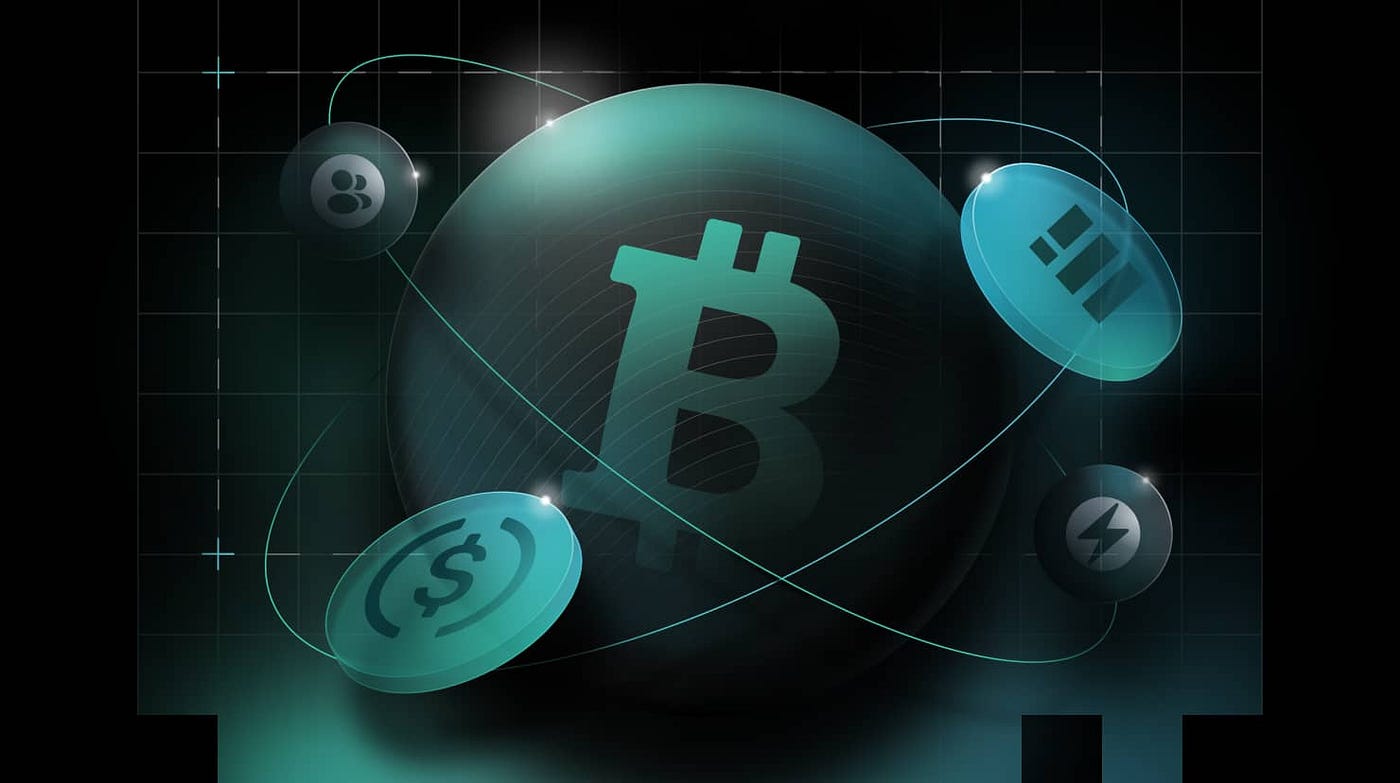
Imagine you want to trade your Bitcoin for someone’s Ethereum. Right now, you probably open Coinbase or Binance, create an account, complete KYC verification, deposit your Bitcoin, wait for confirmations, execute the trade, pay the fees, and maybe withdraw your new Ethereum.
What if you could skip all of that and trade directly with another person, wallet to wallet, without ever giving up control of your funds?
That’s the promise of atomic swaps, and it’s been quietly improving for years while most people weren’t paying attention.
The Central Paradox of Crypto
Here’s what always struck me as weird about cryptocurrency. We built this incredible technology for decentralized, trustless transactions. We eliminated intermediaries. We gave people control of their own money.
And then, to actually use it, everyone funnels through centralized exchanges that hold custody of your funds, know your identity, and can freeze your account whenever they want.
In 2024, over $2.2 trillion in cryptocurrency value moved on exchanges. The vast majority of that went through centralized platforms where you don’t control the keys. We solved the problem of trusting banks by creating crypto exchanges that are basically just crypto banks.
Atomic swaps are trying to fix this weird contradiction at the heart of the ecosystem.
How This Actually Works
The technology isn’t new. The first successful atomic swap happened back in 2017 when Decred and Litecoin were exchanged without a third party. A few days later, someone did it with Litecoin and Bitcoin.
But the concept goes back even further to 2012. The fundamental idea is elegant: create a mechanism where two parties can exchange assets across different blockchains, and either both transactions complete or neither does.
They call it “atomic” because it’s all or nothing, like the indivisible unit of matter.
Here’s how it works in practice. Let’s say Alice wants to trade her Bitcoin for Bob’s Litecoin:
Bob creates a secret value and a hash of that value. He shares the hash with Alice but keeps the secret to himself. Bob then locks up his Litecoin in a special contract that says: Alice can claim this if she provides the secret value, or Bob can reclaim it after two weeks if nothing happens.
Alice looks at this setup and thinks “okay, if I can get that secret, I can claim Bob’s Litecoin.” So she creates her own contract locking up her Bitcoin with the same hash. Bob can claim the Bitcoin if he reveals the secret, or Alice can reclaim it after one week if nothing happens.
Now here’s the clever part. Bob claims the Bitcoin by revealing his secret. The moment he does this, Alice sees the secret on the blockchain and uses it to claim the Litecoin. Both parties get what they wanted, or if either person doesn’t follow through, both get their original funds back after the timelock expires.
No exchange. No middleman. No custody risk. Just peer-to-peer transfer secured by cryptography and smart contracts.
Why This Should Terrify Exchanges
Think about what atomic swaps eliminate:
Trading fees. Exchanges typically charge 0.1% to 0.5% per trade. That adds up fast when you’re actively trading. Atomic swaps have transaction costs (gas fees) but no middleman taking a cut.
Custody risk. Remember FTX? Mt. Gox? Every time an exchange collapses or gets hacked, millions or billions of dollars disappear. With atomic swaps, your funds never leave your wallet until the exact moment they’re exchanged.
KYC friction. Want to trade on a centralized exchange? Hand over your ID, wait for verification, and hope your jurisdiction is supported. Atomic swaps don’t care who you are.
Withdrawal limits and delays. Ever tried to move large amounts off an exchange? Good luck. Atomic swaps have no limits beyond what the underlying blockchains allow.
Geographic restrictions. Live in the wrong country? Many exchanges won’t serve you. Atomic swaps work anywhere with internet access.
If atomic swaps become mainstream and easy to use, what value do centralized exchanges really provide? They’re essentially charging fees to create problems that atomic swaps solve for free.
The Reality Check
Okay, before we start planning the funeral for Coinbase, let’s talk about why atomic swaps haven’t killed exchanges yet.
They’re still technically complex. Setting up an atomic swap requires both parties to agree on numerous technical details. Timelock duration, hash functions, exchange rates. For the average person, this is overwhelming compared to just placing an order on an exchange.
Liquidity is limited. Centralized exchanges have order books with deep liquidity. You can trade $10 million worth of Bitcoin right now without moving the price much. With atomic swaps, you need to find someone who wants to trade the exact opposite pair at your desired rate. That matching problem is hard.
Not all chains are compatible. Both blockchains need to use compatible hashing algorithms. Direct swaps between Bitcoin and Ethereum, for example, have historically been problematic because of technical incompatibilities. Workarounds exist, but they add complexity.
Speed matters. On-chain atomic swaps can take multiple block confirmations to complete. That’s fine for large trades where security matters most, but for quick trading, exchanges are still faster.
User experience is rough. Exchanges have polished interfaces with charts, order books, and one-click trading. Atomic swap platforms in 2025 are getting better, but they’re still not as smooth as centralized alternatives.
Where the Technology is Heading
But here’s where it gets interesting. The atomic swap ecosystem in 2025 has matured significantly.
AtomicDEX by Komodo now supports multiple chains and is accessible to non-technical users. Liquality offers a cross-chain non-custodial wallet with integrated atomic swaps. The Lightning Network is enabling faster atomic swaps for Bitcoin with off-chain transactions.
Layer 2 protocols are being integrated with atomic swap technology, dramatically improving speed. What used to take minutes now takes seconds in some implementations.
The developer tooling is improving. More wallets are adding atomic swap functionality built-in, removing the need for specialized platforms. Cross-chain atomic swaps are under development that wouldn’t require specialized scripting for each blockchain.
Institutional interest is rising. Not for trading, but for settlement and interoperability. When you don’t want to expose your position to exchange risk, atomic swaps become very attractive.
The Decentralized Exchange Angle
Here’s an interesting twist. Decentralized exchanges (DEXs) like Uniswap work great for swapping tokens on the same blockchain. But they can’t help you trade Bitcoin for Ethereum without trust assumptions.
Atomic swaps solve the cross-chain problem that DEXs can’t handle natively. Some projects are building decentralized platforms that aggregate atomic swap opportunities, essentially creating orderbooks for cross-chain trades without centralized custody.
These platforms are finding liquidity by pooling swap opportunities, but the liquidity is still way lower than centralized exchanges. Yet the gap is closing.
The Attack Vector Nobody Talks About
Here’s something that concerns me about atomic swaps at scale: privacy. Current implementations don’t offer strong transaction privacy. The swaps take multiple blocks to complete, and that means anyone watching can track addresses and potentially identify trading patterns.
There are proposals for privacy-enhanced atomic swaps, but they’re not widely implemented yet. For users who care about privacy, ironically, centralized exchanges that pool transactions might actually provide better anonymity than atomic swaps that happen in public on two blockchains.
Security is another concern. While the atomic swap mechanism itself is secure, the complexity creates opportunities for user error. Mess up the timelock duration, and you could lose access to your funds. Use the wrong hash function, and the swap won’t work. These are unforgiving mistakes.
Will Exchanges Become Obsolete?
Here’s my take: atomic swaps won’t make exchanges obsolete anytime soon, but they’ll force exchanges to compete on actual value rather than just being the default option.
The reality is that exchanges provide more than just swap functionality. They provide liquidity, price discovery, fiat on-ramps, customer support, and user-friendly interfaces. Those services have value, even in a world where atomic swaps exist.
But exchanges that rely solely on being the only practical way to trade will struggle. The ones that survive will be those that offer real value: superior user experience, advanced trading features, institutional services, regulatory compliance, and integration with traditional finance.
Atomic swaps will become one option among many. For large trades where custody risk outweighs convenience, they’ll be the obvious choice. For quick trades and active trading, centralized exchanges might still win on user experience.
The real impact might be in forcing exchanges to lower their fees. When users have a credible alternative, exchanges can’t charge monopoly prices anymore.
The Use Cases That Actually Matter
Where I see atomic swaps making the biggest difference isn’t in replacing exchanges entirely. It’s in specific use cases where they’re clearly superior:
Large over-the-counter trades where custody risk is a major concern. Two parties who know each other but don’t trust each other can trade millions without exchange risk.
Cross-border transfers where you want to convert between cryptocurrencies without touching fiat and without exchange intermediaries.
Privacy-conscious users who don’t want to go through KYC or don’t want exchanges tracking their trading history.
Geographic arbitrage where regulations make certain exchanges inaccessible but P2P atomic swaps remain possible.
Integration with DeFi where smart contracts need to interact across chains without custody risk.
The Future We’re Building Toward
The endgame for blockchain interoperability probably isn’t “atomic swaps win” or “exchanges win.” It’s both existing in parallel, serving different needs.
The technology is there. The infrastructure is improving. The user experience is getting better. Institutional interest is growing. But we’re still years away from atomic swaps being as easy as using a centralized exchange.
What we’re likely to see is a hybrid model. Exchanges integrate atomic swap functionality for certain use cases. Wallets add built-in cross-chain trading. Layer 2 solutions make swaps faster and cheaper. The distinction between “using an exchange” and “doing an atomic swap” blurs.
The question isn’t whether atomic swaps will kill exchanges. It’s whether atomic swaps can become good enough that exchanges lose their monopoly on cross-chain trading.
And honestly? We’re getting close.
The Bottom Line
Atomic swap technology is one of those innovations that’s technically impressive but practically limited by the last mile of user experience. It solves real problems, but it creates new ones in the process.
Will it make exchanges obsolete? Probably not. But it might make them optional.
And in a world where financial intermediaries have caused crisis after crisis, making centralized exchanges optional instead of necessary feels like progress worth pursuing.
The technology exists. The question is whether anyone can make it easy enough that normal people will actually use it. Once that happens, the entire landscape of cryptocurrency trading changes.
What’s your experience with atomic swaps? Have you tried using them, or do you stick with traditional exchanges for a reason?
메타데이터
- post_id
- 16d2b516ddb7
- slug
- the-atomic-swap-technology-that-could-make-exchanges-obsolete-16d2b516ddb7
- url
- https://medium.com/@sohail_saifi/the-atomic-swap-technology-that-could-make-exchanges-obsolete-16d2b516ddb7
- canonical_url
- https://medium.com/@sohail_saifi/the-atomic-swap-technology-that-could-make-exchanges-obsolete-16d2b516ddb7
- author_url
- https://medium.com/@sohail_saifi
- status
- ok
- fetched_at
- 2026-07-28 20:20:15