API-First Tools Low-Code Developers Can Use This 2026
With the start of 2026, it is also a good time to review tools that may be useful for upcoming projects. These tools have been around for a…
API-First Tools Low-Code Developers Can Use This 2026
With the start of 2026, it is also a good time to review tools that may be useful for upcoming projects. These tools have been around for a few years but what’s really interesting is they represent newer categories of infrastructure that only recently became practical or necessary as low-code development have increased.
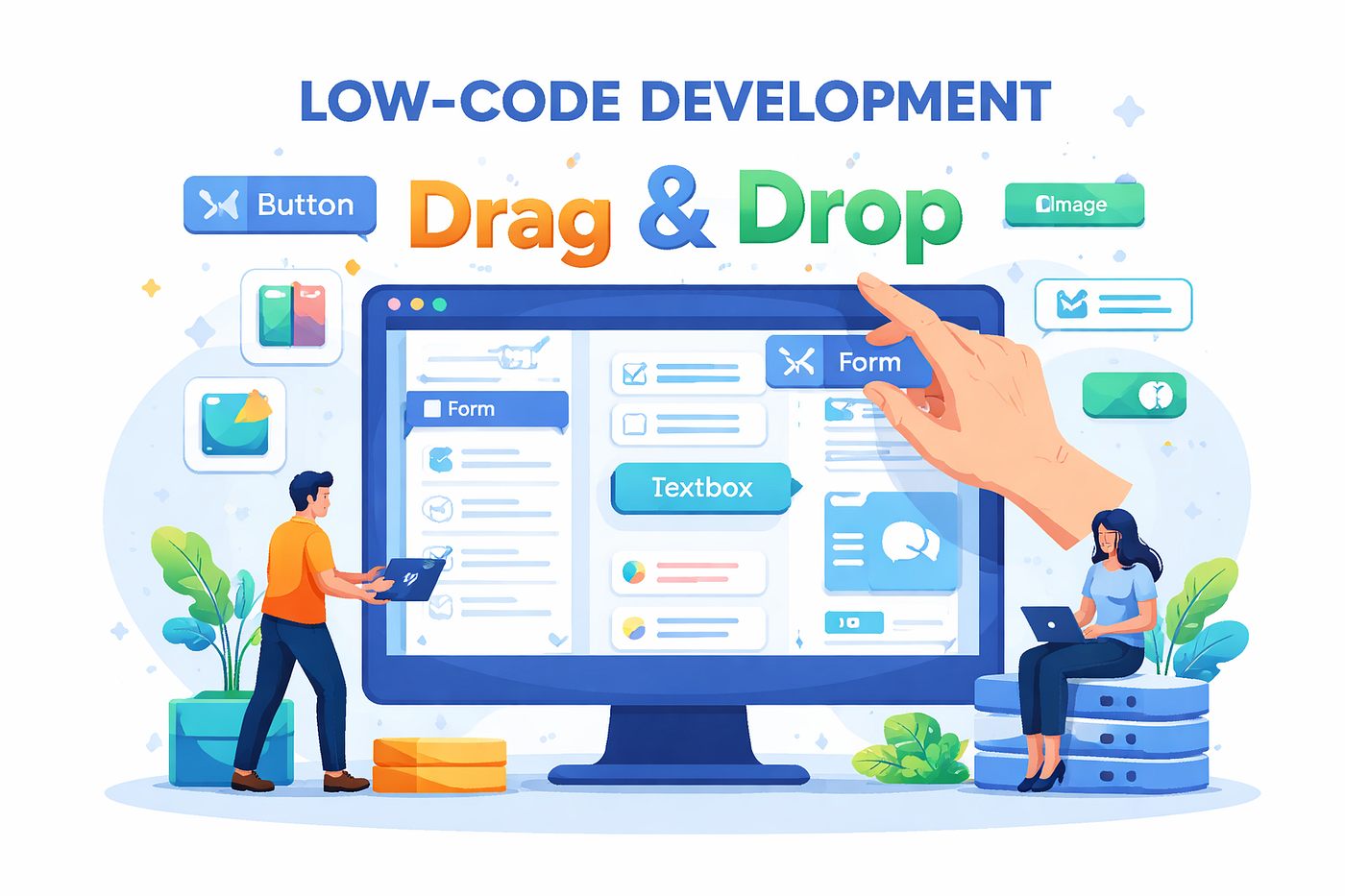
Image generated with AI
Trigger.dev A hosted workflow orchestration and job-tracking platform.
What it can do
- Define workflows as code
- Expose workflows through API endpoints or webhooks
- Run long-running or multi-step jobs
- Persist job state automatically
- Handle retries and idempotency
- Track execution status and failures
How it works Trigger.dev does not follow REST or CRUD patterns. Instead, workflows are triggered by events or HTTP calls and executed asynchronously. Trigger.dev manages execution, retries, and state internally.
Why this is useful Trigger.dev is suitable for developers who:
- are not yet ready to build a full backend
- need background jobs with reliability
- want job tracking without managing queues or workers
- want to expose workflows as callable endpoints
It provides a manageable starting point for orchestration before committing to a full backend architecture.
Inngest An event-driven workflow orchestration platform.
What it can do
- Trigger workflows from events
- Execute step-based jobs
- Enforce idempotency
- Retry failed steps automatically
- Provide execution history and observability
Why this is useful Inngest is designed for systems that depends on webhook payloads. It fits use cases such as background processing, multi-step automation, and agent pipelines that do not align with request-response APIs.
Unkey A managed API-key infrastructure service.
What it can do
- Issue and revoke API keys
- Apply per-key rate limits
- Track per-key usage
- Attach metadata to keys
- Manage access centrally via API
Why this is useful Unkey removes the need to build and maintain custom API-key systems so your APIs and AI systems are managed properly. Unkey takes care of usage limits, specific quota specs and cost tracking.
Modal A Python-first serverless compute platform.
What it can do
- Run Python functions as background jobs
- Support long-running execution
- Provide GPU access
- Avoid container or cluster management
Why this is useful Devs can let Modal handle workers or multiple works that run long running tasks such as LLM, file and data processing. Modal allows developers to deploy Python compute directly without managing infrastructure.
Langfuse An observability platform for LLM-based systems.
What it can do
- Trace prompts and responses
- Track token usage and cost
- Group interactions by session
- Support evaluation and quality analysis
Why this is useful Standard logging tools are not sufficient for LLM workflows. Langfuse provides visibility into prompt execution and agent behavior, which is necessary for debugging and cost control.
Turso
Turso
What it is A cloud-hosted, distributed SQLite platform built on libSQL.
What it can do
- Provide SQLite databases via API
- Support edge-replicated reads
- Require minimal operational setup
Why this is useful SQLite is widely used but traditionally limited to local environments. Turso makes SQLite usable for distributed, API-driven systems, including lightweight backends and agent storage.
Here is a clean, professional closing, rewritten as proper paragraphs. No buzzwords.
These tools are relevant because they are designed to be API-first and work well with asynchronous execution. They support background jobs, event-driven workflows, and orchestration without requiring developers to manage servers, queues, or complex infrastructure from the start. This makes them suitable for systems where work cannot be handled reliably within a single request–response cycle.
For low-code developers and small teams building workflows or agent-based systems, these tools provide a practical way to start. They allow incremental system design: workflows and background execution can be introduced first, while full backend services and data layers can be added later as requirements become clearer.
메타데이터
- post_id
- 16faa6c2ac06
- slug
- api-first-tools-low-code-developers-can-use-this-2026-16faa6c2ac06
- url
- https://medium.com/@raniurbis/api-first-tools-low-code-developers-can-use-this-2026-16faa6c2ac06
- canonical_url
- https://medium.com/@raniurbis/api-first-tools-low-code-developers-can-use-this-2026-16faa6c2ac06
- author_url
- https://medium.com/@raniurbis
- status
- ok
- fetched_at
- 2026-08-02 11:52:24

