Title: Converting Karnaugh Maps to Circuits: Day 26 in Combinational Logic
Day: 26 Module: Circuits: Combinational logic: Karnaugh Map to circuit Topic: Solving K-Map of 4 variables, SOP and POS K-Map problems
Title: Converting Karnaugh Maps to Circuits: Day 26 in Combinational Logic
Day: 26 Module: Circuits: Combinational logic: Karnaugh Map to circuit Topic: Solving K-Map of 4 variables, SOP and POS K-Map problems
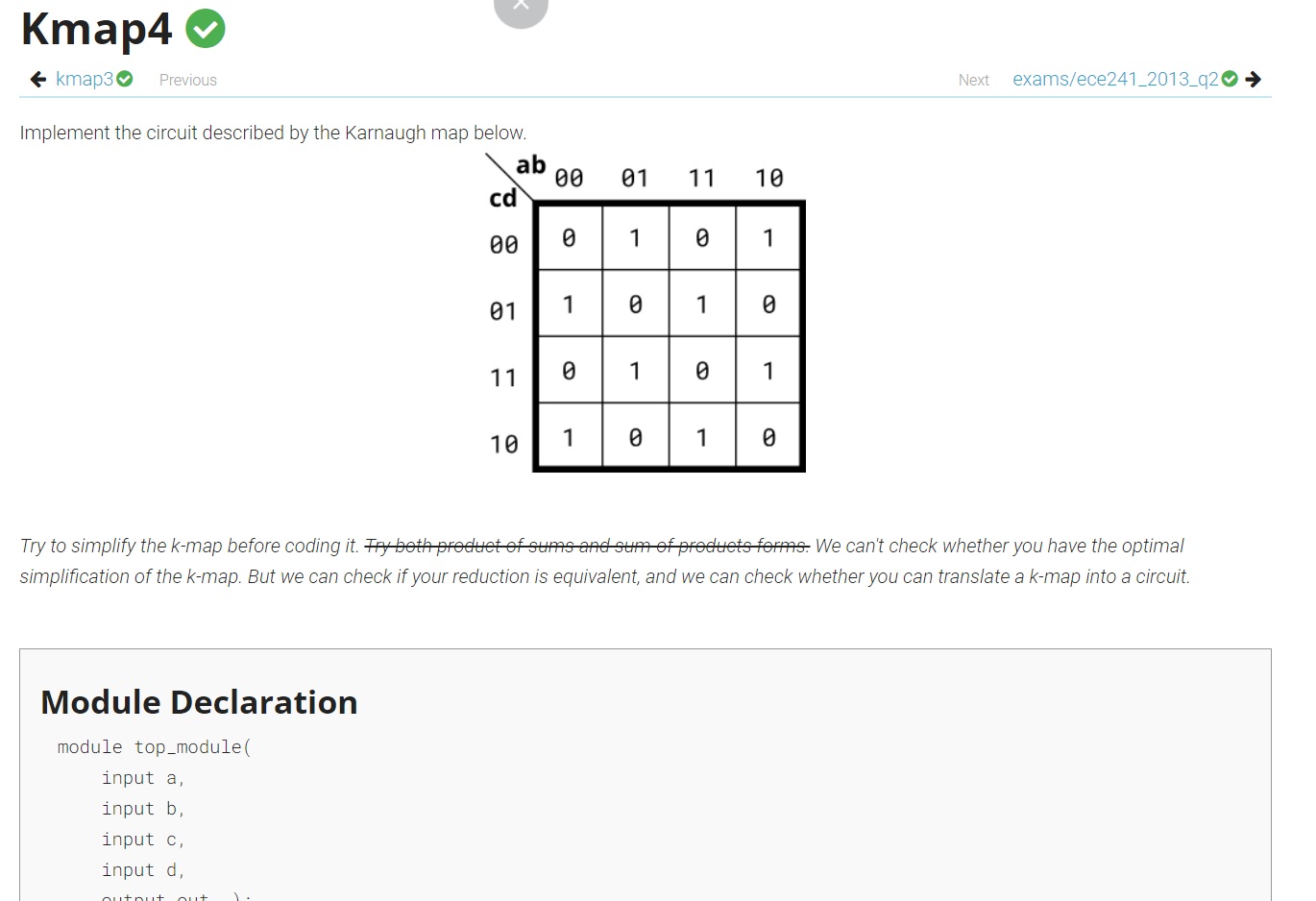
Welcome to Day 26 of our journey through combinational logic circuits! Today, we’ll continue our exploration of Karnaugh Maps (K-Maps), focusing on solving K-Maps of 4 variables and solving problems involving sum-of-products (SOP) and product-of-sums (POS) expressions.
- Solving K-Map of 4 Variables: When dealing with four variables (A, B, C, D), Karnaugh Maps become more complex but equally powerful. We create a 4D map where each cell represents a unique combination of inputs. Grouping adjacent cells and identifying the largest possible groups help simplify the Boolean expression.
- Example: Let’s consider a K-Map for the expression F(A, B, C, D) = Σ(0, 1, 2, 4, 5, 6, 7, 11, 15). By arranging these terms on the K-Map and grouping adjacent 1s, we simplify the expression to its minimal form.
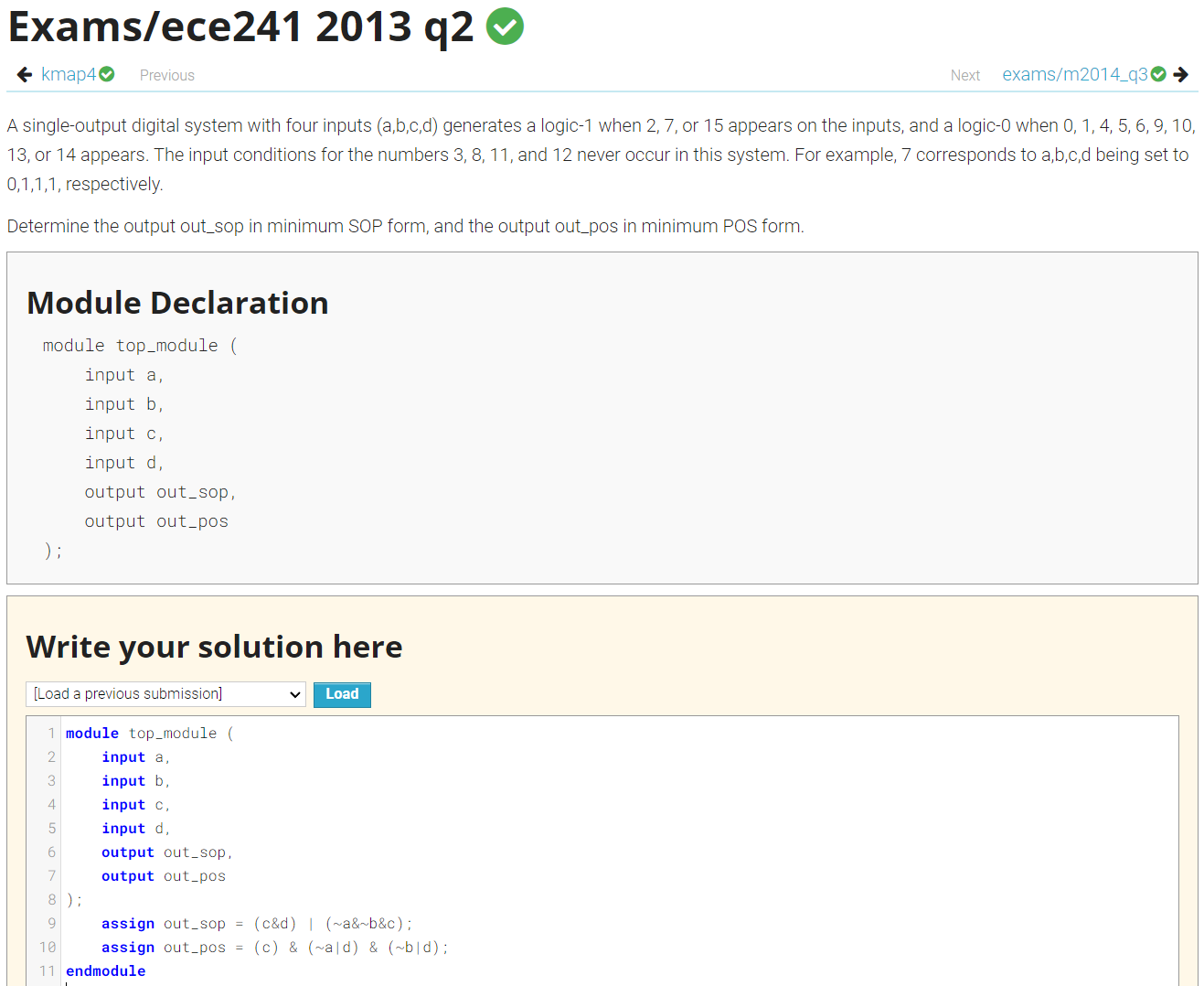
- SOP and POS K-Map Problems: In addition to standard K-Map problems, we encounter problems involving sum-of-products (SOP) and product-of-sums (POS) expressions. SOP expressions consist of ORed terms of ANDed variables, while POS expressions consist of ANDed terms of ORed variables.
- Example (SOP): Given a SOP expression F(A, B, C) = Σ(0, 1, 2, 5, 6), we can solve the K-Map and express the simplified Boolean expression in SOP form. — Example (POS): Given a POS expression F(A, B, C) = Π(3, 4, 7), we can solve the K-Map and express the simplified Boolean expression in POS form.
By mastering SOP and POS expressions, we gain flexibility in representing Boolean functions, which can be advantageous in different circuit design scenarios.
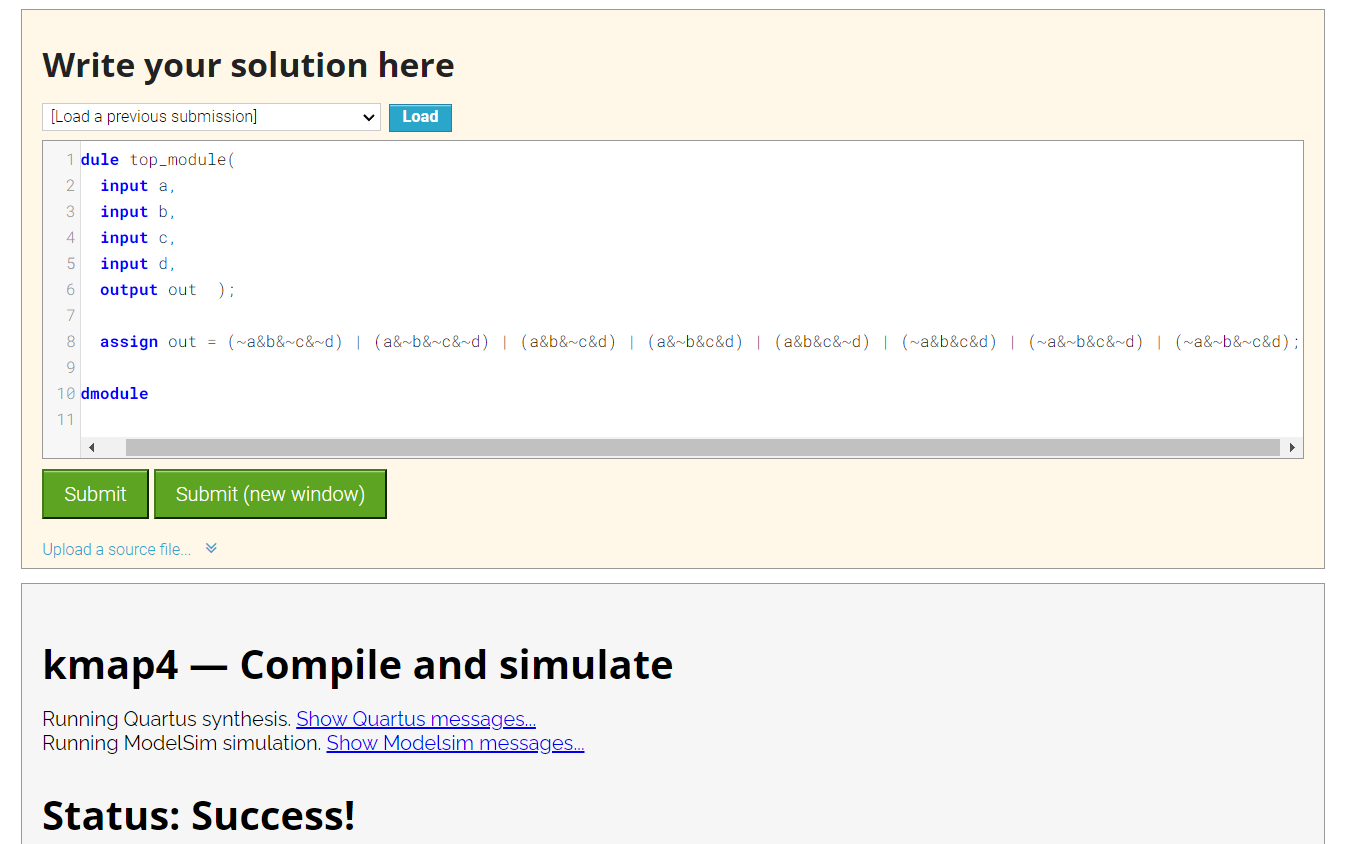
Once we’ve simplified the Boolean expressions using K-Maps and expressed them in either SOP or POS form, we can easily translate them into logic circuits using basic gates like AND, OR, and NOT gates.
Day 26 has expanded our understanding of Karnaugh Maps and their applications in digital circuit design. By solving K-Maps of 4 variables and working with SOP and POS expressions, we’ve learned how to simplify Boolean functions effectively.
Join us tomorrow as we continue our exploration, delving into more advanced topics in digital circuit design!
Stay tuned for Day 27, where we’ll continue to explore fascinating concepts in combinational logic circuits!
메타데이터
- post_id
- 17366dffaee2
- slug
- title-converting-karnaugh-maps-to-circuits-day-26-in-combinational-logic-17366dffaee2
- url
- https://medium.com/@jkpjayanta7/title-converting-karnaugh-maps-to-circuits-day-26-in-combinational-logic-17366dffaee2
- canonical_url
- https://medium.com/@jkpjayanta7/title-converting-karnaugh-maps-to-circuits-day-26-in-combinational-logic-17366dffaee2
- author_url
- https://medium.com/@jkpjayanta7
- status
- ok
- fetched_at
- 2026-06-27 23:56:40
