10 Key Benefits of Rapid CNC Prototyping for Engineers
In today’s competitive manufacturing environment, speed and accuracy are everything. Engineers and product developers are under constant…
10 Key Benefits of Rapid CNC Prototyping for Engineers
In today’s competitive manufacturing environment, speed and accuracy are everything. Engineers and product developers are under constant pressure to reduce time-to-market while ensuring the highest levels of precision. This is where rapid CNC prototyping comes into play. By combining the capabilities of modern machining with fast turnaround times, rapid CNC prototyping is transforming how engineers design, test, and refine products.
In this article, we’ll explore the 10 key benefits of rapid CNC prototyping for engineers and how it connects with advanced **CNC machining services**, CNC milling services, and CNC turning services.

1. Faster Product Development Cycles
One of the biggest advantages of rapid CNC prototyping is the ability to cut down development time. Engineers can move from digital CAD designs to physical parts in a matter of hours or days, instead of weeks. This speed makes it possible to test, refine, and finalize products much faster, helping businesses stay ahead of the competition.
By leveraging professional CNC machining services, prototypes can be created quickly and accurately, enabling engineers to test multiple iterations with ease.
2. High Precision and Accuracy in Prototypes
Modern CNC machines can achieve incredibly tight tolerances and consistent results. For engineers, this means prototypes that closely mimic the final product, ensuring accurate performance testing.
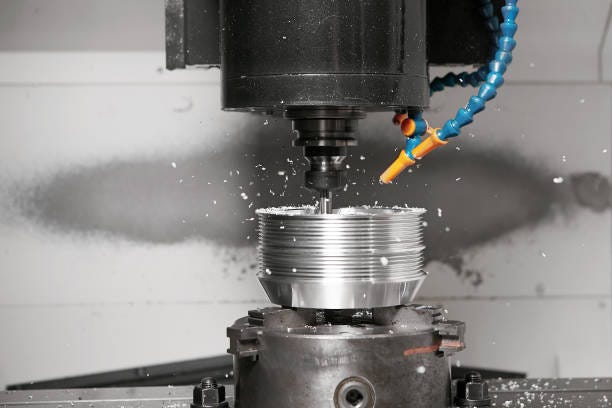
With CNC milling services, intricate details, fine cuts, and complex geometries can be achieved with exceptional precision. This gives engineers the confidence to validate designs before full-scale production.
3. Cost-Effective Testing and Validation
Rapid CNC prototyping is far more cost-effective than traditional prototyping methods. Instead of investing in expensive molds or tooling, engineers can directly machine prototypes from raw materials.
This reduces upfront costs, lowers risks, and provides a practical way to test functionality, durability, and design features before committing to mass production.
4. Wide Range of Materials Available
Another major benefit is material flexibility. Engineers can choose from metals like aluminum, steel, and titanium, as well as plastics such as ABS, PEEK, and nylon.
This versatility makes CNC machining services suitable for industries ranging from aerospace to consumer electronics. Engineers can select the right material for their specific application, ensuring accurate performance testing.
5. Seamless Design Flexibility
Rapid CNC prototyping allows engineers to experiment with different design concepts without worrying about excessive costs or delays. A design can be adjusted in CAD software and quickly produced through CNC milling services for evaluation.
This flexibility is invaluable for R&D teams looking to innovate while maintaining tight project deadlines.
6. Enhanced Product Performance Evaluation
Engineers can create fully functional prototypes that replicate the mechanical and thermal properties of the final product. This allows for real-world testing under stress, heat, or pressure conditions.
Such evaluations ensure that the prototype not only looks right but also performs exactly as intended.
7. Scalability from Prototype to Production
One unique benefit of CNC prototyping is its scalability. The same processes used to create prototypes can be applied to low-volume or high-volume production runs.
For example, **CNC turning services** allow for precise production of cylindrical parts at scale, making it easier for companies to transition smoothly from prototyping to manufacturing.

8. Improved Collaboration Across Teams
Having a tangible prototype in hand makes it easier for engineers, designers, and stakeholders to communicate effectively. Prototypes bridge the gap between digital models and real-world products, fostering better decision-making and collaboration.
This hands-on approach ensures everyone involved in the project shares the same vision.
9. Shorter Time-to-Market
Time-to-market can make or break a product’s success. With rapid CNC prototyping, engineers can accelerate testing, refine designs quickly, and minimize production delays.
By working with reliable CNC machining services, businesses can deliver products to customers faster, gaining a significant competitive edge.
10. Supports Innovation and Customization
Finally, rapid CNC prototyping empowers engineers to innovate without limits. Whether it’s creating custom parts, experimenting with new designs, or tailoring products for niche applications, CNC technology makes it possible.
Custom solutions are increasingly in demand, and rapid prototyping allows businesses to meet those needs while maintaining efficiency and precision.
Conclusion
For engineers, rapid CNC prototyping is more than just a fast way to create parts — it’s a powerful tool that supports innovation, precision, and efficiency. By leveraging advanced CNC machining services, along with specialized CNC milling services and CNC turning services, businesses can transform ideas into reality faster and more cost-effectively than ever before.
As industries continue to demand quicker development cycles and higher-quality products, rapid CNC prototyping is set to remain a cornerstone of modern engineering.
메타데이터
- post_id
- 174cd51eec4f
- slug
- 10-key-benefits-of-rapid-cnc-prototyping-for-engineers-174cd51eec4f
- url
- https://medium.com/@premiumpartsmanufacturing/10-key-benefits-of-rapid-cnc-prototyping-for-engineers-174cd51eec4f
- canonical_url
- https://medium.com/@premiumpartsmanufacturing/10-key-benefits-of-rapid-cnc-prototyping-for-engineers-174cd51eec4f
- author_url
- https://medium.com/@premiumpartsmanufacturing
- status
- ok
- fetched_at
- 2026-08-31 23:13:55