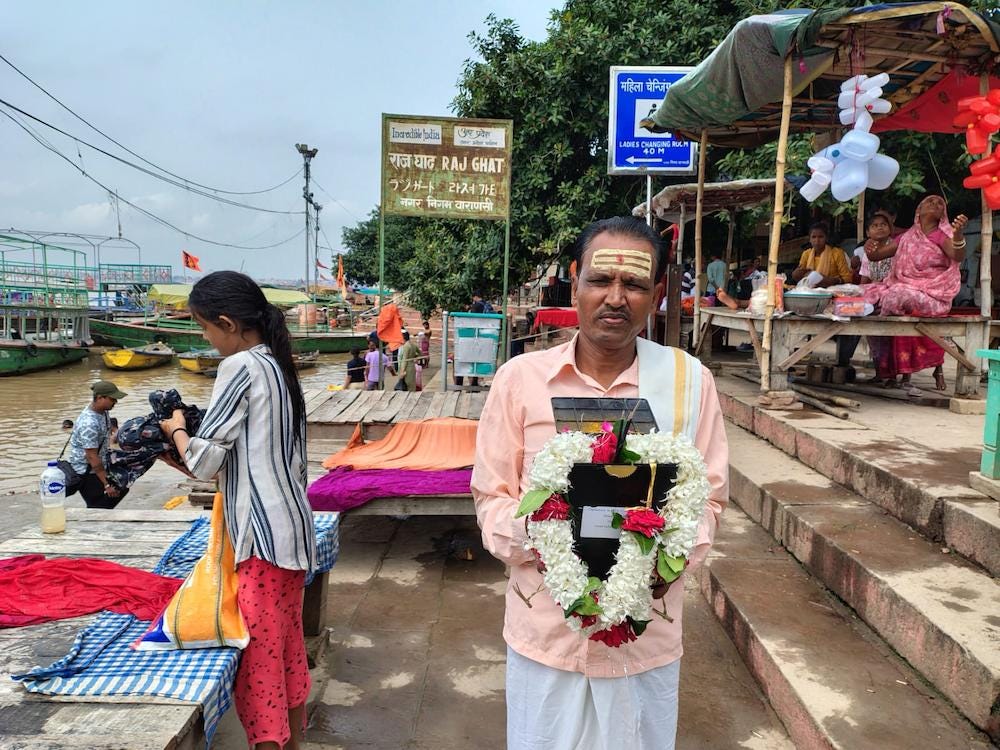
Pind Daan in Varanasi During Pitru Paksha 2026: A Practical Guide
Pitru Paksha is the one period in the Hindu calendar that belongs entirely to the ancestors. For 15 days, the boundary between the living…
Pind Daan in Varanasi During Pitru Paksha 2026: A Practical Guide
Pitru Paksha is the one period in the Hindu calendar that belongs entirely to the ancestors. For 15 days, the boundary between the living and the departed is believed to thin, and the offerings made during this window are said to reach the ancestral souls directly. While Gaya is traditionally regarded as the highest-merit destination for Pind Daan, a very large number of families choose Varanasi — Kashi — for this rite, and for good reasons.
Varanasi offers something that no other city can: the combination of the sacred Ganges, the spiritual energy of the oldest living city on earth, and the ability to combine Pind Daan with Asthi Visarjan, Narayan Bali, or Tarpan in a single visit. For families planning Pind Daan during Pitru Paksha 2026, this guide covers the dates, the practical considerations, the cost, and the things to arrange before you travel.
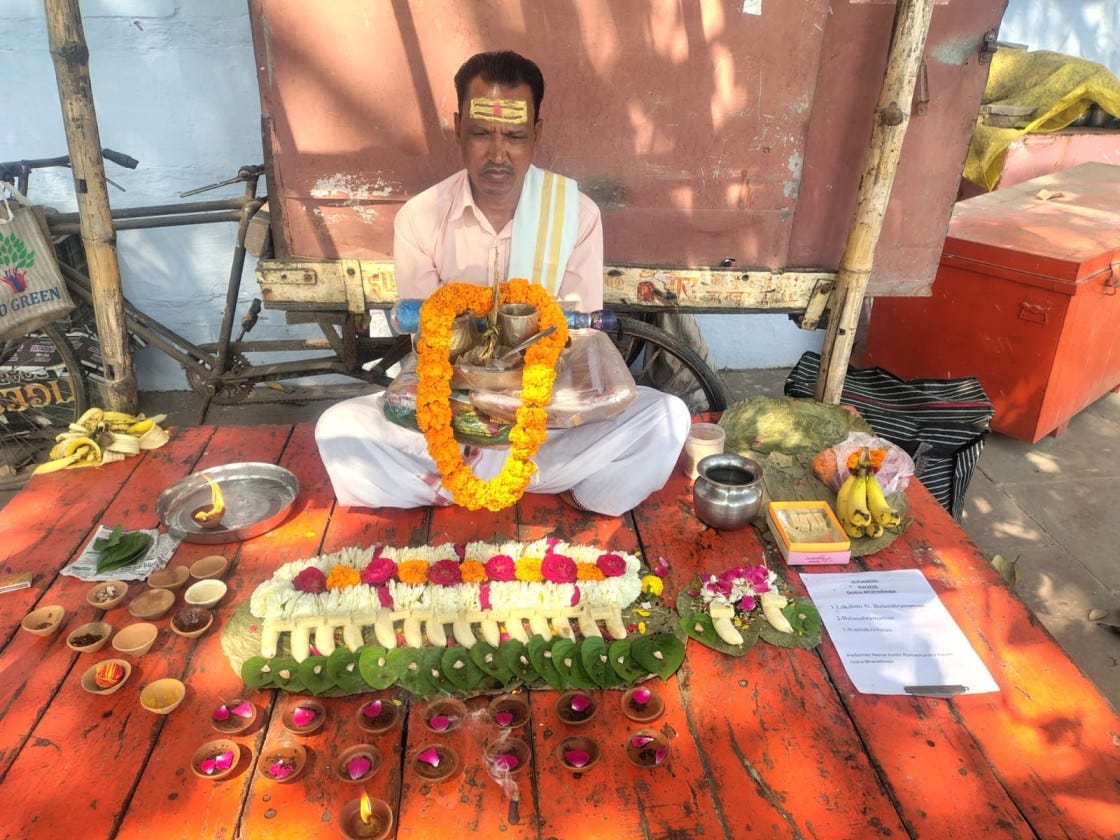
Brahmin Performing Pind Daan in Varanasi
Pitru Paksha 2026 Dates
Pitru Paksha 2026 begins on 26 September 2026 (Saturday) and ends on 10 October 2026 (Saturday). The Shradh for a particular ancestor is traditionally performed on the tithi that matches the date on which the ancestor passed away. If the exact tithi is not known, the Shradh is performed on Sarva Pitri Amavasya, the last day, which is considered a universal day for all ancestors.
The day-wise calendar:
- 26 September — Purnima Shradh
- 27 September — Pratipada Shradh
- 28 September — Dwitiya Shradh
- 29 September — Tritiya Shradh
- 30 September — Chaturthi Shradh
- 1 October — Panchami Shradh
- 2 October — Shashthi Shradh
- 3 October — Saptami Shradh
- 4 October — Ashtami Shradh
- 5 October — Navami Shradh (Matri Navami)
- 6 October — Dashami Shradh
- 7 October — Ekadashi Shradh
- 8 October — Dwadashi Shradh
- 9 October — Trayodashi Shradh
- 10 October — Sarva Pitri Amavasya (Mahalaya Amavasya)
Why Many Families Choose Varanasi along with Gaya for Pitru Paksha
Both Varanasi and Gaya are among the most revered destinations for ancestral rites, and each has its own scriptural authority. Many families perform Pind Daan at both cities — once in Gaya at the Vishnupad Temple and once at the Ganga ghats of Kashi — within the same ancestral-rites trip during Pitru Paksha. The two are not alternatives but complementary, and performing the rite at both is considered to bring the most complete spiritual benefit to the departed.
There are several reasons why families include Varanasi in their Pitru Paksha journey alongside Gaya.
First, Varanasi allows families to combine multiple ancestral rites in a single visit. A family that needs to perform Asthi Visarjan (immersion of ashes), Pind Daan, and Tarpan can complete all three at the Ganga ghats without travelling to a third city. For families who also need Narayan Bali for an ancestor who died an unnatural death, Varanasi offers this as well. This combination is not easily available at Gaya.
Second, Varanasi is better connected by air, rail, and road, making travel easier for families coming from southern or western India, or from abroad. Many families fly into Varanasi, perform the rites at the Ganga ghats, travel to Gaya (approximately 250 km) for the Pind Daan at Vishnupad Temple, and return to Varanasi for the journey home. Pitradev also offers a combined Varanasi — Prayagraj — Gaya — Varanasi 4 Night 5 Day package for families who wish to cover all three sacred cities in one trip.
Third, Varanasi has a wider range of accommodation, from budget dharamshalas to comfortable hotels, which makes the stay more manageable during the crowded Pitru Paksha period.
Fourth, Varanasi has pandits from every linguistic and regional background. Whether your family follows the North Indian, Tamil, Telugu, Odia, or Kannada tradition, a pandit who speaks your language and follows your community’s customs can be arranged. This is particularly important for South Indian families who want the rite performed in their own tradition.
Which Days to Choose and Which to Avoid
Just as with Gaya, the crowd at the Varanasi ghats during Pitru Paksha is not uniform across all 15 days.
First half (26 September to approximately 1 October): The opening days of Pitru Paksha, from Purnima Shradh through Panchami Shradh, are relatively less crowded at the ghats. The queues are shorter, the priests are more available, and the atmosphere is calmer. If your ancestor’s tithi falls in this window, or if you have flexibility in choosing your date, this is the better half to plan your visit.
Second half (2 October onwards): The crowd builds steadily from Shashthi Shradh. The rush becomes intense around Navami Shradh (5 October), which is Matri Navami — the day dedicated to performing Shradh for the departed mother. This is among the most crowded days at every ghat.
The peak day — Sarva Pitri Amavasya (10 October): This is the last day and the most universally observed. Families who do not know the exact tithi of the departed, or who wish to perform a collective Shradh for all ancestors, come on this day. The ghats see their heaviest footfall, and performing the rite in a calm and focused manner becomes difficult.
If your dates are flexible, the first half of Pitru Paksha offers a significantly more peaceful experience.
Where the Pind Daan Is Performed in Varanasi
Pind Daan in Varanasi is performed at the Ganga ghats. Several ghats are used, and the choice often depends on the family’s tradition and the pandit’s arrangement.
Raj Ghat is the most easily accessible ghat in Varanasi. Cars and cabs can drive directly to the ghat, and there is dedicated parking. For families with elderly members, or for anyone who wants to avoid the narrow lanes of the old city, Raj Ghat is the most practical choice.
Manikarnika Ghat is the most ancient and sacred ghat, famous as the Mahashamshan. Telugu families traditionally perform ancestral rites here with a Telugu Shashtri.
Harishchandra Ghat is the second cremation ghat and also used for Pind Daan.
Hanuman Ghat, Kedar Ghat, and Shivala Ghat have a long association with the South Indian community in Kashi. Tamil families traditionally perform the rite at these ghats with a Tamil Vadhyar.
One important fact that many families are not aware of: for the purpose of Pind Daan and Asthi Visarjan, all ghats of Kashi are equally sacred. The spiritual merit does not depend on which ghat you choose. Manikarnika and Harishchandra are famous for cremation, but for the offering of pinds and the immersion of ashes, every ghat carries the same significance, because the offering is made to the same sacred Ganga.
The Cost of Pind Daan in Varanasi
Structured services now offer fixed packages so that families know exactly what they are paying before they travel. The current packages available through Pitradev are:
Nimn Pind Daan — ₹3,000. This includes the Pind Daan only, with the priest charges, all ritual material, and the boat ride included.
Madhyam Pind Daan — ₹5,100. This adds vastra daan, patra daan, and one Brahmin bhojan to the Pind Daan.
Uttam Pind Daan — ₹11,000. This further includes gau daan (donation of a cow), making it the most comprehensive package.
In every package, the priest will not ask for additional money during the puja. The cost confirmed at booking is the cost you pay.
Tamil, Telugu, Odia and Hindi Pandits Available
This is a detail that matters greatly to families from South India and Odisha. The correct pronunciation of mantras and the customs specific to your community are central to a Pind Daan performed the right way.
Varanasi has experienced purohits from different linguistic backgrounds. Telugu Shashtri and Tamil Vadhyar are available for families from Andhra Pradesh, Telangana, and Tamil Nadu. Hindi-speaking pandits serve North Indian families, and priests familiar with Odia customs are available for families from Odisha. The pandit is matched to your language and community, so the sankalp, the mantras, and the guidance you receive during the ceremony are in your language and as per your tradition.
What to Arrange Before You Travel
Planning ahead makes the difference between a peaceful Pitru Paksha experience and a stressful one.
Book the puja in advance. During Pitru Paksha, experienced and reliable pandits at the ghats are booked days or weeks ahead. Arriving without a booking means you are left to find a priest on the spot, where the pricing is unclear and the quality of the vidhi is uncertain. Book at least 2 to 3 weeks before your intended date.
Book accommodation early. Hotels and dharamshalas in Varanasi fill up during Pitru Paksha, especially from Saptami Shradh onwards. Room rates rise significantly, and last-minute availability is limited. Secure your stay well in advance.
Carry the ancestor’s details. Bring a written note with the names, gotras, and dates of passing (where known) of all the ancestors for whom you wish to perform the Shradh. The priest will need these for the sankalp.
Wear a clean white dhoti. Gentlemen wear a white dhoti (need not be new, but should be clean and washed). Ladies may wear any traditional Indian attire such as a saree or salwar suit, and it need not be white.
Start early in the morning. The timing for Pind Daan runs from 7 am until sunset. Beginning early avoids the afternoon crowd and heat.
Precautions at the Ghat
A few realities that families should be aware of.
Beware of auto drivers, rickshaw pullers, and hotel staff who offer to “arrange” the Pind Daan for you. For their commission, they will take you to a random ghat and a random pandit who may charge far more than the standard rate.
Avoid engaging with random pandits at the ghat if you arrive without a booking. They may quote a low price initially but will ask for additional money midway through the ceremony — for Brahmin bhojan, Ganga puja, material charges, and other items that were never mentioned at the start.
If you are booking a Tamil or Telugu priest, confirm that the same person who speaks to you on the phone will perform the puja at the ghat. A common practice is for the senior priest to win your trust and then assign a junior local pandit on the day.
For Families Who Cannot Travel
For families who are unable to travel to Varanasi due to distance, age, health, or work commitments, the Pind Daan can also be performed on your behalf. You share the name, gotra, and tithi of the departed, and a Brahmin performs the complete rite at the Ganga ghat. Photographs, videos, and confirmation of the ceremony are shared with you. This service is especially valuable for NRIs and senior citizens.
In Summary
Pitru Paksha 2026 runs from 26 September to 10 October. Varanasi offers a unique combination of the sacred Ganges, pandits from every linguistic tradition, and the ability to combine Pind Daan with Asthi Visarjan and other ancestral rites in a single visit. The first half of the fortnight is less crowded and more manageable. Pre-booking the puja and the stay is not optional — it is essential. And the cost, when arranged through a fixed-price service, ranges from ₹3,000 to ₹11,000 with no hidden charges.
For families honouring their ancestors during this most sacred window, the preparation you do before you travel is what allows the ceremony itself to be what it should be — calm, correct, and complete.
For families planning Pind Daan in Varanasi during Pitru Paksha 2026, the current packages and booking details are available on the Pind Daan in Varanasi service page.
메타데이터
- post_id
- 177577c6576f
- slug
- pind-daan-in-varanasi-during-pitru-paksha-2026-a-practical-guide-177577c6576f
- url
- https://medium.com/@pitradev91/pind-daan-in-varanasi-during-pitru-paksha-2026-a-practical-guide-177577c6576f
- canonical_url
- https://medium.com/@pitradev91/pind-daan-in-varanasi-during-pitru-paksha-2026-a-practical-guide-177577c6576f
- author_url
- https://medium.com/@pitradev91
- status
- ok
- fetched_at
- 2026-07-14 08:49:03