A Parent’s Guide to Recognizing and Nurturing Giftedness in Children
When we hear the word “gifted,” our minds tend to flash to a specific stereotype: the straight-A student, the pint-sized Mozart, or the…
A Parent’s Guide to Recognizing and Nurturing Giftedness in Children
When we hear the word “gifted,” our minds tend to flash to a specific stereotype: the straight-A student, the pint-sized Mozart, or the child genius who effortlessly aces high school calculus at age ten.
But for parents living it, reality looks quite different.
Your child might read complex chapter books but struggle to tie their shoes. They might ask deeply existential questions about the universe before bedtime, only to have a massive emotional meltdown over a scratch on their favorite toy. Or perhaps they seem chronically bored, constantly questioning authority, and drifting off during school hours.
Giftedness is rarely a smooth path of effortless achievement. More often, it is a complex, beautiful, and sometimes overwhelming way of experiencing the world. If you’ve found yourself wondering why your bright child doesn’t fit the traditional mold, here is a fresh look at what giftedness truly means and how you can support your child’s unique mind.
Redefining Giftedness: It’s Not Just a Test Score
At its core, **giftedness is advanced natural potential**. It is an innate neurodivergence that changes how a child processes information, perceives stimuli, and experiences emotions.
Many school systems define giftedness strictly through high IQ scores or exceptional academic performance. However, modern psychology and educational frameworks recognize that high potential manifests in many distinct domains:
- Intellectual & Academic: The classic rapid learner who spots complex patterns, craves abstract concepts, and masters school subjects quickly.
- Creative & Artistic: Children who think entirely outside the box, offering unconventional solutions, vivid storytelling, or exceptional talent in visual arts, music, and performance.
- Social & Leadership: Natural influencers who possess an advanced understanding of group dynamics, high empathy, and a quiet capacity to organize and motivate others.
- Psychomotor: Early and exceptional physical coordination, spatial awareness, and fine or gross motor control.
- Emotional: A profound, mature capacity for empathy, psychological insight, and deep emotional processing.
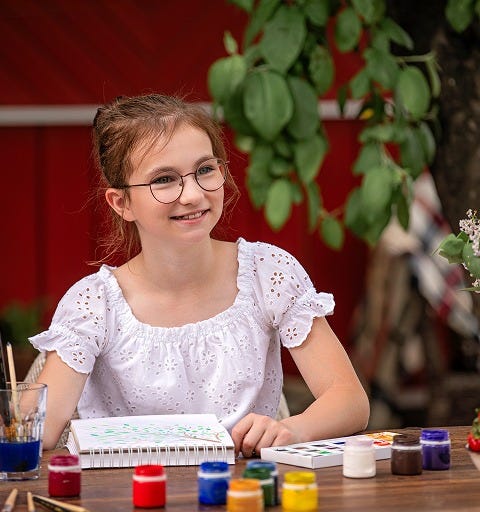
Giftedness in Children
The Complexity of Twice-Exceptionality (2e)
It’s also common for giftedness to coexist with learning differences. Twice-exceptional (2e) children are those who possess high potential while also navigating challenges like ADHD, dyslexia, autism, or sensory processing differences. For 2e kids, their brilliant minds can mask their struggles, or their struggles can hide their genius, making them some of the most frequently misunderstood learners in the classroom.
The Hidden Signs: Look Beyond the Report Card
Because giftedness isn’t just about getting good grades, its indicators are often behavioral and emotional rather than academic. Here are some of the most prominent traits of a high-potential mind:
1. Asynchronous Development
This is the hallmark of giftedness. It means a child’s intellectual, physical, and emotional growth are out of sync. A 7-year-old might have the reading comprehension of a 14-year-old, but the emotional regulation of a typical 7-year-old. This gap can cause immense internal frustration for the child and confusion for the adults around them.
2. Intense Perfectionism and Anxiety
Because **gifted children** can conceptualize adult ideas, they often set impossibly high standards for themselves. A fear of making mistakes can lead to severe procrastination, performance anxiety, or an outright refusal to try new activities unless they can do them perfectly on the first attempt.
3. Deep Existential Thinking
While their peers are focused on games and cartoons, gifted children may experience early anxieties about big topics: death, climate change, infinity, war, and fairness. They possess a fierce, unyielding sense of justice and can become deeply distressed by cruelty or unfair rules.
4. Overexcitabilities (Sensory and Emotional Intensity)
Polish psychologist Kazimierz Dąbrowski identified that gifted individuals experience “overexcitabilities” — a heightened capacity to respond to stimuli. This means a scratchy clothing tag can feel like torture (sensory), a sad movie can trigger days of grieving (emotional), or an interesting topic can keep them awake all night with a racing mind (intellectual).
Why Brilliant Minds Are Often Overlooked
It seems counterintuitive, but high-potential children are routinely missed by educators and parents alike. This usually happens for a few key reasons:
- The Mask of Boredom: When a child already knows the curriculum, repetition feels like physical stagnation. They may check out, daydream, or act out disruptively, leading teachers to label them as distracted rather than under-challenged.
- Social Masking: Gifted children, particularly girls, often consciously suppress their intelligence or change their vocabulary to blend in with their peer group and avoid being labeled a “know-it-all.”
- The “Good Student” Myth: A quiet, well-behaved child who gets straight A’s might just be compliant, while a truly gifted thinker might turn in sloppy work because the assignments lack depth and meaning.
The MythThe Reality Gifted kids will succeed no matter what.Without proper stimulation, they can become unmotivated underachievers. Giftedness is a luxury problem. High intensity and asynchronous growth often cause emotional vulnerability and social isolation. Identification can wait until they are older. Early recognition prevents a child from internalizing their differences as “brokenness.”
How to Set Your Child Up to Thrive
Nurturing a gifted child isn’t about pushing them to study harder or loading their schedule with extra worksheets. It’s about building a supportive framework that honors both their intellect and their deep sensitivity.
Create an “Intellectual Sandbox” at Home
Give them the freedom to dive into “rabbit holes.” If they become obsessed with marine biology, go to the library, watch documentaries, and let them explore that passion until their curiosity is satisfied. Focus on providing raw materials — books, strategy games, puzzles, and open-ended creative tools — rather than rigid, structured toys.
Reframe Success and Value Effort
To combat perfectionism, praise the process rather than the outcome. Instead of saying, “You’re so smart, you got an A!” try saying, “I love how hard you worked to figure out that tough problem.” Normalize failure as a natural, healthy step in the learning process.
Advocate for Their Educational Needs
Start a collaborative dialogue with your child’s teachers. Look for options like curriculum compacting (skipping material they already know), independent study projects, or localized enrichment programs. The goal is to keep them in their “Zone of Proximal Development” — the sweet spot where work is challenging enough to be engaging, but not so hard that it causes despair.
Anchor Their Emotional World
Never dismiss their deep feelings as “overreacting.” Acknowledge their intensity as a core component of how their brain is wired. Help them find words for their massive emotions, and consider connecting them with mentors or peers who share their niche interests so they don’t feel entirely alone.
Conclusion: Beyond the Label
Ultimately, discovering that your child is gifted isn’t about chasing a prestigious label or bragging rights. It is an instruction manual for how to understand their unique heart and mind.
When we look past traditional metrics of success and embrace our children for their intense, creative, and beautifully complex selves, we stop asking them to fit into a mold that wasn’t built for them. By providing the right balance of intellectual challenge and emotional sanctuary, we give them the foundation they need to navigate the world with confidence, balance, and purpose.
메타데이터
- post_id
- 1797a249bc0f
- slug
- a-parents-guide-to-recognizing-and-nurturing-giftedness-in-children-1797a249bc0f
- url
- https://medium.com/@iamelenijones/a-parents-guide-to-recognizing-and-nurturing-giftedness-in-children-1797a249bc0f
- canonical_url
- https://medium.com/@iamelenijones/a-parents-guide-to-recognizing-and-nurturing-giftedness-in-children-1797a249bc0f
- author_url
- https://medium.com/@iamelenijones
- status
- ok
- fetched_at
- 2026-07-24 21:36:43




