When Did Fashion Stop Being Timeless?
There was a time when fashion moved at a different pace.
When Did Fashion Stop Being Timeless?
There was a time when fashion moved at a different pace.
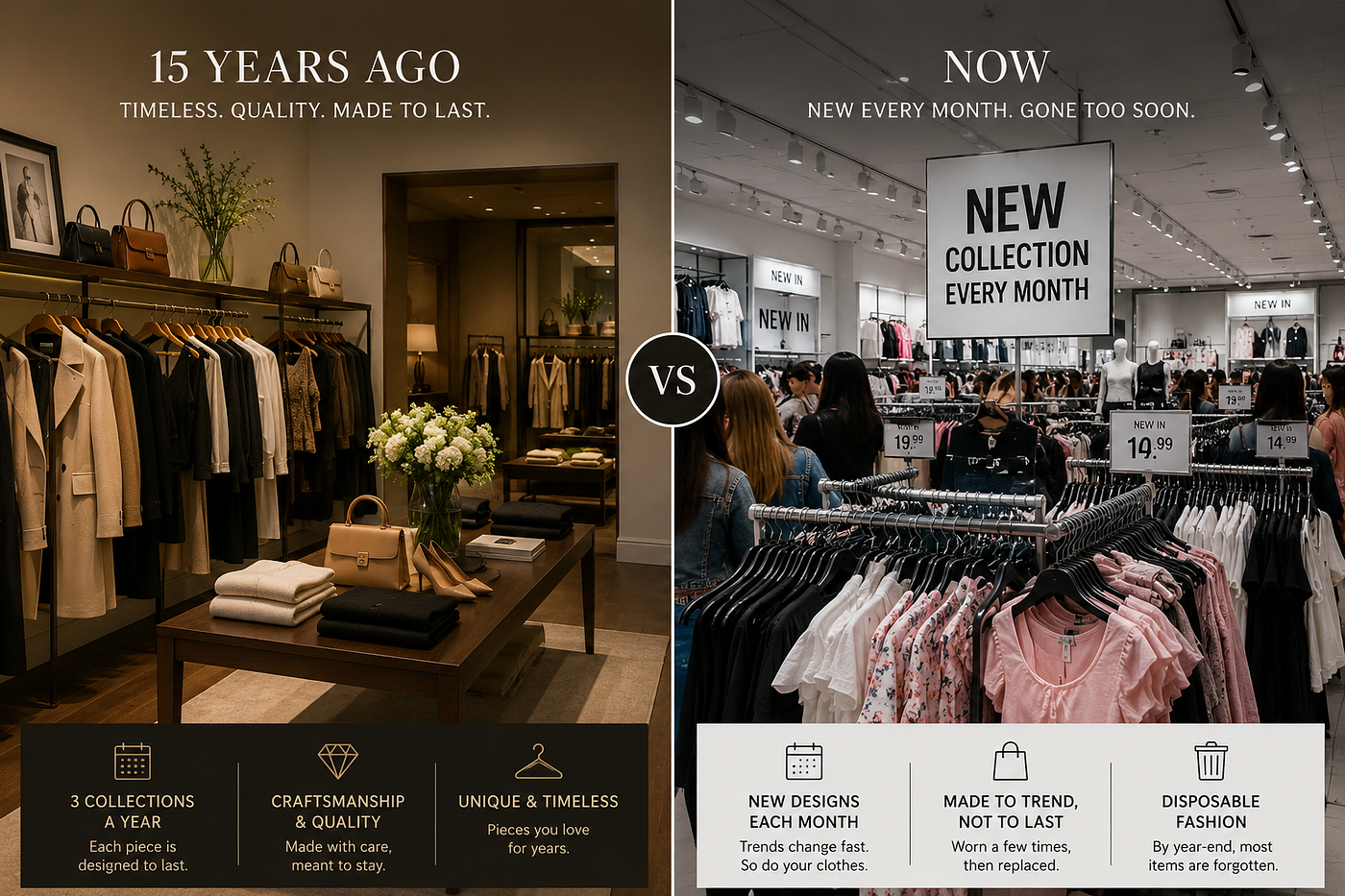
Fifteen years ago, many brands introduced only a few collections each year. Spring and Summer arrived with their own styles. Autumn and Winter followed with another carefully designed collection. New releases felt special because they were limited, anticipated, and created to remain relevant for years.
Owning a garment was different then. A well-made dress, blouse, handbag, or pair of sunglasses could remain a favorite piece for a decade. Fashion trends existed, but they moved slowly enough for people to develop a lasting connection with what they wore.
Today, the fashion landscape looks very different.
Many brands release new designs every month, and some introduce new products every week. Social media, digital advertising, and influencer culture have accelerated the speed of fashion to a level that would have been difficult to imagine fifteen years ago.
Consumers are constantly exposed to new trends, new collections, and new reasons to update their wardrobes.
The result is a cycle where clothing often feels outdated long before it is actually worn out.
Fashion Then: Fewer Collections, Greater Longevity
Traditional fashion calendars were built around seasons.
Designers spent months preparing collections. Retailers planned purchases carefully. Customers had time to discover, appreciate, and wear the pieces they bought.
A garment was not expected to be replaced after a few weeks.
Instead, quality, craftsmanship, and versatility were highly valued. People purchased fewer items, but those items often remained part of their wardrobe for many years.
Many of us can still remember a favorite jacket, handbag, or pair of sunglasses that remained stylish long after it was purchased.
Fashion Today: The Era of Constant Newness
The rise of fast fashion changed consumer expectations.
New arrivals are no longer seasonal events. They are continuous.
Retailers compete to offer the latest designs as quickly as possible. Trends that once lasted several years can now disappear within months.
As a result, fashion has become increasingly disposable.
Items are often purchased because they are currently trending rather than because they provide long-term value. By the end of the year, many pieces feel outdated simply because newer alternatives have appeared.
The clothing itself may still be in excellent condition, but the trend cycle has already moved on.
The Hidden Cost of Fast Fashion
The rapid pace of modern fashion comes with consequences.
Consumers spend more frequently while often feeling less satisfied with their purchases. Closets become crowded with items that are rarely worn. Perfectly usable garments are replaced before reaching the end of their lifespan.
Beyond personal consumption, this cycle also contributes to increasing textile waste and greater pressure on manufacturing resources.
Perhaps the greatest cost, however, is the loss of emotional value.
When clothing becomes temporary, people stop building lasting relationships with the items they own.
Is Timeless Fashion Making a Comeback?
In recent years, many consumers have begun questioning the constant pressure to keep up with trends.
There is growing interest in quality over quantity, capsule wardrobes, versatile pieces, and designs that remain relevant beyond a single season.
Timeless fashion does not mean ignoring trends altogether. It means choosing pieces that continue to look elegant regardless of what is currently popular.
A well-designed linen set, a classic handbag, a refined pair of sunglasses, or a beautifully crafted scarf can remain part of a wardrobe for years rather than months.
The Difference Between Fashion and Style
Fashion will always change.
That is part of its appeal.
Style, however, is something different. Style is personal. It evolves slowly and reflects individual identity rather than temporary trends.
While fashion may continue to move faster than ever, many people are rediscovering the value of buying less, choosing carefully, and investing in pieces that stand the test of time.
Perhaps the question is no longer whether fashion changes too quickly.
Perhaps the real question is whether we want our wardrobes to follow every trend — or whether we want them to tell a story that lasts longer than a season.
메타데이터
- post_id
- 17a6ec012c6a
- slug
- when-did-fashion-stop-being-timeless-17a6ec012c6a
- url
- https://medium.com/@dr.sara_26037/when-did-fashion-stop-being-timeless-17a6ec012c6a
- canonical_url
- https://medium.com/@dr.sara_26037/when-did-fashion-stop-being-timeless-17a6ec012c6a
- author_url
- https://medium.com/@dr.sara_26037
- status
- ok
- fetched_at
- 2026-06-23 06:34:20