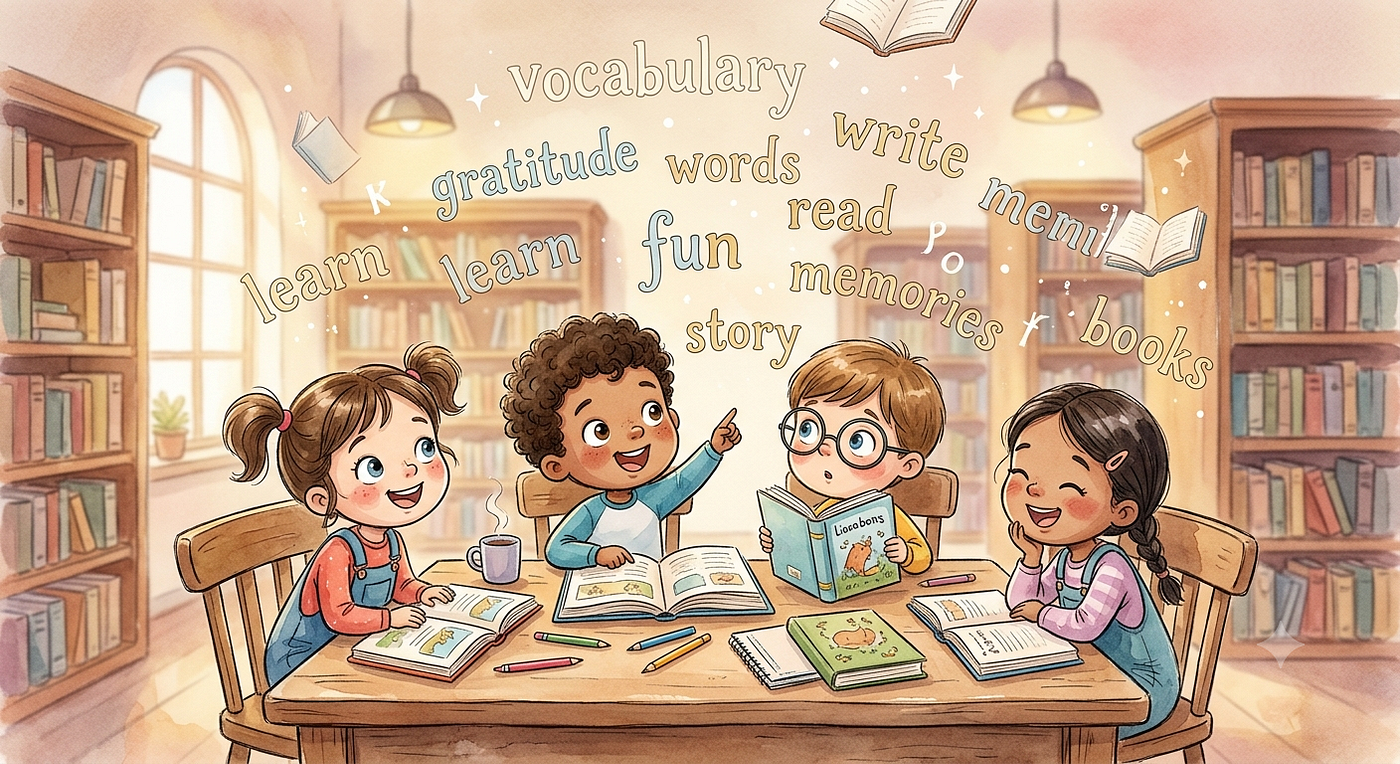
The People Hidden Inside My Vocabulary
Every word has a history. Mine was written by family, teachers, books, newspapers, and a lifetime of listening.
Who Gave You Your Words
The People Hidden Inside My Vocabulary
Every word has a history. Mine was written by family, teachers, books, newspapers, and a lifetime of listening.
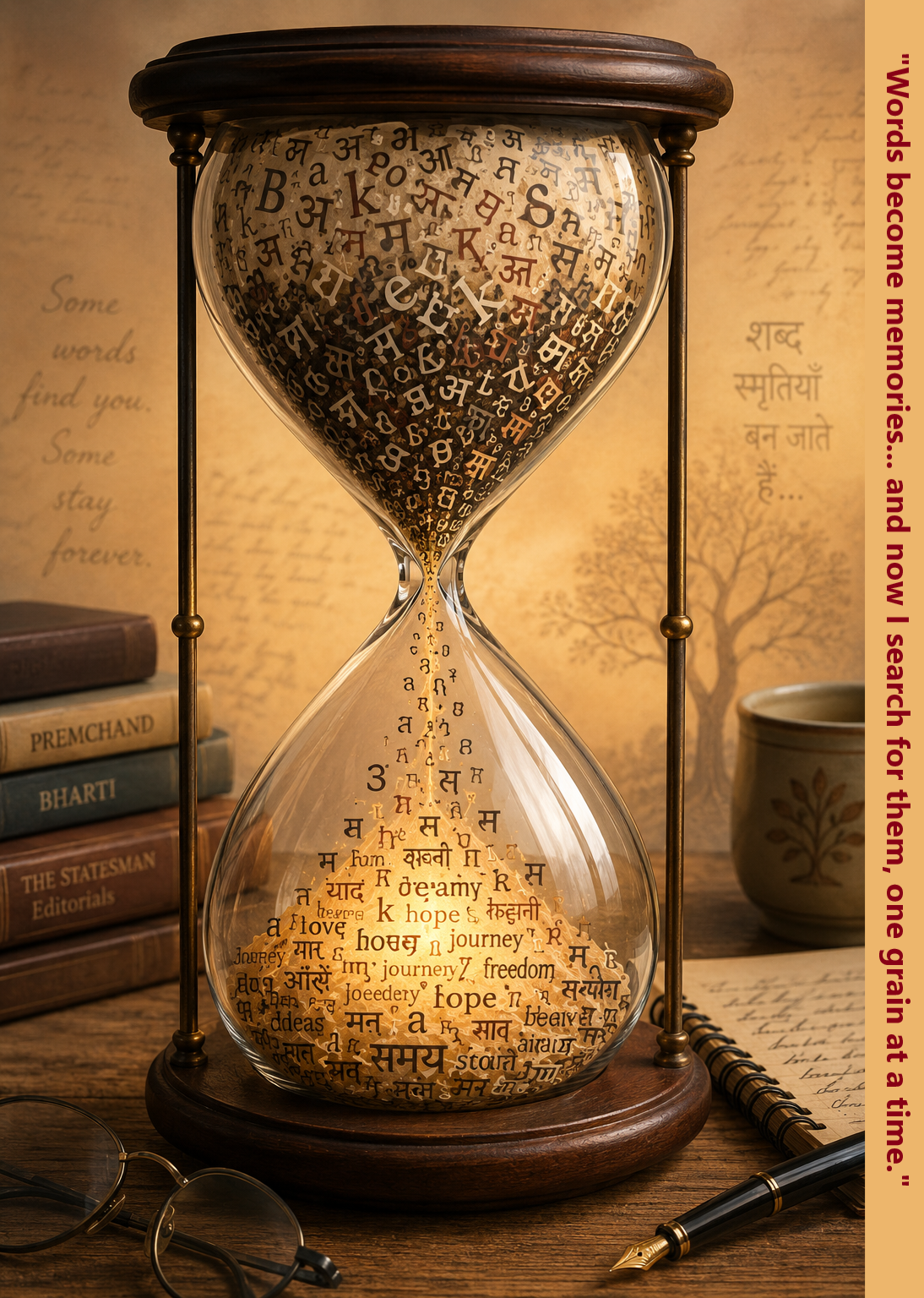
Image: leonardo.ai
Who Gave Me My Words?
These days, I sometimes find myself searching for a word that once came effortlessly. The word is there, somewhere in the attic of memory, but it takes longer to come down the stairs.
Age, Covid, or perhaps both have slowed the retrieval.
And when that happens, I often wonder:
Where did all those words come from in the first place?
The answer, I have realized, is not a person, a book, or a moment.
My vocabulary was not built in a classroom alone, nor discovered in a library one magical afternoon.
It was a joint-family project.
It was assembled over decades by people who never knew they were shaping a writer.
Some handed me books. Some handed me discipline. Some handed me stories. Others handed me entire worlds without realizing it.
Looking back, I can trace the origins of my words.
The journey begins with my elder brother.
Every birthday, when many children hoped for toys or treats, I often received a book from him. Not once or twice, but year after year. At the time, I saw them as gifts. Today, I recognize them as invitations.
Each book opened a new door.
The first one took me to milky-way.
One led to adventure.
Another led to mystery.
A third led to places I had never seen and people I would never meet.
Without realizing it, my brother was teaching me that reading was not merely a pastime. It was a way of enlarging one’s world.
Then came my English teacher, Mr. R. N. Mukherjee.
He taught English, certainly, but what remains with me is not a grammar lesson or a classroom lecture.
It was his insistence that every student borrow a book from the school library each week and actually read it.
At the time, it felt like an assignment.
Today, it feels like a gift.
Looking back, I suspect he was teaching us something much larger than language.
He was teaching curiosity.
He was teaching us that books were not decorations on shelves but companions waiting to be discovered.
And then there was my Tauji.
If I close my eyes, I can still see him.
A winter afternoon.
A charpoy placed in the warm sunshine.
An elderly man stretched out comfortably beneath the winter sky.
And a young boy reading aloud from the editorial page of The Statesman.
Tauji never called it a lesson.
Yet every winter afternoon became one.
He listened patiently while I stumbled through unfamiliar words and complicated sentences. Editorial writers were not trying to educate schoolboys, yet through their arguments, observations, and vocabulary, they did exactly that.
Many words entered my life through those editorials.
More importantly, I learned that language was not only for telling stories. It was also for understanding ideas.
Not all my teachers, however, intended to teach me.
Some taught me accidentally.
For a couple of years, Bhagwat Kathas were organized at our home.
The gentleman narrating them possessed remarkably rich and expressive Hindi. To be completely honest, my attendance was not always motivated by spiritual hunger.
Often, it was a clever strategy to avoid homework and other routine studies.
I attended with the devotion of a student escaping mathematics.
Yet while I thought I was avoiding education, education quietly found me.
The ‘Katha Vachak’s (storyteller’s) Hindi flowed effortlessly, elegant, expressive, and filled with words I rarely encountered elsewhere.
Without opening a textbook, my Hindi vocabulary expanded.
Without taking notes, I absorbed language.
Without intending to learn, I learned.
As I grew older, books became constant companions.
Like many children of my generation, I travelled through the worlds created by Enid Blyton and the Hardy Boys. Their stories filled me with vivid imagination about adventures, mysteries, secret passages, hidden clues, and endless possibilities.
Then came Perry Mason.
The courtroom dramas sharpened my appreciation for precision. Every word mattered. Every question mattered. Every detail mattered.
Later came Arthur Hailey and Irvin Wallace.
Their novels opened doors into industries, institutions, politics, medicine, aviation, business, and human ambition. They taught me that a novel could entertain and educate simultaneously.
By my late twenties, my reading interests began to evolve.
Self-development books entered my life.
Authors such as Norman Vincent Peale, Robert Schuller, and many others introduced me to a different vocabulary — the language of possibility, resilience, personal growth, and hope.
Around this time, my elder sister became one of my fellow travellers on this literary journey.
Ayn Rand came somewhere around this time.
We exchanged books.
We recommended authors.
We discussed ideas.
Sometimes the greatest gifts are not the books themselves but the conversations they inspire.
Meanwhile, another stream continued flowing through my life.
Hindi literature.
I immersed myself in the works of Munshi Premchand, Dharmveer Bharti, Amrita Pritam, Kanhaiyalal Mishr, Narendra Kohli and many others.
These writers gave me more than vocabulary.
They gave me texture.
They gave me emotion.
They gave me insight into the human condition.
Looking back, I realize my thoughts learned to travel on two tracks simultaneously — one English and one Hindi.
Each language enriched the other.
Each expanded the range of what I could think, feel, and express.
But perhaps the most important stage came when words stopped belonging exclusively to others and slowly became my own.
I began writing birthday messages.
Then anniversary wishes.
Then poems, articles, notes, reflections, and occasional attempts at humour.
The earliest instance I remember of consciously playing with rhyme goes back to Class XI, when I wrote slogans during a student agitation over a proposed change in our school’s board affiliation.
I doubt those slogans would qualify as great literature.
Yet they marked an important transition.
I was no longer merely consuming words.
I was beginning to create with them.
And every birthday message written for family members, every anniversary wish crafted for family and friends, every poem composed for loved ones became a form of practice.
Two of my elder sister excelled in Hindi and regularly wrote poems and that somehow passed on to me.
Without realizing it, I was keeping my vocabulary alive and well exercised.
So who gave me my words?
An elder brother with birthday books.
An English teacher who sent me faithfully to the library.
A Tauji reclining on a charpoy beneath the winter sun.
A Bhagwat storyteller whose Hindi I absorbed while pretending to avoid homework.
Novelists, poets, editors, essayists, self-help authors, a book-loving sister, and countless writers I never met.
My sisters penning Hindi poems.
No single person gave me my words.
They arrived one book, one conversation, one winter afternoon, one editorial, one blessing, one Hindi poem and one lifetime at a time.
And today, when a word occasionally hides from me and refuses to appear on command, I remind myself that it is probably still there somewhere.
Waiting patiently.
Resting among the shelves of old libraries.
Lingering in the warmth of a winter afternoon.
Echoing through a Bhagwat Katha.
Or tucked inside a birthday book given long ago by a loving elder brother.
The word may take a little longer to find me now.
But the people who gave it to me never truly left.
A Warm and Grateful Note: Writing this piece turned into an unexpectedly nostalgic journey. As memory led me from one chapter of life to another, I found myself meeting people who are no longer with us, yet seemed vividly alive in those moments of recollection. My heartfelt thanks to the Writer’s Circle team for a prompt that was not merely about words, but about the people who quietly placed them in our care.
Tagging: Parvathi J, ShubhamAgrawal, Priyanshu Jha, Arpita Srivastava, Monika Mahadev, 🌸Preeti Pathak🌸, Parul Bishnoi ⭑
Take part in the 10-day writing challenge at Writer’s Circle:
This story is published under Writer’s Circle, a space for raw thoughts, everyday fictional, Non-fictional stories, and voices that feel real and relatable. Would you like to contribute? Follow our publication. Have a story to tell? Share it with us here.
We also invite you to participate in our other community events and prompts. Check it out:
메타데이터
- post_id
- 17afae08031f
- slug
- the-people-hidden-inside-my-vocabulary-17afae08031f
- url
- https://medium.com/writers-chaupal/the-people-hidden-inside-my-vocabulary-17afae08031f
- canonical_url
- https://medium.com/writers-chaupal/the-people-hidden-inside-my-vocabulary-17afae08031f
- author_url
- https://medium.com/@rkkarnani
- status
- ok
- fetched_at
- 2026-06-14 11:28:49