Notre-Dame de Paris in Sacred Symbolic Art: A Collection for European Collectors
How a contemporary symbolist treats the 2019 fire as civilizational memory—and why Nordic, Polish, and Dutch collectors read the work…
Notre-Dame de Paris in Sacred Symbolic Art: A Collection for European Collectors
How a contemporary symbolist treats the 2019 fire as civilizational memory—and why Nordic, Polish, and Dutch collectors read the work differently
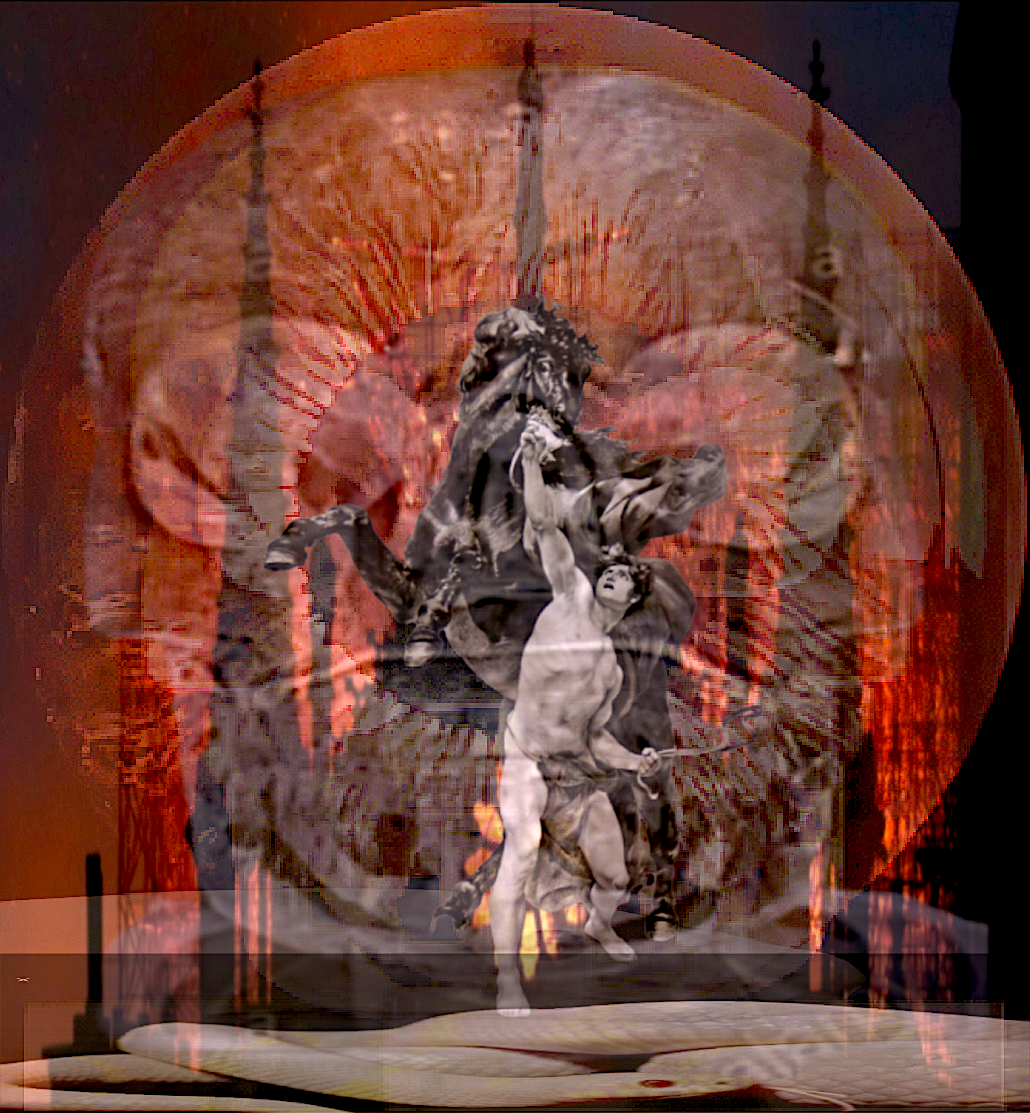
Notre-Dame de Paris Brule
When Notre-Dame de Paris burned in April 2019, something larger than a building went up with the smoke. Eight centuries of accumulated sacred memory hung visible above the Île de la Cité—and then, hours later, hung visible as wound, as warning, as image impossible to forget. Sacred art that engages this rupture is not nostalgia. It is one of the few remaining ways European visual culture can speak directly about civilizational memory without flinching.
This collection by Claude Theriault, an Acadian artist working in layered digital sacred art, takes Notre-Dame as both subject and threshold. The works do not document the fire; they pass through it. Joan of Arc returns. Skulls appear at the cathedral’s flank. The terre des hommes—the earth of men—burns alongside the stone. Each piece is a meditation on what survives, what does not, and what the act of looking demands of a serious viewer.
What the Notre-Dame de Paris Collection Holds
The collection gathers roughly twenty works in which Notre-Dame appears not as architecture but as a living symbol. The strongest pieces—Jean d’Arc et Notre Dame de Paris brûle, Albino Skull Notre Dame de Paris Brûle, and Notre Dame de Paris et la Terre des Hommes Brûle—refuse the postcard view. The cathedral burns in each, but the fire is rendered as transfiguration as much as destruction.
Joan of Arc, canonized in 1920 and one of the most contested figures in French national memory, appears beside the burning cathedral as both witness and judgment. The albino skull folds memento mori directly into the architectural body. The terre des hommes pieces draw on Saint-Exupéry’s title and Teilhard de Chardin’s evolutionary theology at once, making the burning a planetary event rather than a Parisian one.
Each work is available as print on demand through Pixels in multiple substrates and sizes, allowing collectors across Europe to acquire pieces in formats suited to their interiors.

Joseph and the children
The Ghosted Surface: How These Works Are Made
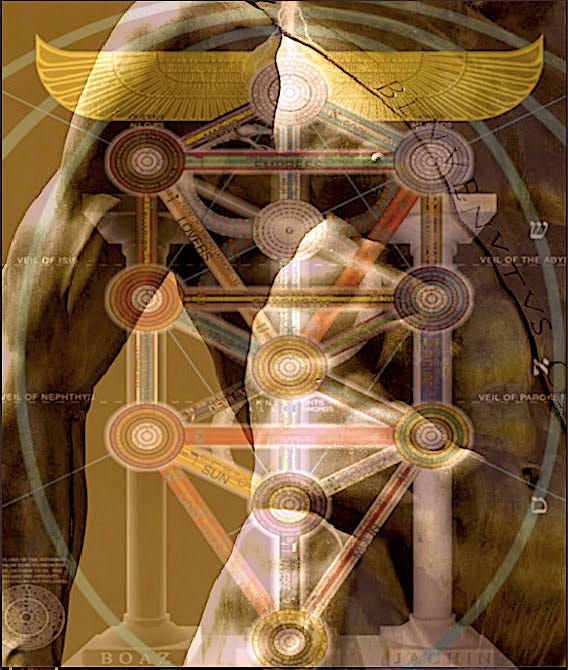
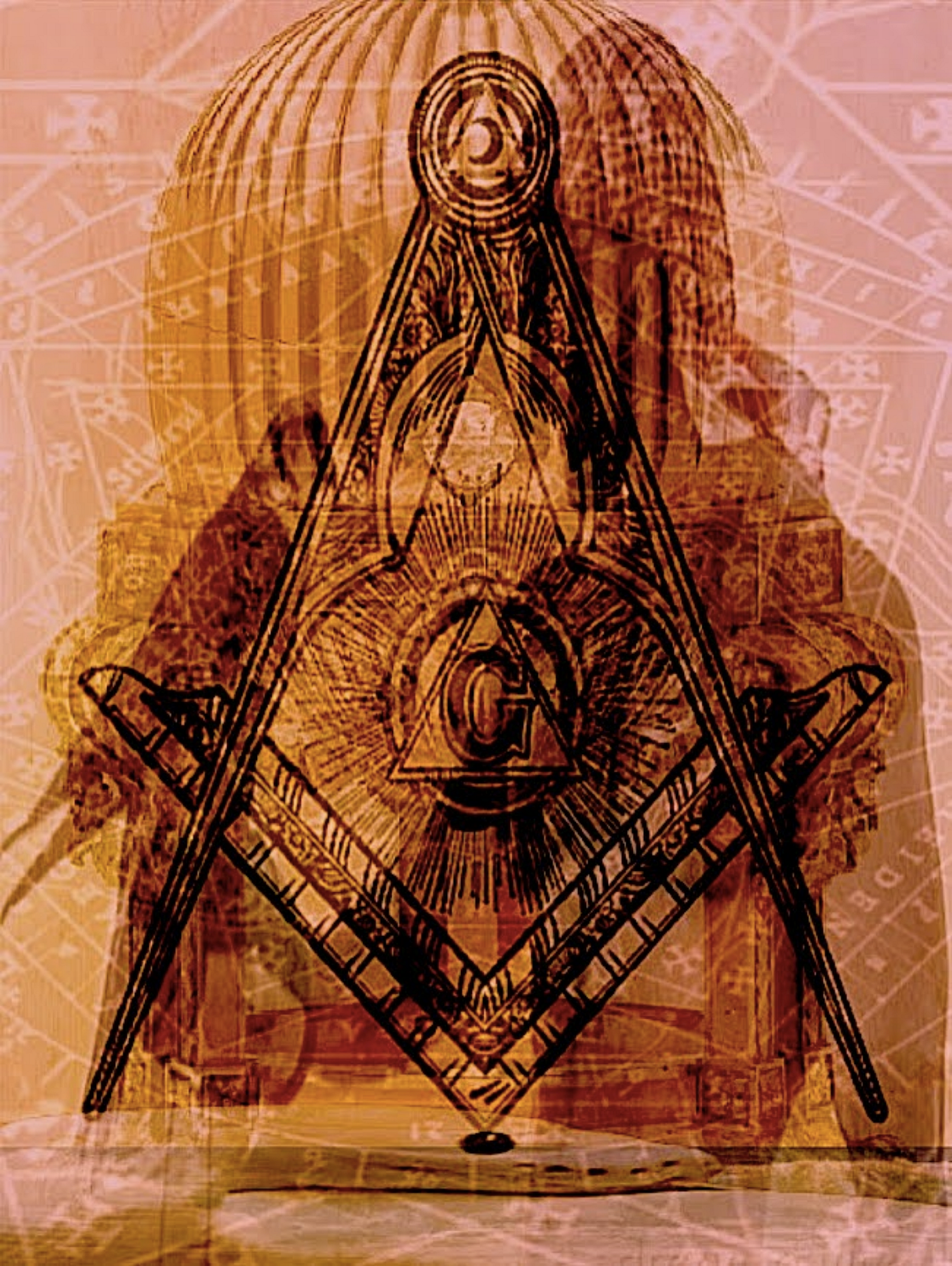
The single most recognizable feature of these works is not the iconography but the surface treatment. Theriault’s compositional method is a palimpsest—the deliberate co-presence of multiple images, none fully resolved. Notre-Dame does not stand in front of the flame; the flame burns through it. Joan does not stand beside the cathedral; she materializes from inside the stone. The Vitruvian figure, when it appears, dissolves into the masonry rather than posing against it.
This ghosted, overwritten quality is achieved through layered digital compositing, intentional pixelation, and a refusal of photographic clarity in favour of symbolic legibility. The technique mirrors the content: esoteric meaning is always layered, always beneath the literal surface. A viewer unfamiliar with the iconography can still identify the work by this surface signature alone.
The palette in this particular collection runs to the luminous register—fire orange, ash grey, ultramarine, ecclesiastical red, and beaten gold. These are the colours of the burning itself, abstracted into permanence.
Why the Collection Speaks to European Collectors
European collectors — particularly in the Nordic countries, Poland, and the Netherlands — inherit a continuous symbolist tradition that the Anglo-American art world largely abandoned in the twentieth century. Hilma af Klint in Sweden, Edvard Munch in Norway, Jacek Malczewski and Stanisław Wyspiański in Poland, and the Dutch theosophical line that fed into Piet Mondrian: these lineages never broke. Sacred geometry, esoteric inheritance, and serious contemporary work were never separated in these cultures the way they were elsewhere.
A burning Notre-Dame reads differently in Kraków, Amsterdam, Reykjavík, and Oslo than it does in cities without that lineage. It is read as a civilizational symbol, as a Catholic and post-Catholic memory at once, as a wound the entire European inheritance shares. Polish collectors bring one frame to the work; Dutch collectors bring another; Icelandic and Norwegian buyers, formed by long winters and contemplative interior cultures, read the pieces as the singular statement work a quiet room is designed around. The collection assumes its viewers are It does not explain itself. For collectors raised inside European symbolic literacy, that refusal is the point.

Notre-Dame de Paris
Living with Notre-Dame: Placement and Scale
These pieces want to be hung alone. The luminous palette and dense iconographic surface mean each work functions as the singular focal point of a room—above a low oak credenza, on a lime-washed plaster wall, behind a dining table, in a library nook. Pair the work with restraint: warm woods, leather, brass, and books on open shelves. Avoid placing the pieces on busy walls or among other strong images. The piece will lose the contest; more importantly, the room will lose its coherence.
Format favours the vertical and the large. A Notre-Dame work at modest scale reads as decoration. At statement scale, it reads as what it is.
Frequently Asked Questions
What is the Notre-Dame de Paris sacred art collection?
The collection is a series of roughly twenty layered digital sacred artworks by Acadian artist Claude Theriault, centred on Notre-Dame de Paris and the 2019 fire. Each piece treats the cathedral as a symbol of civilizational memory rather than as an architectural subject, drawing on Catholic, esoteric, and symbolist traditions in one composition.
Who is the collection made for?
It is made for European collectors—particularly Nordic, Polish, and Dutch buyers—who read art through the symbolist and esoteric traditions native to their cultures. The work assumes symbolic literacy rather than explaining itself, which is why it travels well across European interiors.
What makes these works visually distinctive?
The signature is a ghosted, overwritten surface: multiple images and symbols co-present in one picture plane, none fully resolved. The cathedral, the flame, the figure, and the historical referent all materialize through one another rather than sitting on top of one another. This is the technical fingerprint that identifies a Theriault before the iconography is read.
How are the works produced and made available?
The works are available as print on demand through Pixels in multiple substrates, including fine art paper, canvas, metal, and acrylic, in sizes from intimate to statement format, shipping across Europe.
How should a Notre-Dame piece be displayed in the home?
The piece should be hung alone, at statement scale, on a quiet wall in a room of restrained materials—oak, lime-washed plaster, leather, and brass. The work is designed to function as the single focal point of its space rather than as one image among many on a gallery wall.
메타데이터
- post_id
- 17c79203eaad
- slug
- notre-dame-de-paris-in-sacred-symbolic-art-a-collection-for-european-collectors-17c79203eaad
- url
- https://medium.com/@claudeedwin/notre-dame-de-paris-in-sacred-symbolic-art-a-collection-for-european-collectors-17c79203eaad
- canonical_url
- https://medium.com/@claudeedwin/notre-dame-de-paris-in-sacred-symbolic-art-a-collection-for-european-collectors-17c79203eaad
- author_url
- https://medium.com/@claudeedwin
- status
- ok
- fetched_at
- 2026-08-12 17:13:33