C(OD)E
Huhuhu, I worked on this for four days, from Monday until this afternoon. 😭 I kept revising and rewriting some parts because I wanted…
C(OD)E
"The greatest wealth is health." — Virgil
One lesson that has stayed with me is the idea that every sign has a signifier and a signified. A word is only a collection of letters until we attach meaning to it. The same applies to symbols, sounds, and even colors. They do not inherently mean anything. Instead, they become meaningful because of the experiences, emotions, and contexts we associate with them. Meaning is not fixed. It shifts as our encounters with the world change.
Perhaps that is why colors never remain just colors.
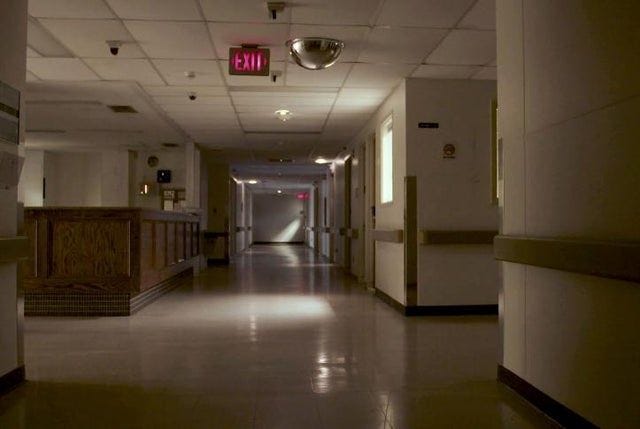
Green can remind someone of hope, while another sees it as the color of hospital curtains. White may symbolize peace in one setting, yet in another, it becomes the color of long nights spent waiting for a doctor to emerge from a room. Even silence changes its meaning. In one place, it offers comfort. In another, it quietly carries uncertainty.
It is strange how we only begin to understand these things after living through them.
Before that night, hospitals existed only on the edges of my life. They were places I visited occasionally, places where people recovered and eventually returned home. Most of what I thought I knew came from films and television. Whenever an emergency scene appeared, it always unfolded the same way. Hurried footsteps. Metal carts racing through hallways. Doctors calling out instructions. Someone shouting,
"Code!"
I often dismissed those moments.
"Movies have to make everything look intense," I would think. "Real life probably isn't like that."
It seemed reasonable to believe that. After all, films are made to capture attention, while reality tends to unfold more quietly.
Our first night in the admission room challenged that assumption.
Nothing extraordinary was happening at first. Nurses moved from one patient to another with practiced familiarity. Some companions rested on plastic chairs while others remained awake, watching monitors or waiting for the next update. The hallway was filled with ordinary sounds. The rolling of medication trolleys. Distant conversations. The rhythmic beeping of machines that gradually became part of the background.
Then, a voice echoed through the corridor.
"Code."
A few moments later,
"Code."
Then once more.
"Code."
Three consecutive calls.
The atmosphere shifted without anyone saying that it had. Medical staff immediately moved with greater urgency, while a metal emergency cart rolled past, its wheels and equipment clattering against the floor. The hallway that had seemed calm only seconds earlier suddenly felt different. Conversations stopped. Eyes followed the direction of the sound. Everyone waited, even without knowing exactly what they were waiting for.
That was when the word code stopped being just another word.
As the night continued, I noticed how often unfamiliar terms floated through the hallways. They were spoken naturally by healthcare workers, almost as if they belonged to another language understood only within those walls. Some were names of medications. Others were abbreviations written on charts or casually mentioned during endorsements.
Among them were two letters I kept hearing.
"OD."
At first, they sounded insignificant, just another abbreviation in a place full of medical shorthand. No one paused to explain them because no explanation was necessary for those who heard them every day.
Only later did I realize that those two letters, much like the word code, carried meanings far beyond themselves. They were not merely part of medical vocabulary. They pointed toward stories, circumstances, and lives that had led people into those hospital rooms. Stories that those passing through the hallway would never fully know.
That was when the lesson about signs returned to me.
Words do not change.
We do.
A word becomes heavier once we have lived through what it signifies.
The same hallway, the same white walls, and the same fluorescent lights looked no different the following morning. Yet they no longer meant the same thing to me.
Perhaps that is how meaning is formed.
Not inside books alone, but in the quiet moments when ordinary words become memories.
And from that night on, every time I encounter the title C(OD)E, I no longer see only a word.
I see the spaces between its letters.
The meanings they quietly carry.
And the stories that remain long after the echoes fade.
메타데이터
- post_id
- 17cbefa62011
- slug
- c-od-e-17cbefa62011
- url
- https://medium.com/@gianmarion2006/c-od-e-17cbefa62011
- canonical_url
- https://medium.com/@gianmarion2006/c-od-e-17cbefa62011
- author_url
- https://medium.com/@gianmarion2006
- status
- ok
- fetched_at
- 2026-07-19 02:03:27