Mental Models
Specialists in cognitive psychology seek to understand how memory works, how the brain stores language, and how impressions are formed…
Mental Models
Specialists in cognitive psychology seek to understand how memory works, how the brain stores language, and how impressions are formed, etc. One of the areas they study is the mental model — what a person believes about how things work.
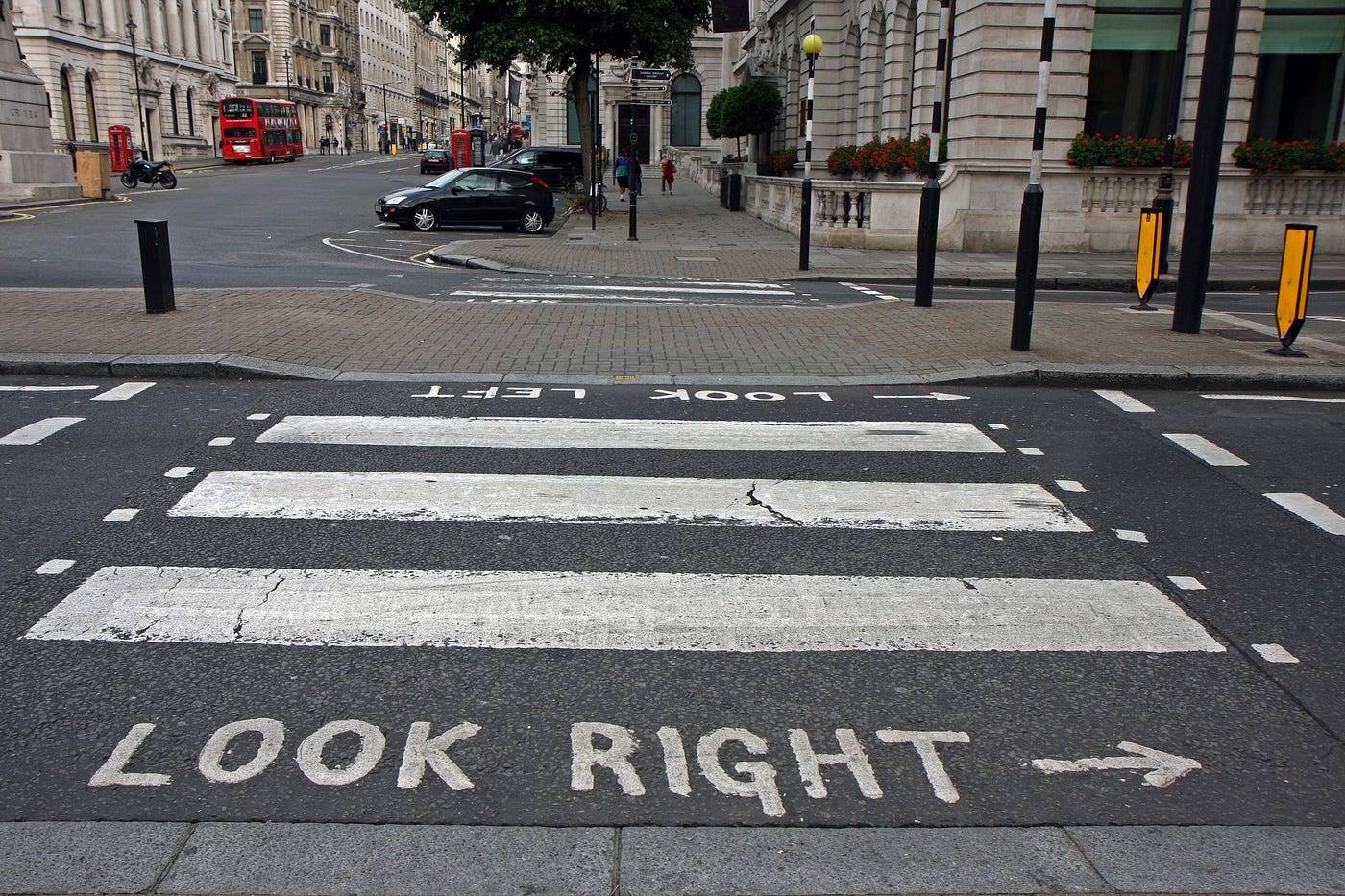
Our perception runs on a mental model programmed to assume that crossing the street usually means looking left first, because in most countries traffic flows on the right-hand side of the road, so pedestrians automatically look left first. But in Britain you’ll notice a message painted on the asphalt at pedestrian crossings in large letters: LOOK RIGHT. Why?
Because many tourists look in the wrong direction and can be involved in accidents when they arrive in places like Britain, Australia, or Malaysia, where traffic comes from the opposite direction. Tourists’ mental models have cemented expectations over many years; these reminders help align people’s behavior with the local traffic system.
ℹ️ Approximately a quarter of the world’s countries drive on the left, like Britain.
The role of a customer/user experience designer is to start by understanding the mental model for interacting with what they are designing, then work to narrow the gap between the target audience’s model and their own. This is why we often struggle with the deliverables of seasoned designers from Western countries — not because they’re bad, but simply because they don’t share the same mental models we do.
💡 Final tip: Don’t assume users share your mental model.
메타데이터
- post_id
- 17ef033a421d
- slug
- mental-models-17ef033a421d
- url
- https://medium.com/@m.sbeai/mental-models-17ef033a421d
- canonical_url
- https://medium.com/@m.sbeai/mental-models-17ef033a421d
- author_url
- https://medium.com/@m.sbeai
- status
- ok
- fetched_at
- 2026-07-17 12:26:46