The Silent Nutrient Thieves: The Cellular Biology of Intestinal Parasites and Chronic Fatigue
How microscopic invaders hijack your metabolism, and the science-backed truth behind natural remedies like garlic and papaya seeds.
The Silent Nutrient Thieves: The Cellular Biology of Intestinal Parasites and Chronic Fatigue
How microscopic invaders hijack your metabolism, and the science-backed truth behind natural remedies like garlic and papaya seeds.
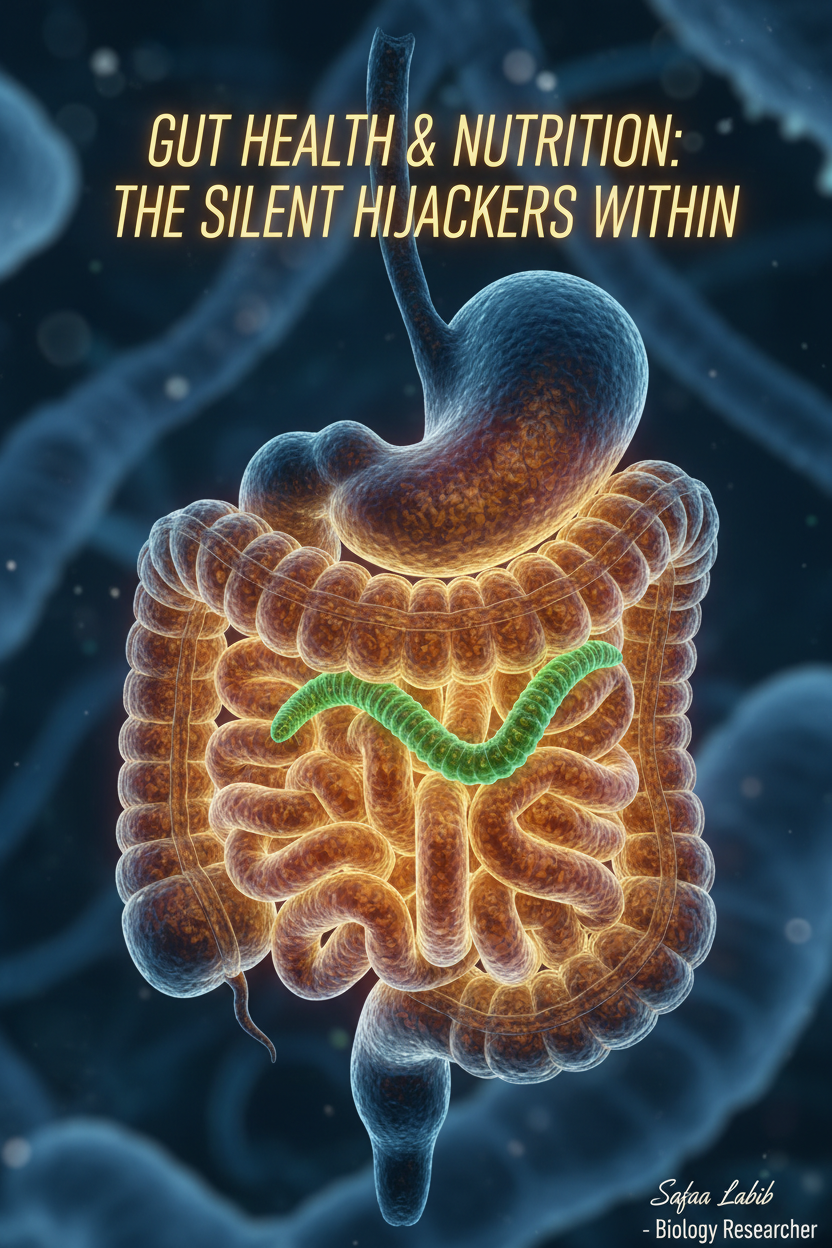
This cinematic 3D rendering visualizes the micro-environment of the human intestinal tract where parasitic pathogens disrupt cellular nutrient absorption. This conceptual educational artwork was generated using Recraft to illustrate the bio-mechanics of gut dysbiosis.
Introduction: Eating for Two (But One is an Invader)
Have you ever felt persistently exhausted, foggy, or nutritionally depleted despite eating a clean, nutrient-dense diet? While modern wellness often blames chronic fatigue entirely on stress or lack of sleep, the root cause sometimes lies deeper within the gastrointestinal tract.
As a biology researcher, I always look at the body as an interconnected ecosystem. Sometimes, fatigue isn’t a failure of your cells; it’s a sign that your nutrients are being stolen before they even reach your bloodstream. Intestinal parasites and helminths (worms) are silent invaders that can inhabit the human gut for years, subtly eroding our metabolic energy and cellular vitality.
The Biological Hijack: How Parasites Steal Your Energy
To understand why intestinal parasites cause profound chronic fatigue, we have to look at the gut's cellular and mucosal levels. They don’t just “eat your food”; they actively disrupt your biochemistry in three distinct ways:
Mucosal Damage and Nutrient Malabsorption
The lining of your small intestine is covered in microscopic, finger-like projections called villi, which maximize nutrient absorption. Parasites physically attach to these villi, causing them to flatten and atrophy. This cellular destruction severely impairs your body’s ability to absorb critical micronutrients — particularly Iron and Vitamin B12. This direct interference leading to iron deficiency anemia and profound physical exhaustion is thoroughly documented in this NCBI Intestinal Parasites and Anaemia Study.
Triggering Systemic Low-Grade Inflammation
The presence of foreign organisms triggers a chronic immune response. The gut immune system releases pro-inflammatory cytokines to fight the invaders. This persistent, parasite-induced low-grade inflammation compromises the intestinal barrier (leading to “leaky gut”). The metabolic cost of maintaining a non-stop immune war drains your ATP (cellular energy) reserves, leaving you feeling chronically drained. The immune mechanisms of this cellular fatigue are detailed in this PubMed Intestinal Inflammation Paper.
Gut Dysbiosis and the Gut-Brain Axis
Parasites alter the pH and chemical environment of the gastrointestinal tract, decimating your beneficial microbiome. This severe dysbiosis alters gut ecosystem dynamics, halting the production of short-chain fatty acids (SCFAs) and neurotransmitters like serotonin, directly causing the mental sluggishness known as “brain fog.”
The Bioactive Power of Garlic and Papaya Seeds: What Science Says
Traditional medicine has long relied on natural remedies to cleanse the gut, and two of the most celebrated anti-parasitic agents are garlic and papaya seeds. But what does the biological data actually say?
- Allicin in Garlic: When garlic is crushed, it releases a potent organosulfur compound called Allicin. In cellular biology, allicin has been shown to inhibit the growth of protozoan parasites. Research shows that allicin disrupts the cysteine proteinases — the exact enzymes parasites need to survive and invade host tissues. The specific antiparasitic efficacy of this compound is documented in this PubMed Allicin Anti-parasitic Research.
- Carpaine in Papaya Seeds: Papaya seeds contain a unique anthelmintic enzyme, papain, and an alkaloid, carpaine. Clinical trials have shown that consuming air-dried papaya seeds significantly clears parasites from stool samples in human subjects, as these compounds help paralyze helminths and break down their protective biofilms. The clinical trial data can be accessed directly at this PubMed Papaya Seed Clinical Trial.
A Traditional Supportive Protocol: Culturally, a blend of crushed raw garlic cloves and a tablespoon of fresh papaya seeds, taken on an empty stomach for three consecutive days, is used to support gut cleansing. Minimizing ultra-processed foods and sugars during this period starves the parasites, enhancing the protocol’s efficacy.
The Medical Guardrail: When Natural Remedies Fail
While integrating bioactive compounds like allicin and papain offers excellent preventative and mild supportive care, a critical biological distinction must be made: Support is not eradication.
In cases of severe parasitic infestations, chronic dysbiosis, or advanced nutrient malabsorption, relying solely on home remedies can be dangerous. Overlooking a heavy parasitic load allows the invaders to continue to compromise your organ systems and deplete your body’s regenerative capacity.
Medical diagnosis via comprehensive stool PCR testing or microscopy is irreplaceable. Broad-spectrum antiparasitic medications (like albendazole or nitazoxanide) are scientifically designed to target the specific cellular structure of the exact parasite infecting you, halting the cycle immediately.
Conclusion: Listen to Your Bio-Signals
Your body is constantly communicating. Chronic post-meal fatigue, bloating, and brain fog are not “normal” signs of aging or hard work; they are bio-signals that your internal ecosystem is out of balance.
Natural remedies are a beautiful, science-backed tool for maintaining gut health and discouraging parasitic colonization. However, true biological recovery requires a balanced, evidence-based approach: respect the wisdom of nature, but never hesitate to deploy the precision of modern medicine when your cellular health demands it.
Scientific Foundations & References
- Intestinal Parasites, Malabsorption, and Iron Deficiency Anemia Study:
- Al-Mekhlafi, M. S., et al. “Severe iron deficiency anemia and malnutrition caused by heavy intestinal parasite infestation: A clinical case analysis.” National Center for Biotechnology Information (NCBI) PMC Archive, PMCID: PMC8640432.
2. Immune Interaction and Microscopic Mucosal Bleeding Paper:
- Fried, B., et al. “The chemical and immunological pathways of host-parasite interactions: Chronic mucosal inflammation and iron loss in gastrointestinal helminthiasis.” NCBI PubMed Central (PMC), PMCID: PMC3336930.
3. Clinical Efficacy of Dried Papaya Seeds Against Intestinal Parasitosis:
- Okeniyi, J. A., Ogunlesi, T. A., Oyelami, O. A., & Adeyemi, L. A. “Effectiveness of dried Carica papaya seeds against human intestinal parasitosis: a pilot study.” Journal of Medicinal Food, PMID: 17472487.
4. Antiparasitic Bioactive Mechanisms of Allicin in Garlic:
- Ankri, S., & Mirelman, D. “Antimicrobial and antiparasitic properties of allicin from garlic: Inhibition of cysteine proteinases in protozoan pathogens.” Microbes and Infection, PMID: 10594976.
Support My Research & Stay Connected
If you found this biological deep dive valuable, I invite you to join my growing community of science-driven readers. My work is dedicated to exploring the intersection of neurobiology, psychoanalysis, and physical health to help you reclaim your Biological Sovereignty.
Subscribe to My Substack: Join the “Biological Sovereignty” newsletter for exclusive research updates, in-depth biological protocols, and nuanced insights delivered directly to your inbox. 👉 **Join the Community on Substack**
Support My Independent Work: If you’d like to fuel my research and help me create more high-quality, evidence-based content, consider supporting me. You can join my paid tiers on 👉 Patreon, or send a direct contribution due to regional subscription limitations via 👉 PayPal.
Connect Professionally: For professional networking, updates on my academic research, and industry discussions, let’s connect on 👉 **LinkedIn**
Explore More: You can find a collection of my published work and curated stories here: 👉 **Safaa Labib on Digitalmehmet**
Thank you for being part of this journey toward mastering your internal ecosystem.
메타데이터
- post_id
- 182f411d565c
- slug
- the-silent-nutrient-thieves-the-cellular-biology-of-intestinal-parasites-and-chronic-fatigue-182f411d565c
- url
- https://medium.com/health-science/the-silent-nutrient-thieves-the-cellular-biology-of-intestinal-parasites-and-chronic-fatigue-182f411d565c
- canonical_url
- https://medium.com/health-science/the-silent-nutrient-thieves-the-cellular-biology-of-intestinal-parasites-and-chronic-fatigue-182f411d565c
- author_url
- https://medium.com/@labibsafaa641
- status
- ok
- fetched_at
- 2026-07-17 17:19:20