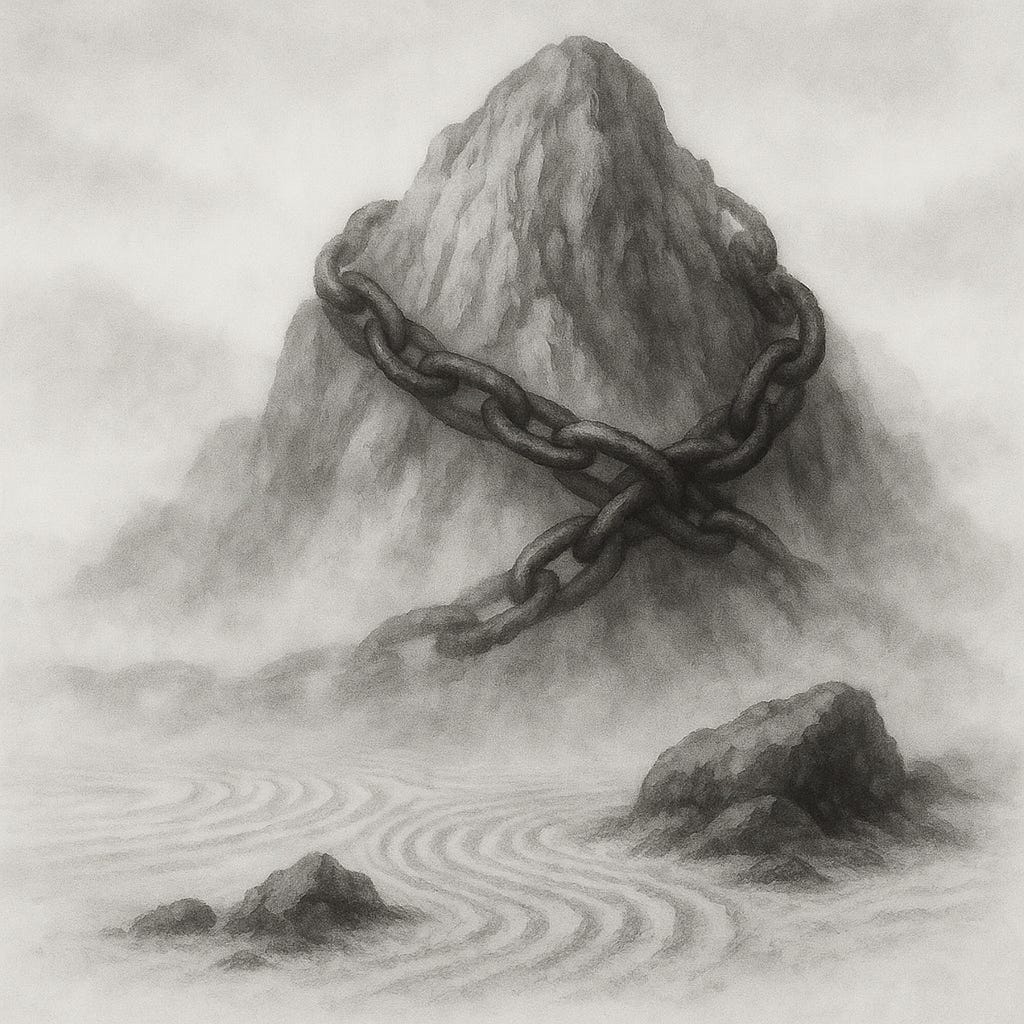
Borders, Ballots, and the Burden of Being a State
Why enforcing sovereignty is not majoritarianism — and why pretending otherwise is dangerous
Borders, Ballots, and the Burden of Being a State

Why enforcing sovereignty is not majoritarianism — and why pretending otherwise is dangerous
People accuse Bharat today of a curious crime: behaving like a country.
Tightening borders, auditing citizenship, cleaning up voter rolls, or scrutinising sensitive institutions attract criticism. And the charge sheet is predictable — majoritarianism, Hindutva, anti-minority. People are quick to deliver labels, often with confidence, and often without curiosity.
Here, I make a simple, unfashionable argument. You do not have to like the BJP to accept that a nation must know who lives within its borders. Or who votes in its elections. Or who operates institutions in sensitive regions. That is not ideology. That is governance.
An Old Problem, Older Than Today’s Politics
Large-scale infiltration from Bangladesh and Myanmar did not begin in 2014. It unfolded over decades, under many governments. And as it was happening, the political class looked away.
The effects are now hard to miss. Border states experienced sharp demographic shifts. Over time, these infiltrators moved deeper into the country. They followed labour markets and political patronage networks. What began as a border issue became a national one.
This is not a religious story. It is a story of administrative neglect catching up with the state.
Demography Is Not a Slur
Demography makes people uncomfortable because it is not discussed with honesty.
Unregulated migration changes local economies, land use, welfare distribution, and political incentives. This is true everywhere, even in India. The earliest casualties are often the weakest. Indigenous communities, informal workers, and even local Muslims. They find themselves undercut and marginalised.
Noticing this does not make one communal. It makes one attentive.
When Democracy Develops Loose Screws
The most damaging consequence of unchecked infiltration is what it does to elections.
Over time, two quiet distortions set in. Some undocumented migrants are eased into the system and rewarded with papers. Others are used for proxy voting in abandoned or deceased identities.
A democracy that cannot vouch for its voters, cannot lecture on democratic virtue. Cleaning electoral rolls is not majoritarianism. It is basic hygiene.
Security Is Allowed to Be Boring
Every large undocumented population creates blind spots. No verified identity. No clear trail. Easy exploitation by criminal and radical networks.
Pointing this out is not prejudice; it is prudence. A state surrounded by hostile neighbours and active insurgencies does not have the luxury of intentional blindness. National security is not a poetry contest. It ought to be dull, procedural, and effective.
The Politics of Permanent Victimhood
A serious conversation also requires confronting an inconvenient habit in Indian politics. The overuse of victimhood.
Over time, opposition parties and the activist ecosystem have learned a mantra. They have figured that framing every enforcement action as persecution is politically beneficial. It shuts down scrutiny, freezes reform, and turns citizenship into an emotional grievance.
The irony is that this does little for ordinary Muslims. It protects intermediaries, not outcomes. A community eternally cast as a victim is denied its rights, and accountability.
Culture, Confidence, and Civilisational Repair
The ecosystem describes Sanatan projects like the Ram Mandir, etc. as aggressive.
A calmer reading helps. As a strategy, colonial rule weakened Sanatan institutions. They did it through education policy, selective history, and administrative division. Independent India inherited much of that intellectual discomfort. The result was a majority community apologetic about its own traditions.
Cultural restoration, then, is less about domination and more about repair. Re-sensitising a society to its roots is not the same as imposing them on others.
Borders Are Not Secular Spaces
Measures such as removing unauthorised madrasas near international borders, mapping funding flows, or collecting intelligence on religious institutions in sensitive zones are often portrayed as targeting faith.
In reality, borders are security instruments, not seminar halls. No state allows opaque institutions to operate unchecked in high-risk areas. Due diligence is not criminalisation. It is responsibility.
Identity Vacuums Have Consequences
For decades, sections of Hindu society treated identity as an embarrassment best kept private. That vacuum came at a cost. It not only led to social drift or loss of confidence, but also led to organised conversion among the most marginalised.
A state that enforces law while allowing cultural renewal is not engineering supremacy. It is strengthening social resilience.
Acting Like a State Is Not a Sin
Calling these policies “majoritarianism” may be satisfying, but it avoids the harder question.
Can a country survive without knowing who enters it, who votes in it, and who operates institutions along its borders?
This is not about the BJP. It is about Bharat deciding whether it wants to remain a functioning state or a well-meaning sentiment.
메타데이터
- post_id
- 182fef84f54b
- slug
- borders-ballots-and-the-burden-of-being-a-state-182fef84f54b
- url
- https://medium.com/@travelure/borders-ballots-and-the-burden-of-being-a-state-182fef84f54b
- canonical_url
- https://medium.com/@travelure/borders-ballots-and-the-burden-of-being-a-state-182fef84f54b
- author_url
- https://medium.com/@travelure
- status
- ok
- fetched_at
- 2026-06-09 15:37:30