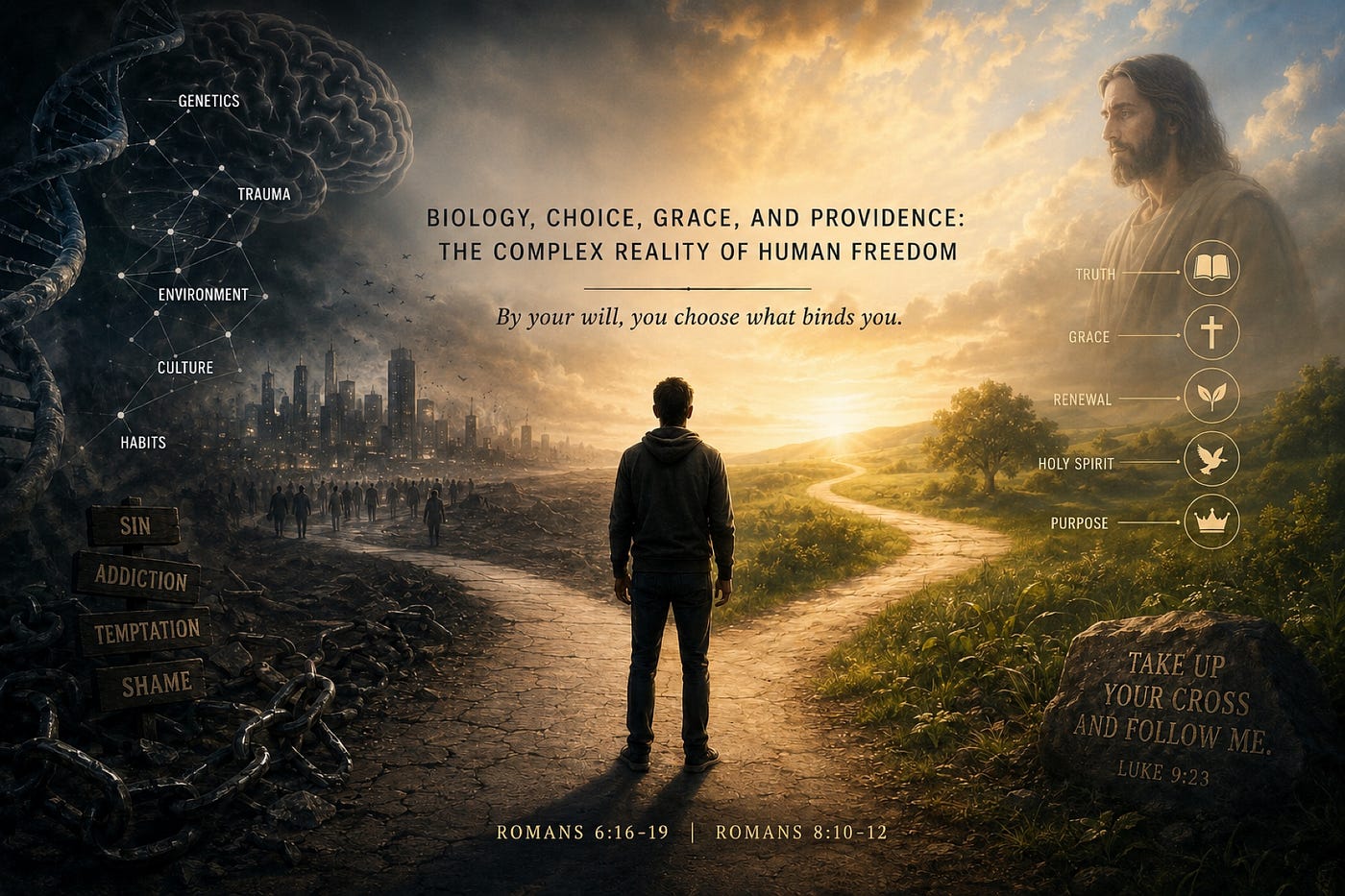
Anthropomorphism and Divine Sympathy
How God’s use of anthropomorphic language in the Old Testament is fulfilled in His becoming Man for us.
Anthropomorphism and Divine Sympathy
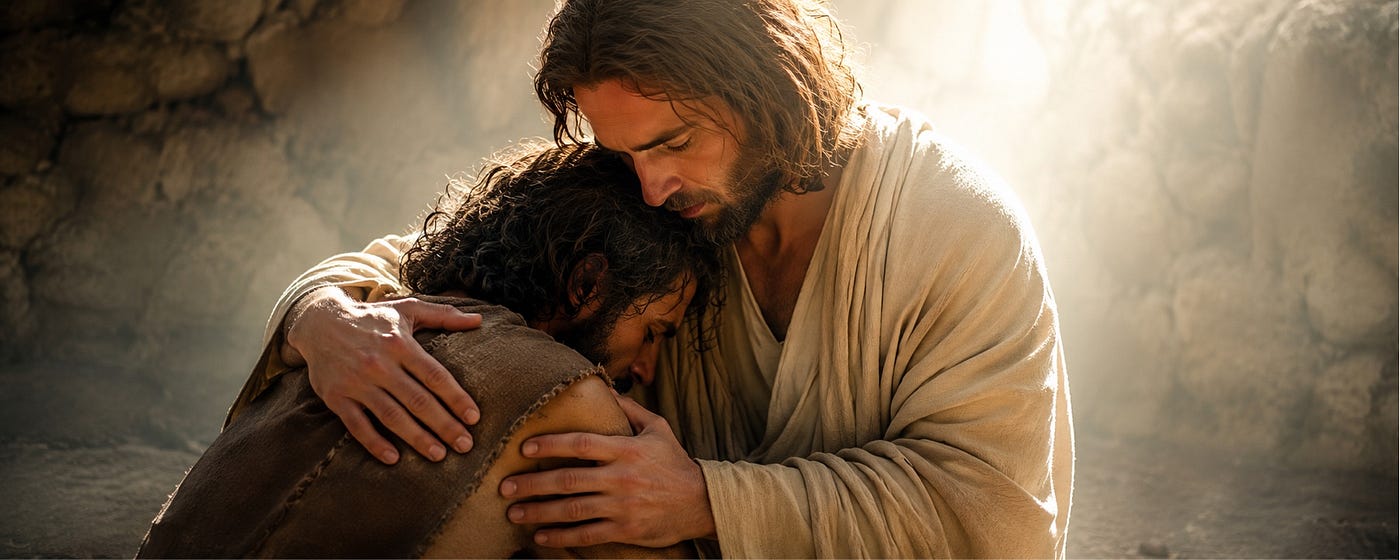
I think one of the greatest illustrations of Divine Sympathy is found in the God-Man, particularly in the story of John 11.
At the death of a dearly-loved friend, Jesus Christ, as a man, wept first, feeling the pain of the reality of death as though He could do nothing about it. As God, He un-did death.
This is highly significant, and very indicative to us that we might know who we are dealing with, both in God & Christ. Because God is not only the judge at the end of all action, or supplier of divine grace in it, but is paraklētos as well: Comforter, Present Companion, who knows exactly where we are and feels what we feel.
This throws more light on the concept of “Anthropomorphism,” by which all through the Old Testament God had been revealing Himself to mankind through the use of human attributes, though in reality His form of being is far greater than anything found in corporeal beings.
“The ears of the Lord…”
“The eyes of the Lord…”
“The Lord repented that He made man,” etc.
A skeptic merely glancing at these might have thought the Judeo-Christian faith, as others, is a made-up one. For the reason that it is common among humans to create gods after its own image.
E.g., because the Greeks were given to sensuality, their gods were behaviorally portrayed as such. And Zeus, who should have been divine (as whatever is called “god” should in reality be transcendent of humanity), is seen to be a lover of women (as men are), or Bacchus (also called Dionysus) is a lover of wine & giver of intoxication: all human traits, found innately in them.
But such is not the case with YHWH, the true God preached by Judeo-Christian belief.
He wasn’t a concept invented by humans, after our human qualities, but He invented all humans. Hence, anthropomorphism in His own case is far different from what any other belief is used to.
This is very note-worthy… ✍🏾
Concerning the Almighty God, first thing one must know about Him is His:
- Omnipotence (being all-powerful)
- Omnipresence (being everywhere)
- Omniscience (being all-knowing)
- Omnibenevolence (being all-good)
And that He is Omniscient, all-knowing, is most-key to us in this discussion.
His Omniscience then unveils to us that all the while God was communicating through us through this language we could accommodate, i.e., Anthropomorphisms, especially in the Old Testament, He was also signifying to us that He had a perfect understanding of the Human experience even though He Himself had never been human.
This is not easily grasped because it takes being relative to something to perfectly understand its condition, and God wasn’t human but He knew us.
I cannot claim to understand what it is to be a mosquito because I have never been one, but I’m also not omniscient as God alone is.
And so, when scripture said “it repented the Lord that He made man,” though not meaning that God changed His mind like us who may make mistakes, it however meant Man’s failure was grievous to His Divine will and He intended to communicate that as this:
“You know how you feel bad when things aren’t going well, I perfectly relate to that, with what man that I created has become.”
And with the prophets, He showed that Israel’s unfaithfulness to Him could be likened to the pain of a cheating spouse, because He knows it, even though as God He is impassible in His own being.
God was saying:
“I made you humans, and I can relate to everything you are feeling just like you feel. I’d use your experiences to make you know things about me.”
And so, even if “The eyes of the Lord” didn’t mean He had optic nerves, it still meant He has insight into all things.
And if “The ears of the Lord” doesn’t mean He has Eustachian tubes, it still remains that He is conscious & aware of everything we say, even to Him as well.
And when He says, “My soul delights,” He teaches us that He is personal, that He perceives and is capable of approving things according to His will.
But the merciful God took His relating to our condition further by extra miles.
“…a body hast thou prepared me.” (Heb. 10:5 & Psa. 40:6 LXX)
This statement concerning Jesus Christ prophesied the Incarnation, where God would have a human body to share our condition experientially.
Just in case you had thought God was simply being poetic when He said, “I know where you are & how you feel,” He validates His perfect knowledge of our Human condition to us by coming to us in the Son, Jesus Christ.
But this knowledge of us predates His human form.
God loves us.
Now, every anthropomorphic description of God not only reveals the divine God’s omniscience and His communication of it to us, but could also literally apply to His being in the form of Man, in the person of Jesus Christ; who had literal eyes in His body that saw & sees us; hands that touched and heals us; ears to hear us; and a heart that delights in us.
Jesus was the paraklētos with the disciples, for which He promised to send ANOTHER which would now be IN us, the Holy Spirit.
He is our High Priest who knows where temptation hits and He holds us up.
Jesus Christ is not only going to judge people at the end of all action, nor only gives us grace to overcome every present trial, but before all these that He does, He is first the person who understands us.
He doesn’t condemn us for the frailty of flesh, and He knows where we are weak.
He also was the one to show us God’s possibilities for us even in these our bodies; and to receive the judgment in His for all we deserve, that we may be eternally free, God proving in a body His long-suffering & willingness to personally remove what troubles us. (Isaiah 43:24–25)
He is God as Man, saying loudly:
“I have become as you are, come and become as I am.”
And this is love.
That being properly understood, let’s expand a little, and adjust semantically a statement I made earlier in the thread:
“…He Himself had never been human.”
Technically speaking, God being eternal means that all that God knows and is, He always knows and has always been.
And since the Word/Son of God would sometime join Himself to flesh, this too was eternally present in God’s knowledge.
[Just the way for Christ’s death, a fact of human history, He is known to be the Lamb slain from the foundation of the world (1 Peter 1:20 & Revelation 13:8).]
It is profound to begin to think on these things because it throws more light on Enoch’s vision of the Son of Man, or David’s testimony of the Lord at God’s right hand, or even Daniel’s vision of Him coming to the Ancient of Days on the cloud in the form of a Man, not merely as future events but eternal truths in a different realm from ours.
Moreover, even in understanding the “image of God” in which Man was made, we find that though Adam’s form in creation was chronologically prior to the Incarnation, God’s knowledge of Christ partaking of that nature was eternally known and, in a manner of speaking, prior to Adam’s forming.
Which means it wasn’t simply that Jesus partook of our human form according to Adam’s image alone, but it is also true that in God’s eternal knowledge, Adam was actually being formed in the image & likeness that God would take.
Of course, God remains far beyond what creation may grasp completely, dwelling in light unapproachable whom no man hath seen or can see: Father, Son, and Spirit.
But we’re talking about the reality of eternal knowledge, and the sense in which what happens temporally in time is simply what God already eternally knows, even concerning us.
And so the point I’m making today is that by God’s omniscience He already comprehends perfectly the human condition, and this pre-dates the Incarnation; which we understand to be His experiential possession of this knowledge.
Therefore His judgments about us are just (even as Paul says in Acts 17:31).
“ Because he hath appointed a day, in the which he will judge the world in righteousness by that man whom he hath ordained; whereof he hath given assurance unto all men, in that he hath raised him from the dead.” — Acts 17:31
Even when He will judge the world, it won’t be the judgment of one who stands aloof from it, but who partook and won.
Conclusion
Finally, what I’m saying in summary is that God knows us entirely, and became us.
Don’t let that go to waste, engage Him in that struggle. Never feel as though you are alone & no one understands you, rely on His own strength & help. He already did everything to prove His love.
“For we have not an high priest which cannot be touched with the feeling of our infirmities; but was in all points tempted like as we are, yet without sin. Let us therefore come boldly unto the throne of grace, that we may obtain mercy, and find grace to help in time of need. ” — Hebrews 4:15 — 16
메타데이터
- post_id
- 186b4fa78d89
- slug
- anthropomorphism-and-divine-sympathy-186b4fa78d89
- url
- https://medium.com/@victoryolaleye/anthropomorphism-and-divine-sympathy-186b4fa78d89
- canonical_url
- https://medium.com/@victoryolaleye/anthropomorphism-and-divine-sympathy-186b4fa78d89
- author_url
- https://medium.com/@victoryolaleye
- status
- ok
- fetched_at
- 2026-06-23 19:38:28