What Is a Concussion?
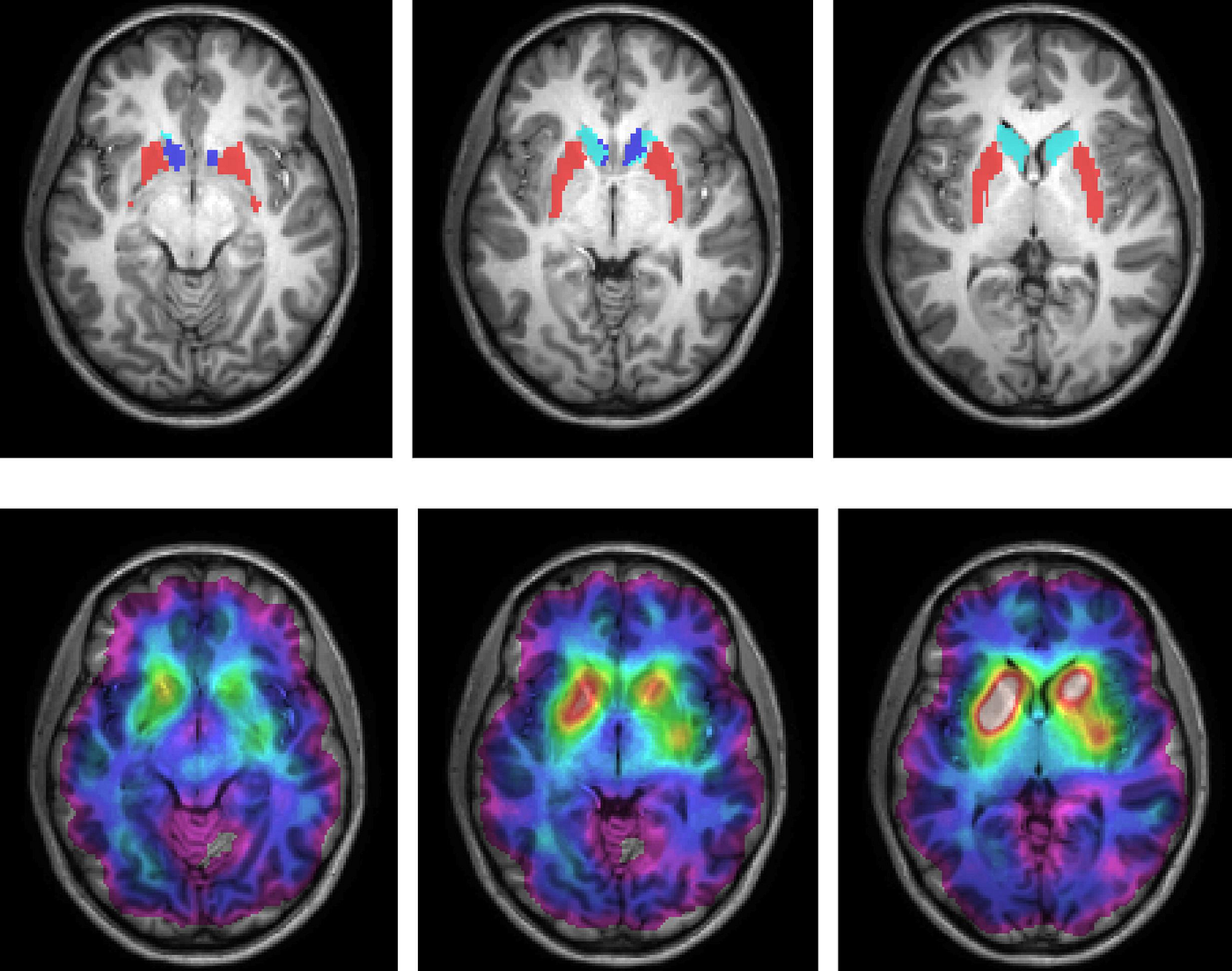
A concussion is a form of mild traumatic brain injury (mTBI). It occurs when a sudden blow, jolt, or rotational force to the head — or…
What Is a Concussion?
A concussion is a form of mild traumatic brain injury (mTBI). It occurs when a sudden blow, jolt, or rotational force to the head — or even to the body — transmits force to the brain, causing it to shift or twist within the skull. Unlike fractures or visible hemorrhages, the damage is generally microscopic: neurons, synapses, and delicate axonal pathways are stretched or sheared. The typical imaging tests (CT, MRI) often appear “normal,” even though the brain’s function is disrupted in the short to medium term.
Because the brain is a highly integrated network, a concussion can transiently impair information processing, movement coordination, balance, autonomic (involuntary) regulation, and cognitive functions.
Key Points
- It is classified as “mild” because it typically doesn’t show gross structural damage on standard imaging, but the functional impact can still be significant.
- The injury triggers a cascade of biochemical, metabolic, and vascular changes that can extend well beyond the moment of impact.
- In many cases, symptoms resolve in days to weeks, but in a subset of people they persist and evolve into more complex syndromes.
What Is Dysautonomia?
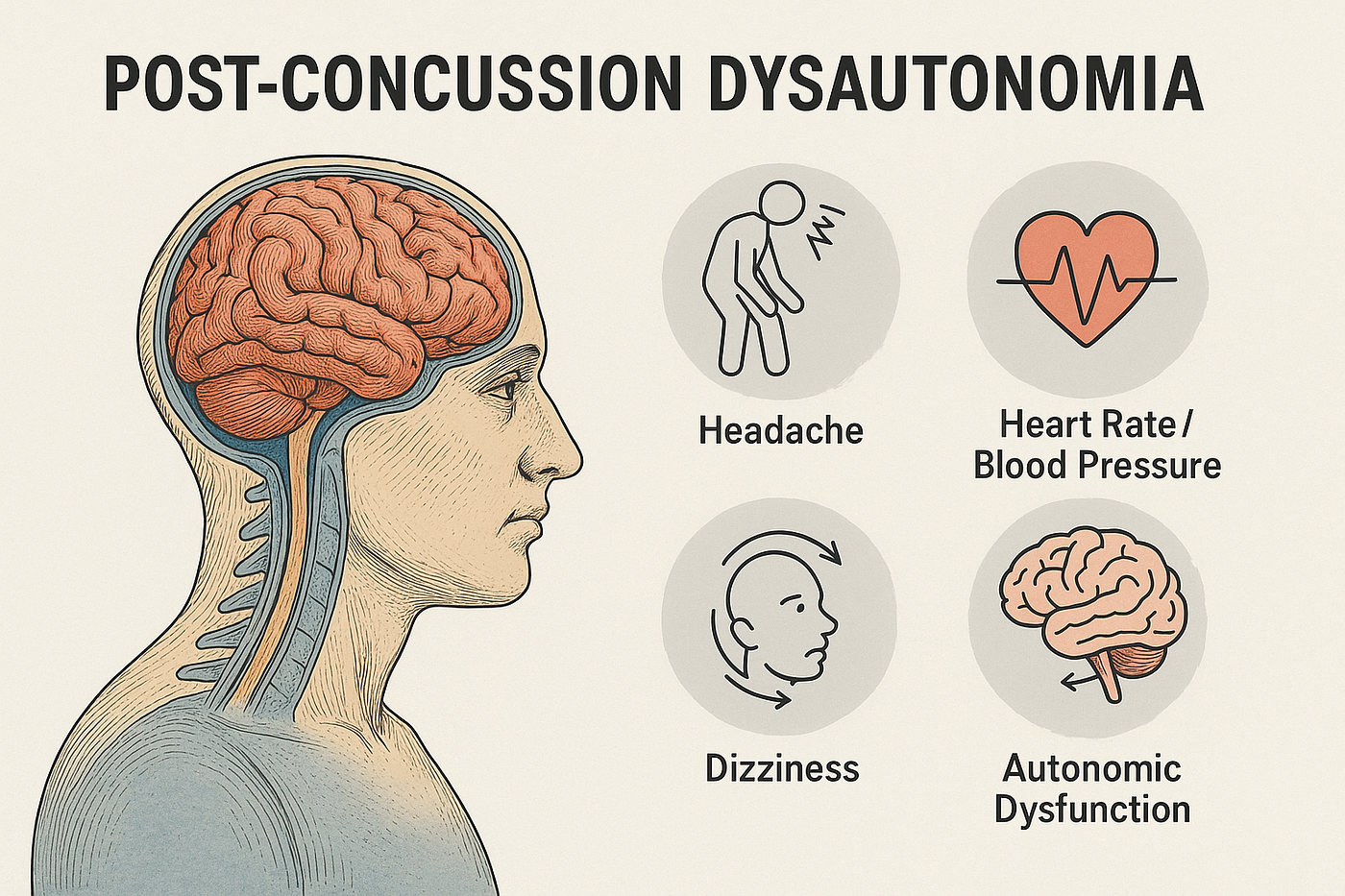
The term dysautonomia refers to dysfunction of the autonomic nervous system (ANS) — the system that regulates the automatic functions of the body: heart rate, blood pressure, digestion, breathing, pupil responses, and blood flow distribution, among others.
In healthy physiology, the ANS smoothly balances its two branches:
- Sympathetic (“fight or flight”)
- Parasympathetic (“rest and digest”)
When this balance is lost, symptoms can include:
- Dizziness, lightheadedness, or feeling faint (especially when standing)
- Rapid heart rate on standing
- Fatigue, brain fog
- Shortness of breath
- Gastrointestinal dysregulation
- Fluctuations in blood pressure or temperature regulation
In short, the body loses some of its ability to automatically adapt to internal or external stressors.
Why Do Some People Develop Dysautonomia After Concussion — and Others Don’t?
Post-concussive dysautonomia doesn’t arise in everyone. The emergence of autonomic dysfunction depends on a complex interplay of factors:
FactorExplanationInjury location & severityImpacts to the brainstem, cerebellum, insula, or midline regions may more readily affect autonomic circuits.Pre-existing vulnerabilityUnderlying autoimmune tendencies, connective tissue laxity, metabolic or mitochondrial weakness, etc.Neuroimmune responseThe individual inflammatory and immune reaction to injury can amplify or perpetuate dysfunction.Recovery environmentSleep quality, nutrition, paced activity, psychological stress, and rehabilitative support influence whether the brain can repair and re-stabilize.
In some cases, the brain “rebounds” quickly, reestablishing homeostasis. In others, a maladaptive cascade takes hold: disrupted brain circuits, persistent inflammation, and impaired oxygen / energy delivery.
Common Forms of Post-Concussion Dysautonomia
Here are syndromes that often overlap or co-occur after concussion:
- POTS (Postural Orthostatic Tachycardia Syndrome): heart rate increases by ≥30 bpm (or more, adjusted for age) on standing
- Orthostatic Hypotension: blood pressure falls when standing
- Neurally Mediated Syncope: fainting due to reflex dysfunction
- Exercise Intolerance / Post-Exertional Malaise
In fact, exercise intolerance is a commonly reported hallmark of lingering concussion symptoms, and is increasingly linked in the literature to autonomic dysfunction. PubMed+2Lippincott Journals+2
Brain Regions Involved in Autonomic & Motor Integration
To understand why concussion can precipitate dysautonomia, here’s a map of the relevant neuroanatomy:
- Eye movement control: frontal eye fields, parietal cortex, brainstem gaze centers, cerebellum
- Balance & vestibular integration: vestibular nuclei in the brainstem, cerebellar nodulus/uvula, parietal-insular cortex
- Autonomic regulation: brainstem nuclei (e.g. nucleus tractus solitarius, vagal motor nuclei), hypothalamus, insula, basal ganglia
- Integration hubs: cerebellum and basal ganglia help fine-tune coordination and autonomic tone
Because these circuits are tightly interconnected, disruption in one domain (e.g. vestibular, eye movement) can “bleed” into autonomic instability.
Oxygen, Blood Flow, and the Autonomic Challenge
Although the brain represents just ~2% of body mass, it consumes ~20% of oxygen. Post-concussion dysautonomia often implicates mismatches in oxygen delivery:
- Central causes: impaired neurovascular coupling, loss of cerebral autoregulation, brainstem injury
- Peripheral causes: vascular constriction errors, autonomic nerve damage, pooling of blood in the legs
One illustrative scenario is a concussion injuring brainstem autonomic nuclei (central), combined with POTS-like peripheral blood pooling.
The Upright Challenge
Humans are unique among many animals in that we habitually maintain an upright posture. To keep the brain perfused when standing, we rely on baroreflexes, brainstem circuits, and cerebellar modulation. After a concussion, these safeguards may falter, making posture more of a “stress test” for the autonomic system.
Cerebral Autoregulation & Neurovascular Coupling
- Cerebral autoregulation: maintains roughly constant cerebral blood flow despite fluctuations in systemic blood pressure
- Neurovascular coupling: delivers extra blood to brain regions when they become active
After concussion, both these systems may be impaired, contributing to dizziness, fatigue, and “brain fog.”
Inflammation, Microglia & the Neuroimmune Response
Microglia are the brain’s resident immune cells. After a concussion:
- They activate rapidly.
- Sometimes they remain in a state of low-grade chronic activation, releasing cytokines and inflammatory mediators.
- These mediators can disrupt autonomic circuits and disturb vascular regulation.
Thus, a sustained neuroinflammatory state may be one of the bridges linking concussion to long-term autonomic dysregulation.
Diet, Immune Modulation & Recovery
Nutrition and immune modulation can influence recovery trajectories. Some observations:
- Processed sugars, oxidized oils, allergenic proteins may exacerbate neuroinflammation
- Diets high in omega-3 fatty acids, polyphenols, antioxidants, and whole foods may help calm microglia and support vascular and autonomic balance
- Sleep, stress management, and gut health may also influence systemic and neural inflammation
These are often adjunctive strategies — not cures — but they may tip the balance toward recovery rather than chronic dysfunction.
Testing for Dysautonomia After Concussion
Here are assessments commonly used to evaluate autonomic and integrative dysfunction:
TestPurpose / What It ProbesEye movement & balance testingReveals dysfunction in cerebellar, basal ganglia, or brainstem circuitsOrthostatic vital signsMonitor HR / BP changes lying → sitting → standingValsalva maneuverChallenges baroreflex and vagal toneDeep breathing testsAssess parasympathetic flexibilityIsometric handgrip testProbes sympathetic drivePupillometryTests brainstem / autonomic reactivity
These tests help localize dysfunction along the neuraxis — from cortical to brainstem circuits — and guide clinicians in mapping the problem.
The Metabolic Cascade of Concussion
Concussions initiate a multi-stage metabolic cascade:
- Sudden ionic shifts, glutamate release → excitotoxic stress
- Mitochondrial dysfunction → ATP shortage
- Impaired cerebral blood flow → mismatch between supply and demand
If not resolved, the brain remains in a state of metabolic instability, which can fuel lingering symptoms such as dysautonomia, fatigue, and cognitive slowness.
Rehabilitation, Neuroplasticity & Recovery
The hopeful part: the brain is plastic, adaptable, and responsive to the right stimuli. Targeted rehabilitation strategies can help rewire and recover:
- Eye movement therapy / oculomotor rehab → reinforces brainstem-cerebellar circuits
- Vestibular therapy → recalibrates balance and autonomic responses
- Multisensory (sound / vision) stimulation → supports integrative circuits
- Cognitive & dual-task training → enhances resilience under stress
- Neuromodulation (e.g. light, electrical, vibration) → potentially enhances connectivity, mitochondrial health, and neurovascular coupling
Behavioral stabilization (sleep, pacing, nutrition, stress regulation) forms the foundation on which these more targeted interventions build. MDPI
Centers around the world are continuously refining diagnostic approaches and treatment protocols, integrating cutting-edge research with clinical experience. The goal is not just symptom control — it is restoration of resilience, function, and quality of life after concussion and dysautonomia.
References & Suggested Further Reading
- Pertab J, et al. Concussion and the autonomic nervous system. PMC. PMC
- Pelo R, et al. Autonomic dysfunction and exercise intolerance in concussion: a scoping review. Clin Auton Res (2023). SpringerLink+1
- Miranda NA, et al. Activity and exercise intolerance after concussion. J Neurol Phys Ther (2018). Lippincott Journals
- JL Pertab, et al. Concussion, Autonomic, Immune, and Endocrine interactions. MDPI review (2025). MDPI
- Pathmanathan K, et al. Cardiac autonomic dysfunction post-concussion. (2025).
메타데이터
- post_id
- 188d2cdbadfa
- slug
- what-is-a-concussion-188d2cdbadfa
- url
- https://medium.com/@dr.traster/what-is-a-concussion-188d2cdbadfa
- canonical_url
- https://medium.com/@dr.traster/what-is-a-concussion-188d2cdbadfa
- author_url
- https://medium.com/@dr.traster
- status
- ok
- fetched_at
- 2026-08-07 07:36:35