Buddha’s 7 M Philosophy for a Balanced and Intentional Life
How mastering seven everyday disciplines leads to clarity, balance, and inner peace
Buddha’s 7 M Philosophy for a Balanced and Intentional Life
How mastering seven everyday disciplines leads to clarity, balance, and inner peace
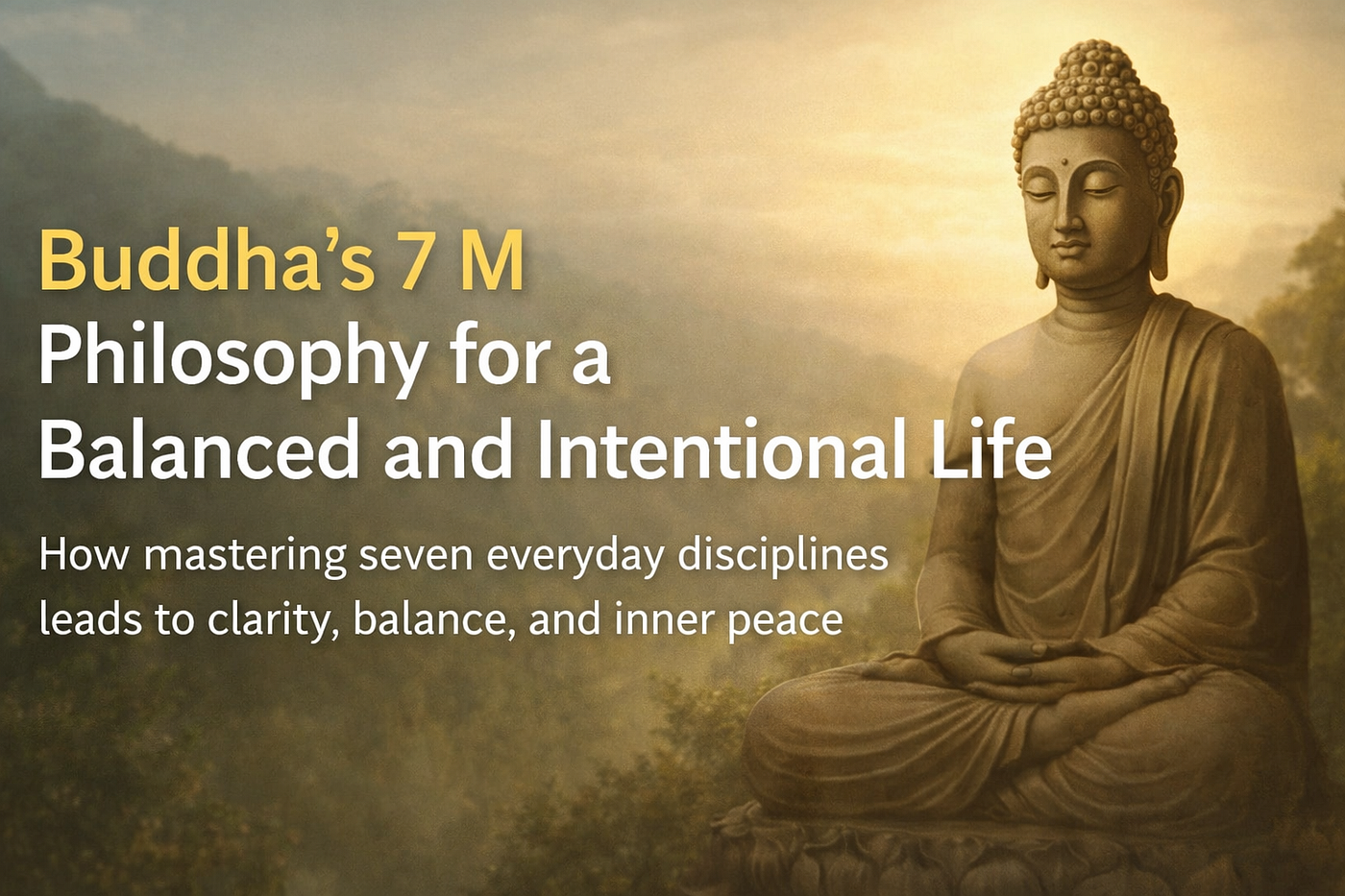
Buddha’s 7 M Philosophy for a Balanced and Intentional Life (Image generated by AI - ChatGPT)
Most people move through life trying to control outcomes. They try to control success, relationships, health, money, and even how others behave. When things do not go their way, frustration follows. Ancient wisdom, however, points in a very different direction.
Buddha never spoke about controlling the world. He spoke about understanding the self. He taught that peace does not come from forcing life to cooperate, but from mastering the small, repeatable elements that quietly shape human behavior.
What later came to be described as the 7 M is not a religious rulebook or a rigid philosophy. It is a practical framework rooted in observation of daily life. It suggests that clarity and balance are not found in dramatic change, but in gentle discipline.
The idea is simple yet demanding. If you learn to manage the mind, the mouth, the moves you make, the way you begin your morning, the food you eat, the money you handle, and the mood you carry, life gradually stops feeling chaotic. It begins to feel intentional.
The Mind: The First Gate of Control

The Mind: The First Gate of Control (Image generated by AI - ChatGPT)
Everything begins in the mind because the mind interprets reality before you ever respond to it. A delay becomes rejection. Silence becomes judgment. A small mistake becomes a personal failure.
The mind fills gaps with stories, often shaped by fear and memory rather than truth. When left unchecked, it pulls attention into the past or pushes it anxiously into the future.
Buddha taught awareness of thought, not suppression of it. The goal is not to silence the mind, but to observe it without obedience. When a negative thought arises, noticing it creates distance. That distance weakens its authority.
Over time, the mind stops reacting automatically and begins responding thoughtfully. This single shift changes how you experience stress, conflict, and uncertainty.
A managed mind does not eliminate problems. It prevents problems from multiplying internally. Peace begins there.
The Mouth: Speech as a Form of Responsibility

The Mouth: Speech as a Form of Responsibility (Image generated by AI - ChatGPT)
Words feel light because they vanish quickly, yet their impact lingers. Many relationships break not because of betrayal, but because of careless speech spoken in moments of emotion.
Buddha emphasized right speech for this reason. Not all truth needs to be spoken immediately, and not all honesty is helpful when delivered without awareness.
Managing the mouth means understanding that words shape trust. When you pause before speaking, you give clarity a chance to catch up with emotion.
Silence, when chosen wisely, often protects more than explanation. Over time, restraint builds credibility. People listen more carefully because they know your words are considered, not impulsive.
Speech guided by awareness strengthens relationships and protects your own inner stability.
The Moves: Action as Daily Commitment

The Moves: Action as Daily Commitment (Image generated by AI - ChatGPT)
Life is not built by intention alone. It is built by action repeated quietly over time. Buddha taught that right action matters because behavior shapes character. The moves you make when motivation fades reveal who you are becoming.
People often wait for inspiration, not realizing that consistency creates inspiration. Small actions done daily hold more power than occasional bursts of effort.
Choosing discipline over comfort, even in ordinary moments, slowly aligns life with values. What once felt difficult becomes natural. Identity follows action.
Progress hides in repetition. Those who understand this stop searching for shortcuts.
The Morning: Where the Day Learns Its Rhythm
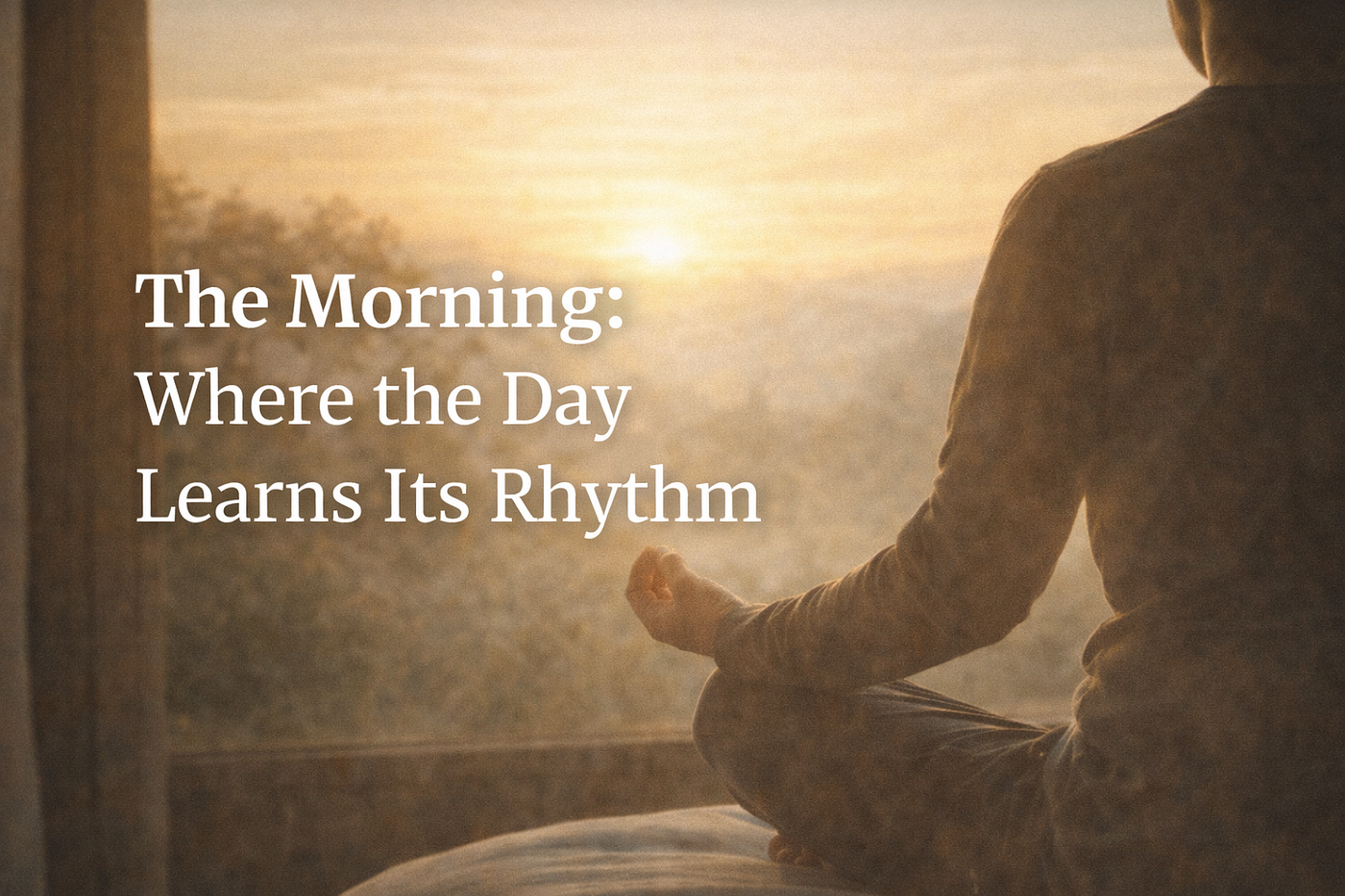
The Morning: Where the Day Learns Its Rhythm (Image generated by AI - ChatGPT)
How the day begins influences how it unfolds. When mornings start in urgency and distraction, the nervous system remains on edge. When mornings begin with intention, even briefly, the day feels more manageable.
Buddha emphasized mindfulness at the start of each day because awareness sets the tone for perception.
Owning the morning does not require complexity. It requires presence. Taking a moment before screens and obligations teaches the mind that life is not an emergency. This small practice reduces reactivity and improves focus throughout the day.
A calm beginning creates space for wiser choices later.
The Meals: Nourishment Beyond Hunger

The Meals: Nourishment Beyond Hunger (Image generated by AI - ChatGPT)
Food influences more than physical health. It affects mood, energy, and clarity. When eating becomes rushed and unconscious, the body responds with imbalance. Buddha taught moderation and awareness in consumption, not restriction.
Managing meals means eating with respect for the body. It is a reminder that well-being is not postponed to the future. When nourishment is intentional, energy stabilizes. Emotional volatility decreases. The body feels supported rather than neglected.
Care for the body strengthens care for the mind.
The Money: Attachment and Awareness

The Money: Attachment and Awareness (Image generated by AI - ChatGPT)
Money often carries emotional weight that extends beyond its function. Fear, pride, insecurity, and desire become entangled with it. Buddha spoke about attachment because clinging creates suffering. This applies directly to money.
Managing money does not mean rejecting comfort or wealth. It means clarity. Knowing where money goes, why it goes there, and whether it aligns with values. When spending and saving are conscious, anxiety softens. Money becomes a tool rather than a source of constant tension.
Financial awareness supports emotional peace.
The Mood: Emotional Climate of Life

The Mood: Emotional Climate of Life (Image generated by AI — ChatGPT)
Mood colors experience. A restless mood amplifies problems. A steady mood creates resilience. Buddha emphasized emotional regulation because unchecked emotions distort perception.
Managing mood does not mean suppressing feelings. It means observing them without letting them dictate behavior. Recognizing when fatigue masquerades as anger or insecurity hides behind criticism changes how long emotions linger.
A stable mood attracts calm interactions and thoughtful decisions. Over time, emotional consistency becomes quiet strength.
The Quiet Power of the 7 M
The Quiet Power of the 7 M (Image generated by AI — ChatGPT)
The wisdom of Buddha’s 7 M lies in its simplicity. None of these disciplines require dramatic change or external permission. They are accessible daily. When ignored, they quietly erode quality of life. When practiced with care, they quietly build it.
You do not need a new identity or a different life. You need awareness of what you already touch every day. Control the small things with intention, and the larger pieces of life stop feeling so uncontrollable.
Peace grows not from force, but from understanding.
Editor: Wandering Mind
메타데이터
- post_id
- 1942b6d7fffa
- slug
- buddhas-7-m-philosophy-for-a-balanced-and-intentional-life-1942b6d7fffa
- url
- https://medium.com/write-a-catalyst/buddhas-7-m-philosophy-for-a-balanced-and-intentional-life-1942b6d7fffa
- canonical_url
- https://medium.com/write-a-catalyst/buddhas-7-m-philosophy-for-a-balanced-and-intentional-life-1942b6d7fffa
- author_url
- https://medium.com/@amitkumar2211
- status
- ok
- fetched_at
- 2026-07-14 06:20:57