Expanding Multi-Channel Synchronized AWGs for Complex MIMO and Quantum Computing Tests
In the realms of cutting-edge research and advanced technology development, multi-channel synchronized Arbitrary Waveform Generators (AWGs)…
Expanding Multi-Channel Synchronized AWGs for Complex MIMO and Quantum Computing Tests
Arbitrary Wave Function Generator Market | @360iResearch
In the realms of cutting-edge research and advanced technology development, multi-channel synchronized Arbitrary Waveform Generators (AWGs) have become indispensable tools. Their ability to precisely generate complex, customizable signals across multiple channels simultaneously has opened new frontiers in fields like multiple-input multiple-output (MIMO) communication systems and quantum computing. As these technologies grow increasingly sophisticated, the demand for expansive and highly synchronized AWG systems that can handle intricate signal patterns with exceptional timing accuracy has surged.
Understanding the Role of AWGs in MIMO and Quantum Computing
Arbitrary Waveform Generators-devices that create custom electrical waveforms-are critical in simulating and testing complex signal environments. In MIMO systems, for example, AWGs enable engineers to emulate the exact transmission and reception conditions across multiple antennas. This is crucial for developing reliable wireless communication networks where data throughput, latency, and signal integrity are paramount.
Similarly, in quantum computing, where quantum bits (qubits) are manipulated through precise pulses of electromagnetic signals, AWGs facilitate the crafting of these pulses with extreme fidelity and timing precision. This capability is essential to minimize errors and decoherence in quantum operations, pushing the envelope of what quantum processors can achieve.
The Shift Toward Multi-Channel Synchronized AWGs
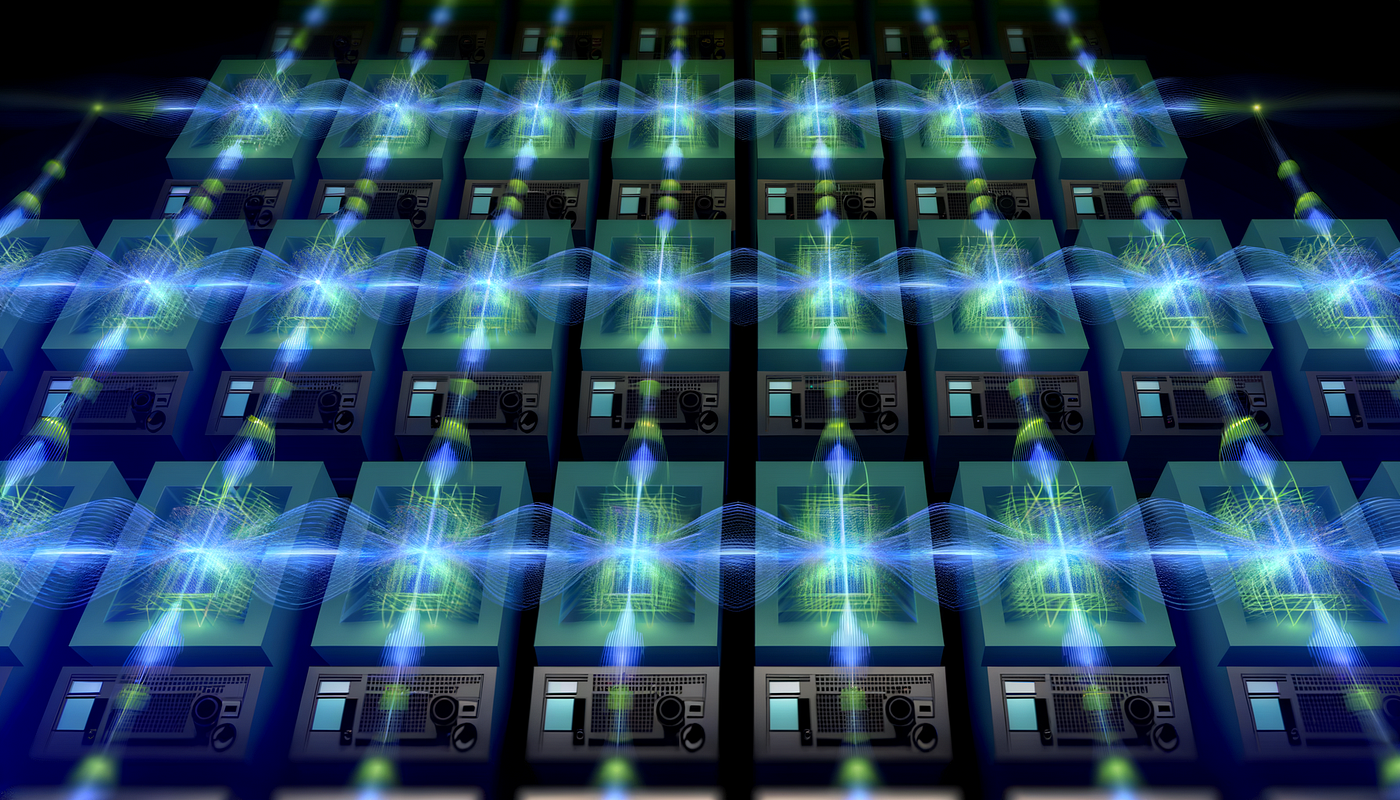
A single-channel AWG can only output one signal at a time, restricting its ability to replicate the complexity of real-world multi-path or multi-qubit systems. Multi-channel AWGs break this limitation by allowing multiple channels to operate in perfect synchronization. This synchronous operation is vital for generating signals that need to maintain strict phase and timing relationships-such as those in phased array antennas or simultaneously operated qubits.
Moreover, expanding the channel count extends the capability to test more complex systems concurrently. This expansion translates to improved productivity, reduced testing times, and better system performance evaluation.
Challenges in Scaling Multi-Channel AWGs
Despite their benefits, scaling multi-channel AWGs is not without challenges. Maintaining synchronization across many channels necessitates sophisticated clock distribution and timing control mechanisms. Jitter, skew, and phase noise must be minimized to preserve signal integrity.
Hardware design grows increasingly complex as channel count rises; engineers must optimize the generator’s architecture to balance size, power consumption, and cooling requirements. Additionally, software that controls the AWG must handle intricate waveform programming, channel alignment, and real-time adjustments seamlessly.
Innovations Driving AWG Expansion
Recent developments in electronics and firmware design have enabled more robust and scalable multi-channel AWG platforms. High-speed digital-to-analog converters (DACs) with greater resolution are combined with ultra-low jitter clock sources to enhance waveform quality. Modular hardware designs allow users to add or remove channels based on experimental needs, providing flexibility and cost efficiency.
On the software front, integrated environments now offer advanced waveform synthesis, automatic calibration, and synchronization tools. These software innovations simplify the setup and execution of complex tests, empowering engineers to focus more on system design rather than instrument configuration.
Applications in Complex MIMO Systems
For MIMO wireless systems evolving for 5G and beyond, higher channel counts in AWGs facilitate the emulation of dense multi-antenna arrays. This capability helps researchers investigate novel beamforming techniques and interference management strategies with unprecedented accuracy.
Synchronizing multiple channels with exact phase control allows precise emulation of signal propagation delays and phase shifts occurring in real-world environments. Consequently, system designs can be optimized for performance metrics such as spectral efficiency, throughput, and reliability before physical deployment.
Quantum Computing Testing
Quantum bits require intricate control via microwave and radio-frequency signals orchestrated with picosecond timing resolution. Expanded multi-channel AWGs enable simultaneous control of multiple qubits, facilitating complex quantum gate operations and error correction schemes.
As quantum processors scale to dozens or hundreds of qubits, multi-channel synchronized AWGs will be central to characterizing and debugging these systems. The precise, coherent waveform generation helps researchers minimize decoherence and crosstalk-two of the biggest challenges limiting practical quantum computing.
Future Outlook and Industry Impact
The expansion of multi-channel synchronized AWGs is poised to accelerate breakthroughs not only in telecommunications and quantum computing but also in radar systems, medical imaging, and electronic warfare. Developers who invest in scalable, high-performance AWG solutions gain a competitive advantage by reducing time-to-market for new technologies.
Advancements in machine learning and artificial intelligence integration with AWG control systems promise even greater adaptability and automated optimization in complex test environments. As a result, these sophisticated instruments will become more user-friendly and accessible to a broader spectrum of researchers and developers.
Conclusion
Expanding multi-channel synchronized Arbitrary Waveform Generators is a critical evolution to meet the demanding requirements of complex MIMO systems and emerging quantum computing platforms. These enhanced AWGs provide the fidelity, timing precision, and scalability essential for pushing the boundaries of innovation. By overcoming synchronization and hardware challenges through modern engineering and software advances, multi-channel AWGs are transforming how experiments and product development in these fields are conducted.
For professionals engaged in wireless communication, quantum research, or any area requiring intricate signal generation and testing, understanding and leveraging these expanded AWG systems will be a key enabler of future success and technological breakthroughs.
Explore Comprehensive Market Analysis of Arbitrary Wave Function Generator Market
SOURCE — @360iResearch
메타데이터
- post_id
- 196a1f9dda67
- slug
- expanding-multi-channel-synchronized-awgs-for-complex-mimo-and-quantum-computing-tests-196a1f9dda67
- url
- https://medium.com/@pranali.baderao/expanding-multi-channel-synchronized-awgs-for-complex-mimo-and-quantum-computing-tests-196a1f9dda67
- canonical_url
- https://medium.com/@pranali.baderao/expanding-multi-channel-synchronized-awgs-for-complex-mimo-and-quantum-computing-tests-196a1f9dda67
- author_url
- https://medium.com/@pranali.baderao
- status
- ok
- fetched_at
- 2026-07-11 16:48:19