Need HIPAA-Compliant AI Medical Scribe Platform? Start With These Top Development Companies
AI technology is becoming more popular among healthcare companies across the globe as a way to optimize the process of documentation as…
Need HIPAA-Compliant AI Medical Scribe Platform? Start With These Top Development Companies
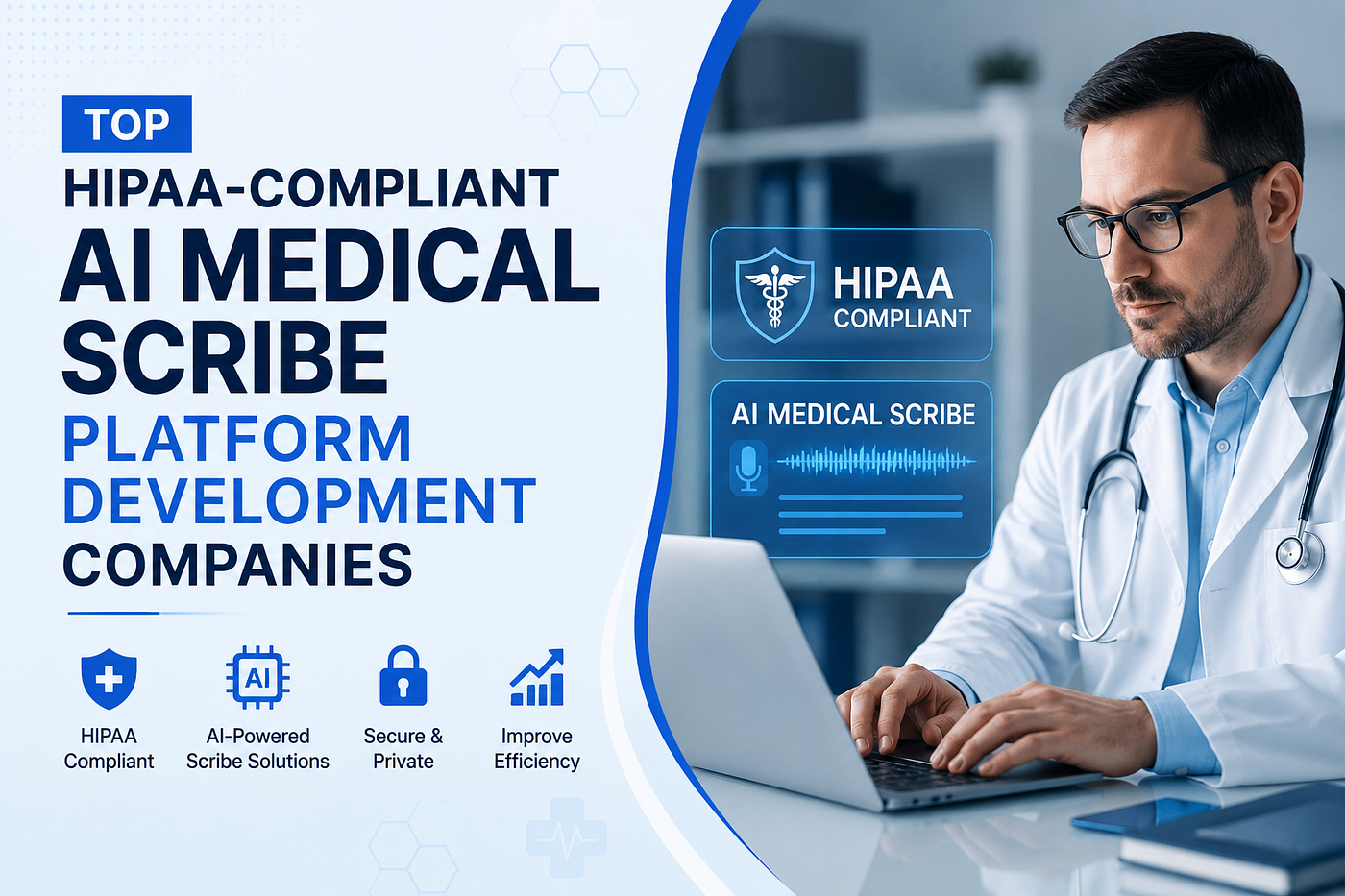
AI technology is becoming more popular among healthcare companies across the globe as a way to optimize the process of documentation as well as to improve the performance of physicians. Overload of the administrative part, high burnout rate among physicians, and the need to document all visits become the drivers for implementing AI solutions for the purpose of solving medical transcription needs of healthcare organizations. According to the representatives of the market, there is impressive growth in the sphere of AI in healthcare because the healthcare institutions are looking for ways of increasing efficiency while remaining compliant. AI-enabled medical transcriptionists can easily transcribe all interactions between a physician and a patient and put the outcomes into an electronic health record..
Why Healthcare Organizations Are Investing in AI Medical Scribe Software Development
Healthcare providers face mounting pressure to reduce documentation burdens while improving care quality. This has led to increased investment in AI Medical Scribe Software Development initiatives.
Reducing Administrative Workload
One of the primary reasons healthcare organizations adopt AI medical scribe solutions is to minimize administrative responsibilities.
Benefits include:
- Automatically documenting patient encounters in real time.
- Reducing time spent on charting after appointments.
- Eliminating repetitive data entry tasks.
- Allowing physicians to focus on clinical decision-making rather than paperwork.
By reducing manual documentation efforts, healthcare professionals can dedicate more attention to patient care and treatment planning.
Improving Clinical Efficiency
AI-powered scribes significantly improve operational efficiency across healthcare facilities.
Key advantages include:
- Faster documentation turnaround.
- Improved workflow automation.
- Reduced clinician fatigue.
- Enhanced appointment management.
Efficient documentation processes help healthcare organizations handle larger patient volumes without sacrificing quality.
Enhancing Patient Interactions
Documentation often distracts physicians during consultations.
AI medical scribes help by:
- Recording conversations automatically.
- Allowing providers to maintain eye contact with patients.
- Improving communication quality.
- Creating more personalized patient experiences.
Patients often feel more engaged when clinicians can focus entirely on their concerns instead of typing notes.
Lowering Operational Costs
Healthcare facilities continually seek cost-effective solutions.
AI medical scribe systems contribute to savings by:
- Reducing dependency on human transcription services.
- Minimizing documentation errors.
- Increasing provider productivity.
- Lowering administrative staffing requirements.
Over time, these benefits generate substantial financial returns for healthcare organizations
Why HIPAA Compliance Is Critical for AI Medical Scribe Platforms
Organizations that build HIPAA-Compliant AI medical scribe solutions must prioritize data security and regulatory compliance from the outset.
Patient Data Protection
Medical scribe platforms process highly sensitive patient information.
Strong data protection measures include:
- End-to-end encryption.
- Secure cloud storage.
- Access control mechanisms.
- Data anonymization practices.
These safeguards help prevent unauthorized access to confidential health information.
Regulatory Requirements
Healthcare software must adhere to strict legal regulations.
HIPAA compliance ensures:
- Proper handling of Protected Health Information (PHI).
- Secure transmission of healthcare data.
- Compliance with privacy rules.
- Protection against regulatory penalties.
Organizations that fail to meet compliance standards may face significant legal and financial consequences.
Data Security Standards
Modern AI medical scribe platforms must incorporate advanced security frameworks.
Essential standards include:
- Multi-factor authentication.
- Role-based access controls.
- Audit logging.
- Continuous security monitoring.
These practices establish trust among providers, patients, and healthcare administrators.
Risk Mitigation Strategies
Healthcare organizations face growing cybersecurity threats.
Risk mitigation strategies include:
- Regular security assessments.
- Penetration testing.
- Disaster recovery planning.
- Ongoing compliance audits.
Companies that Build HIPAA-Compliant platforms can significantly reduce exposure to security risks and compliance violations.
Key Features Required in a Modern AI Medical Scribe Platform
Successful AI Medical Scribe Software Development projects require a robust set of features that improve documentation accuracy and workflow efficiency.
Real-Time Speech-to-Text Transcription
Real-time transcription serves as the foundation of any AI medical scribe platform.
Benefits:
- Instant conversion of conversations into text.
- Reduced documentation delays.
- Improved provider productivity.
- Enhanced record accuracy.
Advanced speech recognition engines ensure accurate capture of medical discussions.
Clinical Note Generation
AI systems can automatically create structured clinical documentation.
Capabilities include:
- SOAP note generation.
- Progress notes.
- Discharge summaries.
- Referral documentation.
This automation reduces clinician workload while maintaining documentation quality.
EHR/EMR Integration
Seamless integration with healthcare systems is essential.
Key benefits:
- Automatic record synchronization.
- Reduced duplicate data entry.
- Improved workflow continuity.
- Better data accessibility.
Integration enables clinicians to access and update records without switching between platforms.
Voice Recognition
Modern platforms use sophisticated voice recognition technology.
Advantages include:
- Speaker identification.
- Physician-specific voice adaptation.
- High transcription accuracy.
- Noise reduction capabilities.
Accurate voice recognition improves the reliability of generated documentation.
Automated Coding Assistance
AI can assist with medical coding and billing workflows.
Features include:
- ICD code suggestions.
- CPT code recommendations.
- Billing documentation support.
- Revenue cycle optimization.
Automated coding reduces administrative burden and billing inaccuracies.
Multi-Provider Support
Healthcare organizations often require collaboration across departments.
Essential capabilities:
- Multiple user profiles.
- Department-specific workflows.
- Team collaboration tools.
- Shared patient documentation access.
This functionality supports scalability across hospitals and healthcare networks.
List of Top Development Companies Building HIPAA-Compliant AI Medical Scribe Platforms
Selecting the right technology partner is crucial when planning an AI medical scribe solution. Below are some leading companies specializing in healthcare software and AI-driven development.
RisingMax
RisingMax is a software development company recognized for delivering advanced healthcare technology solutions tailored to hospitals, clinics, and digital health startups.
Key strengths:
- Healthcare software expertise.
- AI-powered clinical automation.
- HIPAA-compliant application development.
- Cloud-based healthcare platforms.
The company offers end-to-end services, from strategy and design to deployment and ongoing support, making it a strong choice for organizations looking to Build HIPAA-Compliant AI medical scribe systems.
Suffescom Solutions
Suffescom Solutions is an award-winning ai driven mobile app development company with a strong international presence globally. With over 13 years of experience in the IT industry, Suffescom is recognized as a trusted AI powered mobile app development company, delivering cutting-edge solutions tailored to modern business needs in USA, India, UK, Australia and UAE..
Suffescom Solutions provides comprehensive healthcare software development services focused on innovation and compliance.
Backed by a team of 250+ experienced developers and AI specialists, Suffescom focuses on building intelligent, scalable, and cost-effective digital products. From AI-powered applications to robust enterprise platforms, every solution is designed to perform seamlessly today while scaling for future demands.
Notable capabilities:
- AI healthcare applications.
- Clinical workflow automation.
- Secure cloud infrastructure.
- Custom healthcare integrations.
Their experience with emerging technologies helps organizations accelerate AI adoption while maintaining regulatory compliance.
Achievements:
- Recognized as a Top Mobile App Development Company by **Clutch with a 4.8/5 rating** and 80+ verified client reviews.
- As a top rated company recognized by **G2** since 2023 with positive client feedback for blockchain, AI, and app development services.
- Recognized by GoodFirms as the “Best Company to Work With” and featured in the Leaders Matrix for blockchain and app development services
Recognized by Clutch in December 2025 as top app service provider
Markovate
Markovate specializes in artificial intelligence solutions for healthcare providers and medical technology companies.
Areas of expertise:
- Machine learning implementation.
- Medical transcription automation.
- Generative AI integration.
- Intelligent healthcare analytics.
The company helps healthcare organizations transform clinical documentation processes through advanced AI technologies.
ScienceSoft
ScienceSoft has decades of experience delivering healthcare software solutions worldwide.
Core competencies:
- Healthcare application development.
- Compliance-focused software engineering.
- EHR integration services.
- Data security implementation.
ScienceSoft’s extensive healthcare portfolio makes it a trusted partner for enterprise-grade AI medical scribe projects.
Cabot Technology Solutions
Cabot Technology Solutions provides custom software solutions designed to improve healthcare operations and patient outcomes.
Key offerings:
- Healthcare app development.
- AI-enabled workflow automation.
- Secure cloud architectures.
- Integration and interoperability services.
Their healthcare-focused expertise supports organizations seeking scalable AI medical documentation platforms.
Common Challenges in AI Medical Scribe Software Development
Despite its advantages, AI Medical Scribe Software Development presents several technical and operational challenges.
Medical Terminology Accuracy
Healthcare documentation contains highly specialized language.
Challenges include:
- Complex clinical terminology.
- Drug names and abbreviations.
- Specialty-specific vocabulary.
- Context-sensitive medical phrases.
AI models must be extensively trained on healthcare datasets to achieve high accuracy.
Data Privacy Concerns
Healthcare organizations handle sensitive patient information daily.
Key concerns:
- Unauthorized access.
- Data breaches.
- Cloud security vulnerabilities.
- Regulatory compliance issues.
Strong security frameworks are essential to address these concerns.
EHR Interoperability
Healthcare systems often operate across diverse platforms.
Common obstacles:
- Legacy systems.
- Proprietary APIs.
- Data format inconsistencies.
- Integration complexities.
Ensuring seamless interoperability remains a major development challenge.
Speech Recognition Performance
Accurate transcription is critical for clinical documentation.
Factors affecting performance:
- Background noise.
- Multiple speakers.
- Accents and dialects.
- Medical terminology complexity.
Continuous model training helps improve recognition accuracy.
Compliance Management
Regulatory requirements evolve continuously.
Challenges include:
- HIPAA updates.
- Security audits.
- Documentation requirements.
- Risk assessments.
Organizations must implement proactive compliance management processes.
Emerging Trends Shaping AI Medical Scribe Software Development in 2026
Healthcare AI continues to evolve rapidly, introducing new opportunities for innovation.
Generative AI for Clinical Documentation
Generative AI is transforming documentation workflows.
Benefits include:
- Context-aware note generation.
- Faster report creation.
- Improved documentation consistency.
- Reduced manual editing.
Healthcare organizations are increasingly incorporating large language models into clinical documentation systems.
Ambient AI Listening
Ambient AI captures conversations passively without disrupting patient visits.
Advantages:
- Hands-free documentation.
- Natural provider-patient interactions.
- Reduced workflow interruptions.
- Improved accuracy.
This technology is becoming a major focus area for healthcare innovation.
Multilingual Transcription
Healthcare providers serve increasingly diverse patient populations.
Key benefits:
- Support for multiple languages.
- Improved accessibility.
- Enhanced communication.
- Better patient experiences.
Multilingual capabilities expand platform usability across global healthcare markets.
Predictive Healthcare Insights
AI systems are evolving beyond documentation.
Emerging capabilities:
- Clinical trend analysis.
- Risk prediction.
- Patient outcome forecasting.
- Decision support recommendations.
Predictive intelligence adds significant value to healthcare workflows.
Voice-Enabled Workflows
Voice interfaces are becoming central to clinical operations.
Applications include:
- Voice-driven navigation.
- Hands-free record updates.
- Appointment management.
- Clinical command execution.
These capabilities improve efficiency and provider convenience.
Cost Factors That Impact AI Medical Scribe Platform Development
The cost of building an AI medical scribe solution depends on several technical and compliance-related factors.
AI Model Complexity
Sophisticated AI systems require extensive development resources.
Cost drivers:
- Model training.
- NLP implementation.
- Custom algorithms.
- Continuous optimization.
More advanced capabilities generally increase project costs.
HIPAA Compliance Implementation
Organizations that Build HIPAA-Compliant platforms must invest heavily in security infrastructure.
Associated costs include:
- Encryption technologies.
- Security testing.
- Compliance audits.
- Legal consultations.
Compliance-related investments are essential for healthcare software projects.
EHR Integrations
Integration requirements significantly influence development budgets.
Cost considerations:
- API development.
- System compatibility.
- Data migration.
- Third-party licensing.
Complex integration environments typically increase project timelines and costs.
Cloud Infrastructure
Cloud deployment is essential for scalability and performance.
Infrastructure expenses include:
- Secure hosting.
- Data storage.
- Backup systems.
- Monitoring services.
Healthcare organizations must select infrastructure providers that support compliance requirements.
Custom Feature Development
Organizations often require unique functionality.
Examples include:
- Specialty-specific workflows.
- Custom dashboards.
- Advanced analytics.
- Proprietary AI models.
Additional customization generally increases overall development investment.
Choosing the Right AI Medical Scribe Software Development Company
Choosing a development partner entails assessing their skills and domain expertise within the healthcare industry. It is crucial for firms to select developers who possess experience working with software that relates to healthcare, including AI, cloud architecture, and healthcare regulations. They need to understand HIPAA guidelines and be able to work with clinical documents.
The need to consider such elements in an analysis of the business’ portfolio, security measures, scalability, and post-deployment services cannot be understated. Companies planning to undertake the development of their AI Medical Scribe Software should look for service providers who can offer them end-to-end development services.
The ideal partner will not only help Build HIPAA-Compliant Solutions but also ensure long-term scalability, performance optimization, and continuous innovation as healthcare technology evolves.
Conclusion
The healthcare sector is experiencing a revolution that is mainly driven by the use of technology, and the importance of AI medical scribes in alleviating physician stress and improving documentation cannot be underestimated. The adoption of technology has made it possible for physicians to concentrate more on their duties since they do not have to spend much time on administrative duties. The development of AI Medical Scribe Software has been identified as strategically beneficial in many firms.
Nevertheless, developing a successful platform is more than just applying voice recognition technology and note generation solutions. In particular, issues like security, compliance, interoperability, scalability, and usability need proper consideration from concept creation through deployment. For those who want to build HIPAA-compliant AI medical scribe systems, the best way forward is to seek collaboration with competent health care software developers with solid expertise in AI technologies, health care regulations, and clinical workflows. With the right strategy and the correct technology partners, it will be possible for health care organizations to develop future-proof solutions.
FAQs
1. What is an AI medical scribe platform?
An AI medical scribe platform automatically listens to patient-provider conversations and generates structured clinical documentation. It helps reduce manual charting and improves physician productivity.
2. Why is HIPAA compliance important in AI medical scribe software?
HIPAA compliance ensures patient health information remains secure and protected. It helps healthcare organizations meet regulatory requirements and avoid legal penalties.
3. How much does AI Medical Scribe Software Development cost?
Development costs vary based on AI complexity, compliance requirements, integrations, and custom features. Enterprise-grade solutions generally require higher investment than basic platforms.
4. Can AI medical scribes integrate with existing EHR systems?
Yes, modern AI medical scribe platforms can integrate with major EHR and EMR systems. These integrations help streamline documentation workflows and improve data accessibility
메타데이터
- post_id
- 19ac330c47b2
- slug
- need-hipaa-compliant-ai-medical-scribe-platform-start-with-these-top-development-companies-19ac330c47b2
- url
- https://toptechcompanies.co/need-hipaa-compliant-ai-medical-scribe-platform-start-with-these-top-development-companies-19ac330c47b2
- canonical_url
- https://toptechcompanies.co/need-hipaa-compliant-ai-medical-scribe-platform-start-with-these-top-development-companies-19ac330c47b2
- author_url
- https://medium.com/@bradsiemn
- status
- ok
- fetched_at
- 2026-06-14 11:28:49