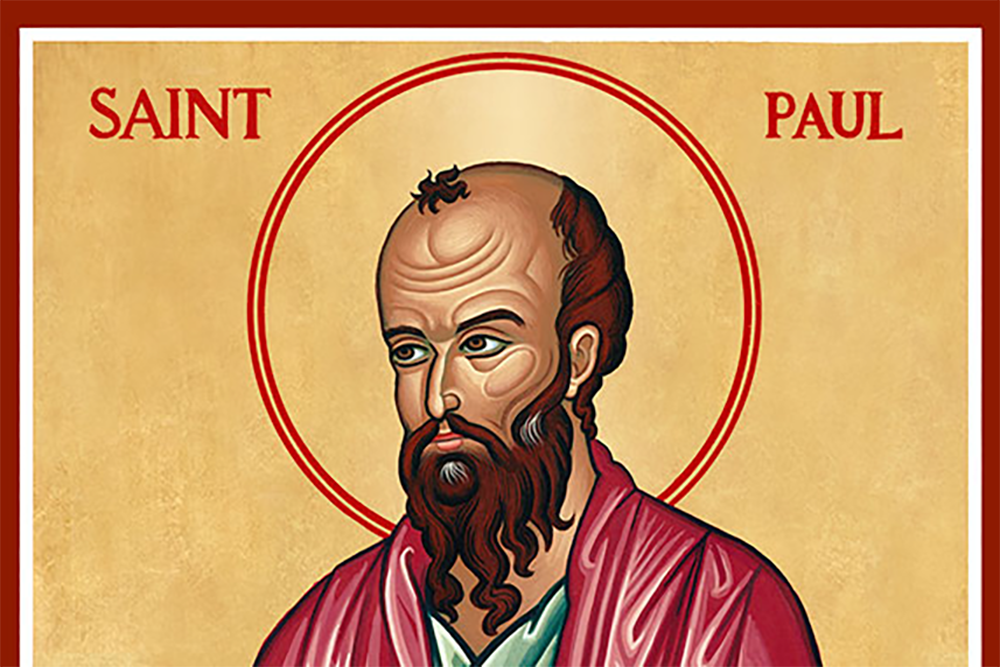
He Saved the World | Prophets & Demons Ep.12
Dr. Shadee Elmasry | Ramadan Series 2026
He Saved the World | Prophets & Demons Ep.12
Dr. Shadee Elmasry | Ramadan Series 2026
[embed]
The Trial of Yusuf (AS): Power, Desire, and the Shirt
When Yusuf (AS) reached the pinnacle of his youth, he attained a position of significant privilege. However, with that privilege came a different kind of internal drama. In addition to his natural status, he had now attained power, making him even more attractive. By this time, Yusuf (AS) was approximately 17 or 18 years old. It was during this period that the wife of the Aziz began to chase after him.
The Nature of Human Desire and Prophethood
The Quran provides insight into this moment in Surah Yusuf:24, acknowledging that Yusuf (AS) was a human being and that the woman was also attractive. The text mentions that she had a hamma toward him. Within the context of the story, her hamma (intention or desire) was clearly one of passion and desire.
Regarding Yusuf’s (AS) own hamma, there are different interpretations. Some suggest his intention was merely to push her away, which might have resulted in injuring her. However, a more likely possibility is that, as a human being, he also experienced a natural desire for her. This does not contradict the nature of prophethood. It is not inconceivable for a prophet to feel desire when presented with someone very attractive; what is inconceivable is for a prophet to act upon such a desire. Yusuf (AS) did not act upon it because he saw a sign from his Lord, which represents his nubuwwah(prophethood).
The Voice of Yaqub (AS)
There is a narration, though it lacks a strong chain of transmission, suggesting that at that critical moment, the heart of his father, Yaqub (AS), sensed that Yusuf (AS) needed help. According to this story, Yaqub (AS) called out, “O Yusuf, Allah is with you. I am not with you, but Allah is with you.”
Upon hearing the voice of the father he longed for and remembering Allah, Yusuf (AS) became “cool.” The passion that typically raises one’s physical temperature subsided. He mastered his impulse and turned to leave the room. As he moved away, she reached out and yanked at his shirt. Given the thin cotton material typical of Egyptian clothing at the time, the fabric ripped, perhaps even caught by her nails as she tried to restrain him.
The Evidence of the Shirt
As Yusuf (AS) reached the door, it was opened by a member of her family: the Aziz himself. Facing an immediate scandal, the wife of the Aziz claimed, “He attacked me.”
To resolve the accusation, an arbitrator was brought in to examine the evidence, focusing specifically on the shirt. The shirt of Yusuf (AS) serves as a recurring theme throughout his entire life story. The logic used by the arbitrator was straightforward:
- If the shirt is ripped from the front: It would indicate he was attacking her while she was defending herself.
- If the shirt is ripped from the back: It would prove he was attempting to leave while she was attacking or pursuing him.
Upon inspection, the shirt was found to be ripped from the back, providing clear evidence of his innocence and her pursuit.
The Symbolism of the Shirt: Yusuf (AS) and the Four Incidents
The story of Yusuf (AS) is uniquely tied to the symbolism of his shirt, which serves as a witness to the major turning points of his life. Just as other prophets are associated with specific objects, Musa (AS) with his staff, Sulayman (AS) with his ring, or Dawud (AS) with his slingshot, Yusuf (AS) has a recurring connection to his garment that testifies to his journey.
The First and Second Incident
The narrative begins with Yaqub (AS), who loved Yusuf (AS) deeply. Following the death of Yusuf’s mother, Yaqub (AS) sought to console the boy by gifting him a special, vibrant jacket or shirt featuring every color imaginable. This garment became the center of the first plot against him.
When his brothers conspired to throw him into a well, they planned to tell their father that a wolf had devoured him. To provide evidence, they slaughtered a sheep and smeared its blood on Yusuf’s (AS) special shirt. However, being the sons of a prophet and not yet “corrupted” by the world, they were poor liars. They brought the bloodied shirt back to Yaqub (AS) but failed to realize a glaring inconsistency: the shirt was soaked in blood but had no holes or tears from a wolf’s teeth. They appeared before their father crying, playing the role of victims while hiding their scheme.
The Third Incident: Accusation and Evidence
The third major interactions with the shirt occur during Yusuf’s (AS) time in Egypt. The shirt was first used by the brothers to lie about him, and later, a shirt was used by the wife of the Aziz (often referred to as Zulaekha in lore) in an attempt to frame him. In this context, the shirt eventually served as the silent witness that absolved Yusuf (AS) when it was found to be torn from the back, proving he was fleeing rather than attacking.
The Fourth Incident: The Shirt of Healing
The final incident involving the shirt brings the story full circle. After years of separation and the loss of his eyesight due to constant grieving, Yaqub (AS) receives Yusuf’s (AS) shirt. Yusuf (AS) sends the garment to be placed over his father’s face. Upon doing so, Yaqub (AS) miraculously regains his sight. In every instance, the shirt testifies for him, moving from a symbol of a lie to a symbol of absolute truth and restoration.
The Scandal and the Fall: Zulaekha’s Scheme and the Imprisonment of Yusuf (AS)
In the Islamic narrative, the perspective on the wife of the Aziz is often nuanced. Rather than being viewed as purely evil, she is sometimes described as being “intoxicated” by Yusuf’s (AS) extraordinary beauty, a beauty so profound it is said to represent half of all beauty created for mankind. Living a lonely life while her husband was preoccupied with politics and business, she was overcome by a desire that was “built-in” to the human experience. While lust is a dangerous fire, it is also seen as a struggle that is profoundly human.
Living in the same house as Yusuf (AS), who served as the assistant to her husband, the minister, Zulaekha found herself in a constant state of fitna (trial or temptation). While this portion of the story draws from Islamic lore and traditional accounts, it highlights profound themes of human nature, envy, and divine mercy.
The Banquet of the Knives
When the scandal of Zulaekha’s pursuit of her assistant began to spread among the elite women of Egypt, she was met with intense ridicule. Zulaekha, described in lore as a proud, sharp-witted leader among her peers, noted for her light skin, jet-black hair, and piercing blue eyes, became a target for the envy of those who wished to tear her down.
To silence her critics, she devised a plan. She invited the women to a banquet and provided each with a sharp knife and fruit to cut. At the height of the gathering, she summoned Yusuf (AS) to enter the room. The women were so utterly mesmerized by his beauty that they lost all awareness of their surroundings, accidentally cutting their own hands with their knives instead of the fruit. Their reaction provided a glimpse into their underlying beliefs; they exclaimed that he was not a human, but a noble angel. This suggests that the society of the time (the Hyksos) retained concepts of monotheism, angels, and the soul, likely stemming from original Abrahamic teachings that had persisted despite a long absence of prophets.
Choice over Sin: The Prison Sentence
Following this display, the women shifted from critics to pursuers, surrounding Yusuf (AS) and demanding his attention. Zulaekha issued an ultimatum: comply with their desires or face the consequences of her influence. She threatened to use her connections to have him imprisoned.
Faced with the choice between committing zina (adultery/immorality) or losing his freedom, Yusuf (AS) famously chose the latter, stating that he would rather go to jail than submit to their demands. Consequently, through Zulaekha’s scheming and the pressure of the scandal, Yusuf (AS) was sent to prison. According to traditional lore, the aftermath of this scandal led to a total collapse of Zulaekha’s social standing.
The Fall of Zulaekha
The Aziz, enraged by the plotting and the framing of Yusuf (AS), whom he genuinely cared for, eventually divorced Zulaekha. Stripped of her status and wealth, she fell into poverty and became a pariah. In the ancient world, “work” was a mark of humiliation for those of her class; it meant manual labor, calloused hands, and physical exhaustion under the sun. As Yusuf (AS) began his steady ascent from prisoner to a position of supreme authority in Egypt, Zulaekha lived a haggard life of struggle.
The turning point for Zulaekha came with her public confession. She eventually admitted that she had lied, stating that “the soul/ego (nafs) certainly commands to evil.” This admission is seen as a reflection of the lingering Abrahamic ethics within her culture, the understanding of the internal struggle between the ego and righteousness.
By the time she admitted the truth, she was a complete outcast in society, while Yusuf’s (AS) trajectory continued upward toward the height of Egyptian power.
The Encounter on the Road
Years after the scandal and Yusuf’s (AS) rise to the position of Prime Minister (Al-Aziz) of Egypt, he was traveling in his carriage when he noticed a familiar face among the crowds. By this time, Yusuf (AS) was at the height of his power and incredibly busy with the affairs of the state. The woman he saw was old, haggard, and dressed in the clothes of the poor, a stark contrast to the noblewoman she once was.
Because of the change in her setting and her aged appearance, Yusuf (AS) did not immediately recognize her. When she saw him, she quickly covered her face in embarrassment. Yusuf (AS), curious about her reaction, ordered the carriage to stop. His assistant demanded she speak, noting the gravity of being addressed by the Prime Minister himself. When she finally lowered her veil, Yusuf (AS) realized it was Zulaekha. Despite the years and the toll that poverty had taken on her, they were actually close in age, with only a few years between them. Moved by compassion for her fallen state, Yusuf (AS) invited her into the carriage.
According to this lore, Zulaekha’s long years of living as a pariah and her eventual public admission of guilt, acknowledging that her own ego had led her astray, served as her “payment” for her past actions. In a miraculous turn of events, Yusuf (AS) was given divine inspiration (wahi) to instruct her to bathe in a specific river or spring (similar to the spring associated with the healing of Prophet Ayyub).
Upon bathing, Zulaekha’s youth and beauty were miraculously restored. The narrative concludes with Yusuf (AS) marrying her, granting her what she had desired many years prior, but only after she had been humbled and purified by her experiences.
The eventual restoration of her youth and her marriage to Yusuf (AS) signifies that Allah’s mercy can encompass those who admit their faults and endure their trials with patience. As noted, scholars often “suspend” these specific details, neither fully confirming nor denying them, as they provide a narrative of hope and the possibility of a “happy ending” for a character who began as an antagonist.
Yusuf’s Education Through Imprisonment
The importance of Prophet Yusuf’s imprisonment lies in the necessity of a complete and well-rounded education for leadership and da’wah. To understand this, consider a person who grows up in an environment like Washington, D.C., attending the most prestigious institutions, such as Georgetown private high school and Georgetown University. If this person then interns with their father in the Senate or at other elite organizations, they may appear to have many qualifications. However, many would argue that such a person only knows one side of the world. They do not know the “streets” or the lives of regular people; their perspective is skewed entirely toward the elite.
Allah willed for Yusuf to receive a comprehensive education that spanned the entirety of the social spectrum. To achieve this, he spent ten years among those considered the lowest rung of society: the criminals. By living within the prison system, Yusuf learned about every level of society between the highest and the lowest. He interacted with the prisoners, but also with the jailers and wardens, who represent the middle class.
This experience teaches us that if one wishes to invite society to the truth, to perform da’wah to everyone, including criminals, one must truly know and understand the whole of that society. Yusuf spent ten years with the elite and ten years with the marginalized. During his time in jail, he was known as a dream interpreter, he actively preached to his fellow inmates, and people witnessed his devoted worship even in the depths of imprisonment.
Interpreting Dream
An assassination attempt occurred against the king, mirroring the high-stakes intrigue often seen in historical dramas. In those times, the royal lifestyle appeared to revolve around the consumption of wine and bread. During one of the king’s daily snacks, he followed a common ritual, much like a scene from a mafia movie, dipping his bread into his wine.
As he was about to eat, his assistants intervened, realizing the meal had not been taste-tested for poison. In antiquity, kings employed taste-testers because the effects of poison were often immediate; a monarch could not consume anything until it was proven safe. To test the meal, a morsel of the wine-soaked bread was thrown to a dog. After taking a bite, the dog collapsed and died. In the ensuing panic, the assistants removed both the wine and the bread but failed to determine which specific item was lethal. Consequently, both the royal winemaker and the bread maker were arrested and placed in a cell with Yusuf while an investigation was conducted.
While in prison, the two men experienced profound dreams. The winemaker dreamed that he was once again squeezing grapes and offering the juice to the king. Yusuf provided da’wah to the man before interpreting the dream. He explained that this was a literal dream, a category of true dreams similar to when the Prophet (peace be upon him) dreamed of performing Umrah with his companions. According to biblical sources , which are treated as “suspended” or uncertain in Islamic epistemology compared to the certainty of the Quran, the man specified he gave the king three grapes. Yusuf interpreted this to mean that in three days, the winemaker would be set free.
The bread maker then shared his dream: he saw three loaves of bread in a basket upon his head, with birds eating from them. Yusuf interpreted this grimly, stating that in three days, the man would be executed and crucified, and birds of prey, such as ravens and vultures, would eat from his head.
The subsequent investigation revealed that the poison had been placed in the bread; the bread maker had accepted a bribe to assassinate the king, while the winemaker was innocent. Recognizing his impending release, Yusuf asked the winemaker to “remember me with your lord (rabb).” In this context, the word rabb refers to the one who provides care or “tarbiyah,” rather than a divine deity, illustrating that the term can describe a master or caretaker in a worldly sense.
The winemaker was eventually freed but forgot about Yusuf, leaving him in prison until the king himself experienced a series of unsettling dreams. These dreams featured seven fat cows being consumed by seven lean ones, a phenomenon contrary to nature, as the weak do not typically devour the strong. This was followed by a vision of seven beautiful, healthy stalks of wheat and seven very poor, dry, and small stalks. Similar to how Prophet Daniel would later interpret a king’s dreams, Yusuf provided the interpretation for this vision.
Saving The World
Through this interpretation, Yusuf became the sabab, or the means, by which Allah saved the region from a massive, worldwide famine. This crisis affected a vast area, including Sham, Iraq, Arabia, and North Africa. Yusuf’s strategy involved a systematic survey of the land to identify where farms were located and the subsequent construction of warehouses throughout Egypt.
He then hired teams to visit every farmer with a specific mandate: the government would purchase half of everything produced that was capable of being stored. For example, if a farmer produced two sheep, one was purchased; if they grew two bushels of wheat or raisins, one was automatically bought by the state. While this was a forced sale, the farmers were satisfied because Yusuf ensured they were paid fairly and well. Perishable items that would rot, such as apples, were not included in this storage plan.
During the seven years of abundance, the population consumed only half of what was produced, while the other half was securely stockpiled. When the subsequent seven years of famine struck, Egypt possessed warehouses full of food and grain. As people from the surrounding nations began flocking to Egypt for survival, the land earned the nickname Ummu Dunya (Mother of the World). This title signifies a “rebirth” of these nations; they were on the brink of death due to the famine but found a source of life in Egypt. Ultimately, while Egypt was the source, it was Yusuf’s management, guided by his Creator, that preserved the known world.
It is often noted that the second seven years of the famine were actually more enjoyable for the people of Egypt than the first seven years of abundance. During the initial seven years, the population worked hard but consumed only half of their production. While the farmers were making significant money because the government was purchasing everything they could store, they were still in a phase of intense labor and restricted consumption.
In the second seven years, the dynamic shifted entirely. Although the famine had arrived, the Egyptians were not working the fields. They possessed both a steady supply of food from the warehouses and the wealth they had accumulated from the previous years’ sales.
Furthermore, as the famine gripped the surrounding regions, people from across the known world began to flock to Egypt to trade. These travelers brought their finest goods, unique leathers and specialized crafts, to exchange for sustenance. This resulted in the Egyptian market being flooded with high-quality goods from every corner of the world. Consequently, the Egyptians experienced a period where they did not have to labor, had access to free or stored food, and could spend their wealth on a diverse array of international products.
This transformation illustrates a profound principle: when a tribulation is handled properly and with wisdom, the period of the trial can actually become better than the time that preceded it. Through Yusuf’s guidance, what was meant to be a catastrophe became a period of unprecedented prosperity and ease for the people.
Reuniting with His Family
When Yusuf’s brothers finally travel to Egypt, their father, Yaqub, gives them a specific instruction: they must not enter the city through a single gate, but rather enter through different doors. To understand the weight of this moment, one must look at the societal values of that era. In ancient times, having a son represented income, protection, and the continuation of a lineage. A son could defend the family and work the land; when he married, he brought his wife into the father’s camp to produce more children. Conversely, the old mentality viewed daughters as a perceived loss; one would feed and protect a daughter only for her to eventually marry into and improve another man’s camp.
The Prophet Muhammad (peace be upon him) explicitly worked to break these taboos. While there is no specific hadith stating that raising a son guarantees Paradise (Jannah), the Prophet promised Jannah to those who raise daughters with care. When he spoke of the rewards for raising four daughters, companions asked about three, then two, and the Prophet confirmed the same reward for them. He corrected the logic of the time, showing that while a son might provide worldly benefits — becoming a fellow protector and bringing grandchildren into the home — raising daughters provides the ultimate spiritual benefit of Paradise.
Yaqub had eleven sons remaining with him. For their first trip to Egypt, he kept his youngest, Binyamin, by his side. While one might assume he kept him for company, prophets do not rely on such needs; rather, there was a deeper wisdom (hikmah) at play. Having lost Yusuf the last time the brothers were together, Yaqub was understandably cautious.
His instruction for the ten brothers to enter through different doors was a practical measure to avoid drawing unwanted attention. In a time when infant and maternal mortality were high, a single tribe appearing with ten healthy, grown sons was an extraordinary sight that could attract the “evil eye” or suspicion. Allah clarifies in the Quran that this tactic would not change the divine decree (qadha and qadar), but it served as a source of comfort for Yaqub’s heart.
This highlights an important distinction in Islamic law (Sharia). While superstitions and charms are not believed to have inherent power, the Sharia allows for actions that provide psychological comfort. Much like keeping a memento from a parent or grandparent, Yaqub’s instruction was an acceptable means of seeking peace of mind, even though he acknowledged that only Allah’s will would ultimately prevail.
After their first successful journey to Egypt, the brothers returned home impressed by the generosity of the Egyptian official. They reported that he had treated them with great kindness but had insisted that they must bring their youngest brother, Binyamin, on their next visit to prove their story. Upon unpacking their bags, they were stunned to find that the official had also returned the original goods and money they had used for trade. This act of benevolence convinced them of his character, and they eventually persuaded their father to let Binyamin accompany them.
This was precisely what Yusuf had intended. Once Binyamin arrived in Egypt, Yusuf discreetly placed the king’s drinking cup into Binyamin’s grain sack. A public announcement was made that the cup was missing, and the gates were closed for a search. When the cup was discovered in Binyamin’s bag, the brothers were devastated. Judah (Yahuda), often recognized as the most noble among the brothers, stepped forward. Despite having been part of the group that wronged Yusuf years prior, Judah demonstrated his growth by pleading to be taken as a prisoner in Binyamin’s place. It is from Judah’s lineage that the monarchy would later be established, leading to figures such as Dawud (David) and the family of Imran.
Yusuf declined the trade, insisting that only the one found with the cup could be detained. However, in private, Yusuf revealed his true identity to Binyamin, comforting him and explaining the situation. Judah, overwhelmed by the prospect of facing his father without Binyamin, refused to return to Canaan. When the other brothers eventually returned to their father, Yaqub famously remarked that he could “smell the scent of Yusuf” long before they reached him.
Upon their final return to Egypt, the brothers realized the truth, asking, “Are you indeed Yusuf?” He confirmed his identity and that of Binyamin. Yusuf then gave them his shirt to take back to their father. When the shirt was placed over Yaqub’s face, his eyesight, which had been lost due to years of grieving, was miraculously restored. While some have speculated about the chemical properties of sweat and its potential medicinal effects on conditions like glaucoma, this event is fundamentally understood as a prophetic miracle (mu’jiza).
This marked the fourth significant appearance of a shirt in Yusuf’s life story. Following this restoration, the entire family moved to Egypt, where they were paraded in and celebrated. The king granted them a fertile region known as the Land of Goshen, located in the eastern part of the Nile Delta where the river branches out. Although political scheming by other ministers eventually caused the king to distance himself from Yusuf, this period marked the beginning of a new phase for the Children of Israel (Bani Isra’il), who would go on to live in Egypt for the next 400 years.
메타데이터
- post_id
- 19b0e40bd5de
- slug
- he-saved-the-world-prophets-demons-ep-12-19b0e40bd5de
- url
- https://medium.com/@fitriananr/he-saved-the-world-prophets-demons-ep-12-19b0e40bd5de
- canonical_url
- https://medium.com/@fitriananr/he-saved-the-world-prophets-demons-ep-12-19b0e40bd5de
- author_url
- https://medium.com/@fitriananr
- status
- ok
- fetched_at
- 2026-07-13 06:23:13