Spark 01: Introduction to Spark
Apache Spark is a unified computing engine and a set of libraries for parallel data processing on computer clusters.
Spark 01: Introduction to Spark
Apache Spark is a unified computing engine and a set of libraries for parallel data processing on computer clusters.
Let’s break this down.
Spark’s whole goal is to be one platform that does it all. By “unified”, it means the same engine handles everything from simple data ingestion and SQL queries to machine learning and real-time streaming.
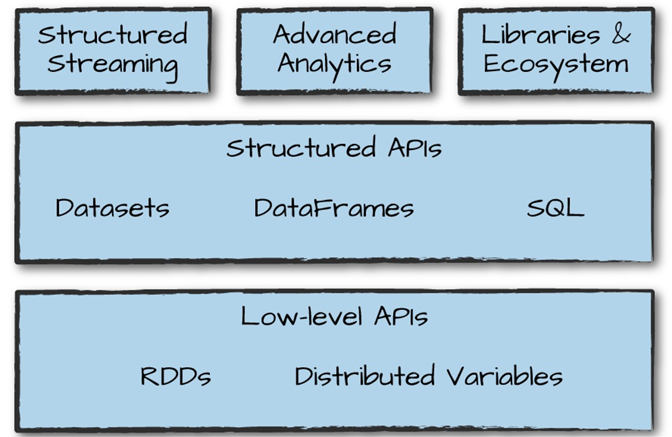
And because it’s all running on one engine, data scientists, data engineers, data analysts, AI and ML engineers aren’t stuck working in silos with their own separate toolchains. They’re all building on the same platform.
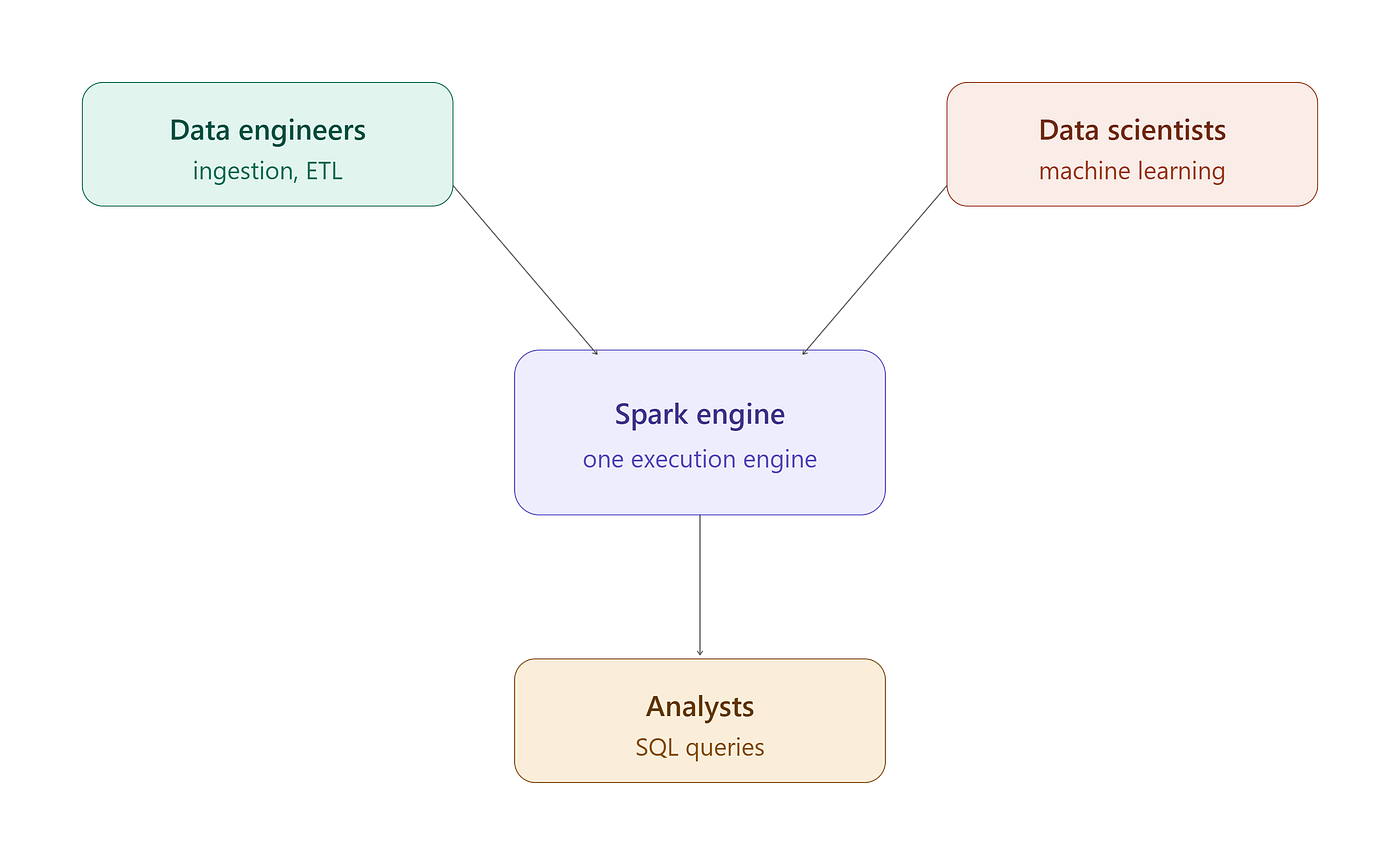
One engine, every role
Although Spark handles reading data from external storage, it does not provide permanent data storage, and persistent storage remains the responsibility of external systems such as Azure Storage, Amazon S3, distributed file systems such as Apache Hadoop, and Apache Cassandra, etc.
Connections with multiple storage systems
But…Why Spark?
Remember when every new laptop felt like a mini miracle? Apps ran faster each year with no changes to your code? That was the era of rising clock speeds when chips simply executed more instructions per second, so single‑threaded programs scaled up automatically.
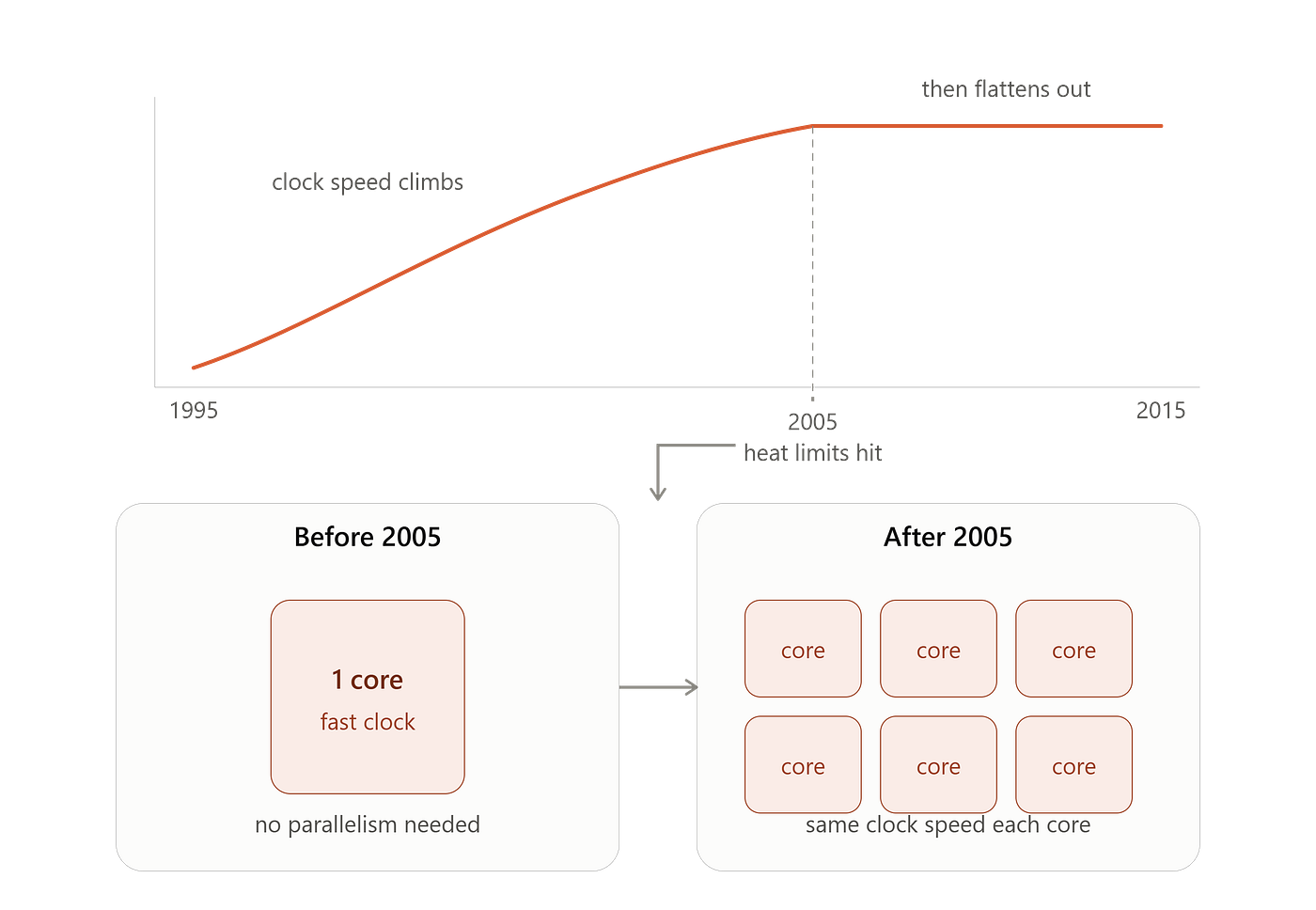
Around 2005, that magic faded. Due to hard limits in heat dissipation, hardware developers stopped making individual processors faster, and switched toward adding more parallel CPU cores all running at the same speed.
Suddenly, more cores sitting on the chip didn’t mean your application got faster automatically. If your code couldn’t run in parallel, it didn’t matter how many cores you had. Applications now had to be rewritten to take advantage of all that parallel hardware.
That’s the gap Apache Spark walked into.
It’s 2026, Spark’s future?
Spark in 2026 is still growing, picking up new ground from Uber’s streaming pipelines to CERN’s particle data, and still the engine most data teams reach for first.
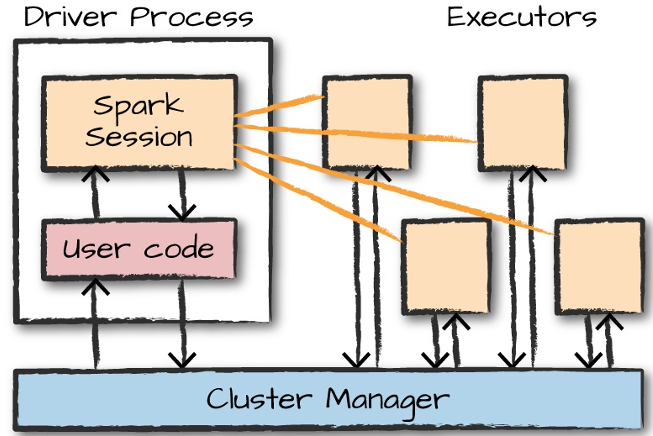
Stay tuned for Part 2, where we open the hood on Spark’s architecture: drivers, executors, the cluster manager, and how your code actually turns into work running across a cluster.
메타데이터
- post_id
- 19d67bee653b
- slug
- spark-01-introduction-to-spark-19d67bee653b
- url
- https://medium.com/h7w/spark-01-introduction-to-spark-19d67bee653b
- canonical_url
- https://medium.com/h7w/spark-01-introduction-to-spark-19d67bee653b
- author_url
- https://medium.com/@sidshe37
- status
- ok
- fetched_at
- 2026-07-09 08:02:55