Every New Technology Rewrites Us a Little
You wouldn’t recognize yourself in 1986. You won’t recognize yourself in 2036.
Every New Technology Rewrites Us a Little
You wouldn’t recognize yourself in 1986. You won’t recognize yourself in 2036.
In 1992, I could dial most of my friends from memory. Not because I sat down and memorized their numbers — you just absorbed them. You called Eric enough times, and your fingers knew the sequence. I still remember my childhood home number in Massachusetts: 617–237–54XX. I haven’t used that number in 36 years, but it’s still in there, taking up space alongside the lyrics to songs I haven’t heard since the first Bush administration.
In 2026, I know my wife’s number and my own. After that, nothing. I think I could (maybe) tell you my kids’ numbers, but I’d have to check. The transition wasn’t sudden — it wasn’t the iPhone that killed my ability to memorize phone numbers. It was the contact list on the Motorola flip phone, and then the smartphone made it effortless.
But this is about more than losing the ability to remember phone numbers; technology has been rewriting humanity for centuries: how we remember, communicate, and interact for centuries, and with AI, this process is accelerating.

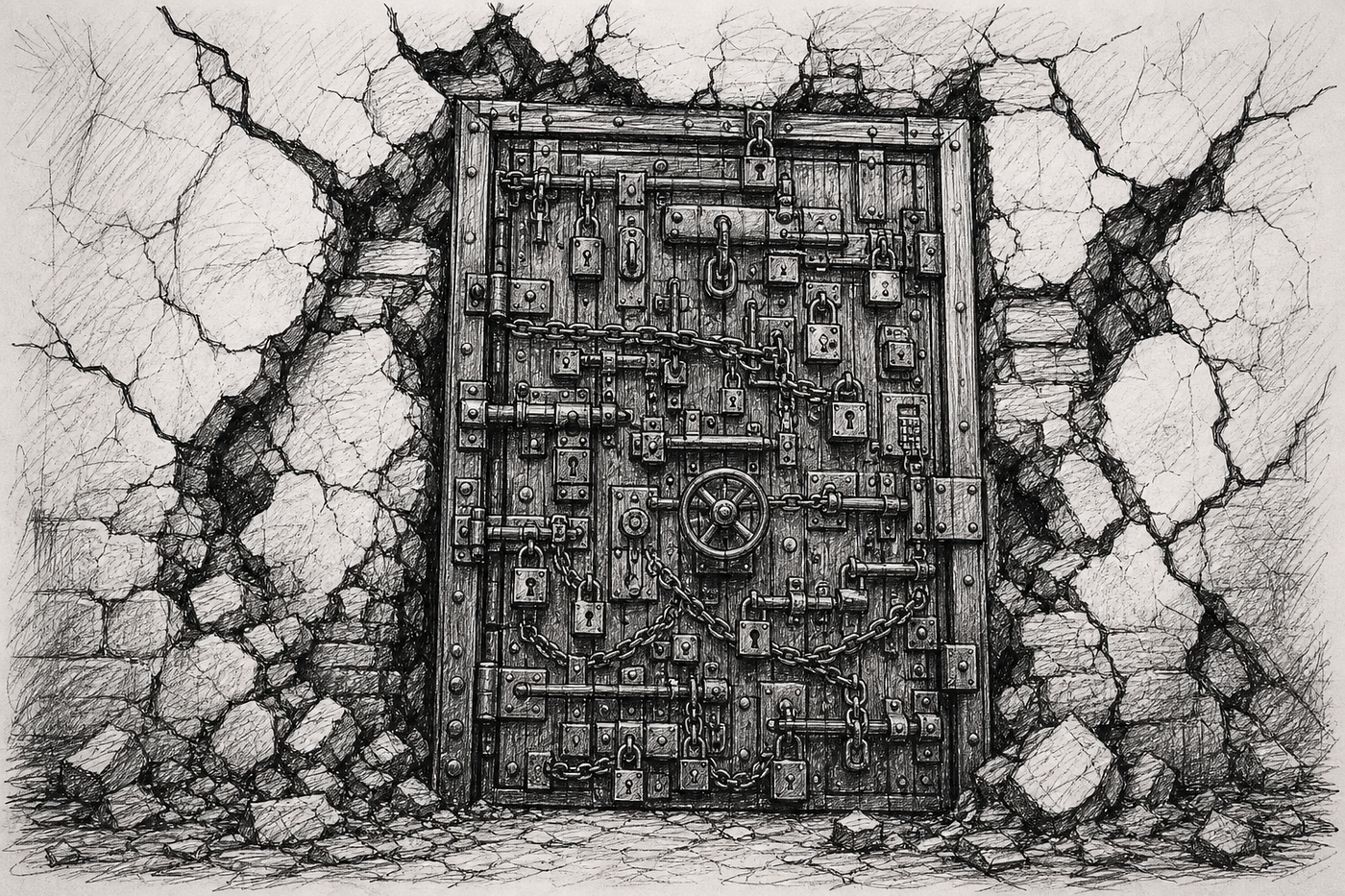
You can’t tell where the rewrite started. (Image Assist from Anthropic)
If you could step into a time machine and go back forty years to find yourself — your actual younger self, sitting in a kitchen or a classroom — the age difference would surprise you, for sure. But the deeper shock would be watching how you interacted with the people around you: the attention you brought, the patience you had, the way you were entirely in the room in a way that might seem impossible in 2026.
If you could flip a switch and experience 1986, I think you would also start to appreciate that the individual’s relationship to knowledge was fundamentally different. News happened once a day; media wasn’t on demand, but there were more fundamental differences in what people knew and how the public consumed information. It would feel like a different planet.
Over the last forty years, the way we remember directions, consume news, and communicate with each other has fundamentally changed — not in one dramatic shift, but in a hundred small steps, each of which was likely imperceptible. Yes, some of the changes, like HTML and cell phones in the 1990s, were appreciated at the time as revolutionary, but you didn’t stop to consider how these technologies would change us over decades.
Have they changed us for the better or for the worse? That’s debatable.
The easy nostalgia argument is that it was calmer, that less technology was better. But I don’t buy it. If you went back forty years, people would perceive you as an over-caffeinated know-it-all. My guess is that you’d be a little bored after a while, and you’d be wondering why everyone had to wait for the evening news to understand what was happening in the world.
You’d also dominate at Jeopardy and Trivial Pursuit. We’ve all been exposed to roughly 0.1% of Wikipedia — we carry a wider set of knowledge of the world than anyone did in 1992. The web and mobile have made us faster and more informed, and that’s a real difference. We’re not wiser or smarter, but I do think we’re all walking around with far more information.
This isn’t new ground. Psychologists call it the Google effect — the tendency to remember where to find information rather than the information itself. A 2015 Kaspersky Lab survey found that most people can’t recall their own children’s phone numbers. A McGill analysis pushed back, arguing that offloading rote memory frees the brain for more important work. Maybe. But “more important work” is making a lot of assumptions.
We gained a lot — I’m not pretending otherwise. But we lost some capabilities along the way, and the pattern is worth watching. Phone numbers took decades to offload. But the writing style is now changing in just a few months.
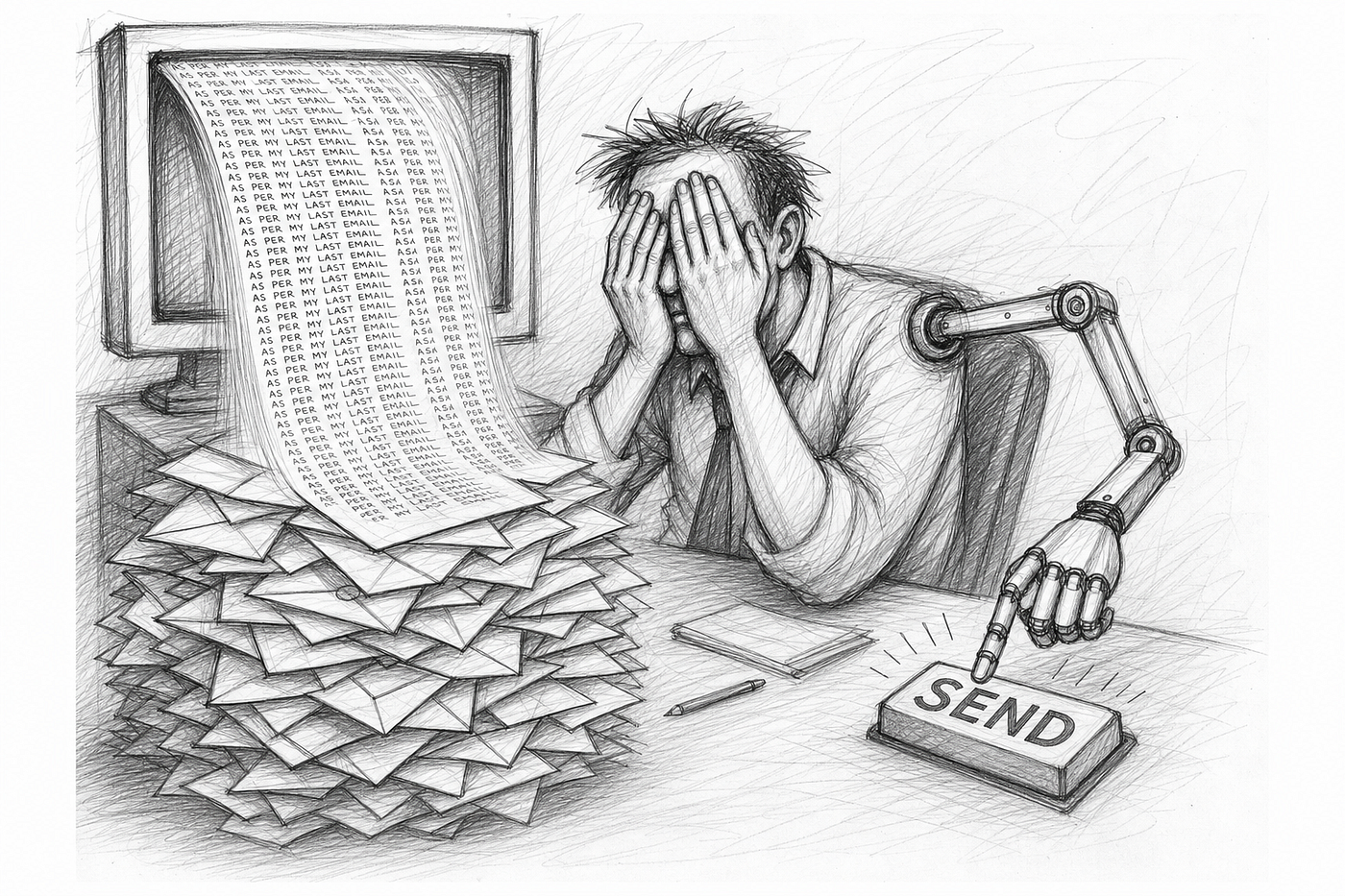
A colleague told me recently that every email in their inbox reads like AI-generated slop — most of it clearly not reviewed by the person who sent it. And this was creating a sense of frustration that people aren’t really taking the time to think about what they are sending.
“It’s all the same; everyone’s emails are just the same AI-generated garbage.”
- A Cornell study last year found that when Indian and American writers both used AI assistants, their styles converged — mainly at the expense of Indian writing styles. The AI didn’t make anyone sound more like themselves. It made everyone sound more alike.
- A USC study found that writing-style diversity dropped sharply across scientific journals, news outlets, and social media after ChatGPT’s release.
- The Poynter Institute’s Alex Mahadevan told Axios he misses “good bad writing” — prose so poorly written it’s engaging and uniquely human.
The second thing we’re losing is the ability to build something from scratch.
- It’s almost quaint to think about now. You want to create a website with a React frontend, an API layer, and a database? Do you start from a blank project? Or do you ask Claude Code to create a project for you? Who starts from scratch? What’s wrong with them?
- From a writing perspective, while many people likely still start from a blank page to resist AI, many (myself included) use AI as a starting point. “Take the following audio notes and rearrange them into an essay.” I can’t imagine starting some of those efforts from scratch.
Addy Osmani wrote about skill atrophy in AI-assisted coding — a Microsoft and Carnegie Mellon study found that the more people leaned on AI tools, the less critical thinking they engaged in. “Diminished independent problem-solving.” One engineer confessed to staring at his terminal, unable to proceed without AI. The knowledge is still out there in documentation and tutorials, but the tacit knowledge — the understanding that comes from building something badly three times before you build it right — that’s what disappears. And you don’t notice it’s gone until you need it.
The pattern matters. Each generation of technology offloads something we used to do ourselves, and we don’t get a vote on whether the trade is worth it. The contact list replaced the memorized phone number. Notifications replaced sustained attention. TikTok replaced attention spans, and AI is replacing the writing voice and the architectural instinct.
What’s going to be interesting is how some of these changes will affect how we communicate, or even whether we continue to communicate at all.
One potential future I’ve been thinking about is one in which everyone just has an agentic representation that coordinates and interacts on our behalf. Maybe we end up delegating more and communicating with a smaller group? We’ll see.
The fundamental, biological realities of being human are still here. The politics look dramatically different from 1992, but the underlying themes haven’t moved. We’re still arguing about how to avoid endless wars. We’re still dealing with racism. It’s the surface that changes quickly — the technology, the platforms, the way information reaches you.
People in 1992 were wrestling with the same questions we are now, just with worse tools and fewer facts at hand. As AI accelerates changes in how we interact and communicate with one another, it’s worth remembering that we’re still human.
I explored this tension — what changes and what doesn’t — in Essential, the third book of *The Condition Set*. It’s set in 2033, and the technology has shifted again, but the people in it are still arguing about the same things we are today.
So here’s what I want to know: what’s something you already sense we’re losing? Not something theoretical — something you’ve noticed in your own work or life.
메타데이터
- post_id
- 19e8a8ef898a
- slug
- every-new-technology-rewrites-us-a-little-19e8a8ef898a
- url
- https://medium.com/@tobrien/every-new-technology-rewrites-us-a-little-19e8a8ef898a
- canonical_url
- https://medium.com/@tobrien/every-new-technology-rewrites-us-a-little-19e8a8ef898a
- author_url
- https://medium.com/@tobrien
- status
- ok
- fetched_at
- 2026-07-09 20:10:33