Mastering the Strategy Pattern in Java: A Comprehensive Guide to Flexible Design
Introduction:
Mastering the Strategy Pattern in Java: A Comprehensive Guide to Flexible Design
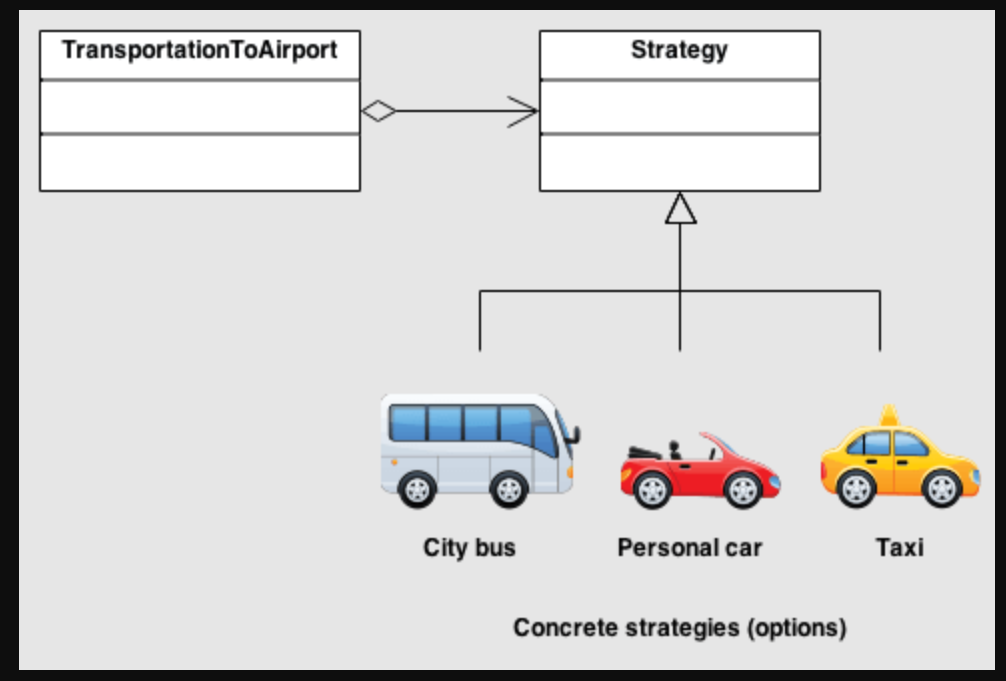
source : sourcemaking.com
Introduction:
The Strategy Pattern stands as a cornerstone in Java design patterns, belonging to the behavioral pattern category. This powerful approach empowers developers to define a family of algorithms, encapsulate each one, and interchange them seamlessly. In this extensive guide, we embark on a journey to explore the nuances of the Strategy Pattern, breaking down each facet for a thorough understanding. Get ready for a code-intensive exploration, where real-world examples will illuminate the practical application of this pattern.

source : sourcemaking.com
Understanding the Strategy Pattern:
- Decoding the Essence of the Strategy Pattern:
The Strategy Pattern is a design paradigm that revolves around defining a set of algorithms, encapsulating each algorithm within its class, and allowing them to be interchangeable. This dynamic interchangeability is achieved without altering the client code. The fundamental premise is to create a family of algorithms, encapsulate each one as a separate class, and empower the client to choose the appropriate algorithm at runtime. Embracing the “Composition over Inheritance” principle, the Strategy Pattern promotes flexibility, maintainability, and scalability in software design.
- Navigating the Components: Context, Strategy Interface, and Concrete Strategies:
At the heart of the Strategy Pattern lie three integral components: the Context, the Strategy Interface, and Concrete Strategies. The Context class encapsulates a reference to the Strategy Interface and delegates algorithm-specific tasks to Concrete Strategies. The Strategy Interface declares the contract that all Concrete Strategies must adhere to, ensuring a consistent interface across the family of algorithms. Concrete Strategies, as the name implies, implement specific algorithms. This trifecta of components orchestrates the dynamic interchangeability that defines the Strategy Pattern.
- Unraveling the Dynamics: How the Strategy Pattern Operates:
The Strategy Pattern operates by allowing the client to choose from a family of algorithms dynamically. The Context class, armed with a reference to the Strategy Interface, remains blissfully ignorant of the details of Concrete Strategies. It delegates the algorithmic tasks to the current Concrete Strategy, enabling runtime flexibility. This decoupling of the client from the implementation details of algorithms ensures that changes in one strategy do not ripple through the entire codebase, fostering modularity and maintainability.
- The Why Behind the Strategy Pattern:
The Strategy Pattern finds its stronghold in scenarios where a class has multiple behaviors and the client needs the freedom to choose between them dynamically. It promotes code reuse, encapsulation, and maintainability. Encapsulating algorithms in separate classes ensures that changes in one algorithm do not impact others, fostering a robust and extensible codebase. The Strategy Pattern is particularly potent in scenarios where the client requires the ability to switch between algorithms at runtime, offering a level of flexibility that traditional approaches often lack.
Code Examples in Java:
Let’s delve into practical examples to illustrate the Strategy Pattern in action. The following snippets demonstrate a simplified scenario where a shopping cart employs different payment strategies.
- Defining the Strategy Interface:
// Strategy Interface
public interface PaymentStrategy {
    void pay(int amount);
}- Concrete Strategies:
// Concrete Strategy 1
public class CreditCardPayment implements PaymentStrategy {
    @Override
    public void pay(int amount) {
        System.out.println("Paid " + amount + " using Credit Card.");
    }
}

// Concrete Strategy 2
public class PayPalPayment implements PaymentStrategy {
    @Override
    public void pay(int amount) {
        System.out.println("Paid " + amount + " using PayPal.");
    }
}- Context Class:
// Context class
public class ShoppingCart {
    private PaymentStrategy paymentStrategy;

    public void setPaymentStrategy(PaymentStrategy paymentStrategy) {
        this.paymentStrategy = paymentStrategy;
    }

    public void checkout(int amount) {
        paymentStrategy.pay(amount);
    }
}- Client Code:
public class StrategyExample {
    public static void main(String[] args) {
        ShoppingCart cart = new ShoppingCart();

        // Using Credit Card payment strategy
        cart.setPaymentStrategy(new CreditCardPayment());
        cart.checkout(500);

        // Using PayPal payment strategy
        cart.setPaymentStrategy(new PayPalPayment());
        cart.checkout(300);
    }
}
Real-world Application: Sorting Algorithms Let’s consider a real-world scenario where the Strategy Pattern finds its application in implementing sorting algorithms. In this context, a system requires sorting functionality, and the client desires the flexibility to choose between various sorting algorithms dynamically.
Applying the Strategy Pattern to Sorting Algorithms:
// Strategy Interface for Sorting
public interface SortingStrategy {
    void sort(int[] array);
}
// Concrete Strategy 1: Bubble Sort
public class BubbleSort implements SortingStrategy {
@Override
public void sort(int[] array) {
// Bubble Sort algorithm implementation
}
}// Concrete Strategy 2: Quick Sort
public class QuickSort implements SortingStrategy {
@Override
public void sort(int[] array) {
// Quick Sort algorithm implementation
}
}// Context class for Sorting
public class SortingContext {
private SortingStrategy sortingStrategy;
public void setSortingStrategy(SortingStrategy sortingStrategy) {
this.sortingStrategy = sortingStrategy;
}
public void performSort(int[] array) {
sortingStrategy.sort(array);
}
}// Client Code for Sorting Algorithms
public class SortingExample {
public static void main(String[] args) {
SortingContext sortingContext = new SortingContext();
// Using Bubble Sort strategy
sortingContext.setSortingStrategy(new BubbleSort());
sortingContext.performSort(array);
// Using Quick Sort strategy
sortingContext.setSortingStrategy(new QuickSort());
sortingContext.performSort(array);
}
}Pros and Cons:
Pros:
Flexibility: Easily switch between algorithms at runtime.
Maintainability: Each strategy is encapsulated, facilitating easy additions or modifications without affecting other strategies.
Testability: Strategies can be tested independently.
Cons:
Increased Number of Classes: Introducing multiple strategies may lead to a larger number of classes, potentially increasing code complexity.
Client Awareness: Clients need to be aware of different strategies and choose them explicitly.
Going Beyond the Basics:
- Advanced Strategy Pattern Usage:
The Strategy Pattern extends its utility beyond basic scenarios. Advanced usage includes scenarios where strategies themselves can change dynamically, enabling adaptive behavior based on runtime conditions.
- Strategy Pattern and Dependency Injection:
Leveraging the Strategy Pattern aligns seamlessly with the principles of Dependency Injection (DI). Injecting strategies into a class enables a clean separation of concerns and facilitates easier testing and maintenance.
- Combining with Other Design Patterns:
The Strategy Pattern often synergizes effectively with other design patterns. Combining it with patterns like Factory Method or Decorator enhances its capabilities and addresses more complex design challenges.
Real-world Application: E-commerce Discount Strategies
Consider an e-commerce platform where discount strategies need to be dynamically applied based on various factors such as user type, purchase history, or ongoing promotions. Implementing a flexible discount system using the Strategy Pattern allows for the dynamic application of discount algorithms, catering to diverse scenarios.
Conclusion:
The Strategy Pattern emerges not only as a versatile tool in a Java developer’s toolkit but as a fundamental paradigm that empowers architects and developers to create flexible, scalable, and maintainable systems. By dissecting the key components, exploring practical examples, and delving into real-world applications, this guide aims to equip developers with the knowledge and confidence to wield the Strategy Pattern effectively.
Mastering the Strategy Pattern opens avenues for building modular, adaptable, and extensible Java applications. Whether it’s navigating payment strategies in a shopping cart or orchestrating sorting algorithms in a data processing system, the Strategy Pattern stands as a testament to the elegance and efficiency of well-thought-out design patterns. As you embark on your coding endeavors, may the Strategy Pattern be a valuable ally in crafting robust and future-proof Java applications. Happy coding!
메타데이터
- post_id
- 19e8c3759349
- slug
- mastering-the-strategy-pattern-in-java-a-comprehensive-guide-to-flexible-design-19e8c3759349
- url
- https://medium.com/@naveen-metta/mastering-the-strategy-pattern-in-java-a-comprehensive-guide-to-flexible-design-19e8c3759349
- canonical_url
- https://medium.com/@naveen-metta/mastering-the-strategy-pattern-in-java-a-comprehensive-guide-to-flexible-design-19e8c3759349
- author_url
- https://medium.com/@naveen-metta
- status
- ok
- fetched_at
- 2026-08-07 17:45:42