Green, Sustainable and Eco-Friendly Interiors
‘Green’
Green, Sustainable and Eco-Friendly Interiors

‘Green’
The term “green” refers to environmentally friendly practices from building design to the landscaping choices. It also encompasses energy use, water use, and storm water and waste water reuse.
The Voluntary pursuit of any activity, which encompasses concern for energy efficiency, environment, water conservation and use of recycled products & renewable energy, can be defined as “Green”
‘Green Building’
The term “Green” and “Green Building” apply not just to products, but to construction and strategies, building design and orientation, landscaping, building operations, maintenance and more.
The Green Building or Green Interior is a new concept, if we catch a sight to the other creatures such as insects, birds and mammals; we can notice that they apply the concept of Green Interiors in their house.
Not only creatures adapted the green building concepts; if we take a look to human history with interior, architecture and buildings, we can find clear examples of and respect for the environment and homogenize them.
After the energy crisis, we found that there were many concepts advocated by reference so-called Green Interior.
‘Why Go Green’

What to Do?
- Reduce
- Replace
- Reuse
- Recycle
Green Building Concepts
What is green or “eco-friendly” interior design?
Green or eco-friendly interior design focuses on improving indoor air quality as well as reducing the impact that furniture purchases have on the environment.
The ‘Green Building’ concept is to ensure waste in minimized at every stage during the construction and operation of the building.
Concept of Green Interior
· To root the relationship between interior, exterior and the surrounding green environment.
· To return to aesthetics and concepts of interior design, in tandem with nature and social values
· Use of building materials with natural properties.

Energy Conservation Features
· 40% saving in power consumption.
· 30% saving in water consumption.
· All power equipments proposed to be run centrally.
· Use of clean energy for power and air conditioning.
· Extensive use of natural day light through unique planning.
· Bio-waste management for kitchen.
· Extensive use of environment friendly recycled materials.

Sustainable and Green Materials
The materials uses being considered in this research project fall into five categories:
-
Fabric.
-
Window Treatments.
-
Surface Materials.
-
Flooring.
-
Walls and Ceilings.
Fabric
Research has revealed that it is necessary to consider the following when determining whether or not a fabric can be considered green or sustainable.
-
Chemicals: Is the fabric and its manufacturing process free of harmful chemicals: Any of 2000 chemicals can be used during the manufacturing process, leaving residual amounts in the fabric that can leach into the water supply, pollute the air, and be absorbed by human skin.
-
Renewable: Is it from a renewable source: If it is a synthetic fiber, is it 100% recyclable and made from recycled content material; or is it antique.
-
Longevity: How long will the fabric be useable before it shows signs of wear and needs to be replaced? The more durable a fabric is, the longer it will last, and a long-lasting fabric can be considered as more environmentally friendly than one that must be replaced frequently.
-
Biodegradable: Is the fabric that is biodegradable, and if so is there an alternative option to become a part of the waste stream at the end of its useful life.
Fabrics can be made from plant fibers, animal fibers, and synthetic fibers.
Green and sustainable plant fibers include:

Green and sustainable animal fibers include:
· Wool
· Cashmere
· Alpaca
· Camel hair
· Leather
· Silk.
Although many synthetic fabrics are made from petroleum-based product, they can still be considered green. Some synthetic fabrics are spun from recycled pre-and post-consumer materials, like plastic bottles and waste from industrial production. This diverts waste from landfills and converts it into useful raw materials. Some of these recycled content fabrics are extremely durable. Even more sustainable are fabrics created from recycled waste, which can be recycled into new raw materials when their lifespan is over.
Window Treatment
Window treatments are green by design as they help control the amount of heat gained and lost through windows. Their insulating and light blocking properties help to reduce heating and cooling energy loads. Window treatments may be made from:
· Fabric
· Natural grass e.g. Flax and hemp have a high resistance to ultraviolet rays.
· Bamboo, which has antimicrobial properties that makes it resistant to mould.
· Wood made from FSC timber in the form of blinds.
· Composites made with 100% recyclable and renewable materials.
When it comes to sustainable interior design, heating and lighting are two of the easiest routes our designers utilize to make our client’s homes as eco-friendly as possible. As most building’s heat escapes through windows, it’s essential that your windows are of the best quality while ensuring proper insulation.
And if you aren’t blessed with the best windows and upgrading them is out of your budget, window treatments are a smart, easy to manage and install option as they keep cold air and the sun’s heat outside while allowing you to control your home’s temperature by opening and shutting them when needed.
Flooring
· Hard Flooring can be made from the following:
· Wood: FSC wood, reclaimed wood.
· Fast growing and renewable materials: cork, bamboo, linoleum, recycled rubber.
· Natural stone.
· Tile or terrazzo: made from pre or post-consumer recycled content; and
· Finished in situ concrete.
Carpets can be made from wool, organic cotton, bamboo, hemp and jute, whilst their
underlay can be made from recycled content. Carpet tiles can also be made from recycled
content and it is possible to refurbish carpets.
1. Cork
Cork is relatively new to the flooring world. Cork is harvested from the bark of the cork oak tree commonly found in the forests of the Mediterranean. The trees are not cut down to harvest the bark, which will grow back every three years, making it an ideal renewable source. It has anti-microbial properties that reduce allergens in the home, is fire retardant, easy to maintain and acts as a natural insect repellent too. Cork, like wood can be finished in a variety of paints and stains to suit any color scheme or design style. Its durability allows for uses in any part of the house. Cork floors, depending on the quality, can last between 10–30 years.


2. Bamboo
Bamboo flooring is another wood like option that is gaining in popularity. It is actually a grass that shares similar characteristics as hardwood. It is durable, easy to maintain and is easy to install. Bamboo is sustainable and made from natural vegetation that grows to maturity in three to five years, far less than the twenty years trees can take. Bamboo, while usually very light, is available in many hues that will work in any setting or decor. Its varied grains and wide array of colors give it an edge over traditional flooring by allowing for customization not often found elsewhere.

3. Linoleum
Linoleum is created from a concoction of linseed oil, cork dust, tree resins, wood flour, pigments and ground limestone. Like cork, it is fire retardant and water resistant. Linoleum is not new to the market. it reemerged on demand with a vast array of bright vibrant colors and a new sealer to protect it from stains. It has a long shelf life and will hold up to a lot of wear and tear.

4. Glass tiles
Glass has similar benefits of other eco-friendly materials. It is non-absorptive and won’t mildew or mold in damp environments. It is easy to maintain and won’t stain. Glass comes in a limitless array of colors, patterns and finishes suitable for most design schemes. Unlike ceramic tiles, glass will reflect light rather than absorb it, adding that additional layer of light some rooms need.

5. Concrete
Polished concrete is an unlikely sustainable material that is gaining in popularity. Concrete is typically slab on grade and used as a sub flooring in some residential settings. If it is polished and tinted to the homeowners taste and style there is no need for traditional flooring to be put over it. From creating a tiled effect with different colors to inlaying other materials such as glass the design possibilities are endless. Concrete is extremely durable, easy to clean and never needs to be replaced.

6. Wool Carpet
Carpet has long been a favorite go-to material for most homes. It is soft to walk on, comfortable to sit on and comes in a range of colors and patterns. Unfortunately, carpet has typically been made using volatile organic compounds or toxins that are harmful to the environment and to our health. There are eco-friendly options though. Consider carpets made of wool. Wool is a natural resource spun into a thread that can be dyed any color imaginable, and then be woven to create a carpet. It is one of the first materials to be used as a floor covering, is very durable and can last centuries.

7. Leather
Leather is a surprising material that can be used as flooring. It is derived from the center-most part of the cowhide and is thicker than the leather pieces used for such things as belts, wallets and handbags. The soft warm feel under foot makes it perfect for bedrooms, closets and small areas with little foot traffic. It is not a great material for bathrooms, kitchens or other moist areas of a home. It is very durable and will wear well over time. Worn, scratched and aged leather develops a personality of its own and can be beautiful to look at for years to come.
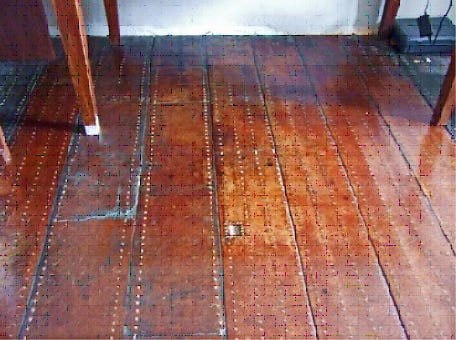
Walls and ceilings
· Paint: non VOC paint e.g. water based and clay paints,
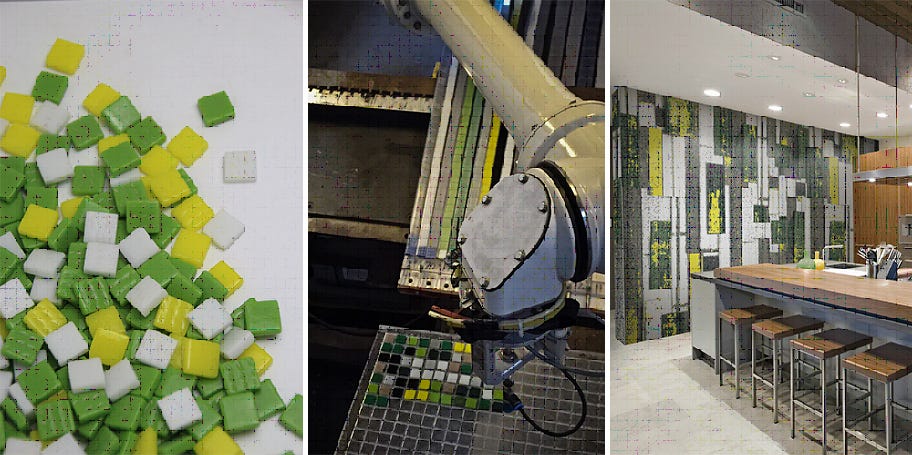
· Tile: recycled tiles come in glass, ceramic and porcelain and from recycled glass and
pre-consumer industrial waste
· Plaster: earth-based plasters are the healthiest wall finishes-natural clay plaster allows a
wall to absorb and release moisture as needed.
· Wall covers: papers made from rapidly renewable sources like cork, grasses and other
plant fibers, but must be used with an environmentally friendly glue or paste.
· Faux stone: manufactured using recycled water in the manufacturing process and
sourcing local raw materials made with pre and post-consumer waste products.
- Recycled Paper Tiles

2. Reclaimed Wood Panels

3. Recycled leather and Wool felt covering

4. Book wallpaper covering

5. Recycled glass tile mosaic
Counter Tops
- Granite recycled glass countertops

2. Icestone

3. Alkemi recycled resources
· Alkemi Polyster
· Award-winning ALKEMI-polyester is a recycled countertop material composed of post-industrial scrap waste (34% by weight — as certified — or 60% by volume). ALKEMI-polyester is made from fine flake aluminum milling scrap, which commonly burns up as a heavy smoke pollutant when exposed to conventional aluminum recycling — but recycled into an ALKEMI surface, the scrap leaves no hazardous footprint.
· Available in a variety of designer colors and surface aesthetics, ALKEMI-polyester is strong, durable, and beautiful. This countertop offers a brilliant, sustainable alternative to the stagnant commercial material options such as plastic laminate

· Alkemi Acrylics
ALKEMI-acrylic is a beautiful and sustainable surfacing alternative, made using pre-consumer waste aluminum and copper flake, solid surface scrap, and recycled acrylic. With no VOC content, ALKEMI-acrylic is safe for people and friendly to the environment — EPA-approved testing of ALKEMI-acrylic shows no notable traces of volatile compounds. ALKEMI-acrylic is a testament of the company’s commitment to continually develop and bring to market the most innovative, design-driven, eco-friendly, and sustainable materials.

4. Non-Porous Stone surfaces

5. Paper Stone
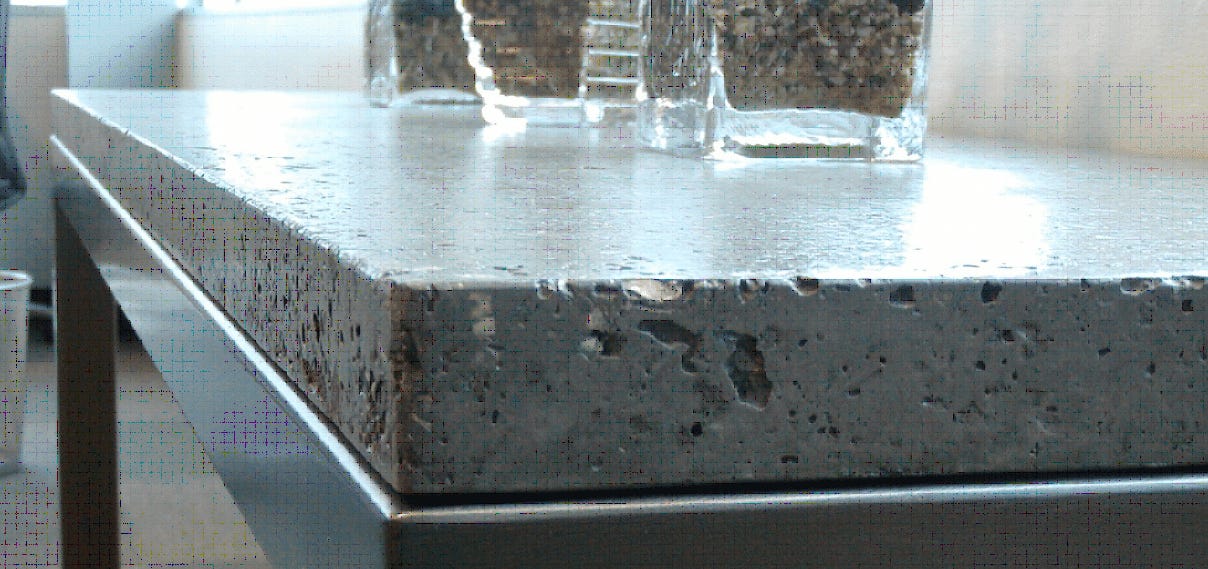
6. Squak mountain stone
The appeal of Squak Mountain Stone is in the hand-made nature — its pastoral, honest aesthetic and the sculptural variability that makes each slab distinct. Even better, the product provides all of this with an affordable price, as well as the environmental benefits that come with a recycled product.

7. QuartzStone
94% of QuartzStone content comes from crushed waste stone left over in quarries or from natural stone beds.

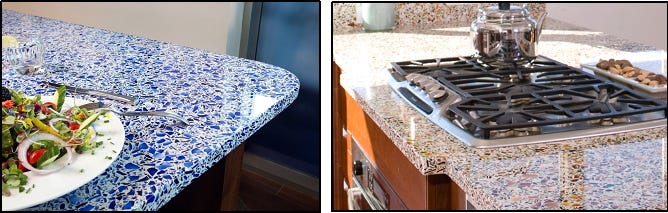
8. Vetrazzo recycled glass countertops.
Vetrazzo is composed of a patented formula that combines recycled glass with a binder of additives, pigments, and other recycled materials. All of the glass used in Vetrazzo is recycled, and it makes up approximately 85% of the final material.
9. Richlite Composite Surface
· Richlite is an FSC-certified product, made from post-consumer recycled paper. Sheets of paper are stacked up and saturated with a phenolic resin, then heat and pressure are applied. Heat and pressure cause the resin to set permanently with zero off-gassing.
· Richlite has become a popular option for interior and exterior applications. The durable, waterproof material is perfect for kitchen and bathroom recycled countertops. It’s seamless, gorgeous, and sustainable.
Comparing Richlite
- Richlite is more heat resistant and sanitary than other solid surfaces, yet warmer to the touch
- Unlike darker acrylic and polyester products, Richlite will not scratch white over time
- Richlite is much harder than wood and will not chip; most impact-resistant option for counters

메타데이터
- post_id
- 1a19a599bad8
- slug
- green-sustainable-and-eco-friendly-interiors-1a19a599bad8
- url
- https://medium.com/@aayushiH/green-sustainable-and-eco-friendly-interiors-1a19a599bad8
- canonical_url
- https://medium.com/@aayushiH/green-sustainable-and-eco-friendly-interiors-1a19a599bad8
- author_url
- https://medium.com/@aayushiH
- status
- ok
- fetched_at
- 2026-06-21 23:24:37