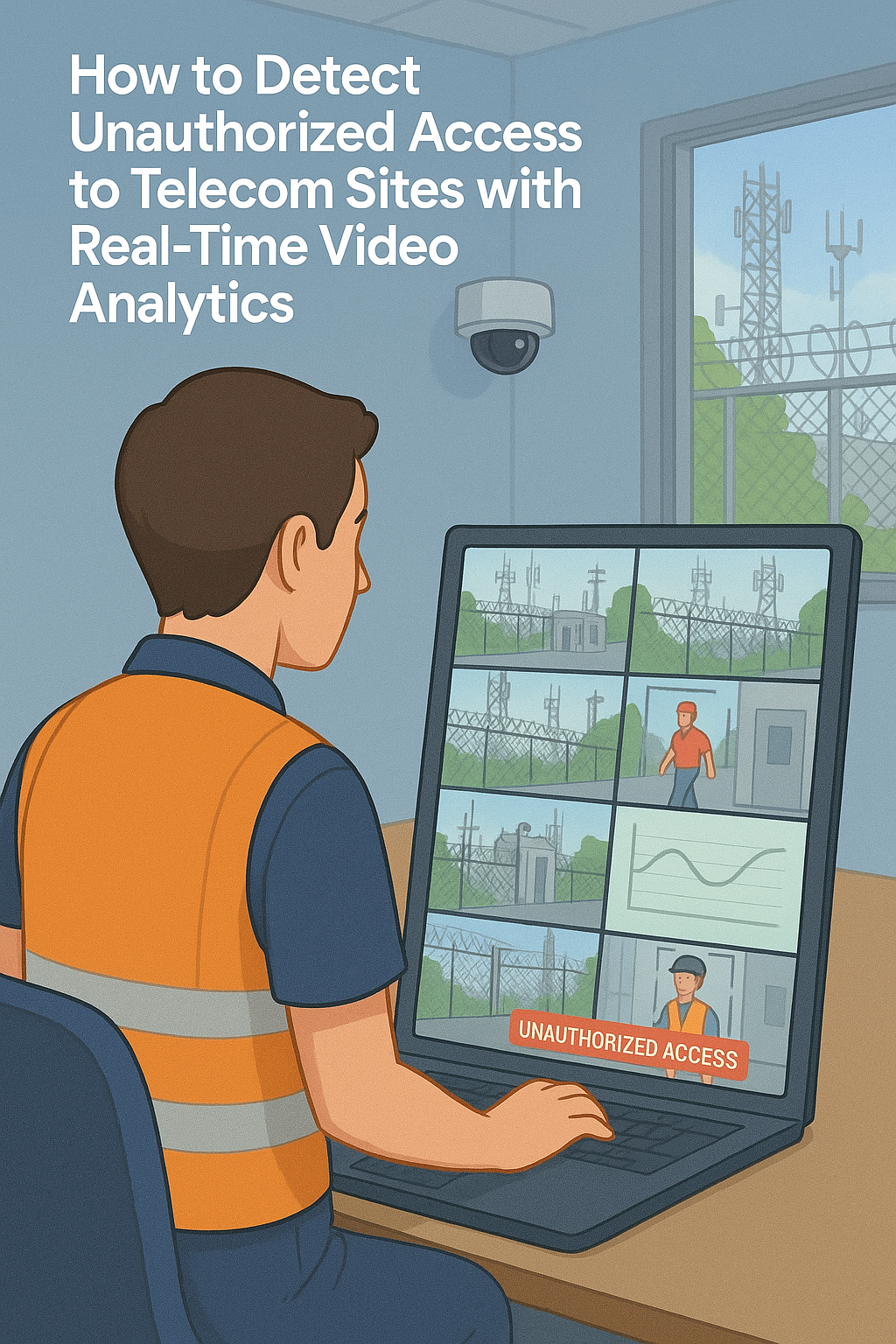
Access Control in Healthcare: Using Facial Recognition to Secure Medical Facilities
By Elinext Tech Space | HealthTech & Security Systems

Access Control in Healthcare: Using Facial Recognition to Secure Medical Facilities
By Elinext Tech Space | HealthTech & Security Systems
In modern hospitals and healthcare campuses, security is no longer just about locking doors. It’s about balancing safety with speed, privacy with convenience, and compliance with technology. As healthcare facilities expand and the risks of unauthorized access grow whether from external threats or internal breaches a new solution is gaining traction: facial recognition–based access control.
Unlike traditional key cards or PINs, facial recognition offers a contactless, efficient, and traceable way to manage entry and it’s increasingly being adopted as part of broader healthcare software development solutions designed for high-security environments like:
- Intensive Care Units (ICUs)
- Pharmaceutical storage rooms
- Data centers with EHR servers
- Research labs and biotech wings
- Administrative offices with patient billing data
Why Facial Recognition in Healthcare?
Healthcare facilities face a unique mix of challenges:
- Strict privacy laws (e.g., HIPAA, GDPR)
- Critical infrastructure requiring tiered access
- 24/7 operations with rotating staff and temporary personnel
- Pandemic-era hygiene concerns (favoring contactless tech)
Facial recognition helps meet these needs by providing:
Touchless entry especially important post-COVID Fast identity verification even with masks (with modern algorithms) Access logs for auditing and compliance Multi-level permissions based on role or shift schedule Integration with EHR and HR systems for dynamic access management
The Tech Stack: How It Works
Implementing a facial recognition access control system in healthcare requires integrating hardware, AI algorithms, and enterprise software. Here’s how the pieces come together:
1. Image Capture Devices
- 2D or 3D cameras at access points (entrances, doors, elevators)
- Some use infrared depth sensors for spoof protection
- Cameras connected via secure network (PoE or Wi-Fi)
2. Facial Recognition Engine
This is the AI core comparing live images to stored faceprints.
- Face detection: Identifies a face in the camera feed
- Face alignment: Normalizes head position and lighting
- Feature extraction: Uses deep learning (CNNs) to convert the face to an embedding
- Face matching: Compares against stored embeddings in <300ms
- Liveness detection: Ensures the face is real (not a photo or video)
Popular algorithms and frameworks:
- OpenCV + dlib (open source baseline)
- FaceNet, ArcFace (deep metric learning)
- InsightFace + RetinaFace (state-of-the-art)
- Commercial SDKs: Cognitec, NEC, VisionLabs
3. Access Management Logic
Once identity is verified, the system determines authorization level based on:
- User role (e.g., surgeon, pharmacist, janitor)
- Time of day (shift-based restrictions)
- Zone sensitivity (e.g., ICU vs. cafeteria)
- Multi-factor authentication (e.g., face + badge)
Rules are managed via a centralized admin dashboard often integrated with hospital HR, EHR, or identity providers (e.g., Active Directory).
4. Logging & Compliance
Every access attempt is logged with:
- Timestamp
- Face ID and access result
- Location (camera/door ID)
- Optional mask status or temperature (if thermal cameras used)
These logs support security audits, incident tracing, and regulatory reporting.
Integration with Healthcare Software Systems
A strong facial recognition access control solution is not standalone it becomes part of a hospital’s digital nervous system.
Elinext helps healthcare providers build:
- API-connected access control layers (with REST or gRPC interfaces)
- Role-based access management tied to EHR permissions
- Alerts to security teams or facility admins in real time
- Cross-campus coordination for larger hospital networks
We also ensure compatibility with existing badge systems, fire regulations, and visitor management tools.
Addressing Privacy and Ethical Concerns
Facial recognition in healthcare must be implemented carefully, with respect for privacy and data governance. Key best practices include:
- On-device recognition (edge processing) to avoid streaming personal data
- Faceprint encryption and hashing
- Time-bound data retention policies
- Patient opt-in options for non-critical areas
- Transparent signage and consent workflows
Countries and regions vary in their regulations, so systems must be configurable for HIPAA, GDPR, or local laws.
Real-World Use Cases
University Hospitals
Use facial recognition to restrict access to neonatal units and pathology labs. Reduces tailgating and badge sharing.
Pharmaceutical R&D Labs
Combine facial ID with PIN codes for multi-factor access to controlled substance storage rooms.
Ambulance Bay Entry
Hands-free facial ID access allows EMTs to enter ER supply zones without removing gloves.
EHR Access at Workstations
Some systems now allow facial login to sensitive patient systems reducing login friction while maintaining security.
Potential Challenges

Elinext’s Role in Smart Hospital Security
At Elinext, we develop and integrate:
- Facial recognition SDKs into existing access control systems
- Hospital-wide identity and permission management tools
- Mobile and kiosk-based check-in systems with face ID
- Secure APIs for linking with HR, EHR, and incident response workflows
These solutions are part of our broader healthcare software development offerings, designed to make hospitals smarter, safer, and more secure without adding friction to clinical workflows.
Final Thought
In a healthcare environment where every second matters and every area counts, facial recognition can play a critical role in ensuring only the right people are in the right places at the right time.
Not just for security. But for safety. For compliance. And ultimately, for better care.
💬 Would facial recognition make your facility feel safer or raise new concerns? What features would make it useful but respectful of privacy? Let us know in the comments.
Explore our full suite of AI development solutions here.
Tags:
HealthTech #FacialRecognition #AccessControl #HospitalSecurity #HealthcareSoftwareDevelopment #BiometricSecurity #SmartHospitals #Elinext
메타데이터
- post_id
- 1a35bb48784f
- slug
- access-control-in-healthcare-using-facial-recognition-to-secure-medical-facilities-1a35bb48784f
- url
- https://medium.com/@elinext/access-control-in-healthcare-using-facial-recognition-to-secure-medical-facilities-1a35bb48784f
- canonical_url
- https://medium.com/@elinext/access-control-in-healthcare-using-facial-recognition-to-secure-medical-facilities-1a35bb48784f
- author_url
- https://medium.com/@elinext
- status
- ok
- fetched_at
- 2026-07-24 12:11:42