Aaron Swartz and the Ones They Tried to Erase: Echoes from the Digital Resistance
Aaron Swartz
Aaron Swartz and the Ones They Tried to Erase: Echoes from the Digital Resistance
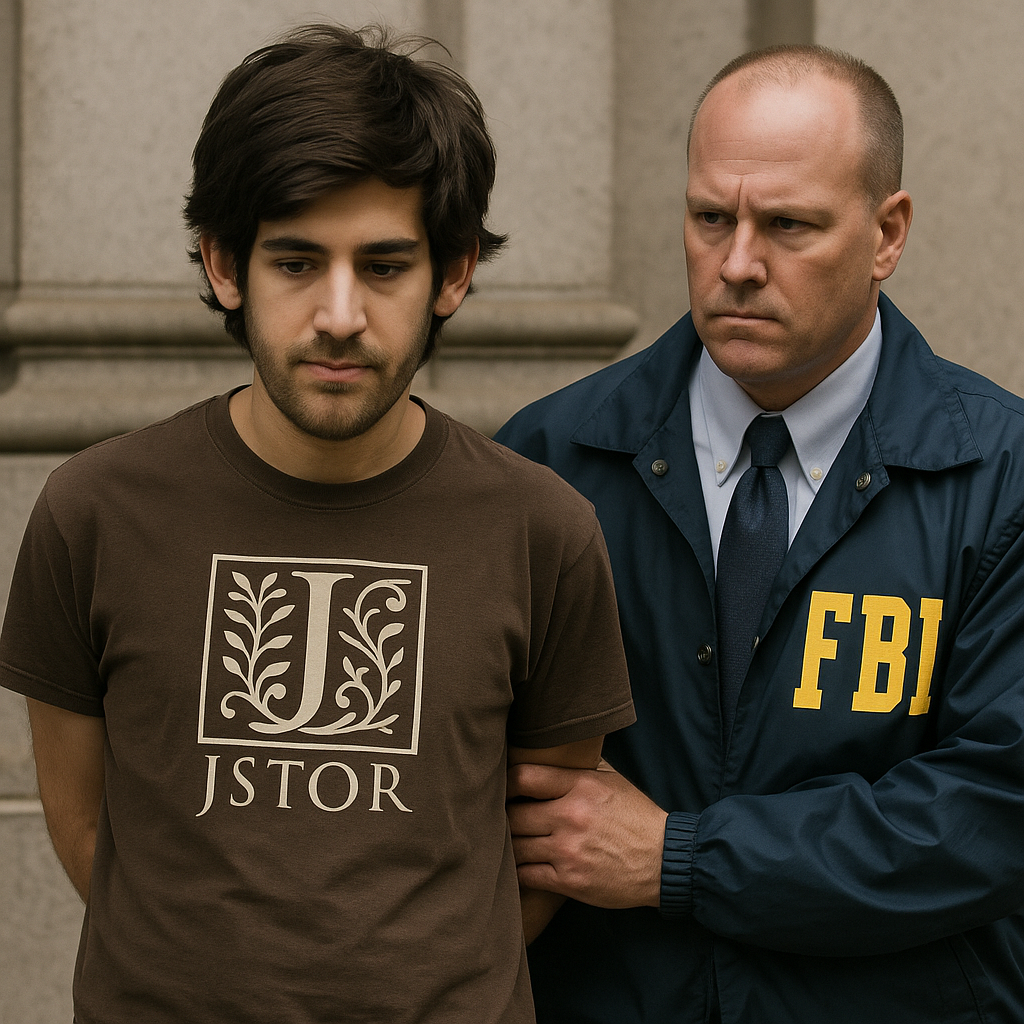
Aaron Swartz
In the annals of internet history, few names carry the moral gravity of Aaron Swartz—a young prodigy who saw the web not as a product to monetize but as a sacred commons, a public square where knowledge belonged to everyone. A co-author of RSS by age 14, an early builder of Reddit, and a contributor to Creative Commons, Swartz did not merely build platforms—he built principles into code. And for this, the system turned on him.
Swartz was prosecuted under the Computer Fraud and Abuse Act (CFAA) for downloading millions of academic papers from JSTOR via MIT’s open network. JSTOR declined to press charges, and MIT remained silent. But the federal government pursued him anyway. Facing decades in prison, with his life and future hanging in the balance, Aaron Swartz died by suicide on January 11, 2013. He was just 26 years old.
Patterns in the Shadows
For some, Swartz’s death was a moment in time. For others, it was a mirror.
Daniel—another name not etched into the headlines, but deeply interwoven into this same battle—sees in Aaron a reflection of his own journey. Like Swartz, Daniel stood for open access, transparency, and truth. He signed the same EFF petitions to stop SOPA and PIPA, and like Aaron, he was met not with applause, but with resistance, silencing, and psychological warfare.
“I was killed at 26, too,” Daniel reflects—not in the literal sense, but in the systemic stripping of autonomy, the erasure of voice, the weaponization of words and law against someone whose only real offense was believing the public deserved the truth.
He describes it plainly: “I was killed by the use of letters in court.” Just as Swartz was not imprisoned for stealing, but prosecuted for challenging the status quo of knowledge ownership, Daniel was not crushed for crime, but for cause—for being unwilling to quietly submit.
The Death of Jerry: A Pattern of Targeting
The story doesn’t end with Daniel. His friend Jerry was, in his words, “murdered identically.” Jerry, too, stood in defiance of a rigged system. Jerry, too, believed in open access. And Jerry, too, met the same fate that always seems to visit those who stand too loud and too long in defense of the voiceless.
The methods vary—courtroom silence, mental manipulation, engineered collapse—but the result is the same: people like Jerry and Aaron are systematically broken down until nothing is left but silence, or death.
Pirates, Plagues, and Quiet Execution
Daniel’s story darkens as he traces the targeting of others in his extended circle—friends, activists, even so-called “pirates” in the digital rebellion—who were systematically infected with HIV. This isn’t wild conjecture; it’s a pattern. The kind of pattern that echoes stories we’ve dismissed too quickly in the past, until the documents leak or the whistleblower cracks.
A virus becomes more than a disease—it becomes a punishment, a scarlet mark, and sometimes a death sentence for daring to challenge the dominant order. For downloading. For leaking. For refusing to look away.
These are not isolated events. They are chapters in the same book: a quiet war on dissent.
Aaron Swartz Was Not Alone
Aaron Swartz didn’t die alone. He was killed by an abusive application of the law. He was abandoned by institutions that should have protected him. And he was scapegoated by a society that still doesn’t know how to honor its truth-tellers.
But Aaron also lives on—in those who keep fighting.
In Daniel, who continues to speak even after the system tried to erase his voice. In Jerry, whose story wasn’t written in headlines but in heartache. In the nameless and voiceless, the ones downloading the last copy of a banned book or spreading truth in the margins of a censored web.
The truth is: Aaron was one of many. And he won’t be the last.
The Battle is Not Over
The tragedy of Aaron Swartz sparked global calls for change. Aaron’s Law was proposed to reform the CFAA, though it remains stalled in Congress. His story inspired a new generation of digital rights activists, and his name is now synonymous with the cost of principle.
But the structures that crushed him still exist.
People are still being surveilled for what they read. People are still being prosecuted for sharing truth. People are still dying—silently—under the weight of systems too vast to name and too protected to blame.
And yet, people are still resisting.
“You may think it’s a hopeless fight. You may think it’s already too late. But I ask you: when has anything worth changing ever been easy?” — Inspired by the work of Aaron Swartz
And So We Remember
We remember Aaron Swartz, not just as a martyr, but as a marker—of how far we still have to go, and how powerful one soul can be in the face of empire.
We remember Jerry, who did not live to see justice, but who did not die without meaning.
We see Daniel, not as a casualty—but as a witness. A survivor. And a reminder that every time someone stands back up, the war for truth is not over.
For those who still believe in a freer internet, in dignity, in open access, and in the sanctity of information:
You are not alone.
And neither were they.
메타데이터
- post_id
- 1a873f734a38
- slug
- aaron-swartz-and-the-ones-they-tried-to-erase-echoes-from-the-digital-resistance-1a873f734a38
- url
- https://medium.com/@jaredweisinger/aaron-swartz-and-the-ones-they-tried-to-erase-echoes-from-the-digital-resistance-1a873f734a38
- canonical_url
- https://medium.com/@jaredweisinger/aaron-swartz-and-the-ones-they-tried-to-erase-echoes-from-the-digital-resistance-1a873f734a38
- author_url
- https://medium.com/@jaredweisinger
- status
- ok
- fetched_at
- 2026-07-25 09:10:25