Kyiv, Moscow, and the War’s Next Turning Point
How the Battlefield, Economy, and Endurance Are Reshaping the Conflict
Kyiv, Moscow, and the War’s Next Turning Point
How the Battlefield, Economy, and Endurance Are Reshaping the Conflict
The Russia-Ukraine war has now lasted longer than World War I. Over the past several months, a chorus of Western and Ukrainian commentators has declared that a “turning point” has arrived — and that it favors Kyiv. From the Atlantic Council to the Financial Times, from to Foreign Policy, the narrative has coalesced around Ukraine finally gaining the upper hand. But as someone who has been tracking this conflict closely, I have to ask: have we actually reached that moment, or are we mistaking tactical successes for strategic shifts?
Let me start by defining what we mean by a “turning point.” After examining definitions from major dictionaries, I define it as a specific moment or short period when a situation changes in an important, impactful way, shifting the overall direction or balance of fighting in what could mark the beginning of a decisive new phase of hostilities. With that definition in hand, let’s examine the evidence.
The Ground War: Slowing, But Still Shifting
One of the clearest metrics for a turning point should be a significant change in territorial control. The data, however, paints a more ambiguous picture than the headlines suggest.
According to Ukraine’s Deep State OSINT group, Russia has continued to make net territorial gains every month since fall 2023. Yes, the rate of those gains has slowed considerably — from an average of 16 square kilometers per day in June 2025 to just 1 square kilometer per day in June 2026 . That’s a remarkable decline that you and I might be tempted to call a turning point in itself.
But here’s the rub: Russia is still gaining ground, not losing it. The Institute for the Study of War, which uses slightly different methodology, shows Russia experiencing net losses in March, April, and May 2026 after gains in January and February. Meanwhile, Russia recently claimed control of five more villages in the Kharkiv and Donetsk regions . Ukrainian President Zelenskyy has vigorously contested some of these claims, particularly regarding the strategic city of Kostiantynivka, but the overall pattern remains one of Russian — not Ukrainian — advance .
What you and I are witnessing is not a battlefield reversal but a deceleration. The front lines are largely frozen in what analysts describe as a “dynamic stalemate” . Neither side can mass forces for major breakthroughs because drone surveillance has made the battlefield hyper-transparent. Instead, Russian tactics have shifted from large armored convoys to small assault groups of 2–3 soldiers attempting to infiltrate Ukrainian defensive positions . This is not the hallmark of an army that has lost the initiative — it’s the hallmark of an army adapting to new constraints.
The Drone Revolution: A Game Changer or Equalizer?
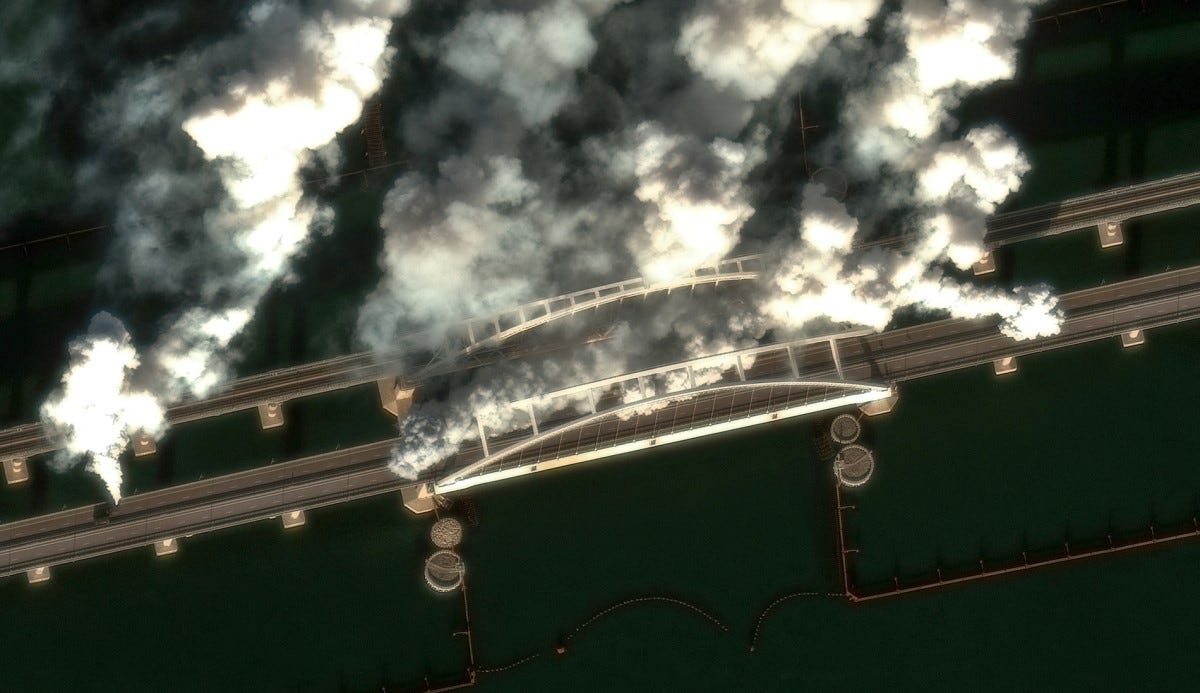
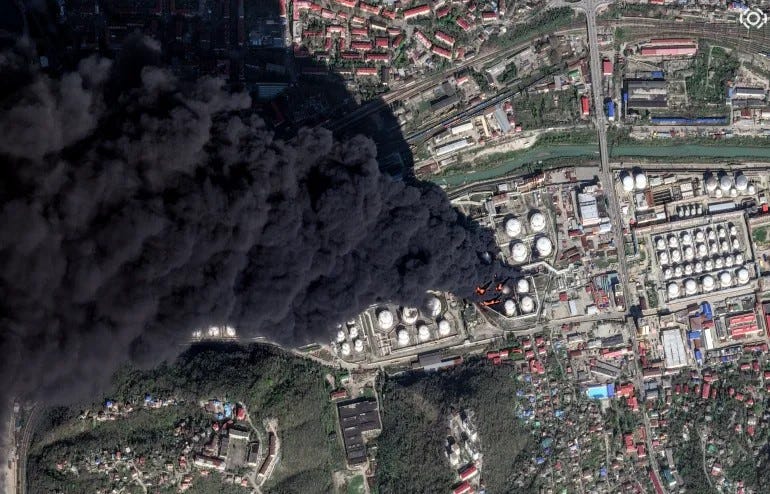
Where Ukraine has unquestionably made strides is in the drone war. As you and I have seen in recent months, Ukrainian long-range strikes have reached targets over 1,000 kilometers behind Russian lines, including oil facilities near Moscow and St. Petersburg . These attacks have psychological and economic impact, but do they constitute a turning point?
The numbers tell a complex story. Ukraine has achieved tactical drone superiority — fielding roughly 1.3 strike drones for every Russian one . However, Russia still dominates in several critical categories of aerial warfare. Moscow possesses hundreds of operational ICBMs and SLBMs — which Ukraine lacks entirely — as well as thousands of conventional cruise and ballistic missiles like Iskanders and Kalibrs [citation:original article]. Ukraine has essentially run out of its own Tochka ballistic missiles and is still scaling production of indigenous alternatives.
More concerning for Ukraine is the interceptor gap. Ukrainian stocks of Patriot anti-ballistic missiles are rapidly depleting, and the United States produces only 60–65 such interceptors per month. A significant German-financed purchase of Patriots won’t begin deliveries until 2028 . This means Ukrainian cities may soon have no effective defense against Russia’s most advanced missiles just as Kyiv appears to be gaining momentum elsewhere . That’s not the trajectory of a war that has decisively turned in Ukraine’s favor.
The Economic Battle: Strain Without Collapse
If you’ve been following the economic analysis, you’ve probably encountered claims that Russia’s economy is on the verge of collapse. The reality, as with so much in this war, is more nuanced.
Russia’s war economy is under genuine strain. Defense spending consumed roughly 48% of total state spending in the first quarter of 2026, and the federal budget deficit hit 6 trillion rubles ($77 billion) in the first half of the year — 60% higher than the entire annual target . Oil and gas revenues remain 30% lower than a year earlier . The liquid portion of Russia’s National Wealth Fund has shrunk from 6.5% of GDP in February 2022 to 1.8% in 2026 .
But here’s what the “collapse” narrative misses: Russia is not broke. The country continues to access domestic credit markets — however expensively — and retains substantial reserves. The International Institute for Strategic Studies recently concluded that while Russia faces a “coming crisis,” it still has the capacity to sustain its war effort, albeit at great cost to its civilian sector .
Consider this contrast: the U.S. federal deficit is projected at about 5.8% of GDP in fiscal year 2026, while France’s deficit exceeded 5% of GDP in 2025. Russia’s deficits, while concerning, are not historically unusual for a major power at war. The ruble appreciated substantially against the dollar in the first half of 2026 — hardly a sign of imminent collapse [citation:original article].
What I find most telling is the assessment from Ukraine’s own Foreign Intelligence Service, which acknowledged in June 2026 that “money is no longer Russia’s main problem” . Even if oil prices rise and revenues recover, Moscow cannot quickly convert money into additional weapons or troops. The constraint is now industrial capacity and manpower, not cash.
The Human Element: Attrition on Both Sides
The personnel situation is perhaps the most contested metric. Western intelligence suggests Russia has suffered roughly 1,000,000 casualties (killed and wounded), compared to 250,000–300,000 for Ukraine [citation:original article]. Russian monthly casualty rates have reportedly exceeded recruitment rates since December 2025 .
Yet here again, the “turning point” narrative faces inconvenient facts. The Russian army continues to recruit roughly 30,000 soldiers per month and is actually growing, according to some military experts [citation:original article]. Ukrainian Brigadier General Andriy Biletsky, commander of the Third Army Corps, told Reuters in May 2026 that Russian forces are “becoming exhausted” but also acknowledged that “the next six months are the most critical” for Ukraine to seize the initiative .
That’s a commander speaking about the potential for a turning point — not declaring one has already arrived.
The Political Calculus: Putin Endures
For a turning point to be truly decisive, it must be accompanied by a shift in the political will to continue fighting. Here, the evidence is mixed.
Domestically, Putin’s approval rating has declined but remains remarkably high — 79% approved of his performance in May 2026, with 74% supporting military actions in Ukraine [citation:original article]. Notably, 60% of Russians favor moving to peace talks, but their vision of peace — including recognition of Donbas as Russian territory and Ukraine’s refusal to join NATO — remains largely incompatible with Ukrainian positions [citation:original article].
Internationally, Russia is not isolated. China’s share of Russia’s foreign trade has reached 35%, and Russian dependence on Chinese dual-use goods exceeds 80% in some segments . The Trump administration has moved from isolating to engaging Moscow, exemplified by the 2025 Alaska summit. European leaders are divided on continuing maximal isolation.
So, Have We Reached a Turning Point?
Based on the evidence, I believe the answer is no — at least not yet.
Ukraine has achieved important successes: slowing Russia’s territorial gains, expanding its long-range strike capabilities, and imposing increasing costs on Russia’s economy. These are meaningful developments that you and I should acknowledge. But they have not produced a decisive, durable shift in the overall direction or balance of the war.
What we’re seeing instead is a war of attrition entering a new phase — one where neither side can achieve a decisive breakthrough, but where the long-term trajectory depends on which side can sustain the grinding costs of industrial warfare. As the International Institute for Strategic Studies put it, Russia faces “a fundamental choice over whether to radically escalate its demands on Russia’s economy and society or to scale back its war aims” .
As Dmytro Kuleba, the former Ukrainian foreign minister, wisely noted: “Turning points are identified retrospectively.” No commander in history has walked into their leader’s office and declared, “We’ve reached the turning point of the war.” That’s not how history works [citation:original article].
For you and me watching this conflict unfold, the temptation is to search for clarity and decisive moments. But war — especially a war of attrition — rarely offers such neat narratives. The battle for Kyiv in spring 2022 was a clear turning point. The Kharkiv counteroffensive in fall 2022 was another. What we are seeing now is a gradual erosion of Russian momentum, not a sudden reversal.
Will that erosion eventually become a true turning point? Perhaps. The next six months — as General Biletsky suggests — may be critical . Russia’s economic strains, industrial constraints, and manpower challenges may become insurmountable. Or they may simply adjust their approach, as they have done repeatedly throughout this conflict.
In the meantime, I’d caution against reading too much into the “turning point” headlines. History suggests that genuine turning points are recognized only in retrospect. We may well be witnessing one now — but we won’t know for sure until years from now, when historians look back and tell us what really happened.
메타데이터
- post_id
- 1a8e39250ea4
- slug
- kyiv-moscow-and-the-wars-next-turning-point-1a8e39250ea4
- url
- https://medium.com/@18shubhampawar/kyiv-moscow-and-the-wars-next-turning-point-1a8e39250ea4
- canonical_url
- https://medium.com/@18shubhampawar/kyiv-moscow-and-the-wars-next-turning-point-1a8e39250ea4
- author_url
- https://medium.com/@18shubhampawar
- status
- ok
- fetched_at
- 2026-07-08 20:12:56