Is Patent the Final Step or the First?Part 1
Navigating the Intersection of New Product Development & Patent Strategy
Is Patent the Final Step or the First?Part 1
Navigating the Intersection of New Product Development & Patent Strategy
In many companies, patents are often treated as a “last line of defense” — something to be addressed only when a product is nearing launch. However, in today’s hyper-competitive and rapidly iterating market, this “reactive protection” mindset is no longer enough.
The risk of hindsight we’ve all seen the scenario: A product reaches the commercialization stage, only for the company to discover that competitors have already locked down the patent landscape. This leads to restricted market entry, compromised pricing power, and the painful realization that your technical roadmap is blocked.
For management, the more critical question is: at which stage of product development should patents be incorporated? Is the role of patents limited to legal protection of technology, or can they become strategic tools for product differentiation, market entry barriers, and negotiating leverage?
Drawing from my experience as an In-house patent engineer involved in numerous Idea-to-Launch projects, I’ve summarized a systematic approach to integrating patent into the core of your New Product Development (NPD) process.

Photo by UX Indonesia on Unsplash
👉What can you retrieve from this article ?
-
How patent strategy builds a sustainable competitive advantage.
-
The synergy between patent and the Stage-Gate® Model.
-
Practical ways patent can accelerate and de-risk your product development journey.
👉Why Patent Strategy is a Critical Business Pillar, Not Just a Legal Task ?
In today’s competitive landscape, patents have evolved from being a simple “legal shield” to a strategic asset that directly impacts a corporate’s revenue, valuation, and market dominance.
Drawing from my experience as an In-house patent engineer, I’ve identified 6 key strategic advantages that a robust patent portfolio brings to a company:

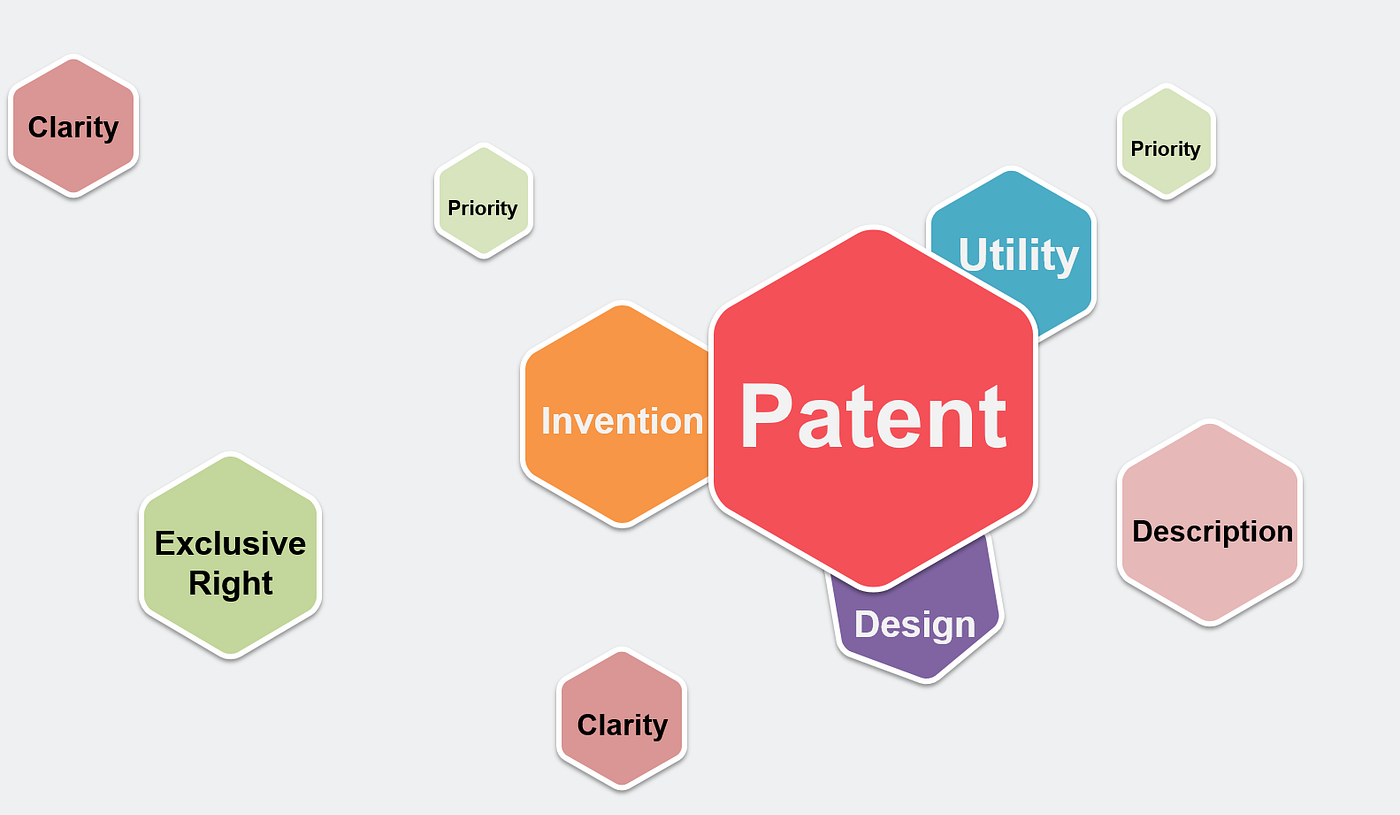
Fig. 1 6 key patent strategic advantages brings to a company
1. Building Technical Barriers
At its core, patent is an exclusive right safeguarded by a legal framework. When a company chooses to patent technologies or core modules that truly possess strategic value, it is in effect constructing a series of invisible yet highly effective technological barriers around the products derived from those technologies (hereinafter referred to as “products,” encompassing both hardware devices and software services). These barriers enable the company to lawfully exclude competitors from entering key markets and technological domains.
From the perspective of product strategy and competitive positioning, the value of patents extends far beyond legal protection. Patents should be viewed as strategic assets that can be integrated into a company’s product roadmap and market deployment. They serve to reinforce product differentiation, extend product life cycles, and preserve strategic initiative in competitive landscapes.
2. Protecting Market Share
From a market strategy perspective, patents are not only exclusive in nature but also inherently territorial. Companies should therefore treat patent portfolio planning as an integral component of their go-to-market and sales strategies. By proactively securing patent protection for key technologies or core modules in their primary target countries, firms can establish technology-based barriers to market entry.
This approach goes beyond merely preventing technological imitation. More importantly, it serves to constrain competitors’ pathways into strategically important markets, thereby enabling companies to retain pricing power and protect long-term revenue potential.
3. Increasing Negotiation Leverage
When competitors attempt to break through patent-based technological barriers in order to enter key markets, the fastest — and often the only — viable route is to acquire the relevant patents or obtain licenses as a prerequisite for market access. In such circumstances, companies that have already built a robust patent portfolio around critical technologies or core modules are well positioned to command greater bargaining power in licensing and transactional negotiations, effectively converting technological advantages into revenue and cash flow.
More importantly, a patent portfolio also functions as a risk management instrument. Should a company face litigation initiated by a non-practicing entity (NPE)[1], its existing patent assets can serve as strategic leverage in settlement negotiations. This, in turn, helps mitigate potential legal exposure and reduce broader operational and business risks.
4. Mitigating Infringement Risks
For late entrants in an industry, the primary objective of patent portfolio development is often not offense, but defense. By building a systematic defensive patent portfolio, companies can preserve negotiation leverage and strategic flexibility when confronted with infringement allegations from industry incumbents. This defensive posture helps ensure that product development and market expansion are not forced to a halt by a single legal risk.
5. Supporting Commercial Excellence
In high-technology industries such as semiconductors and pharmaceuticals, intellectual property risk is a critical factor in procurement decision-making. To mitigate the risk of litigation arising from the use of infringing products, customers in these industries typically require suppliers to provide explicit contractual assurances that the supplied products do not infringe third-party patent rights.
At this stage, if a supplier is able to provide concrete and verifiable information regarding its patent portfolio, it goes beyond merely fulfilling disclosure obligations related to risk. Such transparency directly enhances customer confidence in the product and, to a certain extent, objectively demonstrates the company’s technological strength in the relevant field. As a result, it can materially increase the likelihood of successful transactions and foster opportunities for long-term partnerships.
6. Enhancing Company Valuation
For companies planning to list on China’s stock exchanges, patent portfolio development has long ceased to be a byproduct of the R&D process. Instead, it has become a critical lever that can directly influence company valuation and fundraising capability. Under China’s Initial Public Offerings (IPO) pricing mechanism, underwriting prices are determined by taking into account both tangible and intangible assets. Intangible assets include goodwill, patents, and other intellectual property — among which patents are one of the most rapidly accumulable asset classes.
In other words, patents are not merely tools for protecting technology; they are highly efficient instruments for enhancing enterprise valuation. For companies seeking access to China’s capital markets, a systematic patent strategy often serves as a key lever for indirectly elevating IPO pricing and strengthening negotiation power.
Taken together, the multiple dimensions of value generated by patent portfolio development make it clear that patents are far more than legal safeguards. They are strategic assets capable of directly shaping a company’s revenue potential, valuation, and market position.
This naturally leads to a more fundamental question: how should companies approach patent portfolio development from a strategic perspective and embed it into the new product development process?
Before exploring how to “systematically build a patent strategy,” it is worth first examining an even more foundational issue — how company decide which products to develop in the first place.
👉How Do Company Decide Which Products to Develop ? A Stage-Gate Model Perspective
For most medium-sized and large companies, new products are not created based on intuition alone. Instead, they emerge through a clearly defined and repeatable new product development (NPD) process — one that systematically transforms vague ideas into executable, evaluable, and ultimately market-ready products.
While specific NPD processes vary across organizations due to differences in company culture, industry characteristics, and operational contexts, their underlying logic remains largely consistent [2]. This article adopts the widely used Stage-Gate Model as a reference framework to illustrate how companies systematically drive new product development.
What Is the Stage-Gate Model ?
The Stage-Gate Model breaks down the journey from idea to launch into six stages and five decision gates. Each stage has clearly defined objectives, and at each gate, a structured business review is conducted to determine whether the project should proceed or be terminated — commonly referred to as Go/Kill decisions. The following sections provide a brief overview of the execution focus at each stage and gate[3]-[7].

Fig.2 Stage-Gate Model:New product development process.
1. Stage 0:Discovery
🔶Stage Objective:Identify emerging market opportunities and generate and collect new product ideas.
🔶Key Contributors:Marketing (market analysts, sales representatives) and R&D department (PMs, R&D engineers).
This stage represents both the starting point and one of the most critical phases of the entire Stage-Gate Model. A well-designed development process alone cannot compensate for weak product ideas. As such, companies closely observe and analyze market trends in order to generate product concepts that align with emerging market opportunities.
At a minimum, companies typically establish an internal idea submission mechanism to collect new product proposals. In practice, however, product ideas are more commonly generated through the following two channels:
(1) Market research and competitive analysis
Product managers (PMs), sales teams, or market analysts track and analyze competitors’ product specifications and offerings, identifying opportunities for technical enhancement or differentiation that can serve as the basis for new product ideas.
(2) Customer-initiated requirements
Customers may proactively communicate specific needs to PMs, R&D personnel, or sales teams, with the expectation that the company will develop products tailored to those requirements.
That said, when responding to customer-initiated requests, companies must carefully assess the size of the addressable market and determine whether it is sufficient to justify the associated development costs. If the potential market is limited, such requests may fall into the category of special-order or customized products, which carry a higher risk of failing to recoup development investments. As a result, not all customer-driven requests are suitable candidates for new product development.
2. Gate 1:Idea Screen
🔶Evaluation Objective:Filter new product ideas and assess alignment with the company’s overall business strategy.
🔶Key Reviewers:Second-level managers from Marketing and R&D department.
Gate 1 is designed to quickly determine — based on a limited set of criteria — whether a product idea merits further evaluation. It serves as a critical decision point at which the company decides whether to commit resources to initiating a new product development project.
Key screening criteria typically include:
● Strategic fit:Whether the product idea aligns with the company’s core vision and annual strategic objectives.
● Product advantage and competitiveness:Whether the idea addresses unmet customer needs or delivers value that existing products cannot.
● Market attractiveness:Whether the potential market size is sufficiently large and whether the competitive landscape is overly intense.
● Resource flexibility and risk:Whether existing internal resources are adequate to initiate the development project, and whether legal or other risks may be involved.
Given the limited information available at this early stage, formal financial evaluations are typically not conducted. If a product idea passes Gate 1, it signifies the official launch of the development project, which then proceeds to Stage 1.
3. Stage 1:Scoping
🔶Stage Objective:Conduct a rapid, preliminary assessment of the technical feasibility and commercial potential of the new product project.
🔶Key Contributors:Marketing (market analysts) and R&D department (PMs and R&D engineers).
Stage 1 focuses on quickly gathering and analyzing readily available information — primarily secondary data through desk research — to perform preliminary investigations across three core dimensions:
● Preliminary market assessment:Estimating the potential market size of the new product and identifying key competitors.
● Preliminary technical feasibility assessment:Evaluating whether the company’s existing technologies are sufficient to support development of the new product, rather than assessing feasibility based on the current state of scientific research.
● Preliminary commercial feasibility assessment:Estimating development costs and potential profitability of the new product.
It is important to note that while both Gate 1 and Stage 1 consider factors such as market size and competitive landscape, they differ fundamentally in nature. Gate 1 is a decision point, whereas Stage 1 is an execution phase. The primary output of Stage 1 is a preliminary assessment report, which serves as input for Gate 2, where the product concept undergoes a second round of screening.
4. Gate 2:Second Screen
🔶Evaluation Objective:Determine whether to continue allocating resources based on the preliminary assessment report generated in Stage 1.
🔶Key Reviewers:First-level managers from Marketing and R&D department.
Gate 2 builds upon the preliminary assessment report developed during Stage 1 and serves as a second decision checkpoint to reassess whether the company should continue investing in the new product project.
Compared with Gate 1, the evaluation criteria at Gate 2 not only include the original screening dimensions — strategic fit, product advantage and competitiveness, market attractiveness, and resource flexibility and risk — but also introduce a preliminary financial assessment. At this stage, however, financial evaluation is conducted using rapid and simplified indicators (such as payback period), rather than a full-scale financial analysis.
If the project passes Gate 2, the new product development initiative advances into a phase of substantive and in-depth evaluation.
- Stage 2:Build business case
🔶Stage Objective:Conduct an in-depth assessment of the target market, define product specifications, develop the project plan, and establish the commercial viability and investment rationale of the new product.
🔶Key Contributors:R&D (R&D engineers and PMs), Manufacturing (process engineers and procurement specialists), Marketing (market analysts and sales representatives), and Finance department.
Stage 2 represents the most critical planning and decision-making phase in the new product development process. Unlike Stage 1, which relies primarily on secondary data for preliminary assessments, Stage 2 emphasizes the use of extensive primary research to comprehensively evaluate the new product from both market and technology perspectives, with the goal of producing a robust business case.
The core components of the business case typically include:
● Product definition and value proposition:Target market, product specifications and validation methods, customer pain points addressed, and differentiation from competing products.
● Commercial viability analysis:Go-to-market and sales strategies, as well as competitive market analysis.
● Financial evaluation (the most critical element):Development costs and revenue projections.
● Project execution plan:Resource requirements, development timelines, and assessments of technical development feasibility.
Because this stage requires significant R&D investment — such as equipment purchases and substantial human resource allocation — the business case must clearly demonstrate that the new product project is financially profitable, strategically worthwhile, and operationally feasible.
6. Gate 3:Go to Development
🔶Evaluation Objective:Decide whether to commit substantial resources based on the new product’s business case.
🔶Key Reviewers:Top executives from R&D, Marketing, and Finance department.
Gate 3 is the final review checkpoint before a new product enters the Development stage and represents the last opportunity for the company to terminate the project. At this gate, decision-makers conduct a comprehensive review of the business case produced in Stage 2 and apply a more rigorous reassessment against all evaluation criteria defined at Gate 2.
It should be emphasized that although Gate 3 and Gate 2 share the same evaluation dimensions, the nature of the decision at Gate 3 typically involves significant financial and resource commitments. As a result, financial analysis outcomes become the central basis for decision-making at this gate.
If the project passes Gate 3, the company formally commits substantial resources, and the new product development initiative proceeds into the full-scale development phase.
7. Stage 3:Development
🔶Stage Objective:Execute new product development and conduct initial testing in response to market and customer requirements.
🔶Key Contributors:R&D (PMs and R&D engineers), Manufacturing (process engineers and procurement specialists), Marketing (market analysts and sales representatives), Legal (legal counsel and patent engineers), and Finance department.
Because Stage 2 has already defined clear product specifications and validation methods, Stage 3 focuses on execution. For physical products, this stage involves the actual design and fabrication of the product. For service-based offerings, it entails designing service content and establishing service delivery processes and standard operating procedures (SOPs).
To ensure alignment with market and customer needs, product prototypes are repeatedly tested within the company’s environment during this stage through alpha testing (internal testing, laboratory testing). Design elements that fail to meet requirements are promptly refined, preparing the product for subsequent beta testing (user testing or field trials) in customer environments.
Although Stage 3 is primarily execution-driven from a technical standpoint, cross-functional involvement remains critical. Marketing teams continuously monitor market trends and collect customer feedback to ensure that prototypes remain aligned with market expectations. Finance teams regularly update cost and budget information to maintain visibility over development expenditures. Legal teams work closely with R&D to address legal and intellectual property issues as they arise, ensuring that development progress is not disrupted by legal risks.
8. Gate 4:Go to Testing & Validation
🔶Evaluation Objective:Confirm whether the product prototype meets the original product definition and assess readiness for mass production.
🔶Key Reviewers:The Chief Executive Officer, together with top executives from R&D, Manufacturing, Marketing, and Finance department.
Gate 4 is the first formal review checkpoint after development has been completed. Its primary purpose is to verify whether the prototype has achieved the expected outcomes and to reassess the commercial viability of the new product in order to decide whether it should proceed to the production phase.
At this gate, key review focus areas include whether the prototype broadly aligns with the original product definition approved at Gate 3 and whether product quality has passed initial testing.
It should be noted that the prototype does not necessarily need to be identical to the original product definition, as design changes frequently occur during development due to technical or practical considerations. Such deviations do not, in themselves, constitute barriers to progressing to the next phase — provided that all design changes are well justified and supported by preliminary test results demonstrating continued alignment with market and customer requirements.
If the review concludes that mass production is feasible, the new product development project advances into the Testing & Validation stage, where readiness for market launch and subsequent operations is further examined and confirmed.
9. Stage 4:Testing & Validation
🔶Stage Objective:Conduct advanced testing of the new product and validate its production, marketing, and operational plans.
🔶Key Contributors:R&D (PMs and R&D engineers), Manufacturing (process engineers, procurement specialists, and quality engineers), Marketing (sales representatives and marketing specialists), Legal (legal counsel and patent engineers), and Finance department.
The scope of testing and validation in Stage 4 extends beyond the product itself to include associated marketing, manufacturing, and even operational plans, in preparation for mass production and market launch in the subsequent stage.
Key testing and validation activities typically include:
● Advanced testing (beta, user, or field testing):Verifying product performance and functionality in real-world usage scenarios.
● Pilot production, limited production, or pilot operations:Testing and validating manufacturing or operational processes and related equipment, while calibrating production capacity and cost structures.
● Test marketing or trial sales:Assessing market and customer responses to the product’s marketing strategy in order to estimate market share and revenue potential.
● Revised business and financial analysis:Reassessing the commercial and economic viability of the project based on updated revenue and cost data.
It is important to note that although preliminary prototype testing is conducted during Stage 3, those tests take place within the company’s internal environment, where conditions are inherently more controlled and idealized. Stage 4 therefore plays a critical role by validating the product in actual customer environments, ensuring closer alignment with real-world usage conditions.
As a result, if testing outcomes in Stage 4 fall short of expectations, it is both normal and necessary to return to Stage 3 for design revisions. Iteration between Stage 3 and Stage 4 is a natural and essential part of an effective new product development process.
10. Gate 5:Go to Launch
🔶Evaluation Objective:To confirm that the new product’s commercialization plan is fully prepared and to approve marketing budgets and channel deployment.
🔶Key Reviewers:Chief executive officer (CEO), heads of Marketing, and Finance department.
Gate 5 is the final review checkpoint before a new product development project enters full-scale commercialization. As such, it represents a critical decision point at which the project may still be terminated.
At this gate, decision-makers primarily review the overall outcomes of Stage 4, focusing on the following key aspects:
● Commercial Readiness Check:Whether manufacturing facilities are capable of stable production and meeting predefined quality and yield targets; whether the supply chain can reliably provide required materials or components; whether customer service personnel have completed product training; and whether marketing teams have finalized all necessary marketing materials.
● Sustained Positive Financial Outlook:Whether the projected return on investment (ROI) remains attractive, whether market acceptance is meeting expectations, and how long the product is expected to reach breakeven.
● Appropriateness of the Launch Plan and Feasibility of the Operational Ramp-Up:The launch plan is assessed to ensure that marketing strategies are well aligned with target customer segments and that the launch timing is appropriate (e.g., avoiding direct overlap with competitors’ product launches). The operational ramp-up plan focuses on whether marketing budgets are sufficient, whether sales teams have adequate manpower to approach potential customers, and whether contingency plans are in place should sales performance fall short of expectations.
Once Gate 5 is approved, the product’s market launch and operational plans will be fully executed in the subsequent stage.
11. Stage 5:Launch
🔶Stage Objective:To formally introduce the new product to the market and commence mass production and sales.
🔶Key Contributors:Marketing (sales representatives, marketing specialists, customer service personnel), R&D (PMs), and Manufacturing (process engineers, procurement specialists, quality engineers) department.
Stage 5 represents the final execution stage of the new product development process. Its core objective is to commercialize the product and successfully deploy it into the market or customer environment. As a result, this stage involves extensive production, sales, and market engagement activities.
To support market penetration and sales momentum, companies may participate in industry-specific exhibitions (such as semiconductor exhibitions or international consumer electronics exhibitions) or competitions to enhance product visibility and brand awareness.
12. PLR:Post-Launch Review
🔶Evaluation Objective:To monitor and evaluate the performance of the new product after launch.
🔶Key Reviewers:Senior executives from Finance and R&D department.
After a defined period following commercialization — typically 6 to 18 months — the new product transitions into a regular product within the company’s portfolio. At this stage, the organization conducts a systematic review of actual revenue, costs, profitability, and production performance, comparing these results with the forecasts made at Gate 3 and Gate 5.
The purpose of the Post-Launch Review is to assess the overall outcomes of the new product development project and to capture insights that can inform future development initiatives.
When Does Product Iteration Occur?
Once a new product is launched and deployed into the market and customer environments, product iteration begins to take shape. This process is driven by user and customer feedback, which may come from a variety of sources — such as users voluntarily sharing their experiences on social media, or marketing teams proactively collecting feedback through customer engagement activities.
In practice, the marketing function typically consolidates user and customer feedback related to product usage and performance, and then shares these insights with R&D or manufacturing department as inputs for improving product features, usability, or production processes.
Furthermore, when market response to a new product is particularly strong, the PMs may leverage both the existing product design and accumulated user feedback to propose the design direction for the next-generation product. At this point, the new product development process effectively loops back from the Post-Launch Review (PLR) to Stage 2 (Build business case), initiating a new development cycle and thereby forming a structured product iteration process.
The above sections provide a concise overview of the key activities and review focus at each stage and gate of the Stage-Gate Model. It is important to note, however, that in real-world practice, companies often tailor the model to fit their own organizational structures and internal governance frameworks. As a result, the primary execution teams, gate reviewers, and evaluation criteria at each stage and gate may vary across organizations.
Case Illustration
After reviewing the key concepts of the Stage-Gate Model for new product development, some readers may still find the framework abstract or difficult to visualize. To make the process more concrete and intuitive, the following section
presents a simple case illustration using the example of an Italian restaurant developing a new menu item.
1. Stage 0:Discovery
The restaurant’s management team notices a growing customer interest in creative and fusion cuisine. This sparks an internal discussion:
“What if we incorporated century eggs into Italian dishes — could that become a conversation starter?”
Based on this initial curiosity, the marketing specialists and R&D chefs begin observing market trends while informally gauging customer reactions. Over time, the concept of “century egg–inspired Italian cuisine” gradually takes shape, with ideas such as century egg pasta, century egg risotto, and even century egg pizza emerging through ongoing exploration.
🔶Stage Objective:Identify new opportunities in the food and dining market, and generate and collect ideas for new menu items.
🔶Key Contributors:Marketing specialists, R&D chefs, store managers / operations supervisors.
🔶Key Activities:
● Monitoring dining and culinary trends (e.g., the popularity of East–West fusion cuisine).
● Analyzing whether competitors have launched similar creative dishes.
● Collecting customer feedback (acceptance of century eggs, interest in innovative cuisine).
● Conducting internal brainstorming sessions on possible combinations of century eggs and Italian dishes.

Fig.3 Schematic diagram of Stage 0.
2. Gate 1:Idea Screen
When the marketing specialists and R&D chefs present several ideas for century egg–inspired Italian dishes, the management team deliberately avoids discussing execution details at this stage. Instead, they raise a more fundamental question:
“Would century egg–based dishes feel out of place in an Italian restaurant like ours?”
Only after confirming that the overall direction does not conflict with the restaurant’s brand positioning are ideas allowed to move forward. After discussion, the management team concludes that century egg–inspired Italian cuisine is consistent with the restaurant’s identity as a “Taiwanese–Italian fusion experimental kitchen” As a result, they decide to give this new menu concept a try.
🔶Evaluation Objective:Screen new menu concepts and assess whether “century egg–inspired Italian cuisine” aligns with the restaurant’s overall brand positioning and business strategy.
🔶Key Reviewers:Restaurant owner / brand director, head chef, marketing manager.
🔶Key Evaluation Criteria:
● Whether the concept fits the restaurant’s brand image.
● Whether the culinary concept is sufficiently differentiated and conversation-worthy.
● Whether customer acceptance risks are manageable.
● Whether existing kitchen equipment can support the proposed dishes.
🔶Review Outcome:Approved!The team proceeds to conduct an initial investigation into the feasibility of century egg–inspired Italian dishes in terms of both preparation and commercial potential.

Fig.4 Schematic diagram of Gate 1.
- Stage 1: Scoping
Once the concept of century egg–inspired Italian cuisine takes shape, the R&D chefs do not rush into development. Instead, they begin with a series of quick, high-level checks.
Marketing specialists sound out loyal customers to gauge their willingness to accept century egg as an ingredient. R&D chefs consult food suppliers to confirm whether century eggs can be sourced reliably and consistently, and perform a rough cost calculation to estimate potential pricing. The objective is simple:to determine whether this new menu direction is worth pursuing further.
🔶Stage Objective:Conduct a rapid, preliminary assessment of the feasibility of century egg–inspired Italian cuisine in terms of both dish execution and commercial value.
🔶Key Contributors:Marketing specialists, R&D chefs, procurement specialists.
🔶Key Activities:
● Preliminary market testing (loyal customer interviews, online surveys).
● Assessment of supply stability and cost of century egg ingredients.
● Initial estimation of per-dish cost and feasible pricing range.
● Evaluation of food safety, flavor acceptance, and customer adoption risks.

Fig.5 Schematic diagram of Stage 1.
4. Gate 2:Second Screen
After completing the preliminary investigation, the management team now has some concrete numbers — and a clearer intuition — about century egg–inspired Italian cuisine.
At this point, the key question discussed around the table is straightforward:
“If we actually sell century egg Italian dishes, will we lose money?”
Rather than conducting complex financial modeling, the team relies on quick, pragmatic judgment. They assess whether ingredient costs are reasonable, whether the proposed pricing would be acceptable to customers, and whether the payback period would be excessively long. If the answers remain unclear, they prefer to hit the brakes rather than push forward prematurely.
Ultimately, the team concludes that the cost of sourcing century eggs falls within an acceptable range, the proposed pricing is likely to be well received by customers, and the development cost of the new dishes could be recovered in approximately one month. Based on this assessment, they decide to continue investing in the development of century egg–inspired Italian cuisine.
🔶Evaluation Objective:Determine whether to proceed with the development of century egg–inspired Italian cuisine based on the preliminary assessment results.
🔶Key Reviewers:Restaurant owner, head chef, finance/operations manager.
🔶Key Evaluation Criteria:
● Whether costs and pricing can deliver a reasonable gross margin.
● Whether customer acceptance exceeds the minimum threshold.
● Whether the concept merits entry into formal menu development.
🔶Review Outcome:Approved!The team proceeds to define the specific dishes under century egg–inspired Italian cuisine and to further validate its commercial viability.

Fig.6 Schematic diagram of Gate 2.
5. Stage 2:Build business case
After confirming that the overall direction of the new menu concept is viable, the R&D chefs formally begin working on the new dishes. They repeatedly experiment with different ways of preparing century eggs and pairing them with Italian cuisine, eventually discovering that century egg risotto best balances and complements the egg’s distinctive flavor profile.
At the same time, the marketing specialists starts to define the target customer segment and considers how the dish should be positioned and communicated in the market. In parallel, the finance function conducts a more rigorous analysis of costs and profit potential.
Finally, all insights are consolidated into a comprehensive business case for “Century Egg Risotto,” which serves as the formal proposal submitted to the management team for approval of the new menu item.
🔶Stage Objective:Conduct an in-depth evaluation of the target customer segment, define the content of the century egg–inspired Italian cuisine menu item, and establish its commercial viability.
🔶Key Contributors:R&D chefs, marketing specialists, procurement specialists, finance specialists.
🔶Key Activities:
● Testing different methods of preparing century eggs and pairing them with Italian dishes.
● Defining the target customer segment and core marketing message.
● Performing a comprehensive cost and profit analysis.

Fig.7 Schematic diagram of Stage 2.
6. Gate 3:Go to Development
The restaurant owner, head chef, and finance manager carefully review the entire business case for Century Egg Risotto from start to finish. Their focus goes beyond whether the dish tastes good; instead, they ask a more fundamental question:
“Is this a new dish worth committing to?”
Their evaluation takes into account operational workload in the kitchen, staffing implications, long-term profitability, and the potential impact on the restaurant’s brand. Passing this gate signifies that the management team has formally agreed to move forward and develop the dish to a level that can be confidently served to customers.
Ultimately, the management team concludes that Century Egg Risotto is highly creative, can positively reinforce the restaurant’s brand positioning, and can be supported by existing organizational resources. As a result, they decide to formally approve and proceed with the development of the new menu item.
🔶Evaluation Objective:Decide whether to formally commit resources to developing the Century Egg Risotto based on its business case.
🔶Key Reviewers:Restaurant owner, head chef, finance manager.
🔶Key Evaluation Criteria:
● Whether the business model is financially viable.
● Whether brand-related risks are manageable.
● Whether the required resource investment is reasonable.
🔶Review Outcome:Approved!The team proceeds with the actual development of the Century Egg Risotto and begins internal testing.

Fig.8 Schematic diagram of Gate 3.
7. Stage 3:Development
The Century Egg Risotto officially enters the kitchen development phase. The R&D chefs and kitchen team repeatedly prepare and taste the dish, refining flavors and plating while gradually standardizing the cooking process to ensure consistent quality across all chefs.
During this period, the new menu item is not yet introduced to customers. However, through continuous internal testing and refinement, the dish steadily takes shape behind the scenes.
🔶Stage Objective:Complete the development of the Century Egg Risotto and conduct internal testing.
🔶Key Contributors:R&D chefs, kitchen team, marketing specialists.
🔶Key Activities:
● Finalize the Century Egg Risotto recipe (flavor profile, portion size, and plating).
● Conduct multiple rounds of trial cooking and flavor adjustments.
● Perform internal tastings and incorporate feedback.
● Standardize the cooking process through Standard Operating Procedures (SOPs).
● Perform preliminary estimates of serving time and labor requirements.

Fig.9 Schematic diagram of Stage 3.
8. Gate 4:Go to Testing & Validation
The management team conducts a thorough review of whether the Century Egg Risotto can be served smoothly during actual operations and whether its quality remains consistent across different preparations. If issues such as slow service or unstable quality are identified, the team will require the dish to return to the kitchen for further refinement — rather than forcing it to launch prematurely.
Ultimately, the Century Egg Risotto proves to be operationally smooth and delivers stable, consistent quality, allowing the project to move forward into the trial sales phase.
🔶Evaluation Objective:Confirm that the Century Egg Risotto meets the final recipe specifications and assess its feasibility for scaled production.
🔶Key Reviewers:Restaurant owner, head chef, operations manager.
🔶Key Evaluation Criteria:
● Flavor consistency of the Century Egg Risotto.
● Serving efficiency and quality consistency.
● Cost structure alignment with initial expectations.
🔶Review Outcome:Approved!The restaurant proceeds with a trial launch of the Century Egg Risotto to validate real-world operations and market response.

Fig.10 Schematic diagram of Gate 4.
9. Stage 4:Testing & Validation
The management team decides to conduct a limited trial launch of the Century Egg Risotto in selected locations and time periods to closely observe customer reactions and ordering behavior.
Front-of-house staff are responsible for collecting customer feedback, the kitchen team monitors serving efficiency and verifies whether actual costs align with expectations, and the marketing specialists test different promotional approaches while tracking order rates. All collected data and customer insights serve as critical inputs in determining whether the Century Egg Risotto is ready for a full-scale market launch.
🔶Stage Objective:Conduct a real-world trial of the Century Egg Risotto to validate operational performance and market acceptance.
🔶Key Contributors:Kitchen team, front-of-house service staff, marketing specialists.
🔶Key Activities:
● Trial sales in selected locations and/or time periods.
● Collection of customer feedback and sales data.
● Adjustment of pricing and marketing strategies based on trial results.

Fig.11 Schematic diagram of Stage 4.
10. Gate 5:Go to Launch
Before officially launching the Century Egg Risotto to the public, the management team asks one final question:
“If a customer orders this dish tomorrow, can we confidently serve it?”
Beyond the dish itself, the team confirms that ingredient supply is secure, front-of-house staff are fully prepared to introduce and explain the new menu item, and marketing materials are ready for release. Only when every element is in place does the restaurant allow this century egg–inspired Italian dish to be added to the menu.
Ultimately, with a stable ingredient supply, well-trained service staff, and marketing exposure that even reaches media outlets, the Century Egg Risotto is deemed ready for a full-scale launch.
🔶Evaluation Objective:Confirm that all conditions for the full market launch of the Century Egg Risotto are in place.
🔶Key Reviewers:Restaurant owner, head of marketing, finance/operations manager.
🔶Key Evaluation Criteria:
● Stability of ingredient supply and supply chain.
● Completion of marketing materials and staff training.
● Revenue expectations and risk assessment.
🔶Review Outcome:Approved!The Century Egg Risotto is officially added to the menu and launched for sale.

Fig.12 Schematic diagram of Gate 5.
11. Stage 5:Launch
With everything in place, the Century Egg Risotto is officially added to the menu. Front-of-house staff introduce the dish to customers, the marketing team shares the behind-the-scenes development story on social media, and the kitchen delivers the dish consistently and at scale.
What began as a simple idea has now become an integral part of the restaurant’s offering.
🔶Stage Objective:Formally launch the new menu item, Century Egg Risotto, and begin commercial sales.
🔶Key Contributors:Kitchen team, front-of-house service staff, marketing specialists.
🔶Key Activities:
● Officially list the Century Egg Risotto on the menu.
● Promote the dish through marketing and social media campaigns.
● Monitor sales performance and customer feedback in real time.

Fig.13 Schematic diagram of Stage 5.
12. PLR:Post-Launch Review
After the Century Egg Risotto has been on the menu for some time, the management team conducts a retrospective review of its sales performance, profitability, and customer feedback to assess whether the dish has truly resonated with the market.
Based on this review, the team decides whether the dish should remain a regular menu item, be repositioned as a limited offering, or be retired altogether. In this case, although sales of the Century Egg Risotto declined noticeably as public attention gradually faded, the dish significantly increased the restaurant’s brand visibility and overall revenue during its peak period.
As a result, the management team decided to reposition the Century Egg Risotto as a reservation-only limited menu item, preserving its uniqueness while continuing to leverage its brand impact.
🔶Evaluation Objective:Track the actual post-launch performance of the Century Egg Risotto.
🔶Key Reviewers:Restaurant owner, head chef, finance manager.
🔶Key Evaluation Criteria:
● Actual sales volume and gross margin.
● Customer repeat rate and feedback.
● Decision to retain as a regular item, reposition as a limited offering, or discontinue.
🔶Review Outcome:Repositioned as a reservation-only limited menu item.

Fig.14 Schematic diagram of PLR.
In the next article will explore how patents can support and even guide new product development, enabling companies to approach critical decision points in the development process with greater objectivity and strategic clarity.
👉Reference
- 何謂不實施專利實體(Non-Practicing Entity,NPE)?
https://stli.iii.org.tw/article-detail.aspx?no=64&tp=5&d=7300
- The Stage-Gate Model: An Overview, Scott J. Edgett, 2015.
https://www.stage-gate.com/blog/the-stage-gate-model-an-overview/
- Idea-to-Launch-Stage-Gate-Model
- The Stage-Gate® System The Idea-to-Launch Process — An Intro & Summary
- 【PM實戰】新產品開發流程(四):Stage-Gate 階段關卡法
https://www.pmtone.com/npd-stage-gate/
-
產品開發體系之建立https://iknow.stpi.niar.org.tw/Post/Read.aspx?PostID=9207
-
利用 Stage-Gate 流程進行開放式創新
https://synergytek.com.tw/blog/2014/08/17/useing-stage-gate-to-open-innovation/
- What’s Next After Stage‐Gate
http://media.transformanceadvisors.com/pdfs/After-Stage-Gate.pdf
The latest version of the Stage-Gate Model in companies the 3A system — Adaptive & Flexible, Agile, and Accelerated — to enable a more responsive and flexible approach to managing change throughout the new product development process. In addition, the gate review mechanism has been refined to move beyond a sole reliance on financial metrics, instead also considering factors such as strategic alignment between the product and the market, technical feasibility, and sustainable competitive advantage.
Reference [9] provides a concise and accessible overview of the updated Stage-Gate Model. Interested readers are encouraged to consult the original source for further details.
- 從精實生產到精實創新(上)
메타데이터
- post_id
- 1ac817a4e60e
- slug
- is-patent-the-final-step-or-the-first-part-1-1ac817a4e60e
- url
- https://medium.com/@Irenesiplearningrecord/is-patent-the-final-step-or-the-first-part-1-1ac817a4e60e
- canonical_url
- https://medium.com/@Irenesiplearningrecord/is-patent-the-final-step-or-the-first-part-1-1ac817a4e60e
- author_url
- https://medium.com/@Irenesiplearningrecord
- status
- ok
- fetched_at
- 2026-07-17 08:48:32