I Tried and Analyzed 5 Types of Walking To Find the Best for Fat Loss
Yes, there are ways to maximize fat loss when walking — but are they worth the effort?
I Tried and Analyzed 5 Types of Walking To Find the Best for Fat Loss
Yes, there are ways to maximize fat loss when walking — but are they worth the effort?

Photo by Sergei A on Pexels
Walking is considered one of the best exercises for fat loss.
Why?
For four main reasons:
- It’s easy, accessible, and extremely cheap. All you need is a good pair of shoes.
- It doesn’t spike our hunger like other, more intense forms of cardio. Even if you walk for an hour — and burn extra calories — you’ll be just as hungry as if you’d been sitting instead.
- Although it burns fewer calories per hour than intense cardio like running or sprinting, we can usually walk for longer periods without feeling fatigued, so we end up burning more calories overall.
- It prompts our bodies to use more fat as fuel than other, more intense forms of cardio.
In short, when fat loss is the goal, adding more daily steps should be on everyone’s agenda — something I’ve experienced myself. After all, one of the main reasons I’ve been able to achieve and maintain a low body fat percentage for almost 6 years is that I regularly walk around 10-15k steps daily.
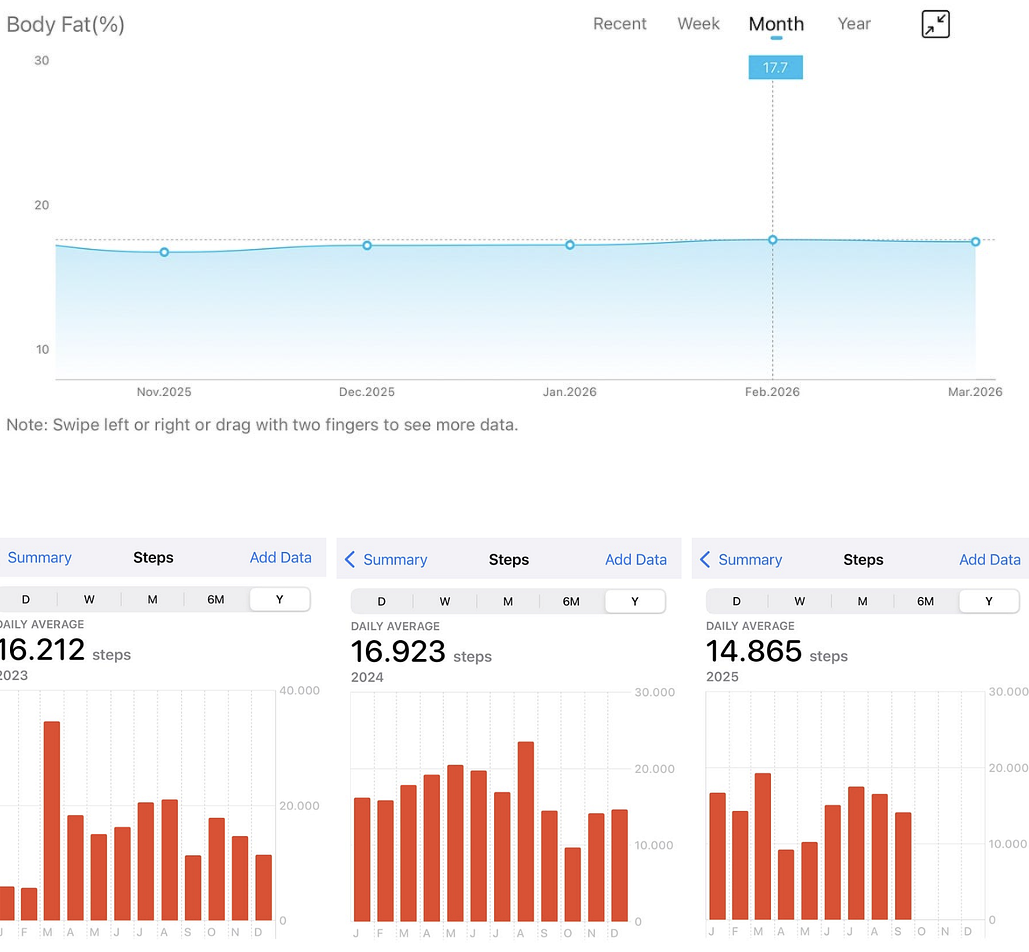
Body fat percentage in the last few months and my daily step count in the last 3 years. Source: author.
Now, I know not everyone can get this crazy amount of daily steps in. And now that I’m a mom, I’ll probably need to lower my daily steps as my baby grows and requires more of me.
This prompted a question: Is there a way for me to walk less yet still get the same fat-loss-and-maintenance results?
Based on a 30-day weighted-walking challenge I did in 2024, I knew the answer was yes. There are ways to maximize fat loss when walking.
This is why I decided to try 5 different ways to intensify my walks and analyze their data. My goal? Determine which ones are worth the effort.
Here’s what I learned:
Disclaimer: The purpose of this article is to share my experience with 5 types of walking — not to provide medical advice. So remember to consult a healthcare professional before attempting anything new.
The Criteria I Considered in My Analysis
To evaluate which types of walking are worth the effort, I considered three criteria:
- Calories burned. To burn fat, we need to burn more calories than we consume in a day, which means that maximizing the calories burned while walking is desirable. For this, I not only considered the data I got from my walking workouts, but I also reviewed the available research.
- Accessibility/convenience. Although walking in general is very accessible, some types are more so than others, and, since one of the key ingredients of any successful fat loss strategy is sustainability, the most convenient walking types will win in this category.
- Enjoyment. Any movement that feels like a chore will make fat loss efforts harder than they need to be, which is why I’m considering enjoyment.
I rated every walking type from 0 to 3 to help me create an overall score. Then I compared all the totals and created a tier list.
Note: My hope with this simple experiment is to inspire you to also try different types of walking to see which ones work best for you. Remember that what you find convenient and enjoyable might be different from me, so hopefully, this article will inspire you to also create a personal walking tier list.
#1. Combo-Walking
Combo-walking means combining a different activity — reading emails, watching YouTube, taking a call — while walking indoors, either on a treadmill desk or around the living room.
This is one of my sweethearts because it’s how I get such a high step count every single day. I try as much as possible to use my treadmill desk while working, or I’ll pace around my living room when scrolling.
Here are two examples of combo-walking:
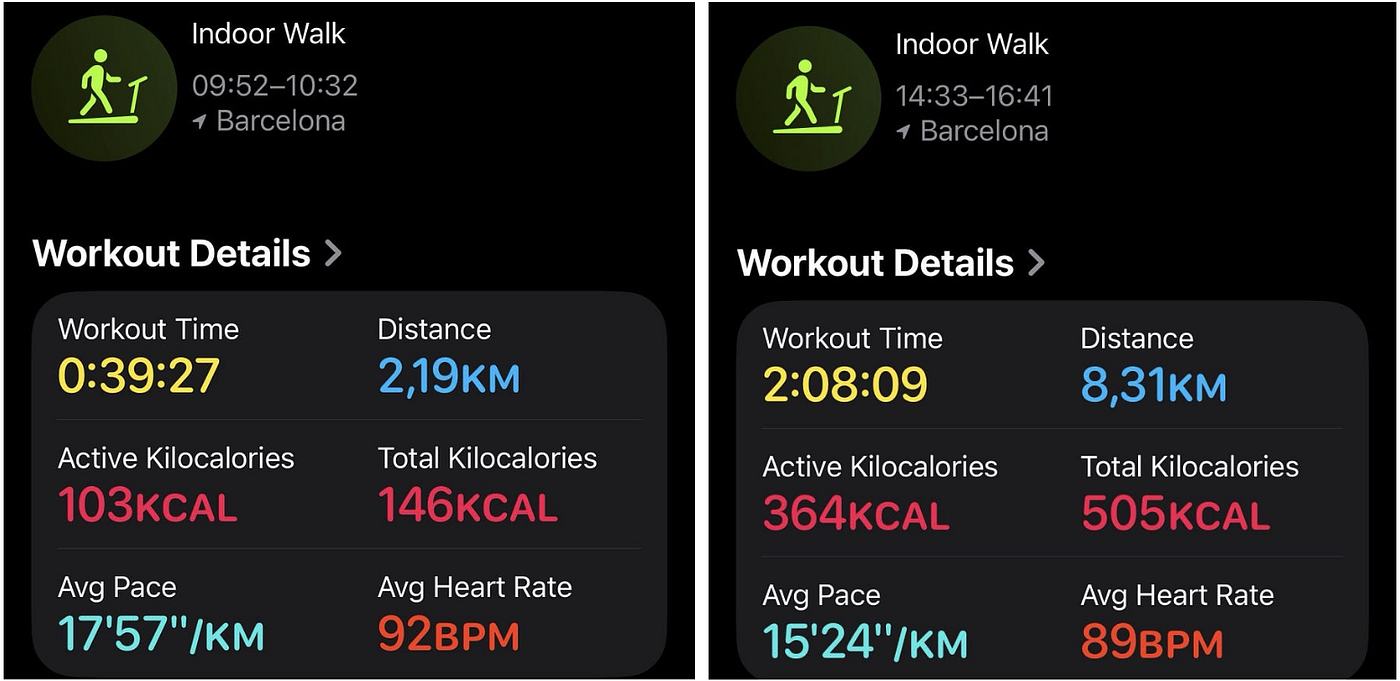
Two examples of combo-walking. Source: Author’s smartwatch.
According to a 2010 meta-analysis, walking for 30 minutes at a moderate pace (4.8 km/hour) translates to roughly 150 kcals. But as you can see, my average kcals when combo-walking are around 115 kcals (I’m using the total kcals to estimate this).
Now, my burned calories when combo-walking were likely lower than the meta-analysis’s for two reasons. First, my lean physique probably means I burn fewer calories than other people when moving, and second, my pace when walking indoors is slower than 4.8 km/hour, which is inevitable because I need to walk more slowly when multitasking.
This means that, in terms of calories, combo-walking gets a 0 (less than other types of walks).
But what about accessibility and enjoyment?
Well, I’d give a 3 to both categories because combo-walking is super easy for me as I only need to start circling my living room while doing something (you don’t need a treadmill desk). And I have a blast when multitasking and getting my steps in.
In short, combo-walking gets:
- Calories: 0
- Accessibility: 3
- Enjoyment: 3
Total score: 6
Note: You can read more about different types of combo-walking here, and about my experience with a treadmill desk here.
#2. Weighted-Walking
As I mentioned in the intro, I tested this in 2024 during a 30-day challenge, which you can check here.
Back then, I learned that wearing a vest that was about 10% of my body weight helped me burn an extra 10% of calories while walking, which was in line with a 2013 study that reached the same conclusion. In other words, a weighted vest could help me shorten my walks by 10%, which doesn’t seem like too much, but still… better than nothing.
Below you can see the results I got during that challenge:

Left (30-minute 5 km/hour walk without the vest). Right (30-minute 5 km/hour walk with the vest). Source: author.
That said, now that I have a baby, most of my outdoor walks are weighted, as I’m either carrying my baby or pushing a stroller. So, this time around, I wanted to test how carrying extra weight in my daily life affects my walking — not to mention that most people don’t have weighted vests, so this seemed a more realistic way to do weighted walking.
Here’s what I saw:
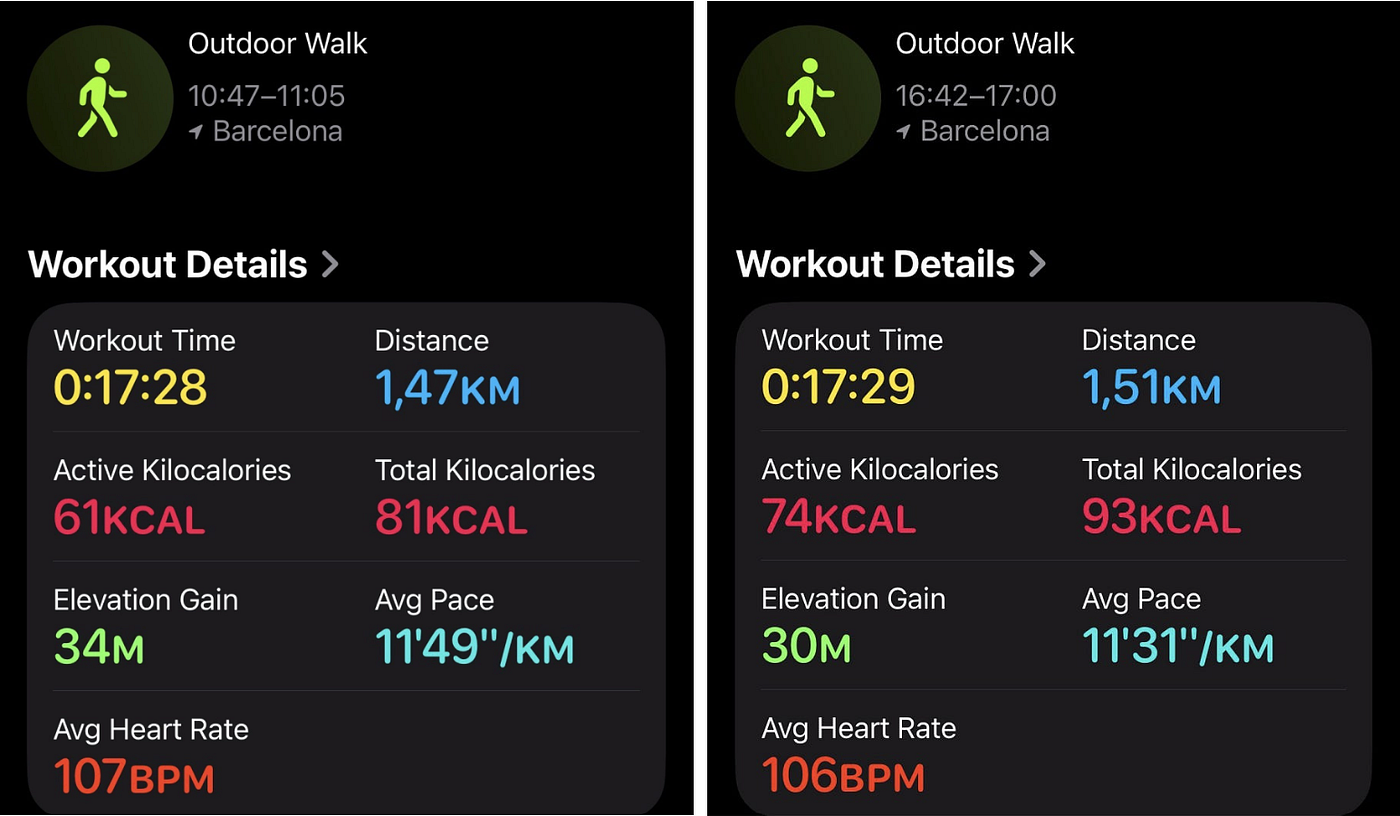
Walking the same route around my neighborhood without my baby (left) vs. while pushing the stroller (right). Source: author
As you can see, walking the same route and at a similar pace while pushing the stroller does burn more total calories. In this case, it was about 15% more.
In other words, whether you’re pushing a stroller or carrying a heavy backpack, adding extra weight to your daily walks can definitely increase the calories burned, even if just a bit, which is why I’m giving this a score of 1 (burns more calories than regular walking, but it’s way less than other types I’ll discuss later).
In terms of accessibility, since we can all add weight to our walks with a backpack — and we don’t necessarily need a vest — this gets a 3.
As for enjoyment, I’m going to give it a 2 — and that’s only because I’m currently pushing my baby around town. Otherwise, it’d be a 1 (or maybe even a 0). I personally don’t enjoy carrying extra weight.
In short, weighted-walking gets:
- Calories: 1
- Accessibility: 3
- Enjoyment: 2
Total score: 6
#3. Brisk-Walking
Although my 2024 challenge centered on weighted vests, I also took the opportunity to test what happened when I walked faster (from 5 km/h to 6 km/h).
The results blew me away:

Left (30-minute 5 km/hour walk without the vest). Right (30-minute 6 km/hour walk without the vest). Source: author
As you can see, walking 20% faster helped me burn 66% more calories, which is in line with research on the benefits of faster walking (without reaching the point of running).
Wow.
But what if walking at 6 or 7 km/hour feels like a chore? Because I was bathed in sweat after I finished walking on the treadmill, and you know, I don’t want my daily walks to always require an immediate shower.
This is something I tested around my neighborhood. Doing almost the same route but with a faster pace got me these results:
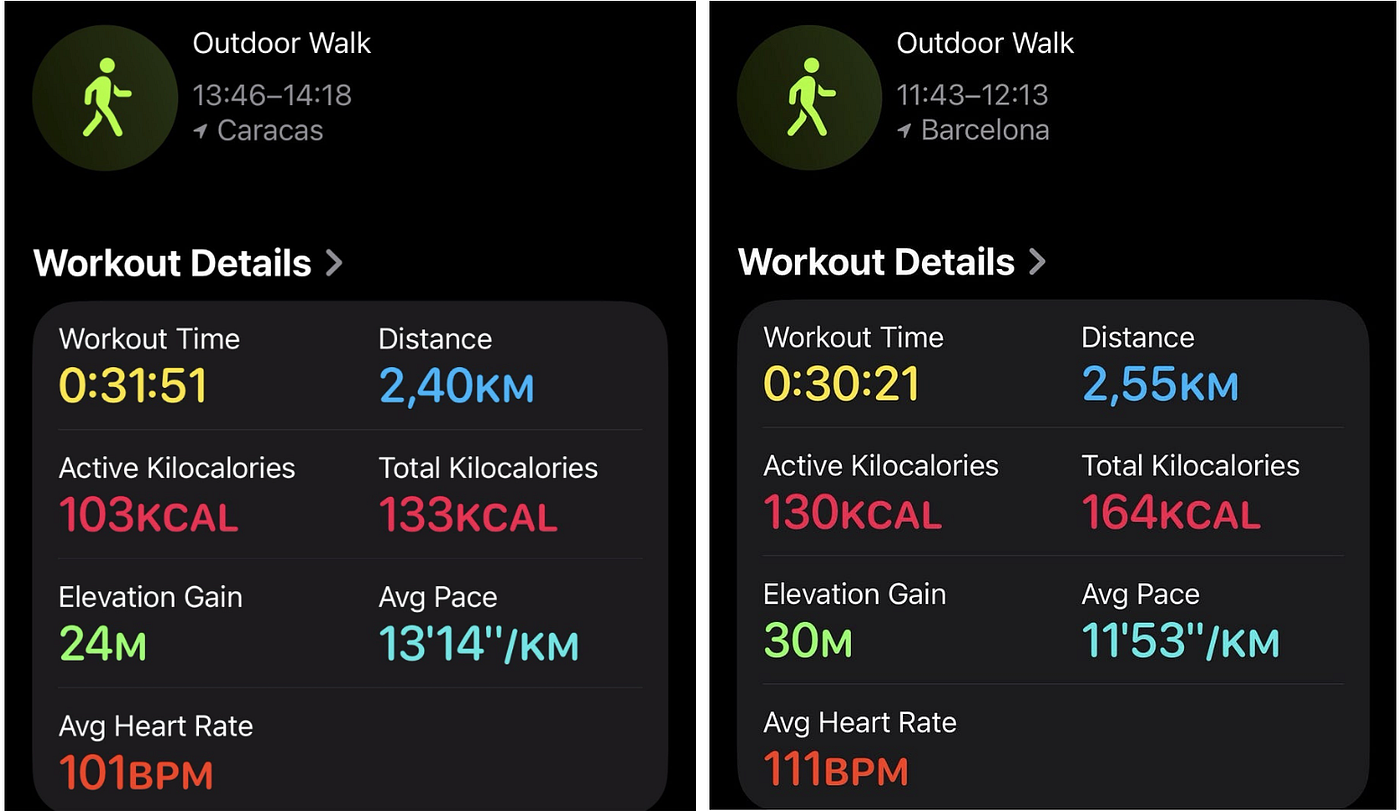
Walking the same route around my neighborhood but with a more leisurely pace (left) vs. a faster pace (right). Source: author
It turns out that just walking around 8% faster helped me burn 32% more total calories, a way bigger effect than adding extra weight, which is why this gets a score of 3.
As for accessibility and enjoyment, I’m giving brisk walking two 3s as it just requires us to slightly increase our pace to see results — and I personally enjoy walking fast.
In short, brisk-walking gets:
- Calories: 3
- Accessibility: 3
- Enjoyment: 3
Total score: 9
Note: Another interesting variable when considering walking speed could be whether that speed is steady or variable since a 2015 study showed that walking at different speeds can burn up to 20% more calories compared to maintaining a steady pace.
#4. Incline-Walking
According to this 2025 study, walking at a 10% incline has a metabolic cost 81%–145% higher than walking on flat terrain.
Now, I don’t currently have access to a treadmill with an adjustable incline (I don’t have the time to go to the gym, and my treadmill desk can’t change the inclination), so I took advantage of living in a city with plenty of incline (Barcelona, Spain), and ran my experiment around my neighborhood.
To do this, I went downhill for 16–18 minutes, following one of the city’s most important streets (Carrer Balmes), and then went back up, trying as best as possible to follow the same route and walk at the same speed.
Here’s what happened:
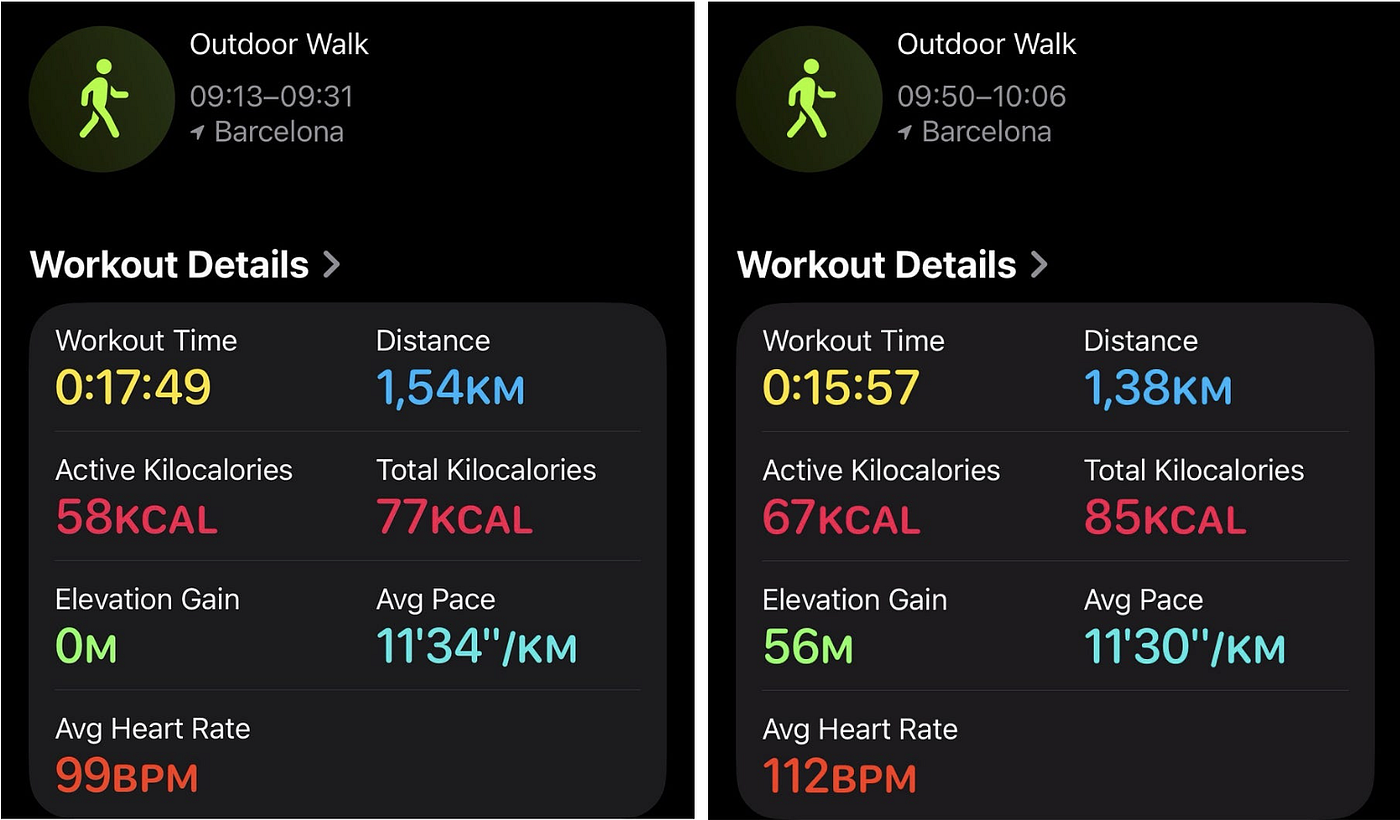
Left (walking downhill). Right (walking uphill along the same route and with a similar pace). Source: author.
As you can see, I burned around 24% more calories per minute with just a 4% incline (although it’s important to note that some sections were flat).
Not completely satisfied with the results (considering this was a comparison of downhill vs. uphill walking), I got some books under my walking pad to create an incline and ran another test, walking at 3 km/h for fifteen minutes with and without my makeshift incline.
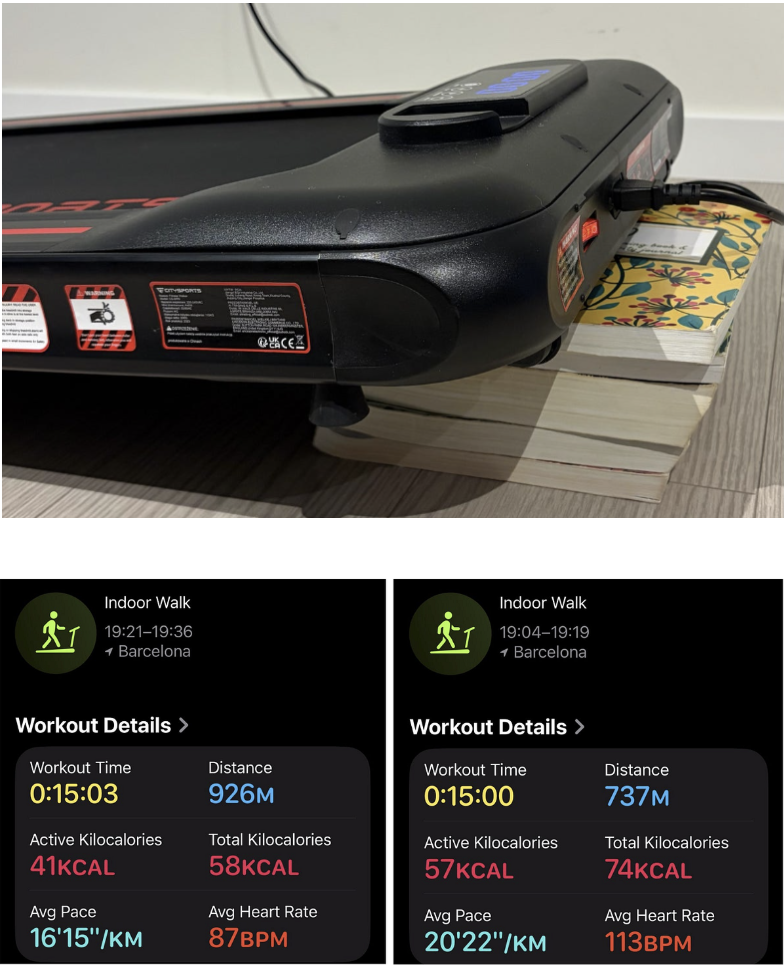
Using books to create an incline with my walking pad, and the results I got from my incline vs. no incline walking experiment. Source: author.
Although I don’t know what %incline this was, I managed to burn 28% more calories when compared to no incline.
Once again, I confirmed that incline walking can help us maximize the calories burned per minute. This is why I’m giving this a score of 2 for calories (way more calories burned than my standard walking, yet less than other types).
As for the other two criteria, I’m giving incline-walking lower scores. Accessibility receives a 1 because not everyone has access to a gym, has a treadmill at home for incline walks, or lives in a city like Barcelona. And enjoyment gets a 2 because I prefer walking in flat terrain.
In short, incline-walking gets:
- Calories: 2
- Accessibility: 1
- Enjoyment: 2
Total score: 5
#5. Going Up Stairs
I’ll be honest: I initially didn’t want to include stair-climbing, but then I thought about the different ways we can get our steps in (without involving more structured forms of exercise like running), and we all probably climb a few flights of stairs every single day.
Not only that, but I came across a study showing that climbing stairs can help us burn even more calories than incline walking, making it an excellent tool for fat loss and improving aerobic capacity.
Intrigued, I decided to put the stairs of my apartment building (it has 7 floors) to good use for 20 minutes, which ended up amounting to 8 times going up and down.
This is what I saw:

Stair-climbing in my apartment building. Source: author.
As you can see, I burned around 8 calories per minute climbing stairs, while incline-walking helped me burn around 5.3, and brisk walking around my neighborhood got me to 5.41 (numbers from the screenshots above).
The only other type of walking that got me to this insane number of calories per minute was brisk walking at 6 km/hour (7.6 calories/min), but I was only able to do that on my walking pad and was unable to do anything else besides listening to a podcast — not to mention I ended up super sweaty.
That last part was also true for stair-climbing: I had to shower immediately.
This is why, although this type of “walking” gets 3 in terms of calories, it gets a 1 for enjoyment. I don’t enjoy getting my daily steps and needing to shower immediately afterward.
Moreover, I didn’t particularly enjoy having awkward encounters with my neighbours. They looked at me as though I were crazy.
Finally, in terms of accessibility, I’m giving this a 3 because most of us have access to stairs, be that the stairmaster machine at the gym or the ones at home (or even at work).
In short, going up stairs gets:
- Calories: 3
- Accessibility: 3
- Enjoyment: 1
Total score: 7
Note: Many of you may be thinking, “Hiking is basically a combination of everything you tested.” And that’s absolutely true. However, I didn’t include it in this list because, unless you’re a professional hiker or you retired near a mountain, you — like me — probably can’t hike regularly, so even though it’s a great calorie burner and extremely enjoyable, it isn’t reliable for a fat loss goal as it’s not something you can do on a daily basis.
I Found My Winner — But Does It Really Matter?
Based on the three criteria I considered, this is how the rating for the best type of walking for fat loss ended up:
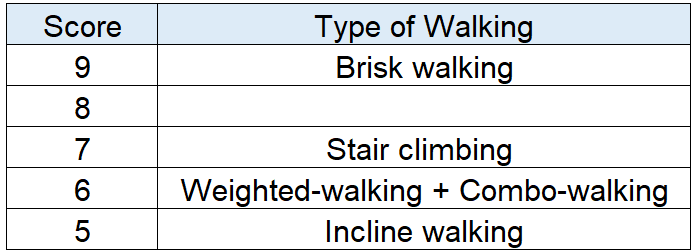
Scoring chart made by author
As you can see, if I were aiming to maximize the fat loss benefits of walking, the best type for me would be brisk walking.
It seriously increases the calories burned per minute while being accessible to me, as I live in a walkable city. Moreover, I enjoy walking outdoors and have a natural inclination to go fast.
That said, I’m not saying this is the best type of walking for fat loss.
As I mentioned before, my only hope is to inspire you to also find a way to get your steps in — and lose fat if that’s your goal — in a way that’s efficient, easily accessible, and enjoyable.
After all, a fat loss journey can only be successful when it’s sustainable. And it can only be sustainable if it’s easy and fun, whether that happens while watching Netflix on your treadmill desk or carrying your baby around your neighborhood.
메타데이터
- post_id
- 1aefae69aa43
- slug
- i-tried-and-analyzed-5-types-of-walking-to-find-the-best-for-fat-loss-1aefae69aa43
- url
- https://medium.com/in-fitness-and-in-health/i-tried-and-analyzed-5-types-of-walking-to-find-the-best-for-fat-loss-1aefae69aa43
- canonical_url
- https://medium.com/in-fitness-and-in-health/i-tried-and-analyzed-5-types-of-walking-to-find-the-best-for-fat-loss-1aefae69aa43
- author_url
- https://medium.com/@alealevs
- status
- ok
- fetched_at
- 2026-06-17 08:20:12