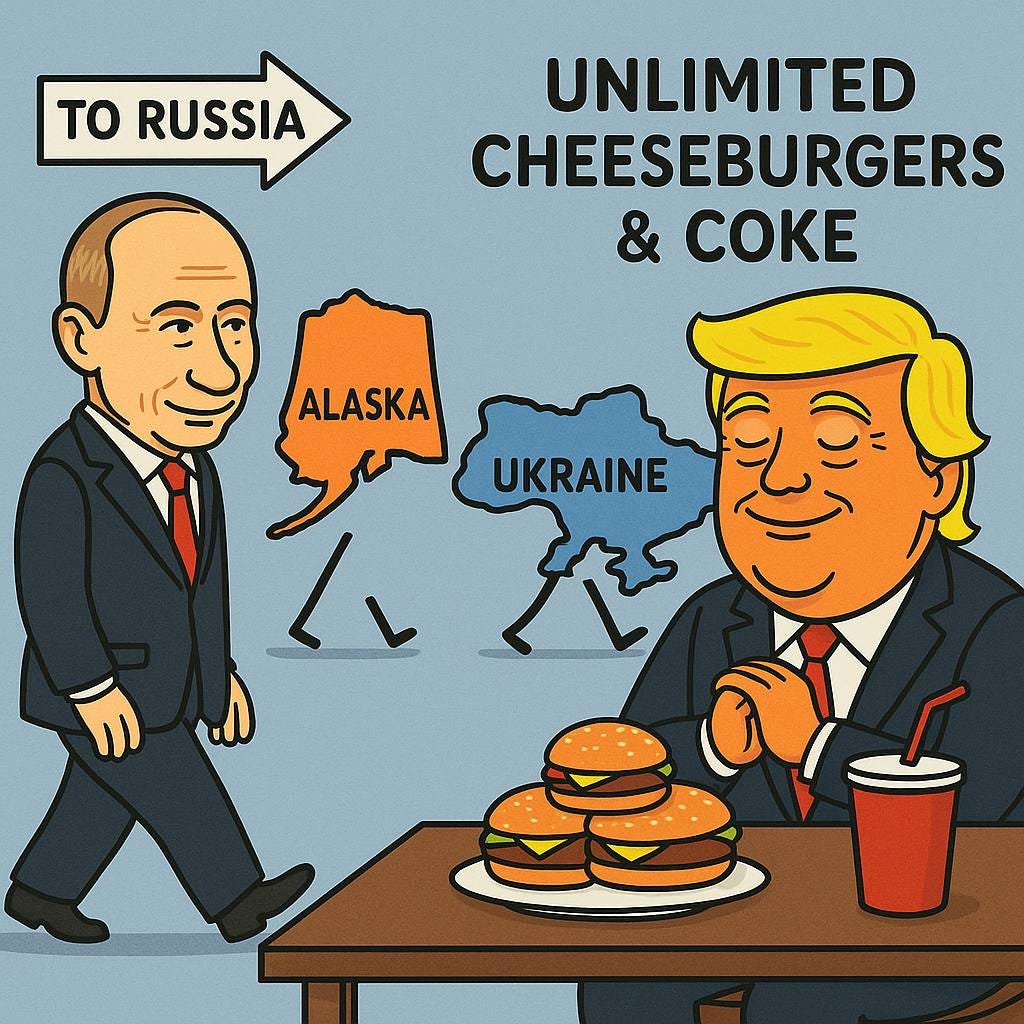
Chinese Three-Theater Trap
The Return of Imperial Geopolitics Through Infrastructure, Proxy Pressure, and Hybrid Conflict
Chinese Three-Theater Trap
The Return of Imperial Geopolitics Through Infrastructure, Proxy Pressure, and Hybrid Conflict
In 2026, China is pursuing one of the most ambitious and internally coherent geopolitical strategies of the 21st century — a multi-theater game in which it simultaneously ties down Western resources on two distant fronts in order to create favorable conditions for a decisive move in the Taiwan direction. Through subtle pressure on a weakened Russia, manifested for example in the symbolic downgrading of its delegation during the May 9 Victory Day parade, and through discreet support for Iran via Pakistan and Asian logistical corridors, Beijing seeks to disperse the attention, resources, and political will of both the United States and Europe. In this analysis, I examine the mechanisms of this strategy, its grounding in current events, and the risks it poses both to China itself and to the broader transatlantic security architecture.
In today’s geopolitical landscape, marked by escalating tensions among major powers, an increasingly clear picture is emerging of the multidimensional strategy pursued by the People’s Republic of China. Beijing appears intent on creating conditions that would allow it to achieve its key strategic objectives without entering into a direct, full-scale military confrontation with the United States. Observing developments over recent weeks and months in 2026, one can discern a coherent operational pattern in which China leverages both partners and rivals in order to fragment Western attention and distribute Western resources across several operational theaters simultaneously. From a strategic-analytical perspective, based on available intelligence reporting, media disclosures, and official public statements, it appears that China is constructing one of its most sophisticated geopolitical frameworks to date: a system of mutually binding adversaries designed ultimately to create a strategic window of opportunity regarding Taiwan.
A central element of this configuration is Europe, where Russia — despite severe economic and military weakening following years of war in Ukraine — continues to function as a destabilizing force. Increasingly, assessments suggest that Russia could potentially pose a military threat to a NATO member state within months rather than years, as had previously been assumed. At the same time, concerns are growing regarding the full reliability of American commitment to Article 5 of the North Atlantic Treaty. These concerns do not emerge in a vacuum; they coincide with intensifying Russian hybrid activity, visible for example in reports from the Portuguese Atlantic coast, where Russian naval units and vessels associated with the so-called “shadow fleet” have repeatedly launched drones over areas containing critical infrastructure, including undersea telecommunications cables. Similar incidents, combined with espionage cases — such as the recent arrest of a Chinese national in Norway on the island of Andøya, where authorities alleged an attempt to install a 22-ton satellite receiver near a strategically important spaceport — demonstrate how vulnerable NATO’s critical infrastructure has become to intelligence and sabotage operations.
In this context, China’s behavior during Russia’s Victory Day parade on May 9, 2026, was particularly revealing. Unlike the anniversary celebrations the previous year, when Xi Jinping personally stood alongside Vladimir Putin, Beijing in 2026 limited its representation exclusively to embassy officials, without sending a higher-level governmental delegation. This was a classic Chinese diplomatic signal — subtle, yet unmistakable to Moscow. In my assessment, it constituted a form of calibrated pressure intended to remind Russia that the so-called “no-limits partnership” does in fact have limits — and costs. Russia, which launched its invasion of Ukraine in 2022 with what many analysts interpret as tacit approval from Beijing, now finds itself trapped by its own structural weakness: a wartime economy, enormous demographic and military losses, and growing dependence on China as a market for energy exports and technological components. China, meanwhile, appears to view the prolonged conflict in Europe as strategically advantageous: it ties down NATO capabilities, European defense spending, and American strategic attention, while requiring no direct commitment of Chinese military resources.
Parallel to the pressure exerted on Russia in Europe, China is conducting an equally sophisticated strategic game in the Middle East, where it uses Iran as a key instrument for the long-term fixation of American military, logistical, and political resources. In 2026, following several weeks of direct confrontation involving the United States, Israel, and Iran, the region entered a phase of fragile ceasefire repeatedly tested by incidents around the Strait of Hormuz. Rather than seeking a rapid and durable settlement that would allow Washington to reduce its military footprint, Beijing — according to American intelligence reporting — has discreetly supported Tehran with dual-use components, chemicals associated with the production of solid rocket fuel (such as sodium perchlorate reportedly transported aboard Iranian vessels departing from Chinese ports), and, according to some assessments, preparations for the delivery of short-range air defense systems. This limited but persistent support remains below the threshold of overt military intervention, allowing China to preserve its image as a mediator while simultaneously preventing the full stabilization of the situation.
In my assessment, this represents a classic application of a strategy of “controlled tension.” China, as the largest purchaser of Iranian oil, possesses significant economic and political leverage over Tehran. Beijing uses this leverage to discourage Iran from making overly far-reaching concessions in negotiations with the Trump administration — particularly regarding its missile and nuclear programs. Instead, periodic incidents are effectively encouraged, maintaining American carrier strike groups, air assets, and logistical infrastructure in a heightened state of readiness across the Middle East. In this scenario, Pakistan plays the role of an invaluable “logistical gateway.” In April 2026, Islamabad activated several new overland transit corridors through its territory into Iran, formalizing routes capable of circumventing the maritime blockade around the Strait of Hormuz. These corridors, linking the ports of Gwadar and Karachi with Iranian border crossings, facilitate not only civilian trade, but potentially also the movement of dual-use goods or military-related components concealed within the dense commercial traffic associated with the China–Pakistan Economic Corridor (CPEC).
An additional element of this network is Turkmenistan and other Central Asian states through which alternative supply routes may pass, connecting Chinese industrial production with Iranian recipients while bypassing the most vulnerable maritime corridors. In this way, Beijing is constructing a multilayered logistical redundancy system that reduces the effectiveness of potential Western secondary sanctions and enables Iran to continue playing for time. For China, such a situation is strategically optimal: the United States is compelled to maintain a substantial portion of its force-projection capabilities far from the Pacific theater, generating enormous operational costs, political fatigue within American society, and fragmentation of strategic focus among decision-makers in Washington. At the same time, China itself avoids direct involvement while benefiting from elevated energy prices and the weakening of Western strategic cohesion.
This Middle Eastern chessboard perfectly complements developments in Europe. There, through subtle pressure and strategic leverage over a weakened Russia, Beijing seeks to maintain a high level of NATO engagement and continued deployment of American strategic reserves on the Eastern Flank. Here, through Iran and a network of partners such as Pakistan, China effectively keeps a second American hand tied down in the Middle East. The overall framework is not based merely on speculation, but on observable mechanisms of dependency, logistical routes, and intelligence signals emerging in open-source reporting and analytical assessments throughout 2026.
The interaction between these two theaters — the European and the Middle Eastern — creates, in my assessment, an exceptionally favorable strategic configuration for China, one ultimately intended to generate the long-sought “window of opportunity” regarding Taiwan. As Russia is subtly encouraged to sustain a high level of hybrid pressure in Europe, while Iran — supported logistically through Pakistani corridors and Chinese dual-use components — continues generating recurring crises in the Middle East, the United States and its allies are forced to disperse attention, military capabilities, and resources across at least two geographically distant fronts. This mechanism of multi-theater strategic fixation represents a classic example of Chinese strategic thinking rooted in the tradition of Sun Tzu, where victory is achieved not necessarily through direct confrontation, but through weakening the adversary’s will and capacity to respond at the decisive moment. Observing intelligence reporting and strategic analyses from 2026, one can see how Beijing is exploiting both the prolonged war in Ukraine and instability in the Middle East in order to stretch American naval power, air forces, and logistics between the Atlantic/Pacific axis and the Persian Gulf, thereby naturally reducing Washington’s readiness for rapid and large-scale force projection in the Indo-Pacific theater.
In this context, the concept of a “window of opportunity” regarding Taiwan — increasingly discussed openly by Chinese analysts — becomes especially significant. The dispersion of American resources across Europe and the Middle East reduces not only Washington’s physical capacity for rapid intervention in the Taiwan Strait, but also the political willingness of American society and elites to engage in yet another potentially extremely costly conflict. If Russia continues hybrid operations along NATO’s Eastern Flank — forcing sustained engagement of European militaries and American strategic reserves — while Iran maintains persistent tension around the Strait of Hormuz, Beijing gains both time and strategic space to prepare operations against Taiwan that need not involve a full-scale amphibious invasion. A more plausible scenario may involve blockade operations, quarantine measures, or limited kinetic actions supported by intensive hybrid and disinformation campaigns designed to paralyze political decision-making regarding intervention.
This synergy between theaters is not accidental. It reflects the outcome of a deliberate Chinese geopolitical architecture in which Russia and Iran function as “useful” partners — not equal allies, but instruments employed to disperse Western attention and resources. For Beijing, the ideal strategic scenario is one in which Europe and the Middle East absorb a substantial share of American and allied focus over the next 12–36 months, coinciding with the period during which Chinese armed forces continue intensive modernization and military exercises around Taiwan. In my assessment, this is the most dangerous aspect of the entire structure: China does not need to fight directly on land or at sea in Europe or the Middle East. It merely needs to calibrate support and pressure skillfully enough for its “partners” to do so on its behalf. As a result, the United States risks strategic exhaustion, while Europe risks developing a growing sense of abandonment by its American ally, further weakening NATO cohesion.
No grand strategy — even one as sophisticated as China’s — is free from serious risks and internal contradictions that, in my view, may ultimately undermine the effectiveness of the entire project. By acting as the conductor of two distant theaters, Beijing must constantly balance on a narrow line between controlled tension and uncontrolled escalation. Excessive pressure on Russia could lead to a situation in which a weakened and humiliated Moscow either seeks an independent and chaotic accommodation with the West or, even worse from Beijing’s perspective, suffers a military collapse that destabilizes NATO’s Eastern Flank in ways unfavorable to Chinese interests. Russia is not a fully obedient instrument; it is a nuclear-armed power with its own strategic ambitions, deep-rooted great-power identity, and the capacity for unpredictable escalation. In an extreme scenario, the use or threatened use of nuclear weapons could fundamentally alter the rules of the geopolitical game and force China into forms of involvement it seeks to avoid.
A similar dynamic exists in the Middle East. Iran, although economically dependent on China, remains a highly autonomous actor driven by its own revolutionary ideology and regional ambitions. At any moment, Tehran’s internal political logic could push events beyond the framework Beijing considers optimal — for example through the closure of the Strait of Hormuz or direct attacks on energy infrastructure. Such developments would likely trigger a dramatic surge in global oil prices and a broader economic crisis that would also inflict significant damage on the Chinese economy itself.
Another major risk concerns the reaction of the United States and Europe. In my assessment, Washington, despite its current strategic overstretch, is far from passive. American strategic elites increasingly recognize the contours of China’s multi-theater strategy, a realization that may accelerate processes such as technological decoupling, intensified military buildup in the Pacific, and the expansion of broader security coalitions such as AUKUS and Quadrilateral Security Dialogue, potentially with greater European participation. If Europe — influenced by warnings from senior political figures in Eastern Europe as well as similar voices emerging from Germany, France, and the Nordic states — genuinely accelerates its own rearmament and reduces dependence on the American security umbrella, then China’s strategy could paradoxically produce the opposite effect from that intended. Rather than confronting a weakened and divided West, Beijing could instead face a more unified, militarily capable, and strategically self-sufficient transatlantic alliance.
Moreover, excessive reliance on Pakistan as a logistical conduit carries the risk of secondary American sanctions targeting the China–Pakistan Economic Corridor (CPEC), the flagship project of the Belt and Road Initiative. Such measures could significantly weaken Chinese influence in South Asia and undermine one of Beijing’s most important strategic infrastructure investments.
Finally, neither the Chinese economy nor Chinese society is immune to the long-term costs of this geopolitical game. Persistently elevated energy prices, disruptions to global supply chains, and the risk of recession in Western markets could slow Chinese economic growth — the very foundation upon which the legitimacy of the Chinese Communist Party ultimately rests. In my assessment, Beijing is acutely aware of these constraints, which is why it calibrates pressure with extreme caution: strong enough to tie down adversaries, but not so strong as to provoke a reaction it cannot control. All of this demonstrates that, despite its sophistication and strategic elegance, China’s grand strategy also contains within itself the seeds of its own vulnerability.
This multi-theater Chinese strategic architecture is impressive in its internal logic, yet — as I have demonstrated — it also contains significant risks both for Beijing itself and for the broader global order. In summarizing this analysis in light of the latest intelligence reporting and strategic assessments from 2026, China’s multi-theater strategy now appears both more sophisticated and more cautious than it might have seemed only a few months ago. Beijing is indeed attempting to use Russia in Europe and Iran in the Middle East to disperse Western resources and strategic attention, as evidenced by the continued hybrid activity of Russia and the ongoing movement of dual-use components through Pakistan and Turkmenistan. This represents a classic implementation of the principle of “victory without direct battle” — Beijing does not need to commit its own armed forces in Europe or the Middle East so long as it can skillfully calibrate economic, technological, and political support in ways that allow Russia and Iran to perform the destabilizing work on its behalf, thereby stretching NATO and American resources across multiple theaters.
However, the highly visible failure of Chinese air-defense systems — including the HQ-9B and YLC-8B/YLC-9B radar platforms — during the American-Israeli operation against Iran in February 2026 exposed serious deficiencies in Chinese combat systems and command structures. Iran became not merely a useful proxy, but effectively an unintended testing ground that revealed to the People’s Liberation Army the real limitations of Chinese military technology when confronted with Western electronic warfare, stealth capabilities, and integrated combat systems. These experiences appear to have triggered a strategic reassessment in Beijing. Plans for an aggressive operation against Taiwan within the previously discussed 2027 horizon have reportedly been postponed indefinitely. Rather than risking direct military confrontation with the United States under conditions in which Chinese military systems cannot yet guarantee success, Xi Jinping seems increasingly to have embraced a strategy of “soft integration” — combining economic pressure, political influence, and hybrid operations with selective engagement toward more moderate political forces within Taiwan.
This does not signify abandonment of the objective of “reunification.” Rather, it reflects recognition that the strategic window of opportunity has not yet fully opened. Russia continues to be encouraged to tie down NATO through hybrid pressure, while Iran remains a destabilizing factor in the Middle East, but the broader purpose now appears less focused on creating the immediate conditions for a military move against Taiwan and more oriented toward the long-term weakening, fragmentation, and exhaustion of the West.
For Europe, this development carries both reassuring and deeply troubling implications. The positive aspect is that the immediate risk of a major war in the Indo-Pacific over the next several years appears to have diminished significantly. The negative aspect is that the hybrid cooperation among China, Russia, and Iran is likely to persist, while Russia — increasingly isolated and perceiving reduced levels of support from Beijing — may become even more unpredictable. In this emerging strategic environment, Europe must accelerate the development of its own autonomous deterrence capabilities, strengthen the protection of critical infrastructure, and avoid excessive dependence on American strategic attention, which will remain divided across multiple global theaters.
China’s “three-theater game” has therefore not failed; rather, it has evolved into a more cautious, long-term version of itself. Beijing has not abandoned its ambitions — it has merely purchased time to correct the weaknesses exposed above Iranian skies. And it is precisely this long-term strategic adaptation that Europe and the transatlantic alliance must now prepare for.
메타데이터
- post_id
- 1b0c4437a2e9
- slug
- chinese-three-theater-trap-1b0c4437a2e9
- url
- https://medium.com/@AndyRo/chinese-three-theater-trap-1b0c4437a2e9
- canonical_url
- https://medium.com/@AndyRo/chinese-three-theater-trap-1b0c4437a2e9
- author_url
- https://medium.com/@AndyRo
- status
- ok
- fetched_at
- 2026-06-10 10:12:36