Condition-Based vs Preventive Maintenance: What Actually Works in Modern Industry?
Source Credit: Originally published on our website…
Condition-Based vs Preventive Maintenance: What Actually Works in Modern Industry?

Choosing the right maintenance strategy is key to balancing cost, reliability, and performance.
Source Credit: Originally published on our website. https://www.maintwiz.com/blog/condition-based-maintenance-vs-preventive-what-actually-works/
Maintenance strategies have evolved significantly — from reactive repairs to predictive, AI-driven systems.
Yet, many organizations still face a fundamental question:
Should we rely on preventive maintenance schedules, or move toward condition-based maintenance?
The answer is not as straightforward as it seems.
Both approaches offer distinct advantages — but their effectiveness depends on how, where, and why they are applied.
Understanding Preventive Maintenance
Preventive maintenance (PM) is based on time or usage intervals.
Maintenance activities are scheduled at predefined intervals regardless of equipment condition.
Key characteristics:
- Fixed schedules (daily, monthly, yearly)
- Standardized procedures
- Easy to implement
- Widely adopted across industries
Benefits:
- Reduces unexpected failures
- Simple planning and execution
- Suitable for stable and predictable assets
Limitations:
- Can lead to over-maintenance
- Unnecessary part replacements
- Higher labor and material costs
- Does not account for actual asset condition
Preventive maintenance works well — but only when failure patterns are predictable.
What Is Condition-Based Maintenance?
Condition-Based Maintenance (CBM) uses real-time data to determine when maintenance is required.
Instead of relying on schedules, CBM monitors equipment condition through:
- Vibration analysis
- Temperature monitoring
- Oil analysis
- Sensor data
Key characteristics:
- Data-driven decisions
- Maintenance triggered by asset condition
- Focus on early fault detection
Benefits:
- Reduces unnecessary maintenance
- Extends asset life
- Improves reliability
- Optimizes maintenance cost
Limitations:
- Requires sensors and monitoring systems
- Higher initial investment
- Needs data analysis capability
CBM shifts maintenance from time-based to need-based execution.
The Core Difference
The fundamental difference lies in decision logic:
- Preventive Maintenance → “Maintain at fixed intervals”
- Condition-Based Maintenance → “Maintain when needed”
This difference has a significant impact on:
- Cost
- Efficiency
- Asset performance
- Downtime
When Preventive Maintenance Works Best
Preventive maintenance is most effective when:
- Failure patterns are predictable
- Assets are low-cost or non-critical
- Monitoring systems are not feasible
- Regulatory compliance requires fixed schedules
Examples include:
- HVAC servicing
- Routine inspections
- Basic mechanical components
In these cases, the simplicity of PM outweighs its limitations.
When Condition-Based Maintenance Delivers Value
CBM is most effective when:
- Assets are critical to operations
- Failures have high consequences
- Equipment behavior can be monitored
- Downtime is expensive
Examples include:
- Rotating equipment (motors, turbines)
- High-value production assets
- Continuous process industries
Here, CBM significantly reduces risk and cost.
The Hybrid Approach: What Actually Works
The most effective organizations do not choose one approach over the other.
They combine both.
A hybrid strategy includes:
- Preventive maintenance for low-critical assets
- Condition-based monitoring for critical equipment
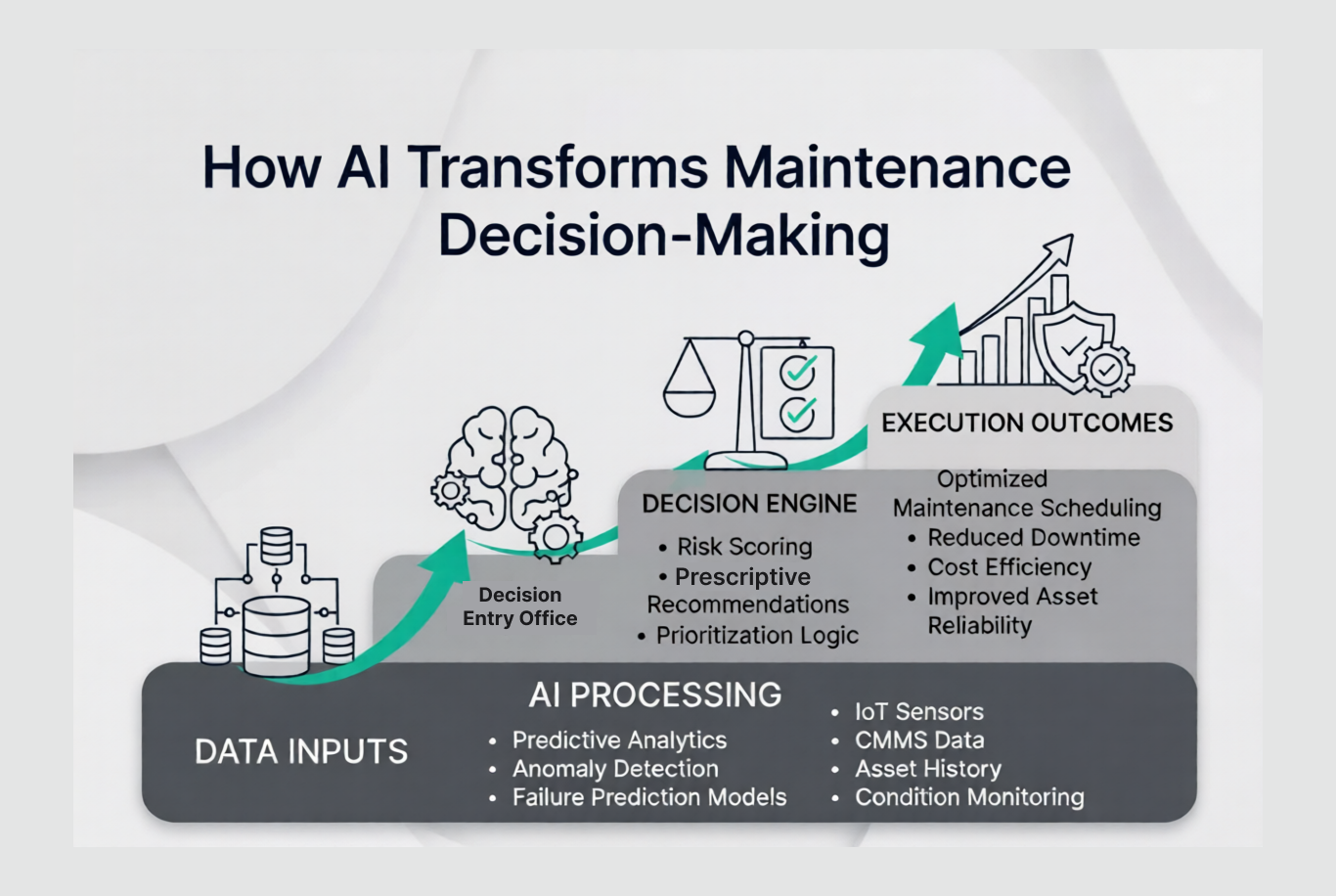
- Predictive analytics for advanced optimization
This approach ensures:
- Cost efficiency
- Reliability improvement
- Balanced resource allocation
The Role of CMMS in Strategy Execution
A CMMS platform plays a critical role in managing both PM and CBM strategies.
Modern systems enable:
- Scheduling preventive tasks
- Integrating sensor data
- Generating condition-based work orders
- Tracking asset performance
- Analyzing maintenance effectiveness
Solutions like https://www.maintwiz.com/product/ai-cmms-work-order-management-solutions/ help organizations unify these strategies into a single system.
Moving Toward Predictive Maintenance
Condition-based maintenance is often the foundation for predictive maintenance.
Predictive maintenance uses:
- Historical data
- Machine learning
- Advanced analytics
to predict failures before they occur.
To explore this evolution further: https://www.maintwiz.com/what-is-predictive-maintenance/
The Real Answer: Context Matters
There is no universal “best” maintenance strategy.
The right approach depends on:
- Asset criticality
- Failure impact
- Cost constraints
- Data availability
- Operational complexity
Organizations that succeed are those that align maintenance strategy with business objectives.
Conclusion
The debate between condition-based and preventive maintenance is not about choosing one over the other.
It is about choosing the right strategy for the right asset.
Preventive maintenance provides structure and simplicity. Condition-based maintenance delivers precision and efficiency.
Together, they form the foundation of modern maintenance strategy.
In the end, what works is not the method — but how intelligently it is applied.
Related Resources
메타데이터
- post_id
- 1b392aeeefa9
- slug
- condition-based-vs-preventive-maintenance-what-actually-works-in-modern-industry-1b392aeeefa9
- url
- https://medium.com/@priya_97637/condition-based-vs-preventive-maintenance-what-actually-works-in-modern-industry-1b392aeeefa9
- canonical_url
- https://medium.com/@priya_97637/condition-based-vs-preventive-maintenance-what-actually-works-in-modern-industry-1b392aeeefa9
- author_url
- https://medium.com/@priya_97637
- status
- ok
- fetched_at
- 2026-06-15 20:49:13