AI This Week: Governments Step In, Voice Gets Smarter, China Draws a Line, and Cancer Detection…
The biggest AI stories this week weren’t about a new model dropping. They were about who controls AI — and what happens when that question…
AI This Week: Governments Step In, Voice Gets Smarter, China Draws a Line, and Cancer Detection Improves
The biggest AI stories this week weren’t about a new model dropping. They were about who controls AI — and what happens when that question starts to matter.
The past week in AI felt different. Not because of a flashy product launch or a record-breaking benchmark score.

But because the people in charge — governments, regulators, and geopolitical rivals — started showing up to the party uninvited.
Here’s a plain-English breakdown of the four stories you need to understand.
1. The U.S. Government Wants to See AI Models Before You Do
For the past few years, the U.S. government’s approach to AI was simple: stay out of the way and let companies build. That approach just changed.
The National Institute of Standards and Technology (NIST) announced a new task force called TRAINS — Testing Risks of AI for National Security.
The job of this group is to look at powerful AI models before they’re released to the public, and check whether they pose any national security risks.
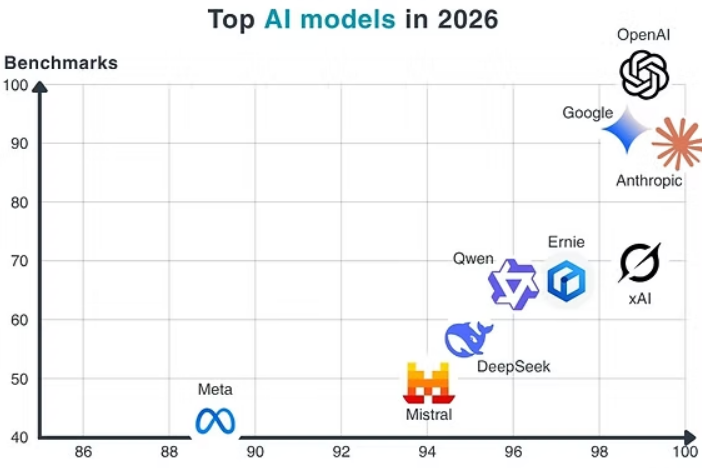
The focus areas include cybersecurity, biosecurity, and the potential for AI to help create dangerous weapons. Big names like Google, Microsoft, OpenAI, Anthropic, and xAI have already agreed to submit their models for review.
On top of that, the White House is reportedly considering an executive order that could make this process mandatory.
Why did this happen so fast?
A big trigger was Anthropic’s Claude Mythos Preview — an unreleased model that reportedly demonstrated the ability to find and exploit security vulnerabilities in widely used software on its own. That got Washington’s attention fast.
Why it matters:
This is a meaningful shift. Pre-release government testing could catch genuinely dangerous capabilities before they reach the public. But it also raises real questions.
Will this slow U.S. companies down while their global competitors keep moving at full speed? Could large companies use this process to squeeze out smaller players and open-source projects?
The broader message is clear: AI is no longer just a tech story. It’s a national security story now.
2. OpenAI Launched New Voice Models — and They’re More Useful Than You Think
OpenAI released three new audio models this week through its Realtime API:
- GPT-Realtime-2 — the main voice model with a major new trick
- GPT-Realtime-Translate — real-time speech translation across 70+ languages
- GPT-Realtime-Whisper — live speech-to-text transcription
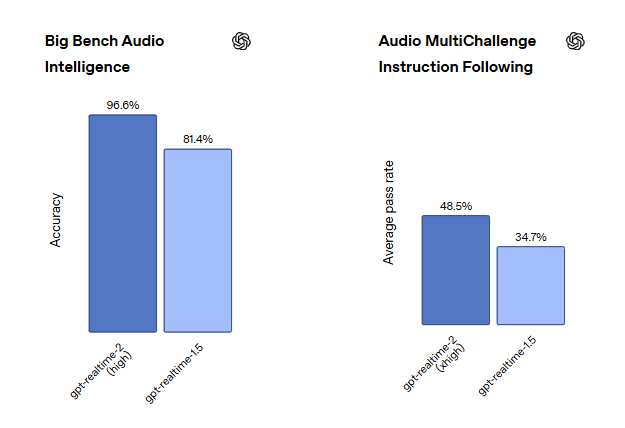
The headline feature in GPT-Realtime-2 is the ability to control how much the model “thinks” before responding. Developers can choose from five reasoning levels — from minimal (fast, snappy answers) to xhigh (slower, but more thoughtful and accurate).
That matters because voice AI has always had a painful tradeoff: smart responses take time, and time kills the feeling of a real conversation.
Another clever fix: the “preamble.”
When the model needs a moment to think or look something up, it now says things like “let me check that” or “looking that up now” — instead of going silent. That one change makes the experience feel far more natural.

Early results from companies using the system were strong. Zillow reported that its voice agent’s call success rate jumped from 69% to 95%. Glean saw a 43% improvement in helpfulness for internal queries.
The honest trade-off:
At its highest reasoning setting, GPT-Realtime-2 takes about 2.3 seconds before it speaks. Some competitors are faster. And even at its best, the model’s pass rate on complex multi-turn conversations is still below 50% — meaning voice AI still has a long road ahead.
But the direction is clear. Voice is becoming a serious interface, not just a demo feature.
3. China Blocked Meta’s $2 Billion Deal — and Sent a Big Warning
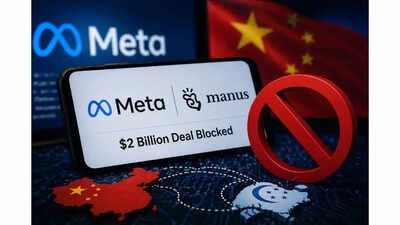
In December 2025, Meta announced it was buying Manus, an AI startup based in Singapore, for around $2 billion.
Manus had built a reputation for creating AI agents — systems that can handle long, multi-step tasks on their own.
China’s government just killed the deal.
The block came from China’s National Development and Reform Commission.
Here’s what makes this unusual: Manus wasn’t based in China. It had moved to Singapore specifically to operate outside Beijing’s reach. Its founders were Chinese, and the engineering talent came from China — but legally, the company was in Singapore.
China didn’t care about that distinction. It blocked the acquisition anyway.
What this means for startups:
For years, Chinese AI founders used what’s sometimes called the “Singapore strategy” — relocate abroad, raise money from Western investors, and try to grow internationally without being tied down by Beijing’s oversight.
This ruling puts that strategy in serious doubt.
The message from Beijing seems to be: if your company was born in China, we still have a say over what happens to it — no matter where you move.
Two of Manus’s co-founders were reportedly barred from leaving China while the review was ongoing. The deal has since been unwound.
The bigger picture:
This isn’t just about one deal falling apart. It signals that AI companies and their technology are now being treated as strategic national assets — not just products.
The gap between the U.S. and Chinese AI ecosystems is widening, and startups caught in between are finding the middle ground is disappearing fast.
4. Google’s AI Spotted Cancers That Doctors Missed — But Doctors Still Don’t Fully Trust It
Back in 2020, Google unveiled an AI system that could detect breast cancer in mammograms as well as expert radiologists. Five years later, the system still isn’t being used to diagnose real patients.
This week, two new studies showed how the AI actually performed under real-world NHS (UK health service) conditions — and the results were genuinely impressive.
What the studies found:
In a review of 116,000 mammograms, the AI caught more cancers than the first human reader — and found about 25% of cancers that humans had initially missed but that became visible in follow-up scans years later.
In a live test on 9,250 fresh scans across 12 clinics, the AI processed each scan in under 18 minutes. Human readers took more than two days. Accuracy held up well.
Researchers also modeled what would happen if the AI replaced one of the two human reviewers currently required in the UK’s standard process.
The conclusion: human workload could drop by roughly 40% while maintaining — or even improving — diagnostic quality.
So why isn’t it being used yet?
Trust.
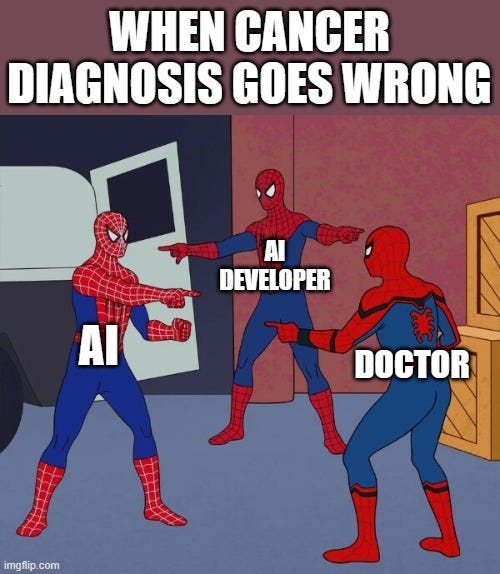
Even with strong results, several radiologists in the studies said they were skeptical of the AI’s recommendations. Years of training build a kind of professional intuition, and it’s hard to hand that over to a system you can’t fully explain or interrogate.
The path forward isn’t AI replacing doctors. It’s AI working alongside doctors in a way that’s transparent enough for clinicians to actually feel confident using it.
With 2.3 million new breast cancer diagnoses globally each year, the stakes are high. The technology is ready. The human side of adoption still needs work.
The Thread Running Through All Four Stories: Control
Look at these four stories together and one theme stands out.
Every single one of them is about who gets to decide what AI does, who gets access to it, and who’s responsible when something goes wrong.
- Governments want control over what gets released.
- Companies want control over how fast they can move.
- Nations want control over each other’s technology.
- Doctors want control over their own diagnostic process.
AI has entered a new phase. It’s not just about building the most capable model anymore. The companies that succeed going forward will be the ones that can earn trust — from governments, institutions, clinicians, and everyday users — not just the ones that push the benchmark numbers highest.
The “build fast and figure it out later” era is ending. Proving it, first is the new game.
Writing such articles is very time-consuming; show some love and respect by clapping and sharing the article. Happy learning
Follow me for more: https://medium.com/@maxerom
Reach out to me on LinkedIn: https://www.linkedin.com/in/ibrahim-murtaza-5013/
Check out this for more A.I related News and Tutorials: https://medium.com/techcraft-chronicles
Let me know if there is something I missed or I can improve or remove any copyright material.
메타데이터
- post_id
- 1b6d281eaafe
- slug
- ai-this-week-governments-step-in-voice-gets-smarter-china-draws-a-line-and-cancer-detection-1b6d281eaafe
- url
- https://medium.com/techcraft-chronicles/ai-this-week-governments-step-in-voice-gets-smarter-china-draws-a-line-and-cancer-detection-1b6d281eaafe
- canonical_url
- https://medium.com/techcraft-chronicles/ai-this-week-governments-step-in-voice-gets-smarter-china-draws-a-line-and-cancer-detection-1b6d281eaafe
- author_url
- https://medium.com/@maxerom
- status
- ok
- fetched_at
- 2026-06-09 15:37:30