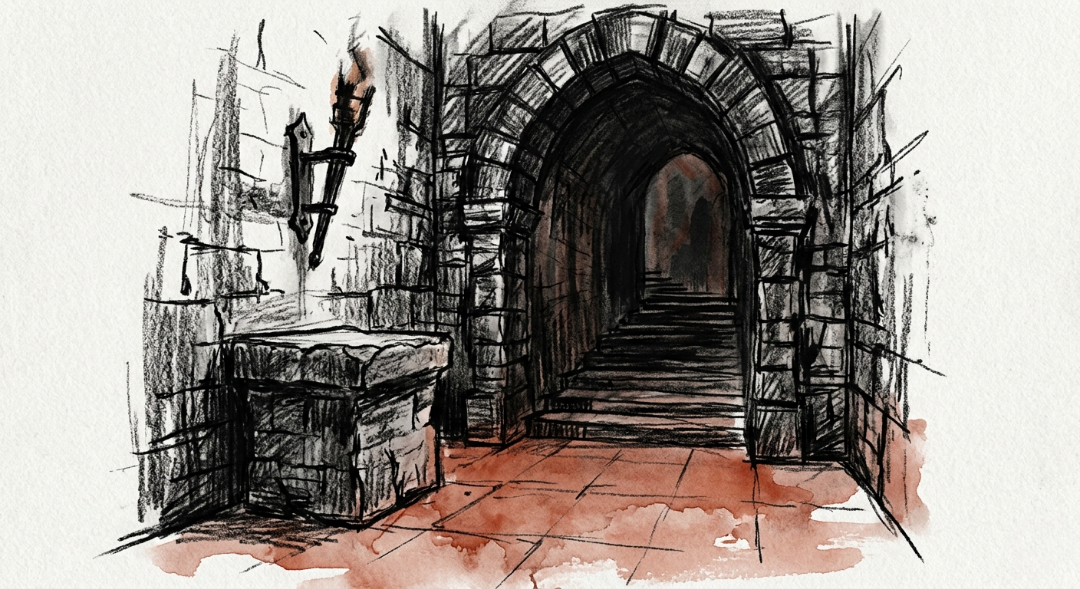
Welcome to Dogville: Population: 15 Humans, 1 Chalk Dog, and Your Will to Live
A structural analysis of Grace’s transparent cage through the eyes of an architect and the grit of charcoal
Welcome to Dogville: Population: 15 Humans, 1 Chalk Dog, and Your Will to Live
A structural analysis of Grace’s transparent cage through the eyes of an architect and the grit of charcoal

“An architectural study of Grace: Trapped in a space where the walls are invisible, but the social boundaries are made of reinforced concrete.” Art Sketch by Author
[Restored with Sketches]
Non-member=Click!
Look, we all have that one friend. And you know the one. “Hey, I’m throwing a dinner party tomorrow,” they say over the phone at about 11 p.m. on a Tuesday.
The project is going to be a test. There is no food on the dish just the outline of food. Additionally, you will either think I’m a genius or burn my car after I torture you psychologically for three hours. BYOB. Bring your own baggage.

“Deconstructing the floor plan of Dogville. In this village, transparency isn’t honesty; it’s a form of voyeuristic surveillance.” Art Sketch by Author
That friend is Lars von Trier. And the dinner party is Dogville.
“And how did that make you feel?” is the equivalent of your therapist asking you that question right before you realize you are the issue, according to the 2003 movie Dogville.
The film boldly poses these important questions: What is evil? Is corruption a natural human trait? Nicole Kidman might have been filming, so why did she consent to this? For a wage, the Stepford Wives?
Strap in. Depending on your reading pace and existential tolerance, we will be delving into this masterwork of minimalist maximalism for the next ten minutes, or three hours.
Part I: The Set-Up Or, “Where Are the Walls, Lars?”
Art Sketch by Author
Let’s paint a picture. Actually, let’s not paint a picture, because Lars von Trier certainly didn’t.
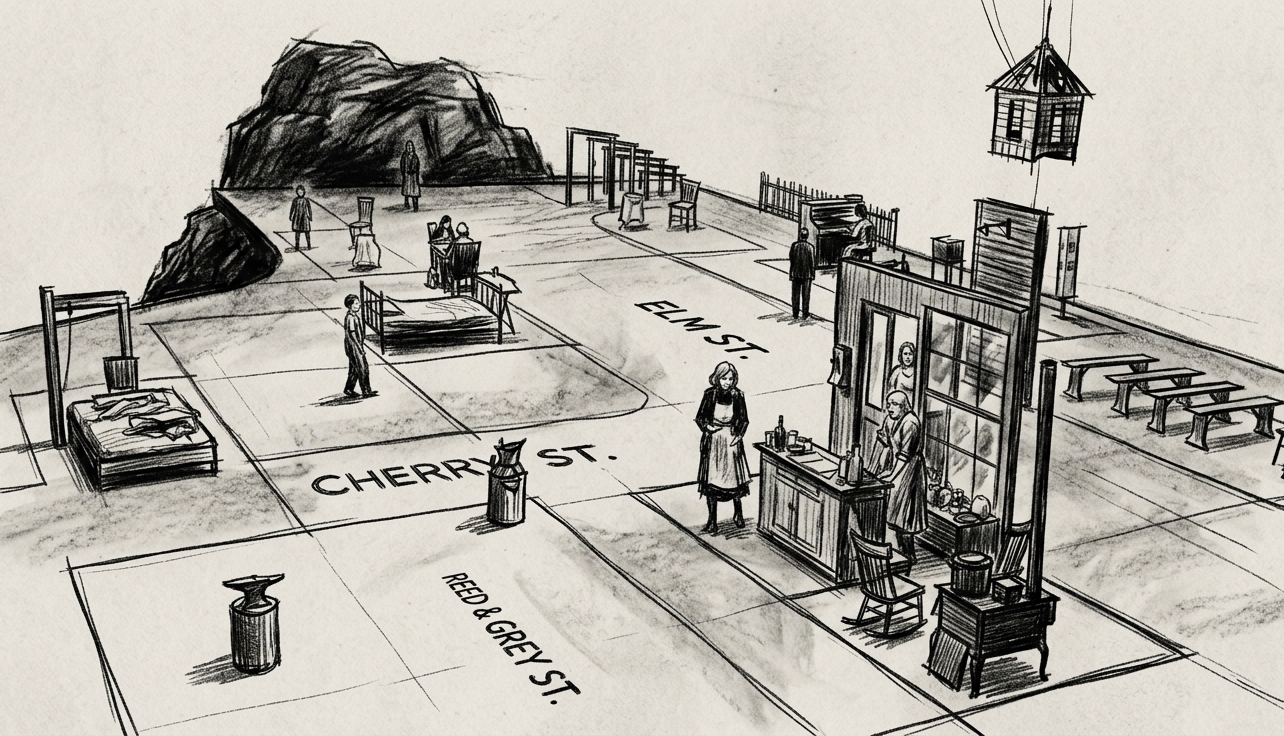
The film opens, and you check your TV settings because you think the colors are off. They aren’t. You’re looking at a massive, dark soundstage. On the floor, there is white chalk. The chalk outlines the shape of houses. There’s a chalk line for a street. There’s a chalk circle for a bush.

Art Sketch by Author
There’s a chalk square for a dog, named Moses, who is occasionally represented by a chalk outline and, later, by a real dog, which is the biggest special effects budget line item on the entire production .
This is Dogville. During the Great Depression, a little village in the Rocky Mountains. But there are no mountains. There are no walls. When a character enters their home, they sleep down on a bed situated in the center of an open warehouse while the other characters pretend not to hear them snore from a distance of three feet.
Sketch by Author
In a voice that sounds like God chose to read you a serial murderer bedtime story, John Hurt describes the entire event. It is confusing. It is theatrical. It is the ultimate test of whether you have ADHD .
At first, you think, “Okay, quirky. It’s a choice. Like wearing a croptop to a funeral.” But then you realize the genius of it: There are no walls in Dogville, so there is no privacy. We, the audience, see everything. The characters, however, are blind.
Pretending they can’t see their neighbor cheating at cards since a chalk line indicates they shouldn’t be able to, they stagger around their chalk outlines. That’s a metaphor, you moron. We all live in a fishbowl and criticize one another whilst acting as though we have walls of our own.
Part II: Welcome, Grace! (Please Don‘t Ruin the Curve)
Art Sketch by Author
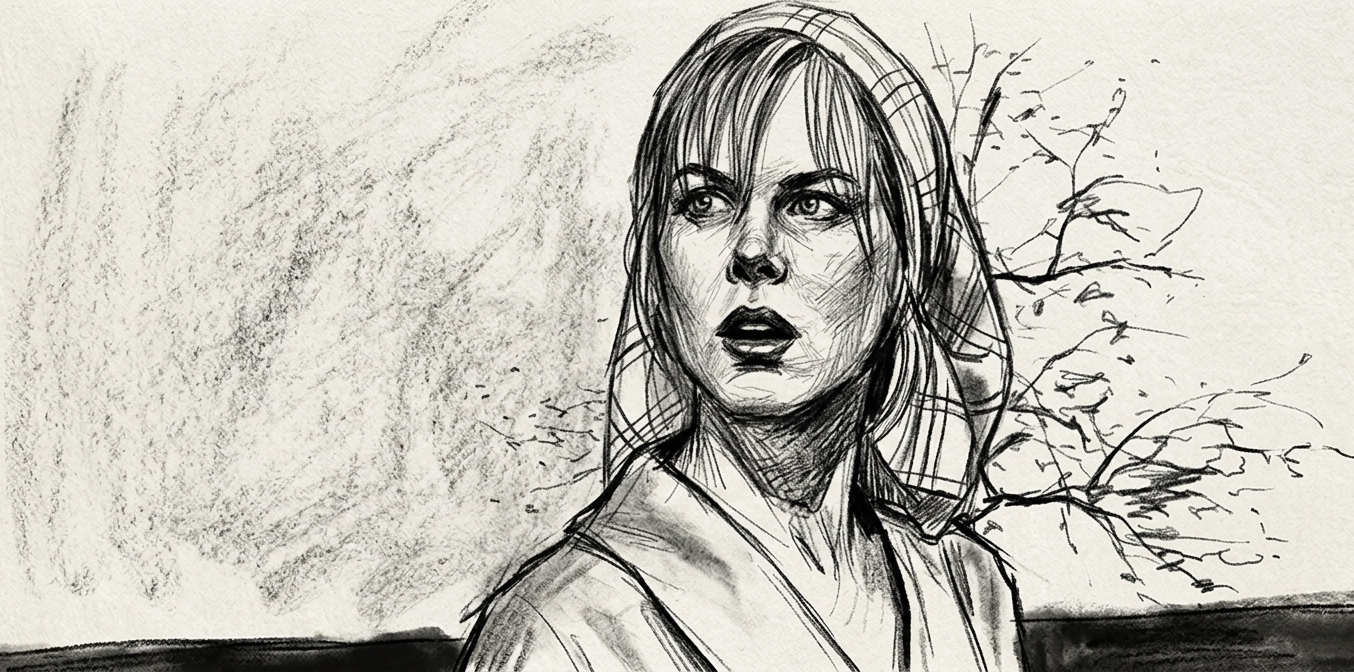
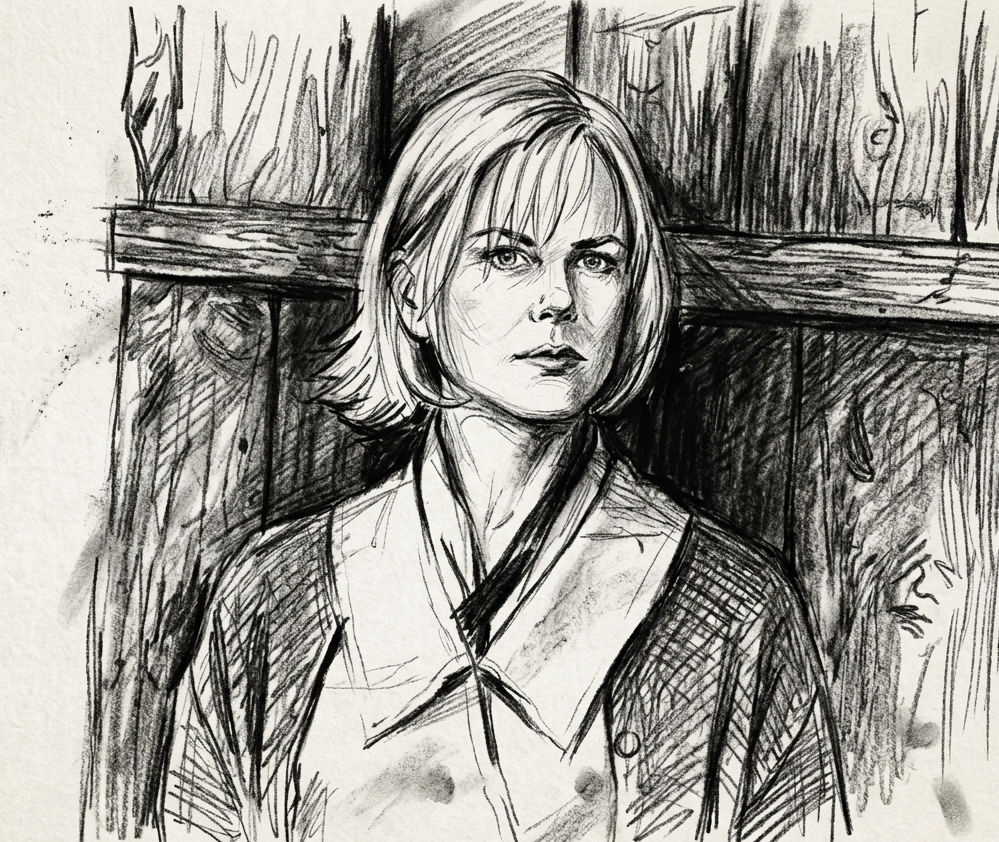
Into this chalk-dusted nightmare wanders Grace (Nicole Kidman). As a fugitive, she avoid lawbreakers, she has the cool, controlled voice of someone who has never had to ask for directions in an unsafe circumstance, yet she remains charming and pleasant.
She is immediately found by Tom Edison Jr. (Paul Bettany). Tom is the town’s self-appointed intellectual. Although he talks about “moral rearmament” in town meetings, he never actually does anything about it.
He has 40,000 Substack followers in 2025 and has never voted in a local election. Tom decides that taking Grace in would be a great “gift” to the town a chance for them to prove they are good people .
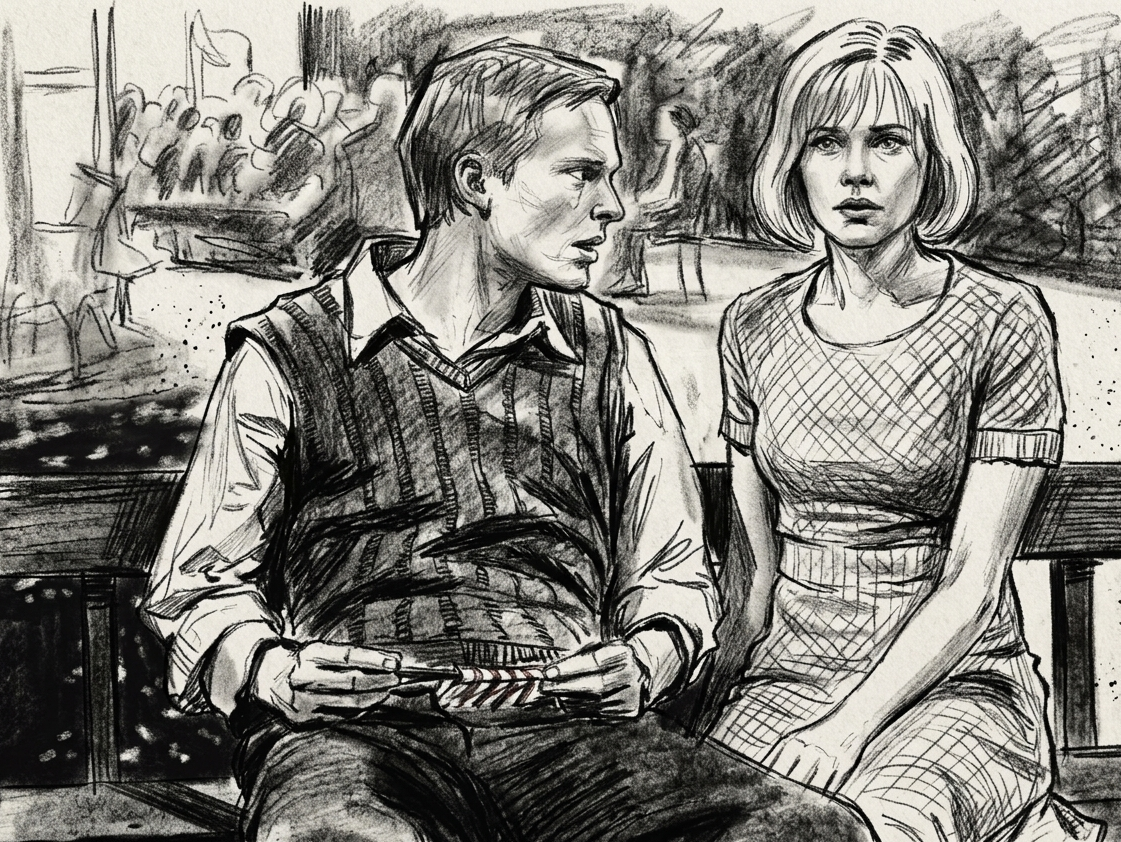
Art Sketch by Author
The residents of the town are dubious. Lauren Bacall, Patricia Clarkson, Stellan Skarsgård, Ben Gazzara, Jeremy Davies, and Chloe Sevigny are among the embarrassingly stacked cast members that play them.
It’s like the Avengers, but instead of fighting Thanos, they’re arguing about whether the pretty stranger can pick a few gooseberries .
They consent to a trial of two weeks. To retain her job, Grace will do menial tasks for everyone. She smiles. She works hard. She is the ideal visitor. She’s the type of visitor who reminds you to vacuum more frequently.
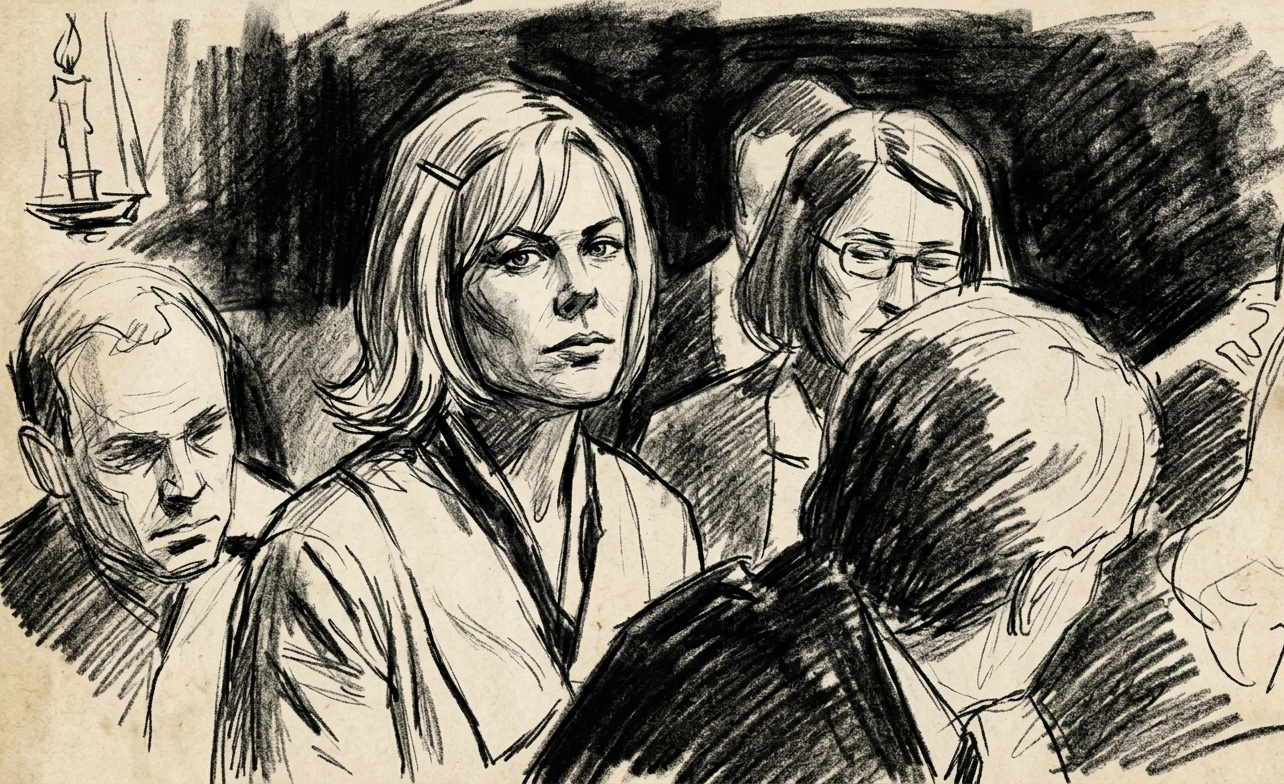
Art Sketch by Author
For a while, it works. The townspeople warm to her. Although the stage has great lights, the sun is not metaphorically visible. According to the narrator, everything is going well.
You start to relax. Perhaps Lars von Trier isn’t a misanthropic nihilist, you think. Maybe this is just a quirky story about community!
Oh, you sweet summer child.
Part III: “How to Turn a Kindness into a Currency” or “The Slow Descent”
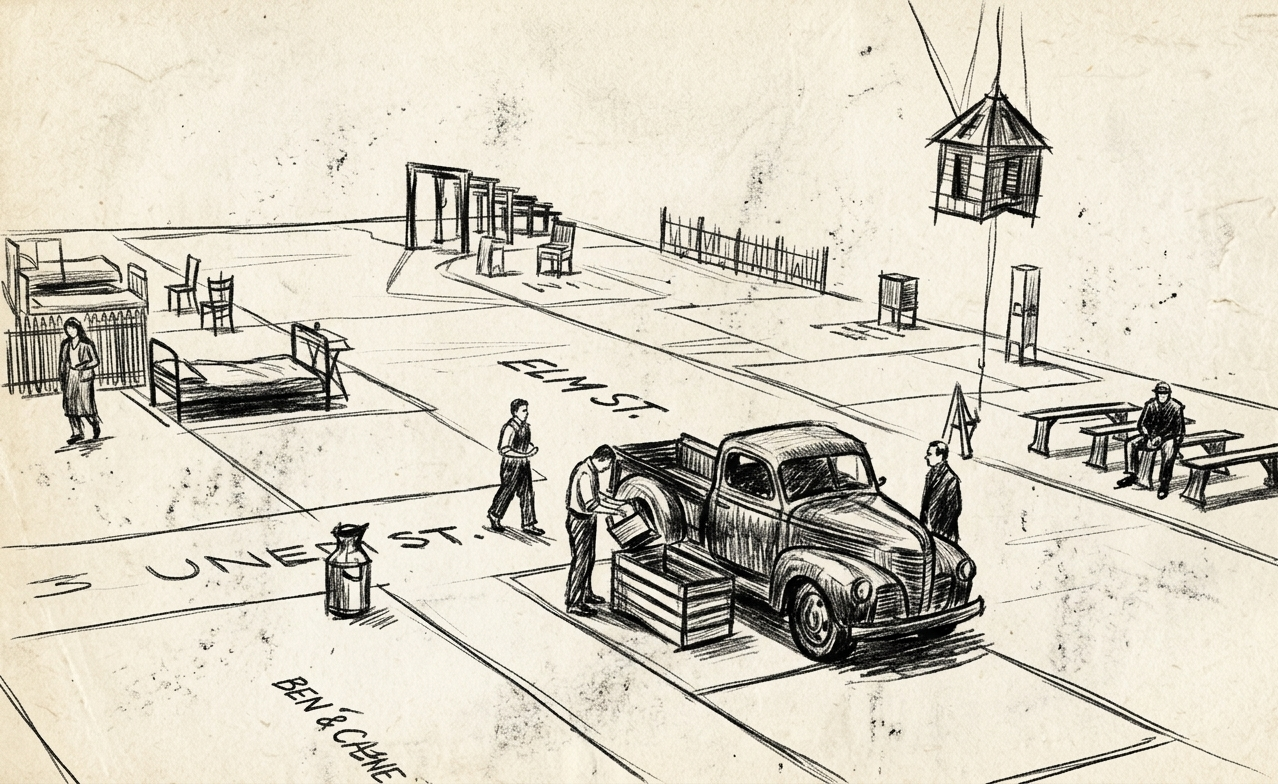
Art Sketch by Author
As usual, the police are the first to cause trouble
The police arrive with “Wanted” flyers in search of Grace. All of a sudden, Grace is a liability rather than merely a visitor. It turns out that the town’s generosity was never a gift. It was an investment with compound interest.
Tom, the “intellectual,” negotiates a new deal: Grace can stay, but she has to work harder. More chores. Longer hours. The men start to look at her differently. The women start to get jealous .
This is where von Trier performs his magic trick. He takes the mundane a small town, a stranger, a few chores and turns it into a horror movie.
The chores increase. Then the demands. Then the disrespect. Then the thievery. Then the sexual assault.
It happens incrementally. One man forces himself on her, and she endures it because she has nowhere to go. Then another man does it. Then the children of the town start mocking her. She becomes less of a person and more of a resource a thing to be used .
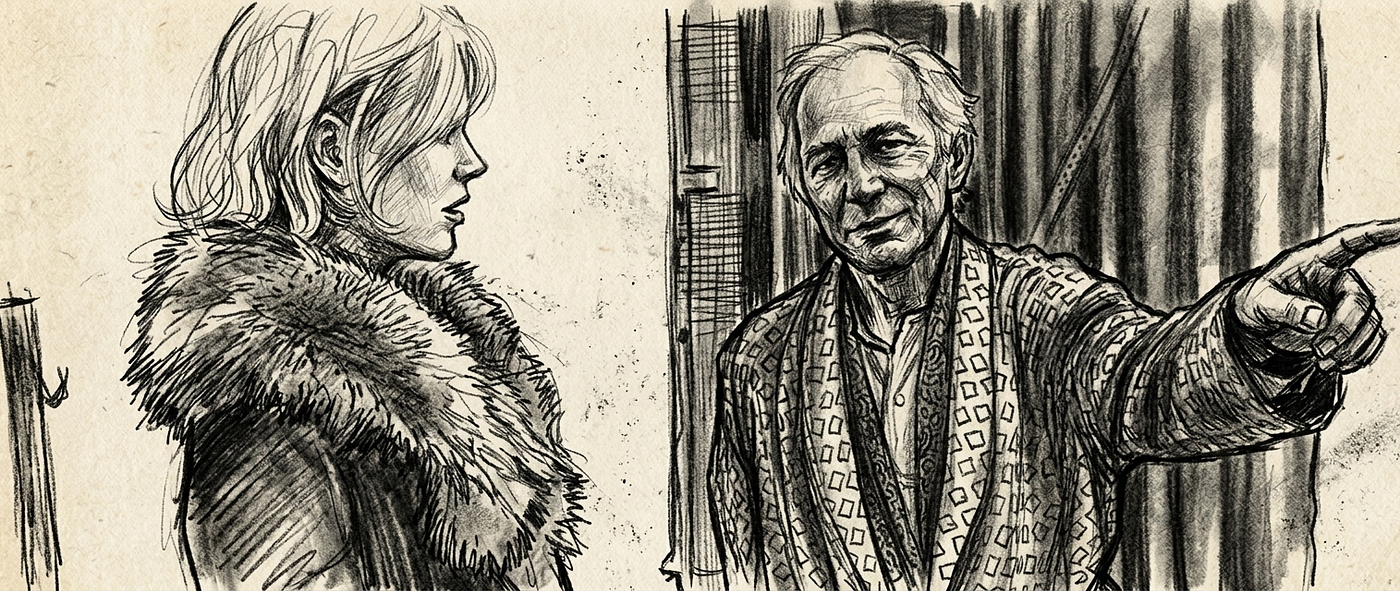
Art Sketch by Author
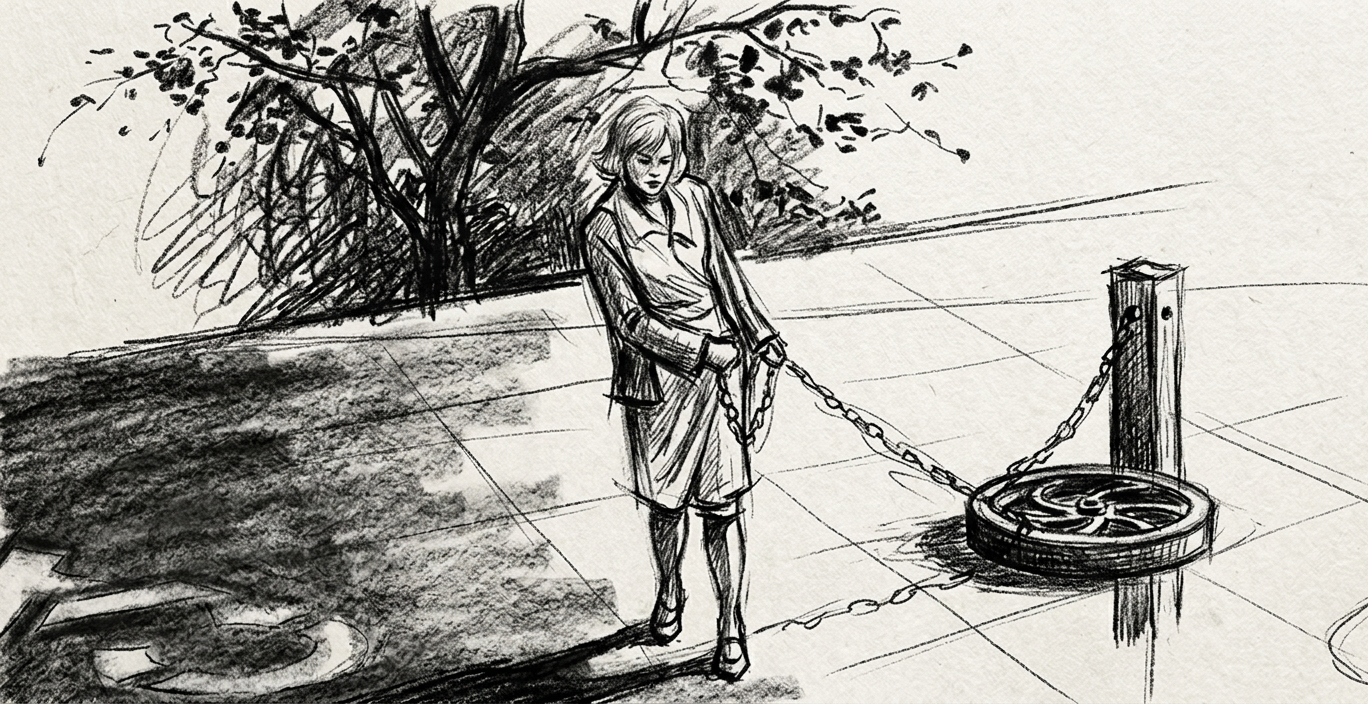
By the time the town decides to chain her to a heavy iron wheel (yes, an actual wheel) and she is raped nightly by the male population, you’re not just horrified; you’re exhausted.
You’ve watched the decay of decency in slow motion. You’ve seen kind individuals turn into monsters when they discovered they could get away with it.
At this point, reviewers either declare the movie a masterpiece or yell at the TV.
The renowned reviewer Roger Ebert witnessed this craziness up close. He admired the audacity but ultimately threw in the towel. He wrote that the film “works as a demonstration of how a good idea can go wrong” and compared the viewing experience to watching “a raving prophet on a street corner” . He noted that while von Trier has the “imagination of an artist” he also has the “pedantry of a crank” .
Ouch. But fair.
Part IV: The Politics: “I‘ve Never Been to America, But Let Me Tell You About America”
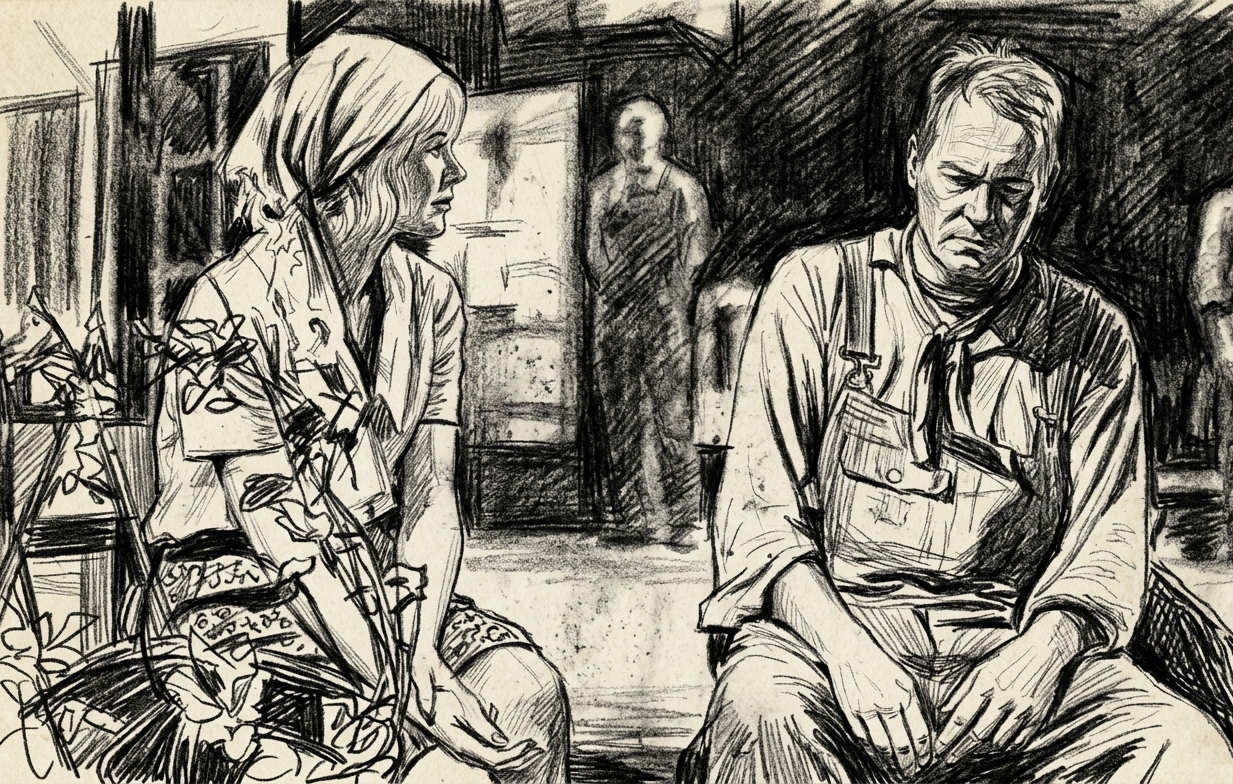
Art Sketch by Author
You can‘t talk about Dogville without talking about the elephant in the room, or rather, the elephant that refuses to get on a plane to America.
Lars von Trier has never set foot in the United States. He is terrified of flying. Yet, he decided to make a trilogy about the soul of America . It’s like me writing a definitive guide to the surface of Mars because I watched a lot of Star Trek.
Dogville is the first part of that unfinished “USA Land of Opportunities” trilogy. And boy, does he have opinions.
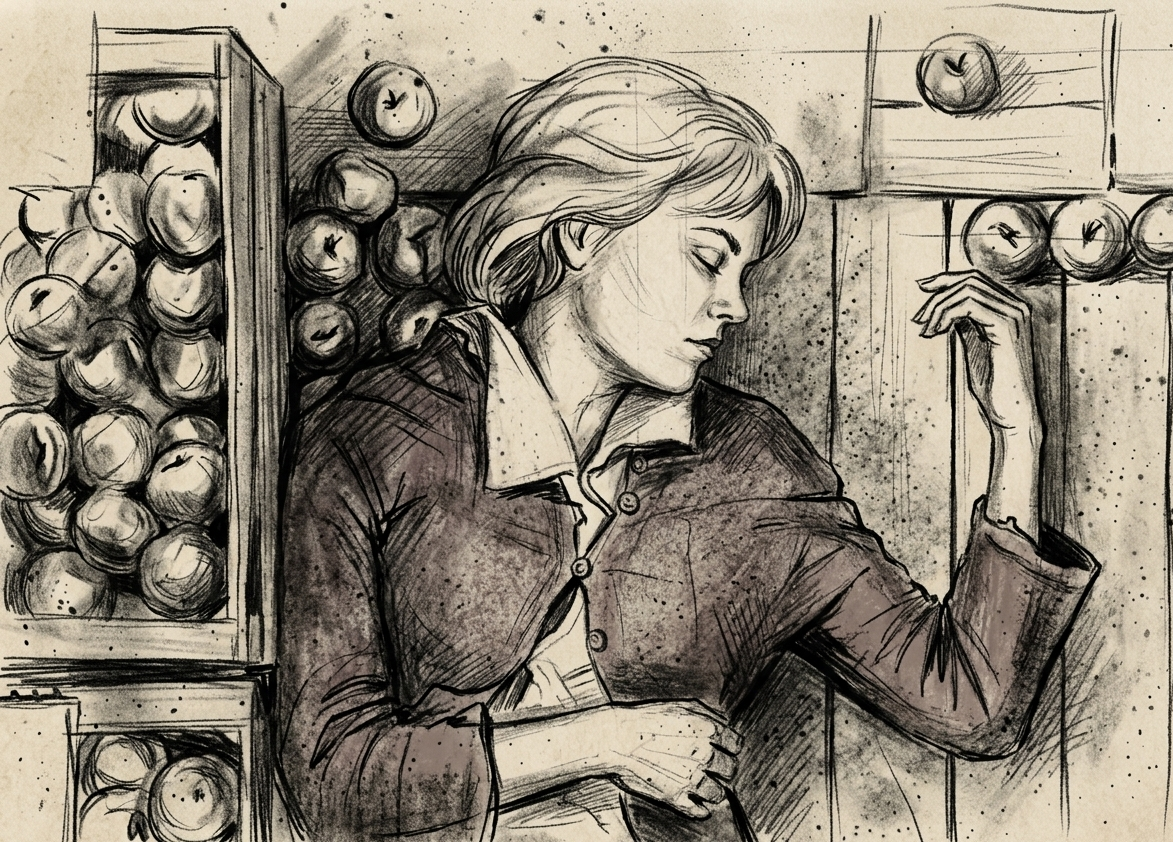
Sketch Art by Author
The film is dripping with allegory. The name “Grace” is obviously theological. The town exploits her labor and then her body, much like capitalism exploits the worker. The gangsters at the end arrive in a long black car, representing the authoritarian power that the town unwittingly summoned.
When the film premiered at Cannes, people accused him of being anti-American. Von Trier, in his defense, basically said, “I’m not anti-American; I’m just anti-people-who-are-mean-to-the-weak, and by the way, your history with slavery and poverty is kind of a bummer” .
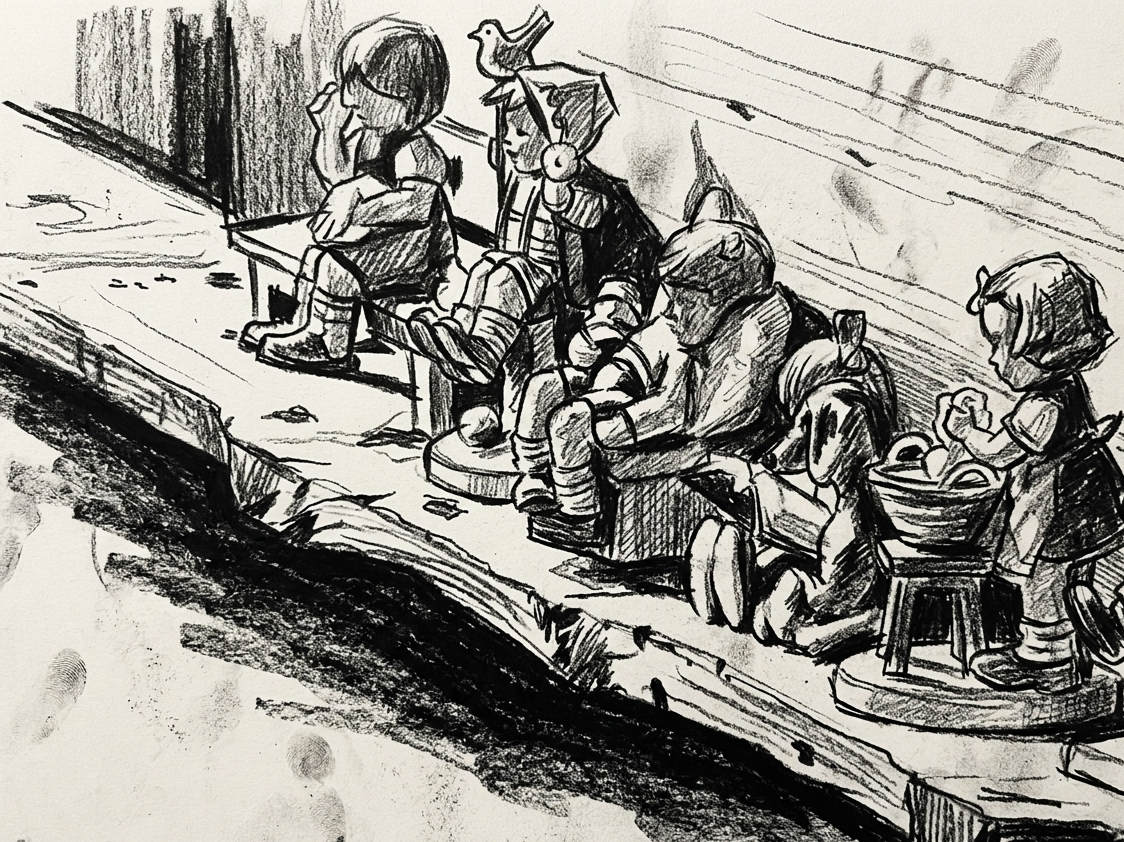
Art Sketch by Author
He uses the film to show that under the pressure of poverty and the seduction of power, the “American Dream” rots into a nightmare. The townspeople aren’t evil because they’re poor; they’re evil because they’re human. And for von Trier, being human is the original sin .
It’s a bleak, bleak worldview. It suggests that if you give people just a little bit of power over someone else, they will turn into rapists and thieves within six months. It’s not exactly the Chamber of Commerce tourism ad for Colorado.
Part V: The Ending Or, “Revenge is a Dish Best Served with Machine Guns”
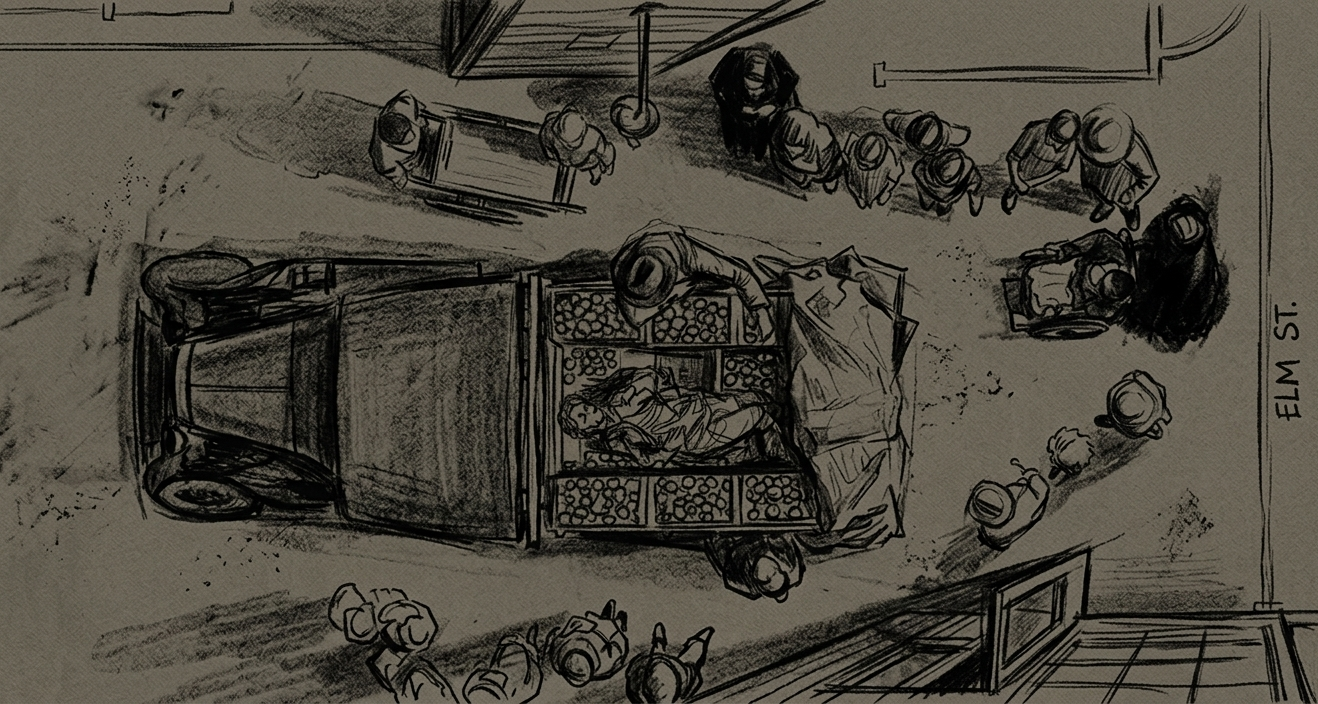
Art Sketch by Author
Alright, spoilers for a twenty-year-old movie. You’ve been warned.
Grace finally escapes. She calls for the gangsters the very people she was running from to come and get her. It turns out the gangsters aren’t just gangsters.
The Big Man (played with terrifying calm by James Caan) is her father. Grace has been running from her family’s crime empire because she thought they were too cruel.
Her father tells her she’s naive. He says the people of Dogville aren’t good people who made mistakes; they’re dogs who need to be put down.
Grace disagrees. She forgives them. She tells her father they should just leave.
And then, as they’re driving away, she looks back at the town. She thinks about the rapes. The chain. The humiliation. The smashed Hummel figurines (a crime Ebert himself noted was the most accurate detail in the film ).
Art Sketch by Author
She changes her mind.
She gives the order.
The gangsters return to Dogville. They line up the entire population. They shoot the adults. They shoot the children. They shoot the elderly. They shoot the woman who was nice for five minutes. They burn the town to the ground.
As the town burns, Grace walks through the chaos. She finds the one person who was kind to her a man who offered her his apples without expecting sex in return. She looks at him, smiles, and shoots him in the head.
The only survivor? The real dog, Moses. Grace sets him free. Because animals, apparently, are better than people .
The screen goes black. David Bowie’s “Young Americans” starts blasting. Over the credits, we see a montage of real, haunting Depression-era photographs of poor Americans the actual “dogs” of society .
It is the most brutal mic drop in cinema history.
Part VI: The Reviews: “I Laughed, I Cried, I Lost the Will to Live”
So, what do the people think?
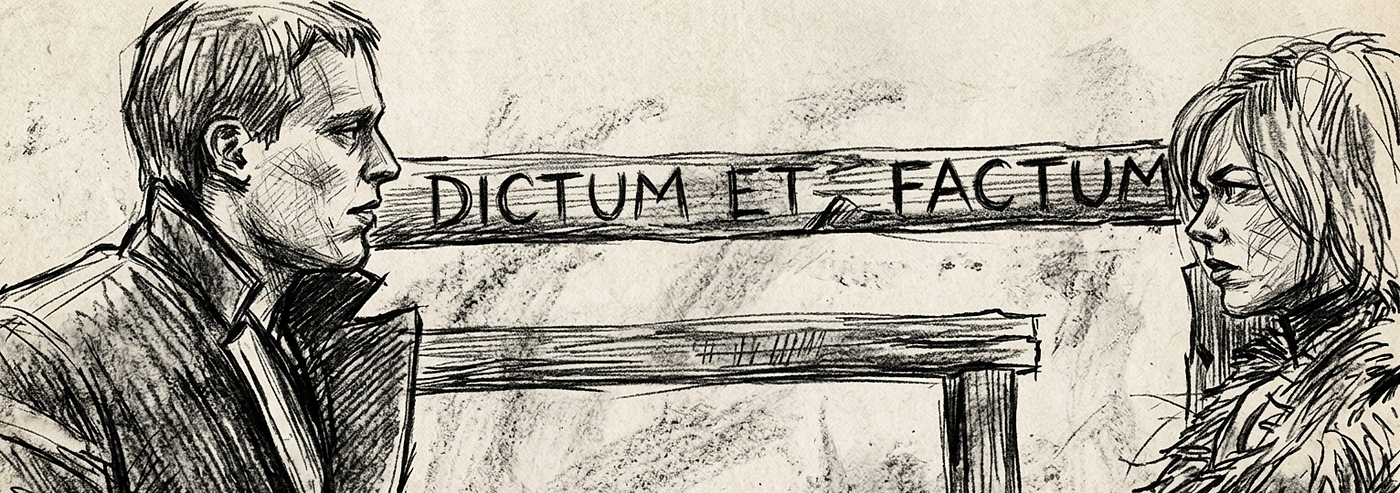
Art sketch by Author
Oh, the reviews are a roller coaster. Reading them is like watching a jury deliberate on whether water is wet.
On IMDb and Metacritic, the user reviews are a glorious dumpster fire of hot takes .
One user writes, “It was impressive… But fifteen minutes into the film, the style and story were clear, and the attenuated pace and three-hour length of the film were annoying” . This is the “I get it, Lars, you’re smart, can we go home now?” camp.
Another user, clearly having a bad day, calls it “A Nightmare On Elm Street” not because of Freddy Krueger, but because the town of Dogville itself is the nightmare .
Some defend it fiercely. They call it a “bleak, experimental masterwork” and praise its exploration of “morality & retribution” . They argue that the chalk outlines force you to focus on the acting, the words, the rot.
One particularly enthusiastic reviewer said they “envy the people who haven’t watched it yet, cause they have one of the most especially 3 hours of their life to come” . That reviewer is either a genius or a sadomasochist.
And then there’s the confused viewer who just wanted to see Nicole Kidman in a nice dress: “I know this is not a movie that will appeal to everybody… I can’t describe have to see it!” . Yes. Stars. Exactly.
The most common complaint? The runtime. Three hours. No walls. Lots of rape. It’s not exactly Frozen. As one user put it: “It would have been better if it was 30 or 60 minutes shorters. Longdreaded” . “Longdreaded.” That should be the official genre tag on Netflix.
Part VII: The Verdict: Should You Watch It?

Art Sketch by Author
Here’s the thing about Dogville. It’s not a movie you “enjoy” It’s a movie you survive. It’s a cinematic colonoscopy. It’s uncomfortable, you feel exposed, and by the end, you just want it to be over so you can go eat a sandwich and forget the whole thing.
But days later, you can’t forget it.
You think about the structure. The audacity of the no-walls set. You think about how the narrator describes the town as “a nice place” while we watch it burn.
You think about how you, the viewer, are complicit. You watched Grace get abused for two hours. You waited for the violence. And when it came, you cheered. We all cheered. We wanted the dogs to be put down .
And that’s von Trier’s point. He didn’t just make a movie about evil people. He made a movie about an audience that demands revenge.
If you watch Dogville, you will hate it. If you watch Dogville, you will love it. If you watch Dogville, you will need a shower. But if you watch Dogville, you will have an opinion. And that, dear reader, is more than you can say about 99% of the other movies on your streaming queue.
Just make sure you have a hug or a stiff drink waiting for you when the credits roll. And maybe skip the Hummel figurines for a while. They’re triggers now.
Final Rating:
Visuals: Chalk/10
Vibe: Existential Dread
Nicole Kidman’s Bravery: 11/10
Recommendation: Watch it with a therapist on speed dial.
Thanks for reading! If you enjoyed this deep dive into cinematic misery, smash that clap button (it’s the only violence we condone here) and subscribe for more articles about movies that ruin your day.
If you enjoyed this deep dive into the mechanics of mastery, you’ll love my publication: The Applied Mind. 🧠
Please 50 Claps👏 and Comment 💕
***buy me a coffee / Substack / Patreon / Medium /***
Thanks for reading. ❤️
See you in the next one!
메타데이터
- post_id
- 1bb920a9a7e8
- slug
- welcome-to-dogville-population-15-humans-1-chalk-dog-and-your-will-to-live-1bb920a9a7e8
- url
- https://medium.com/the-applied-mind/welcome-to-dogville-population-15-humans-1-chalk-dog-and-your-will-to-live-1bb920a9a7e8
- canonical_url
- https://medium.com/the-applied-mind/welcome-to-dogville-population-15-humans-1-chalk-dog-and-your-will-to-live-1bb920a9a7e8
- author_url
- https://medium.com/@misselbereth
- status
- ok
- fetched_at
- 2026-06-13 12:55:53