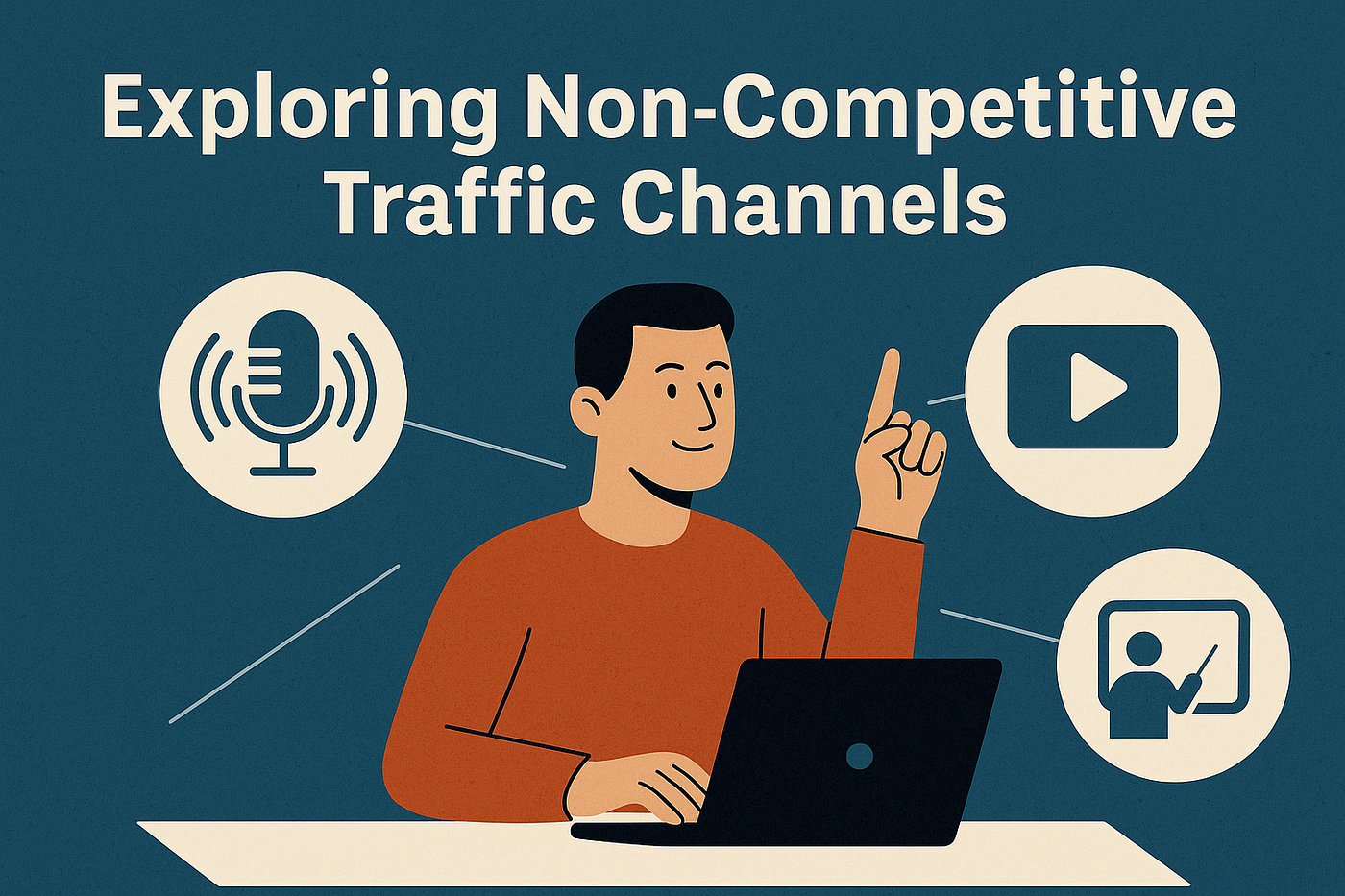
Low-Competition Traffic Sources Creators Should Use Before Scaling
Why Creators Get Stuck Competing in the Worst Places
Low-Competition Traffic Sources Creators Should Use Before Scaling
Why Creators Get Stuck Competing in the Worst Places
When most creators think about traffic, they instinctively go where everyone else is.
Big platforms. Loud feeds. Constant competition.
The issue isn’t that these platforms don’t work — it’s that they’re the hardest place to start.
High-competition channels reward creators who already have:
- clear messaging
- proven offers
- consistency dialed in
Most creators enter these spaces while still figuring those things out. The result is slow growth, frustration, and the feeling that traffic “just doesn’t work.”
Low-competition traffic exists to solve this problem.
It gives you room to refine your message, learn what converts, and build momentum — without fighting the crowd.

What Low-Competition Traffic Really Means
Low-competition traffic doesn’t mean low quality.
It means:
- fewer creators targeting the same audience
- less pressure to perform or go viral
- more room for clarity to win
These channels reward relevance over reach.
For creators building traction, that’s a major advantage.
Underrated Traffic Sources Most Creators Overlook
Many of the best traffic sources aren’t trendy or flashy — but they convert better because they’re quieter.
1. Niche Search Queries (Long-Tail Search)
Most creators think search traffic means competing for huge keywords.
In reality, the best opportunities live in specific questions.
Low-competition search traffic comes from:
- long-tail queries
- problem-focused searches
- niche language real people use
Examples look like:
- “why my content isn’t converting”
- “best traffic source for creators”
- “creator business bottlenecks”
Why this works
- people arrive with intent
- competition is lower
- content is easier for AI search to surface
This traffic grows slowly — but converts consistently.
2. Community-Based Platforms
Communities already have something most platforms don’t: trust.
This includes:
- niche forums
- private groups
- paid or free communities
- focused group spaces
Why this works
- smaller but warmer audiences
- less noise
- deeper conversations
Creators who show up helpfully — not promotional — often become the most trusted voice in the room.
3. Email and Direct Traffic
Email is one of the most underestimated low-competition channels.
It’s not flashy. It doesn’t trend. But it works.
Why this works
- direct access to your audience
- no algorithm controlling visibility
- strong conversion rates
Even a small, well-aligned email list can outperform large social audiences when trust is built.
4. Answer-Based Content (AI Search)
Answer-based content is one of the fastest-growing low-competition opportunities.
This content focuses on:
- clear questions
- direct explanations
- structured clarity
It’s designed to be:
- summarized
- referenced
- cited by AI tools
Creators who write clearly and diagnostically have a natural advantage here.
How to Validate a Traffic Source Before You Commit
Low competition doesn’t mean “try everything.”
Before committing to a channel, ask:
- Are people already asking questions here?
- Does this format fit how I naturally communicate?
- Can I show up consistently without forcing it?
- Does this channel support what I sell?
Validation saves time — and energy.
Traffic Sources That Scale Quietly Over Time
The best low-competition channels often grow without feeling busy.
These include:
- search-based content
- email lists
- answer-driven articles
- community authority
They scale through clarity, not volume.
That’s why they’re ideal before moving into high-reach platforms.
When to Move Into High-Reach Channels
Low-competition traffic isn’t permanent — it’s foundational.
Move into larger platforms when:
- your message is clear
- your offer converts
- you know exactly who you help
At that point, competition feels lighter — because clarity does the heavy lifting.
Find Your Best Low-Competition Traffic Path
If you’re unsure which low-competition channels fit your business, guessing usually leads to scattered effort.
A free **traffic source analysis** helps you identify:
- where competition is lowest for you
- which channels match your business model
- what to focus on right now — not later
This kind of clarity lets you grow quietly, without chasing algorithms or burning out.
Final Thought
You don’t need to win everywhere.
You need to win somewhere specific.
Low-competition traffic gives creators space to build confidence, clarity, and conversions — before scaling into louder channels.
Choose focus over crowds. Build momentum where it’s easiest. And scale only once the foundation is solid.
Clap or comment if you found this helpful.
메타데이터
- post_id
- 1bf396b831ca
- slug
- low-competition-traffic-sources-creators-should-use-before-scaling-1bf396b831ca
- url
- https://medium.com/@jefbode/low-competition-traffic-sources-creators-should-use-before-scaling-1bf396b831ca
- canonical_url
- https://medium.com/@jefbode/low-competition-traffic-sources-creators-should-use-before-scaling-1bf396b831ca
- author_url
- https://medium.com/@jefbode
- status
- ok
- fetched_at
- 2026-06-09 14:34:10