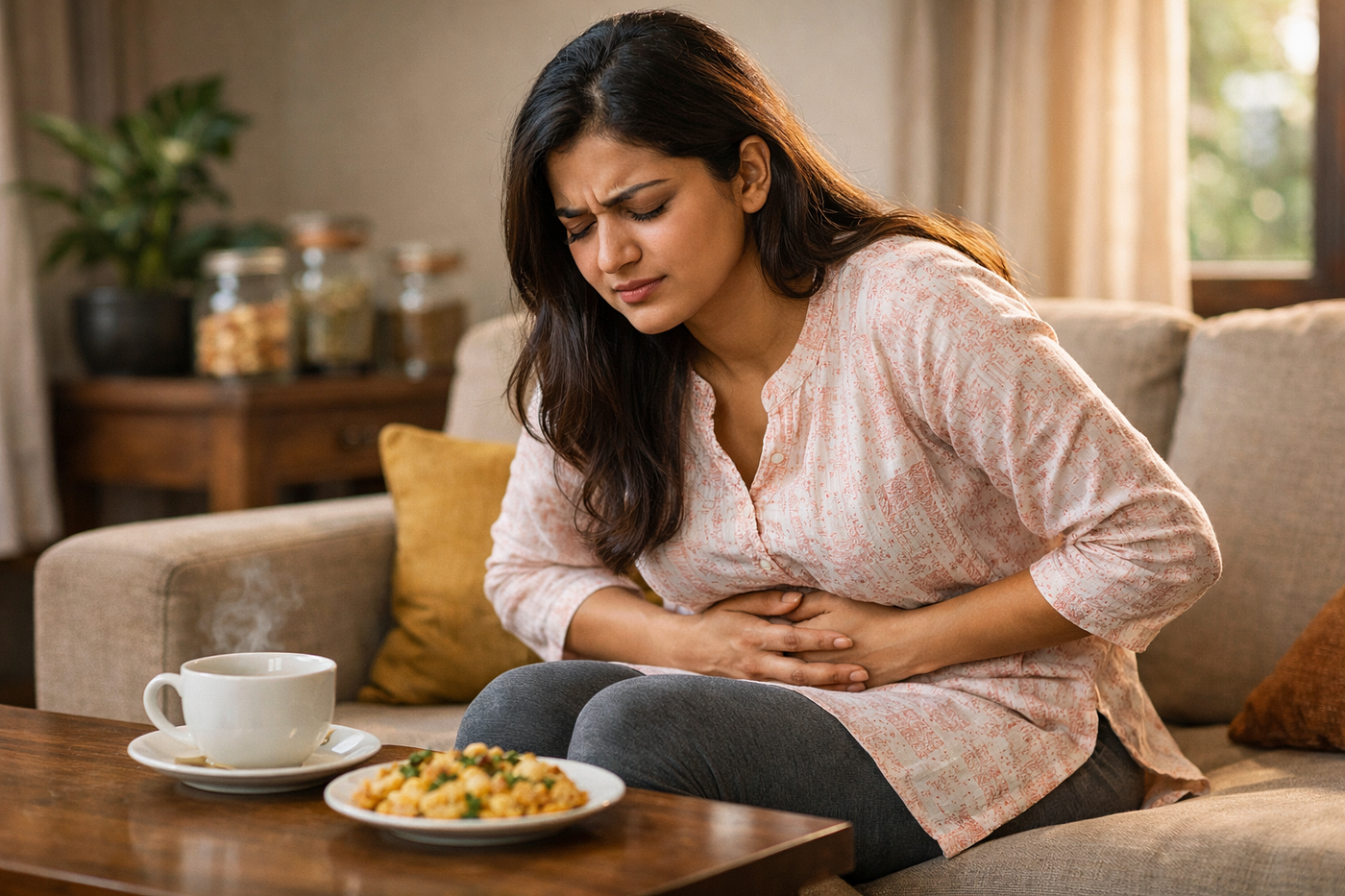
Your Gastroenterologist Won’t Tell You This: The 3 Indian Kitchen Ingredients That Rebuilt My Gut…
By Gut Wellness Club
Your Gastroenterologist Won’t Tell You This: The 3 Indian Kitchen Ingredients That Rebuilt My Gut in 17 Days
By Gut Wellness Club
You’ve swallowed the pills. You’ve survived the bland diets. You’ve spent thousands on specialists who handed you another prescription and said, “Let’s see how this goes.”
And your gut is still on fire.
Here’s the uncomfortable truth the ₹2 lakh gastroenterology industry doesn’t want you to hear: your grandmother’s kitchen already has the cure. Not a band-aid. Not a “management plan.” A permanent reversal of chronic digestive issues — bloating, IBS, acid reflux, constipation, leaky gut — in 15 to 21 days.
At Gut Wellness Club, we’ve watched it happen hundreds of times. No supplements. No imported powders. Just Indian traditional food, ancient yoga practices, and the precise science of feeding your gut the three things it’s starving for: prebiotics, probiotics, and postbiotics.
This isn’t theory. This is your exact daily protocol. What to eat. When to eat it. How to prepare it. Starting today.
First, Understand Why Your Gut Is Broken
Your gut contains over 38 trillion bacteria. When the good bacteria die and the bad bacteria take over, you get what scientists call dysbiosis — the root cause behind nearly every chronic digestive issue.
Modern Indian diets have quietly destroyed this balance. Refined wheat replaced hand-ground bajra. Pasteurized packaged curd replaced natural fermentation. Pressure-cooked dal replaced slow-cooked bone-nourishing broths. Air-conditioned lifestyles replaced morning sun exposure and physical movement.
The result? Your gut lining is damaged. Your microbiome is starving. Your digestion has forgotten how to work.
To fix this permanently, you need to rebuild three layers — in the correct order:
Layer 1 — Prebiotics: Feed the good bacteria so they multiply. Layer 2 — Probiotics: Introduce fresh armies of good bacteria. Layer 3 — Postbiotics: Harvest the healing compounds these bacteria produce.
Most people take a random probiotic capsule and wonder why nothing changes. That’s like planting seeds on concrete. You need the soil (prebiotics) first, then the seeds (probiotics), then the harvest (postbiotics).
Let’s build your gut from the ground up.
LAYER 1: PREBIOTICS — Feeding Your Good Bacteria
Prebiotics are specific types of fibre that your body cannot digest but your good bacteria feast on. Think of them as fertilizer for your microbiome.
The 5 Most Powerful Indian Prebiotic Foods
1. Raw Green Banana (Kaccha Kela)
This is the single most powerful prebiotic available in any Indian kitchen. Raw green banana contains resistant starch, the preferred fuel of Bifidobacteria and Lactobacillus — the two bacterial species responsible for strong digestion.
How to consume:
- Peel one raw green banana.
- Slice it thinly and soak in a bowl of water with a pinch of turmeric for 10 minutes (prevents oxidation).
- Steam for 8–10 minutes. Do NOT fry or overcook.
- Eat it plain with a drizzle of cold-pressed coconut oil and a pinch of rock salt.
When: Every morning, 30 minutes before breakfast. Empty stomach.
Why this timing works: On an empty stomach, the resistant starch reaches your colon intact without interference from other foods. Your bacteria get the first meal of the day.
2. Chicory Root (Kasni)
Available at any Indian herb shop, chicory root contains inulin — the most studied prebiotic fibre in the world. It directly increases Bifidobacteria populations by up to 10x within two weeks.
How to consume:
- Take 1 tablespoon of dried chicory root.
- Boil in 2 cups of water for 15 minutes on a low flame.
- Strain, let it cool to lukewarm.
- Add half a teaspoon of raw, unprocessed honey. Stir.
When: Every evening, 30 minutes after dinner. This gives your gut bacteria an overnight feast while your body rests and repairs.
3. Whole Garlic (Lahsun) — Eaten Raw
Raw garlic contains fructooligosaccharides (FOS), one of the most potent prebiotics. Cooking destroys most of it. Raw is non-negotiable.
How to consume:
- Crush 2 medium cloves of garlic. Crushing activates allicin, the healing compound.
- Let them sit for 10 minutes after crushing (this is critical — allicin needs oxygen exposure to activate).
- Swallow with a glass of lukewarm water. Do NOT chew extensively — swallowing reduces the burning sensation.
- Follow immediately with 2–3 slices of fresh cucumber to cool the stomach.
When: Every morning, first thing. Before even the green banana. This is your very first act of the day.
4. Cooked & Cooled Rice (Basi Bhat / Panta Bhat)
This is a gut-healing tradition that Eastern and Southern India has practiced for centuries. When rice is cooked and then cooled overnight, its starch converts into retrograded resistant starch — a powerful prebiotic.
How to consume:
- Cook 1 cup of traditional red rice, hand-pounded rice, or aged rice (puzhungal arisi).
- Transfer to a clay pot or steel vessel. Add enough water to submerge the rice.
- Cover loosely and leave at room temperature overnight (8–12 hours).
- Next morning, drain most water, add a pinch of rock salt, a teaspoon of cold-pressed sesame oil, and eat with a raw onion or green chilli.
When: As your breakfast, 3–4 times per week. Especially powerful in summer months.
5. Raw Banana Stem (Vazhaithandu)
Widely available in South Indian markets, banana stem is loaded with prebiotic fibre and is one of the most effective natural remedies for kidney and gut health simultaneously.
How to consume:
- Take a 6-inch piece of fresh banana stem.
- Remove the outer layers. Chop into small pieces, removing the fibre strings.
- Add to a blender with 1 cup of fresh buttermilk, a pinch of cumin powder, and rock salt.
- Blend into a thick juice. Do not strain — the fibre is the medicine.
When: Mid-morning, around 11 AM, between breakfast and lunch. Three times per week.
LAYER 2: PROBIOTICS — Introducing Living Good Bacteria
Once your prebiotic foundation is set (give it at least 3–5 days), your gut becomes fertile ground for live beneficial bacteria. Now we plant the seeds.
Forget probiotic capsules. Indian traditional fermented foods contain more diverse, more resilient, and more effective bacterial strains than any laboratory product. Here’s your exact protocol.
The 5 Most Powerful Indian Probiotic Foods
1. Homemade Curd Set in a Clay Pot (Mitti ki Handi ka Dahi)
This is not the same as plastic-packaged store curd. Curd set in a clay pot contains Lactobacillus delbrueckii and Streptococcus thermophilus in quantities that commercial curd cannot match. The porous clay surface harbours bacteria from previous batches, creating a living ecosystem.
How to prepare:
- Boil full-fat A2 cow milk (or buffalo milk). Let it cool until you can hold your finger in it comfortably — roughly 40°C.
- Add 1 tablespoon of live curd culture (from a previous homemade batch or a trusted neighbour’s curd).
- Pour into an unglazed clay pot. Cover with a cotton cloth.
- Keep undisturbed for 8–10 hours in a warm place.
How to consume:
- Eat 1 full bowl (approximately 200 ml) at room temperature. Never eat curd cold from the fridge — cold temperatures make bacteria dormant.
- Add a pinch of rock salt and roasted cumin powder.
When: With lunch. Every single day. Non-negotiable. This is the backbone of your probiotic protocol.
2. Kanji (Fermented Black Carrot Water)
This North Indian fermented drink is a probiotic powerhouse. The wild fermentation process produces Lactobacillus plantarum — one of the strongest gut-healing bacteria known to science.
How to prepare:
- Take 4–5 black carrots (kali gajar). Peel and cut into long thin sticks.
- Add to a large glass jar with 1 litre of filtered water.
- Add 2 tablespoons of ground black mustard seeds (rai) and 1 tablespoon of rock salt.
- Cover with a muslin cloth. Keep in direct sunlight for 3–5 days.
- The water turns deep purple-red and develops a sharp, tangy smell. That’s when it’s ready.
How to consume:
- Drink 1 glass (200 ml) of the kanji water. You can eat the carrot sticks as well.
When: 30 minutes before lunch. The acidity primes your stomach for digestion.
3. Ambali (Fermented Ragi Porridge)
A staple of Karnataka and Tamil Nadu, ambali is fermented finger millet porridge that contains Lactobacillus fermentum, Pediococcus, and natural yeasts — a probiotic triple threat.
How to prepare:
- Cook 2 tablespoons of ragi flour in 2 cups of water, stirring continuously until it thickens into porridge.
- Let it cool to room temperature.
- Transfer to a clay or glass vessel. Add half a cup of water, cover with a cloth.
- Ferment for 12–24 hours at room temperature.
- The porridge will turn slightly sour and develop tiny bubbles — it’s alive.
How to consume:
- Add a pinch of salt and drink as is, or thin it with water and buttermilk.
When: As a mid-afternoon drink, around 4 PM. This is your gut’s second probiotic dose of the day.
4. Rice Kanji / Pazhankanji (Fermented Rice Water)
Different from cooled rice. This is the starchy water in which rice was cooked, then left to ferment overnight.
How to prepare:
- While cooking rice, keep the excess starch water (the water you would normally drain off). About 2 glasses.
- Pour into a clay pot. Add a small piece of dry ginger (saunth).
- Cover with cloth and leave overnight.
- By morning, it will have a mildly sour, fermented aroma.
How to consume:
- Drink 1 glass on its own, at room temperature.
When: First thing in the morning, right after your raw garlic. Wait 15 minutes, then eat your green banana.
5. Homemade Pickles Fermented in Mustard Oil (Aam ka Achaar / Nimbu ka Achaar)
Traditional Indian pickles — made with raw mango, lemon, or mixed vegetables, fermented in mustard oil with salt and spices — are loaded with Lactobacillus brevis and Leuconostoc mesenteroides. These are NOT the vinegar-based commercial pickles. Only traditional oil-and-salt fermented pickles work.
How to consume:
- Take a small portion — 1 tablespoon — of genuinely fermented homemade pickle.
When: With both lunch and dinner. Every day. It acts as a probiotic condiment that also stimulates digestive enzyme secretion.
LAYER 3: POSTBIOTICS — Harvesting the Healing Compounds
Postbiotics are the metabolic byproducts that good bacteria produce when they feed on prebiotics — short-chain fatty acids (SCFAs) like butyrate, acetate, and propionate. These are the actual healing agents. They repair your gut lining, reduce inflammation, and permanently restore digestive function.
You cannot buy postbiotics in a bottle. Your body must produce them. But certain Indian foods and practices dramatically accelerate postbiotic production.
The 5 Most Powerful Indian Postbiotic Boosters
1. Ghee (Clarified Butter) — Specifically A2 Cow Ghee
Ghee contains butyric acid — the same short-chain fatty acid your gut bacteria produce. Consuming ghee directly gives your gut lining an immediate repair material while your bacteria ramp up their own production.
How to consume:
- 1 teaspoon of pure A2 cow ghee, melted, in a glass of warm water.
When: First thing on waking, before garlic, before anything else. Wait 15 minutes, then proceed with garlic, then fermented rice water, then green banana. Yes — your mornings now have a precise sequence.
The morning sequence (exact order):
- Warm water with 1 tsp ghee (6:00 AM)
- Wait 15 minutes
- Raw crushed garlic with lukewarm water + cucumber (6:15 AM)
- Wait 10 minutes
- Fermented rice water — 1 glass (6:25 AM)
- Wait 15 minutes
- Steamed green banana with coconut oil (6:40 AM)
- Breakfast at 7:30 AM — cooled rice (Panta Bhat) or regular meal
2. Fermented Buttermilk / Chaas (Mattha)
When curd is churned and diluted with water, the fermentation byproducts — lactic acid, diacetyl, and bacteriocins — become highly bioavailable. These are postbiotics in liquid form.
How to prepare:
- Take 1 cup of fresh homemade curd (from your clay pot batch).
- Add 2 cups of water.
- Churn vigorously with a wooden churner (madhani) or blender for 2 minutes. Remove the butter that rises to the top (use it for cooking).
- Add roasted cumin powder, a pinch of rock salt, fresh curry leaves, and a tiny piece of fresh ginger.
How to consume:
- Drink 1 full glass after lunch. Sip slowly — don’t gulp.
When: Immediately after lunch. Every day. This is your post-meal postbiotic infusion.
3. Aged Tamarind Water (Imli Pani)
Tamarind that has been aged for 1+ years develops organic acids and polyphenol metabolites — potent postbiotic compounds that feed the gut lining and reduce intestinal inflammation.
How to prepare:
- Soak a lemon-sized ball of aged tamarind in 1 glass of warm water for 30 minutes.
- Squeeze and mash thoroughly. Strain.
- Add a pinch of black salt (kala namak), roasted cumin powder, and a tiny pinch of black pepper.
How to consume:
- Drink the entire glass at room temperature.
When: 30 minutes before dinner. This primes your evening digestion and delivers postbiotic compounds directly to your colon.
4. Slow-Cooked Bone Broth or Dal Residue Water (Daal ka Paani)
The water remaining after slow-cooking whole moong dal, masoor dal, or horse gram (kulthi dal) on a low flame for 45+ minutes contains amino acids, glutamine, and microbial metabolites that seal the gut lining.
How to prepare:
- Wash 1 cup of whole moong dal.
- Cook on a low flame in 4 cups of water with turmeric, a piece of dry ginger, and 2 crushed garlic cloves.
- After 45 minutes, the dal will be soft and the water golden-yellow.
- Strain the thin upper water — this is your postbiotic-rich daal ka paani.
- Season with ghee, cumin tadka, and rock salt.
How to consume:
- Drink 1 bowl warm, sipping slowly.
When: With dinner. Or as dinner itself on fasting/light meal days.
5. Overnight Soaked Fenugreek Water (Methi Dana Paani)
Fenugreek seeds soaked overnight release galactomannan fibre and saponins which, upon contact with gut bacteria, rapidly produce short-chain fatty acids — especially butyrate.
How to prepare:
- Soak 1 tablespoon of fenugreek seeds in 1 glass of water overnight (8+ hours).
- In the morning, the water turns slightly viscous and pale yellow.
- Do NOT discard the water. Chew and swallow the softened seeds as well.
When: Include this in your morning sequence — drink it right after the ghee water and before the garlic. Adjust the sequence as:
- Ghee water → 2. Methi water (chew seeds) → 3. Garlic → 4. Fermented rice water → 5. Green banana
THE YOGA PROTOCOL: Activating Your Gut From the Outside
Food is only half the equation. Your gut has its own nervous system — the enteric nervous system — with over 500 million neurons. Specific yoga practices directly stimulate this system, accelerate peristalsis, improve blood flow to the intestines, and enhance bacterial colonisation.
Practice this sequence every morning, before your gut-healing food protocol. Duration: 25 minutes.
Morning Yoga Sequence for Gut Healing
1. Agnisar Kriya (Fire Breath Cleansing) — 5 minutes
- Stand with feet shoulder-width apart, hands on knees, slight forward bend.
- Exhale completely. Without inhaling, rapidly pump your abdomen in and out 15–20 times.
- Inhale, rest. Repeat 5 rounds.
- Why it works: Creates a vacuum effect that physically massages the intestines, stimulates enzyme secretion, and moves stagnant food through the tract.
2. Pavanamuktasana (Wind-Relieving Pose) — 5 minutes
- Lie on your back. Pull your right knee to your chest. Hold for 30 seconds.
- Switch to the left knee. Hold for 30 seconds.
- Pull both knees to chest. Rock gently side to side for 1 minute.
- Repeat 3 rounds.
- Why it works: Physically compresses the ascending and descending colon, releasing trapped gas and stimulating bowel movement.
3. Malasana (Deep Squat / Garland Pose) — 3 minutes
- Squat deeply with feet flat on the floor, toes slightly turned out.
- Press your elbows against inner knees. Palms together at chest.
- Hold for 1 minute. Rest. Repeat 3 times.
- Why it works: Opens the ileocecal valve (the gateway between small and large intestine) and aligns the colon for natural elimination.
4. Katichakrasana (Standing Spinal Twist) — 3 minutes
- Stand with feet apart. Extend arms to sides.
- Twist right — left hand touches right shoulder, right hand wraps behind waist.
- Twist left. Repeat 15 times each side.
- Why it works: Wrings the abdominal organs like a towel, flushing stale blood and drawing in fresh, oxygenated blood to the digestive organs.
5. Bhujangasana (Cobra Pose) — 3 minutes
- Lie face down. Place palms beside your chest.
- Slowly lift your chest off the ground, keeping hips grounded.
- Hold for 20 seconds. Lower. Repeat 5 times.
- Why it works: Stretches the abdominal wall, stimulates the vagus nerve (the gut-brain communication highway), and improves stomach acid production.
6. Shavasana with Abdominal Breathing — 6 minutes
- Lie flat on your back. Close your eyes.
- Place both hands on your belly. Breathe deeply so your belly rises on inhale, falls on exhale.
- Focus only on the sensation of your belly moving.
- Why it works: Activates the parasympathetic nervous system (rest-and-digest mode). Your gut only heals in this state. Stress and shallow breathing keep you in fight-or-flight, where digestion shuts down completely.
YOUR COMPLETE DAILY SCHEDULE — DAY 1 TO DAY 21
5:30 AM — Wake up. Yoga sequence (25 minutes).
6:00 AM — Ghee water (1 tsp A2 ghee in warm water).
6:05 AM — Methi water with chewed seeds.
6:15 AM — 2 crushed garlic cloves swallowed with warm water. Cucumber slices.
6:25 AM — 1 glass fermented rice water.
6:40 AM — Steamed green banana with coconut oil and rock salt.
7:30 AM — Breakfast: Panta Bhat (cooled fermented rice) 3–4x/week. Other days: idli, dosa, or poha with fermented chutneys.
11:00 AM — Banana stem buttermilk juice (3x/week).
12:30 PM — Kanji (fermented carrot water) — 1 glass.
1:00 PM — Lunch with homemade clay-pot curd, fermented pickle, and dal. Eat slowly. Chew 32 times per bite.
1:30 PM — Buttermilk (chaas) — 1 full glass, sipped slowly.
4:00 PM — Ambali (fermented ragi porridge) — 1 glass.
6:30 PM — Aged tamarind water — 1 glass.
7:00 PM — Dinner: Light dal with daal ka paani, seasonal vegetables, a small portion of rice. Fermented pickle on the side.
8:30 PM — Chicory root tea with raw honey.
9:30 PM — Sleep. Your gut does 80% of its repair between 10 PM and 2 AM. Missing this window stalls your entire healing process.
WHAT TO EXPECT — WEEK BY WEEK
Days 1–5: Increased gas, mild bloating, and possibly loose stools. This is die-off — bad bacteria being starved and expelled. Do not stop. This is the sign it’s working.
Days 6–10: Gas reduces dramatically. You’ll notice your first solid, well-formed bowel movement — possibly the first in months. Energy levels begin to rise. Afternoon fatigue disappears.
Days 11–15: Bloating is mostly gone. Acid reflux reduces significantly. You’ll feel hungry at meal times (a sign your digestive enzymes are back online). Skin begins to clear — acne, dullness, and dark circles fade as toxic load decreases.
Days 16–21: Digestion feels effortless. You eat without fear. Bowel movements are consistent, well-formed, and on schedule. The chronic discomfort you’d been carrying for months or years — gone. Your gut biome has been rebuilt.
THE RULES THAT MAKE OR BREAK THIS PROTOCOL
- No packaged food. Zero. For 21 days, every single thing you eat must come from a whole, unprocessed source.
- No cold water or cold food. Cold suppresses digestive fire (agni). Everything at room temperature or warm.
- No eating after 7:30 PM. Your gut needs 12+ hours of fasting overnight to complete its repair cycle.
- No antibiotics or antacids unless medically critical. These destroy the very bacteria you’re rebuilding.
- Chew every bite 32 times. Digestion begins in the mouth. Unchewed food rots in the gut.
- Sleep by 10 PM. Non-negotiable. Gut repair happens during deep sleep.
- Morning sunlight for 15 minutes. Stand in direct early morning sun. UV exposure regulates gut bacterial circadian rhythms — this is recent microbiome science confirming ancient Indian practice.
This Isn’t Alternative Medicine. This Is Original Medicine.
Every fermented food in this protocol has been consumed in Indian households for thousands of years. Every yoga kriya was documented by Swami Swatmarama in the Hatha Yoga Pradipika in the 15th century. Every timing principle follows Ayurvedic dinacharya (daily routine).
Modern science is now spending millions of dollars researching what your great-grandmother practiced instinctively.
The gut is not complicated. We complicated it. Pills complicated it. Processed food complicated it.
Your gut knows how to heal. You just have to stop poisoning it and start feeding it what it was designed to receive.
21 days. Indian food. Yoga. No pills.
That’s the protocol.
Gut Wellness Club cures chronic digestive issues permanently using Indian traditional food and yoga within 15–21 days. No supplements. No medication. Just ancient wisdom, modern discipline, and a gut that finally works.
Follow us for daily gut-healing protocols, recipes, and real patient recovery stories.
**www.gutwellnessclub.com**Your Gastroenterologist Won’t Tell You This: The 3 Indian Kitchen Ingredients That Rebuilt My Gut in 17 Days
By Gut Wellness Club
You’ve swallowed the pills. You’ve survived the bland diets. You’ve spent thousands on specialists who handed you another prescription and said, “Let’s see how this goes.”
And your gut is still on fire.
Here’s the uncomfortable truth the ₹2 lakh gastroenterology industry doesn’t want you to hear: your grandmother’s kitchen already has the cure. Not a band-aid. Not a “management plan.” A permanent reversal of chronic digestive issues — bloating, IBS, acid reflux, constipation, leaky gut — in 15 to 21 days.
At Gut Wellness Club, we’ve watched it happen hundreds of times. No supplements. No imported powders. Just Indian traditional food, ancient yoga practices, and the precise science of feeding your gut the three things it’s starving for: prebiotics, probiotics, and postbiotics.
This isn’t theory. This is your exact daily protocol. What to eat. When to eat it. How to prepare it. Starting today.
First, Understand Why Your Gut Is Broken
Your gut contains over 38 trillion bacteria. When the good bacteria die and the bad bacteria take over, you get what scientists call dysbiosis — the root cause behind nearly every chronic digestive issue.
Modern Indian diets have quietly destroyed this balance. Refined wheat replaced hand-ground bajra. Pasteurized packaged curd replaced natural fermentation. Pressure-cooked dal replaced slow-cooked bone-nourishing broths. Air-conditioned lifestyles replaced morning sun exposure and physical movement.
The result? Your gut lining is damaged. Your microbiome is starving. Your digestion has forgotten how to work.
To fix this permanently, you need to rebuild three layers — in the correct order:
Layer 1 — Prebiotics: Feed the good bacteria so they multiply. Layer 2 — Probiotics: Introduce fresh armies of good bacteria. Layer 3 — Postbiotics: Harvest the healing compounds these bacteria produce.
Most people take a random probiotic capsule and wonder why nothing changes. That’s like planting seeds on concrete. You need the soil (prebiotics) first, then the seeds (probiotics), then the harvest (postbiotics).
Let’s build your gut from the ground up.
LAYER 1: PREBIOTICS — Feeding Your Good Bacteria
Prebiotics are specific types of fibre that your body cannot digest but your good bacteria feast on. Think of them as fertilizer for your microbiome.
The 5 Most Powerful Indian Prebiotic Foods
1. Raw Green Banana (Kaccha Kela)
This is the single most powerful prebiotic available in any Indian kitchen. Raw green banana contains resistant starch, the preferred fuel of Bifidobacteria and Lactobacillus — the two bacterial species responsible for strong digestion.
How to consume:
- Peel one raw green banana.
- Slice it thinly and soak in a bowl of water with a pinch of turmeric for 10 minutes (prevents oxidation).
- Steam for 8–10 minutes. Do NOT fry or overcook.
- Eat it plain with a drizzle of cold-pressed coconut oil and a pinch of rock salt.
When: Every morning, 30 minutes before breakfast. Empty stomach.
Why this timing works: On an empty stomach, the resistant starch reaches your colon intact without interference from other foods. Your bacteria get the first meal of the day.
2. Chicory Root (Kasni)
Available at any Indian herb shop, chicory root contains inulin — the most studied prebiotic fibre in the world. It directly increases Bifidobacteria populations by up to 10x within two weeks.
How to consume:
- Take 1 tablespoon of dried chicory root.
- Boil in 2 cups of water for 15 minutes on a low flame.
- Strain, let it cool to lukewarm.
- Add half a teaspoon of raw, unprocessed honey. Stir.
When: Every evening, 30 minutes after dinner. This gives your gut bacteria an overnight feast while your body rests and repairs.
3. Whole Garlic (Lahsun) — Eaten Raw
Raw garlic contains fructooligosaccharides (FOS), one of the most potent prebiotics. Cooking destroys most of it. Raw is non-negotiable.
How to consume:
- Crush 2 medium cloves of garlic. Crushing activates allicin, the healing compound.
- Let them sit for 10 minutes after crushing (this is critical — allicin needs oxygen exposure to activate).
- Swallow with a glass of lukewarm water. Do NOT chew extensively — swallowing reduces the burning sensation.
- Follow immediately with 2–3 slices of fresh cucumber to cool the stomach.
When: Every morning, first thing. Before even the green banana. This is your very first act of the day.
4. Cooked & Cooled Rice (Basi Bhat / Panta Bhat)
This is a gut-healing tradition that Eastern and Southern India has practiced for centuries. When rice is cooked and then cooled overnight, its starch converts into retrograded resistant starch — a powerful prebiotic.
How to consume:
- Cook 1 cup of traditional red rice, hand-pounded rice, or aged rice (puzhungal arisi).
- Transfer to a clay pot or steel vessel. Add enough water to submerge the rice.
- Cover loosely and leave at room temperature overnight (8–12 hours).
- Next morning, drain most water, add a pinch of rock salt, a teaspoon of cold-pressed sesame oil, and eat with a raw onion or green chilli.
When: As your breakfast, 3–4 times per week. Especially powerful in summer months.
5. Raw Banana Stem (Vazhaithandu)
Widely available in South Indian markets, banana stem is loaded with prebiotic fibre and is one of the most effective natural remedies for kidney and gut health simultaneously.
How to consume:
- Take a 6-inch piece of fresh banana stem.
- Remove the outer layers. Chop into small pieces, removing the fibre strings.
- Add to a blender with 1 cup of fresh buttermilk, a pinch of cumin powder, and rock salt.
- Blend into a thick juice. Do not strain — the fibre is the medicine.
When: Mid-morning, around 11 AM, between breakfast and lunch. Three times per week.
LAYER 2: PROBIOTICS — Introducing Living Good Bacteria
Once your prebiotic foundation is set (give it at least 3–5 days), your gut becomes fertile ground for live beneficial bacteria. Now we plant the seeds.
Forget probiotic capsules. Indian traditional fermented foods contain more diverse, more resilient, and more effective bacterial strains than any laboratory product. Here’s your exact protocol.
The 5 Most Powerful Indian Probiotic Foods
1. Homemade Curd Set in a Clay Pot (Mitti ki Handi ka Dahi)
This is not the same as plastic-packaged store curd. Curd set in a clay pot contains Lactobacillus delbrueckii and Streptococcus thermophilus in quantities that commercial curd cannot match. The porous clay surface harbours bacteria from previous batches, creating a living ecosystem.
How to prepare:
- Boil full-fat A2 cow milk (or buffalo milk). Let it cool until you can hold your finger in it comfortably — roughly 40°C.
- Add 1 tablespoon of live curd culture (from a previous homemade batch or a trusted neighbour’s curd).
- Pour into an unglazed clay pot. Cover with a cotton cloth.
- Keep undisturbed for 8–10 hours in a warm place.
How to consume:
- Eat 1 full bowl (approximately 200 ml) at room temperature. Never eat curd cold from the fridge — cold temperatures make bacteria dormant.
- Add a pinch of rock salt and roasted cumin powder.
When: With lunch. Every single day. Non-negotiable. This is the backbone of your probiotic protocol.
2. Kanji (Fermented Black Carrot Water)
This North Indian fermented drink is a probiotic powerhouse. The wild fermentation process produces Lactobacillus plantarum — one of the strongest gut-healing bacteria known to science.
How to prepare:
- Take 4–5 black carrots (kali gajar). Peel and cut into long thin sticks.
- Add to a large glass jar with 1 litre of filtered water.
- Add 2 tablespoons of ground black mustard seeds (rai) and 1 tablespoon of rock salt.
- Cover with a muslin cloth. Keep in direct sunlight for 3–5 days.
- The water turns deep purple-red and develops a sharp, tangy smell. That’s when it’s ready.
How to consume:
- Drink 1 glass (200 ml) of the kanji water. You can eat the carrot sticks as well.
When: 30 minutes before lunch. The acidity primes your stomach for digestion.
3. Ambali (Fermented Ragi Porridge)
A staple of Karnataka and Tamil Nadu, ambali is fermented finger millet porridge that contains Lactobacillus fermentum, Pediococcus, and natural yeasts — a probiotic triple threat.
How to prepare:
- Cook 2 tablespoons of ragi flour in 2 cups of water, stirring continuously until it thickens into porridge.
- Let it cool to room temperature.
- Transfer to a clay or glass vessel. Add half a cup of water, cover with a cloth.
- Ferment for 12–24 hours at room temperature.
- The porridge will turn slightly sour and develop tiny bubbles — it’s alive.
How to consume:
- Add a pinch of salt and drink as is, or thin it with water and buttermilk.
When: As a mid-afternoon drink, around 4 PM. This is your gut’s second probiotic dose of the day.
4. Rice Kanji / Pazhankanji (Fermented Rice Water)
Different from cooled rice. This is the starchy water in which rice was cooked, then left to ferment overnight.
How to prepare:
- While cooking rice, keep the excess starch water (the water you would normally drain off). About 2 glasses.
- Pour into a clay pot. Add a small piece of dry ginger (saunth).
- Cover with cloth and leave overnight.
- By morning, it will have a mildly sour, fermented aroma.
How to consume:
- Drink 1 glass on its own, at room temperature.
When: First thing in the morning, right after your raw garlic. Wait 15 minutes, then eat your green banana.
5. Homemade Pickles Fermented in Mustard Oil (Aam ka Achaar / Nimbu ka Achaar)
Traditional Indian pickles — made with raw mango, lemon, or mixed vegetables, fermented in mustard oil with salt and spices — are loaded with Lactobacillus brevis and Leuconostoc mesenteroides. These are NOT the vinegar-based commercial pickles. Only traditional oil-and-salt fermented pickles work.
How to consume:
- Take a small portion — 1 tablespoon — of genuinely fermented homemade pickle.
When: With both lunch and dinner. Every day. It acts as a probiotic condiment that also stimulates digestive enzyme secretion.
LAYER 3: POSTBIOTICS — Harvesting the Healing Compounds
Postbiotics are the metabolic byproducts that good bacteria produce when they feed on prebiotics — short-chain fatty acids (SCFAs) like butyrate, acetate, and propionate. These are the actual healing agents. They repair your gut lining, reduce inflammation, and permanently restore digestive function.
You cannot buy postbiotics in a bottle. Your body must produce them. But certain Indian foods and practices dramatically accelerate postbiotic production.
The 5 Most Powerful Indian Postbiotic Boosters
1. Ghee (Clarified Butter) — Specifically A2 Cow Ghee
Ghee contains butyric acid — the same short-chain fatty acid your gut bacteria produce. Consuming ghee directly gives your gut lining an immediate repair material while your bacteria ramp up their own production.
How to consume:
- 1 teaspoon of pure A2 cow ghee, melted, in a glass of warm water.
When: First thing on waking, before garlic, before anything else. Wait 15 minutes, then proceed with garlic, then fermented rice water, then green banana. Yes — your mornings now have a precise sequence.
The morning sequence (exact order):
- Warm water with 1 tsp ghee (6:00 AM)
- Wait 15 minutes
- Raw crushed garlic with lukewarm water + cucumber (6:15 AM)
- Wait 10 minutes
- Fermented rice water — 1 glass (6:25 AM)
- Wait 15 minutes
- Steamed green banana with coconut oil (6:40 AM)
- Breakfast at 7:30 AM — cooled rice (Panta Bhat) or regular meal
2. Fermented Buttermilk / Chaas (Mattha)
When curd is churned and diluted with water, the fermentation byproducts — lactic acid, diacetyl, and bacteriocins — become highly bioavailable. These are postbiotics in liquid form.
How to prepare:
- Take 1 cup of fresh homemade curd (from your clay pot batch).
- Add 2 cups of water.
- Churn vigorously with a wooden churner (madhani) or blender for 2 minutes. Remove the butter that rises to the top (use it for cooking).
- Add roasted cumin powder, a pinch of rock salt, fresh curry leaves, and a tiny piece of fresh ginger.
How to consume:
- Drink 1 full glass after lunch. Sip slowly — don’t gulp.
When: Immediately after lunch. Every day. This is your post-meal postbiotic infusion.
3. Aged Tamarind Water (Imli Pani)
Tamarind that has been aged for 1+ years develops organic acids and polyphenol metabolites — potent postbiotic compounds that feed the gut lining and reduce intestinal inflammation.
How to prepare:
- Soak a lemon-sized ball of aged tamarind in 1 glass of warm water for 30 minutes.
- Squeeze and mash thoroughly. Strain.
- Add a pinch of black salt (kala namak), roasted cumin powder, and a tiny pinch of black pepper.
How to consume:
- Drink the entire glass at room temperature.
When: 30 minutes before dinner. This primes your evening digestion and delivers postbiotic compounds directly to your colon.
4. Slow-Cooked Bone Broth or Dal Residue Water (Daal ka Paani)
The water remaining after slow-cooking whole moong dal, masoor dal, or horse gram (kulthi dal) on a low flame for 45+ minutes contains amino acids, glutamine, and microbial metabolites that seal the gut lining.
How to prepare:
- Wash 1 cup of whole moong dal.
- Cook on a low flame in 4 cups of water with turmeric, a piece of dry ginger, and 2 crushed garlic cloves.
- After 45 minutes, the dal will be soft and the water golden-yellow.
- Strain the thin upper water — this is your postbiotic-rich daal ka paani.
- Season with ghee, cumin tadka, and rock salt.
How to consume:
- Drink 1 bowl warm, sipping slowly.
When: With dinner. Or as dinner itself on fasting/light meal days.
5. Overnight Soaked Fenugreek Water (Methi Dana Paani)
Fenugreek seeds soaked overnight release galactomannan fibre and saponins which, upon contact with gut bacteria, rapidly produce short-chain fatty acids — especially butyrate.
How to prepare:
- Soak 1 tablespoon of fenugreek seeds in 1 glass of water overnight (8+ hours).
- In the morning, the water turns slightly viscous and pale yellow.
- Do NOT discard the water. Chew and swallow the softened seeds as well.
When: Include this in your morning sequence — drink it right after the ghee water and before the garlic. Adjust the sequence as:
- Ghee water → 2. Methi water (chew seeds) → 3. Garlic → 4. Fermented rice water → 5. Green banana
THE YOGA PROTOCOL: Activating Your Gut From the Outside
Food is only half the equation. Your gut has its own nervous system — the enteric nervous system — with over 500 million neurons. Specific yoga practices directly stimulate this system, accelerate peristalsis, improve blood flow to the intestines, and enhance bacterial colonisation.
Practice this sequence every morning, before your gut-healing food protocol. Duration: 25 minutes.
Morning Yoga Sequence for Gut Healing
1. Agnisar Kriya (Fire Breath Cleansing) — 5 minutes
- Stand with feet shoulder-width apart, hands on knees, slight forward bend.
- Exhale completely. Without inhaling, rapidly pump your abdomen in and out 15–20 times.
- Inhale, rest. Repeat 5 rounds.
- Why it works: Creates a vacuum effect that physically massages the intestines, stimulates enzyme secretion, and moves stagnant food through the tract.
2. Pavanamuktasana (Wind-Relieving Pose) — 5 minutes
- Lie on your back. Pull your right knee to your chest. Hold for 30 seconds.
- Switch to the left knee. Hold for 30 seconds.
- Pull both knees to chest. Rock gently side to side for 1 minute.
- Repeat 3 rounds.
- Why it works: Physically compresses the ascending and descending colon, releasing trapped gas and stimulating bowel movement.
3. Malasana (Deep Squat / Garland Pose) — 3 minutes
- Squat deeply with feet flat on the floor, toes slightly turned out.
- Press your elbows against inner knees. Palms together at chest.
- Hold for 1 minute. Rest. Repeat 3 times.
- Why it works: Opens the ileocecal valve (the gateway between small and large intestine) and aligns the colon for natural elimination.
4. Katichakrasana (Standing Spinal Twist) — 3 minutes
- Stand with feet apart. Extend arms to sides.
- Twist right — left hand touches right shoulder, right hand wraps behind waist.
- Twist left. Repeat 15 times each side.
- Why it works: Wrings the abdominal organs like a towel, flushing stale blood and drawing in fresh, oxygenated blood to the digestive organs.
5. Bhujangasana (Cobra Pose) — 3 minutes
- Lie face down. Place palms beside your chest.
- Slowly lift your chest off the ground, keeping hips grounded.
- Hold for 20 seconds. Lower. Repeat 5 times.
- Why it works: Stretches the abdominal wall, stimulates the vagus nerve (the gut-brain communication highway), and improves stomach acid production.
6. Shavasana with Abdominal Breathing — 6 minutes
- Lie flat on your back. Close your eyes.
- Place both hands on your belly. Breathe deeply so your belly rises on inhale, falls on exhale.
- Focus only on the sensation of your belly moving.
- Why it works: Activates the parasympathetic nervous system (rest-and-digest mode). Your gut only heals in this state. Stress and shallow breathing keep you in fight-or-flight, where digestion shuts down completely.
YOUR COMPLETE DAILY SCHEDULE — DAY 1 TO DAY 21
5:30 AM — Wake up. Yoga sequence (25 minutes).
6:00 AM — Ghee water (1 tsp A2 ghee in warm water).
6:05 AM — Methi water with chewed seeds.
6:15 AM — 2 crushed garlic cloves swallowed with warm water. Cucumber slices.
6:25 AM — 1 glass fermented rice water.
6:40 AM — Steamed green banana with coconut oil and rock salt.
7:30 AM — Breakfast: Panta Bhat (cooled fermented rice) 3–4x/week. Other days: idli, dosa, or poha with fermented chutneys.
11:00 AM — Banana stem buttermilk juice (3x/week).
12:30 PM — Kanji (fermented carrot water) — 1 glass.
1:00 PM — Lunch with homemade clay-pot curd, fermented pickle, and dal. Eat slowly. Chew 32 times per bite.
1:30 PM — Buttermilk (chaas) — 1 full glass, sipped slowly.
4:00 PM — Ambali (fermented ragi porridge) — 1 glass.
6:30 PM — Aged tamarind water — 1 glass.
7:00 PM — Dinner: Light dal with daal ka paani, seasonal vegetables, a small portion of rice. Fermented pickle on the side.
8:30 PM — Chicory root tea with raw honey.
9:30 PM — Sleep. Your gut does 80% of its repair between 10 PM and 2 AM. Missing this window stalls your entire healing process.
WHAT TO EXPECT — WEEK BY WEEK
Days 1–5: Increased gas, mild bloating, and possibly loose stools. This is die-off — bad bacteria being starved and expelled. Do not stop. This is the sign it’s working.
Days 6–10: Gas reduces dramatically. You’ll notice your first solid, well-formed bowel movement — possibly the first in months. Energy levels begin to rise. Afternoon fatigue disappears.
Days 11–15: Bloating is mostly gone. Acid reflux reduces significantly. You’ll feel hungry at meal times (a sign your digestive enzymes are back online). Skin begins to clear — acne, dullness, and dark circles fade as toxic load decreases.
Days 16–21: Digestion feels effortless. You eat without fear. Bowel movements are consistent, well-formed, and on schedule. The chronic discomfort you’d been carrying for months or years — gone. Your gut biome has been rebuilt.
THE RULES THAT MAKE OR BREAK THIS PROTOCOL
- No packaged food. Zero. For 21 days, every single thing you eat must come from a whole, unprocessed source.
- No cold water or cold food. Cold suppresses digestive fire (agni). Everything at room temperature or warm.
- No eating after 7:30 PM. Your gut needs 12+ hours of fasting overnight to complete its repair cycle.
- No antibiotics or antacids unless medically critical. These destroy the very bacteria you’re rebuilding.
- Chew every bite 32 times. Digestion begins in the mouth. Unchewed food rots in the gut.
- Sleep by 10 PM. Non-negotiable. Gut repair happens during deep sleep.
- Morning sunlight for 15 minutes. Stand in direct early morning sun. UV exposure regulates gut bacterial circadian rhythms — this is recent microbiome science confirming ancient Indian practice.
This Isn’t Alternative Medicine. This Is Original Medicine.
Every fermented food in this protocol has been consumed in Indian households for thousands of years. Every yoga kriya was documented by Swami Swatmarama in the Hatha Yoga Pradipika in the 15th century. Every timing principle follows Ayurvedic dinacharya (daily routine).
Modern science is now spending millions of dollars researching what your great-grandmother practiced instinctively.
The gut is not complicated. We complicated it. Pills complicated it. Processed food complicated it.
Your gut knows how to heal. You just have to stop poisoning it and start feeding it what it was designed to receive.
21 days. Indian food. Yoga. No pills.
That’s the protocol.
Gut Wellness Club cures chronic digestive issues permanently using Indian traditional food and yoga within 15–21 days. No supplements. No medication. Just ancient wisdom, modern discipline, and a gut that finally works.
Follow us for daily gut-healing protocols, recipes, and real patient recovery stories.
메타데이터
- post_id
- 1c3bf3a8c7cd
- slug
- your-gastroenterologist-wont-tell-you-this-the-3-indian-kitchen-ingredients-that-rebuilt-my-gut-1c3bf3a8c7cd
- url
- https://medium.com/@gutwellnessclub/your-gastroenterologist-wont-tell-you-this-the-3-indian-kitchen-ingredients-that-rebuilt-my-gut-1c3bf3a8c7cd
- canonical_url
- https://medium.com/@gutwellnessclub/your-gastroenterologist-wont-tell-you-this-the-3-indian-kitchen-ingredients-that-rebuilt-my-gut-1c3bf3a8c7cd
- author_url
- https://medium.com/@gutwellnessclub
- status
- ok
- fetched_at
- 2026-07-08 17:17:42