Impact of Latency During Inference
Latency during inference is the time it takes a model to process data and deliver a result. It is a critical system constraint that…
Impact of Latency During Inference
Latency during inference is the time it takes a model to process data and deliver a result. It is a critical system constraint that directly impacts costs, user experience, and model choices.
This impact is rarely constant, as response times fluctuate wildly under real-world conditions. The mistake most people make is treating latency as a single number. In practice, it is a distribution shaped by multiple interacting components:
- prefill time (processing the prompt)
- decode time (token generation)
- queueing delay (waiting for compute resources)
- network round trips
- memory bandwidth constraints
- batching effects
Every component reacts and degrades differently under load and scale. So, the impact of latency is never a single isolated failure, it is a cascading system breakdown.

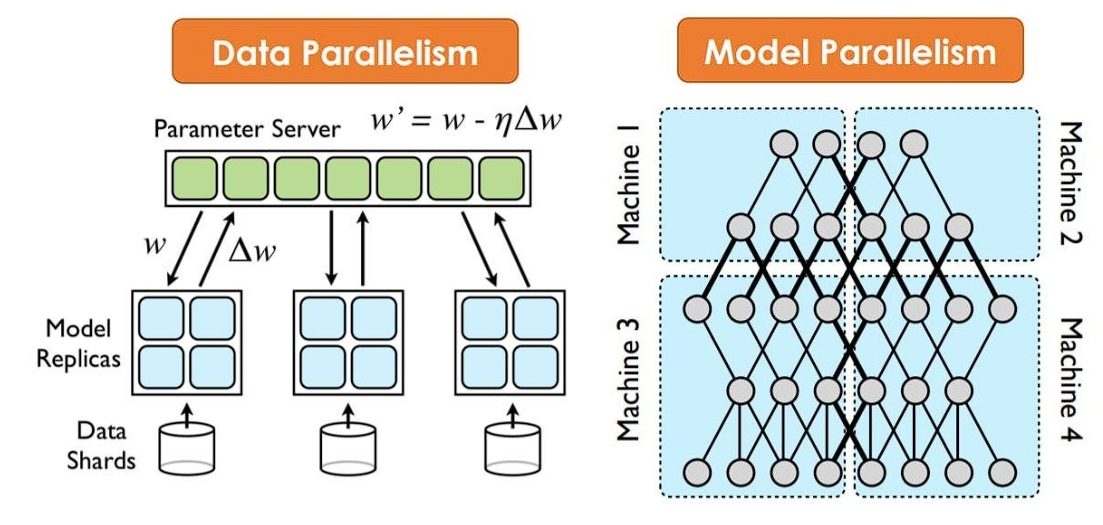
Source Image
1. Throughput Collapse Under Load
Inference systems rarely fail gracefully. As concurrent traffic grows, performance does not degrade smoothly. Instead, stable latency suddenly gives way to massive spikes in tail latency. This rapid system breakdown is triggered by specific operational bottlenecks:
- GPU Saturation: The processor hits its physical computation limits.
- Queue Buildup: Requests pile up faster than the hardware can execute them.
- Inefficient Batching: Combining user prompts of drastically different lengths stalls the entire process.
- KV-Cache Pressure: The massive memory footprint needed for context contextually chokes the GPU.
What matters here is tail latency, because depending on average latency is a critical mistake here. Tail latency is the worst-case performance under pressure.
For example, a system with:
- 200ms average latency
- 12 sec delay
- 5% of users
is operationally worse than a system with:
- 600ms consistent latency every single time
because user-facing systems live or die by worst-case perception, not mean performance.
2. Time-to-First-Token as Behavioral Control
Time-to-first-token (TTFT) is often more important than total completion time.
Why:
Users do not wait for completion. They react to system responsiveness.
If TTFT is high:
- users interrupt prompts
- users re-submit requests
- users assume failure
- session abandonment increases
Even if final output quality is high, delayed initial response breaks interaction continuity.
This is particularly severe in agentic or multi-step workflows where each step resets user expectation.
3. Compounding Latency in Multi-Step Systems
Modern inference is rarely single-pass.
Common patterns include:
- retrieval + generation
- tool calling loops
- self-refinement passes
- safety filtering pipelines
- reranking stages
Each stage adds independent latency.
If a system has:
- 5 stages × 800ms each
you are already at 4 seconds before generation even stabilizes.
But worse is variance:
If any single agent stage suffers an unpredictable spike, the entire downstream pipeline stalls. This initial processing delay multiplies across multi-agent workflows, which is why agentic systems often feel sluggish even after heavy optimization. The bottleneck is not poorly written code, it is a sequential dependency.
4. Latency vs Model Scale Trade-off
Scaling model size directly increases inference cost, but the latency effect is non-linear.
Reasons:
- attention computation grows with sequence length
- memory movement becomes dominant over compute
- batching efficiency decreases with heterogeneous prompts
- decoding cannot be fully parallelized
So larger models often introduce:
- higher TTFT
- slower token generation
- worse tail latency under load
This creates a practical constraint:
Beyond a point, intelligence gains are offset by interaction slowdown.
5. User-Level Impact: Interaction Degradation
Latency changes how users interact with systems in measurable ways:
- shorter prompts (users stop elaborating)
- reduced exploration (fewer follow-up queries)
- higher abandonment rates
- lower trust in intermediate reasoning
The system is still correct. But interaction density drops.
This matters because most value from inference systems is not in single outputs, but in iterative refinement loops. Latency reduces the number of iterations per session, which directly reduces total extracted value.
6. Infrastructure-Level Cost Amplification
Latency is tightly coupled with cost efficiency.
High latency systems often indicate:
- underutilized GPUs due to conservative batching
- excessive queuing buffers
- inefficient routing
- fallback execution paths under load
To reduce latency, systems typically sacrifice batching efficiency.
To increase efficiency, systems tolerate higher latency.
This is a direct trade-off:
cost per token vs time per token
There is no configuration where both are minimized simultaneously at scale.
7. System Behavior Under Real Traffic (Not Benchmarks)
Benchmarks typically measure isolated inference.
Production systems experience:
- burst traffic
- long-context prompts
- mixed workload distributions
- retry storms
- uneven geographic routing
Under these conditions:
Average latency becomes meaningless.
What defines system quality is:
- stability under burst load
- predictability of response time
- tail latency control under saturation
A system that is fast in benchmarks but unstable in production is operationally weak.
Conclusion
Latency during inference is not a single optimization target. It is a structural constraint that affects every layer of production deployment:
- throughput stability
- model scaling limits
- multi-step system design
- cost efficiency
- interaction behavior
- real-world usability
Most importantly, it determines whether model capability translates into usable system behavior under real traffic.
An inference system is not defined by how fast it can process a single request in isolation. It is defined by how consistently it maintains that speed under continuous, multi-user demand. That predictable consistency is exactly where latency becomes decisive.
메타데이터
- post_id
- 1c5215f06dcd
- slug
- impact-of-latency-during-inference-1c5215f06dcd
- url
- https://medium.com/@ml-point/impact-of-latency-during-inference-1c5215f06dcd
- canonical_url
- https://medium.com/@ml-point/impact-of-latency-during-inference-1c5215f06dcd
- author_url
- https://medium.com/@ml-point
- status
- ok
- fetched_at
- 2026-06-09 15:37:30