NVMe vs SATA vs HDD: What actually survives in a closet?
It’s easy to think of a storage drive as a time capsule. Copy 1–2TB of files, power it down, put it on a shelf, and assume it will still be…
NVMe vs SATA vs HDD: What actually survives in a closet?
It’s easy to think of a storage drive as a time capsule. Copy 1–2TB of files, power it down, put it on a shelf, and assume it will still be readable in 10 or 20 years.
The problem is that storage isn’t passive. Even when it’s sitting in a box, physics keeps working.
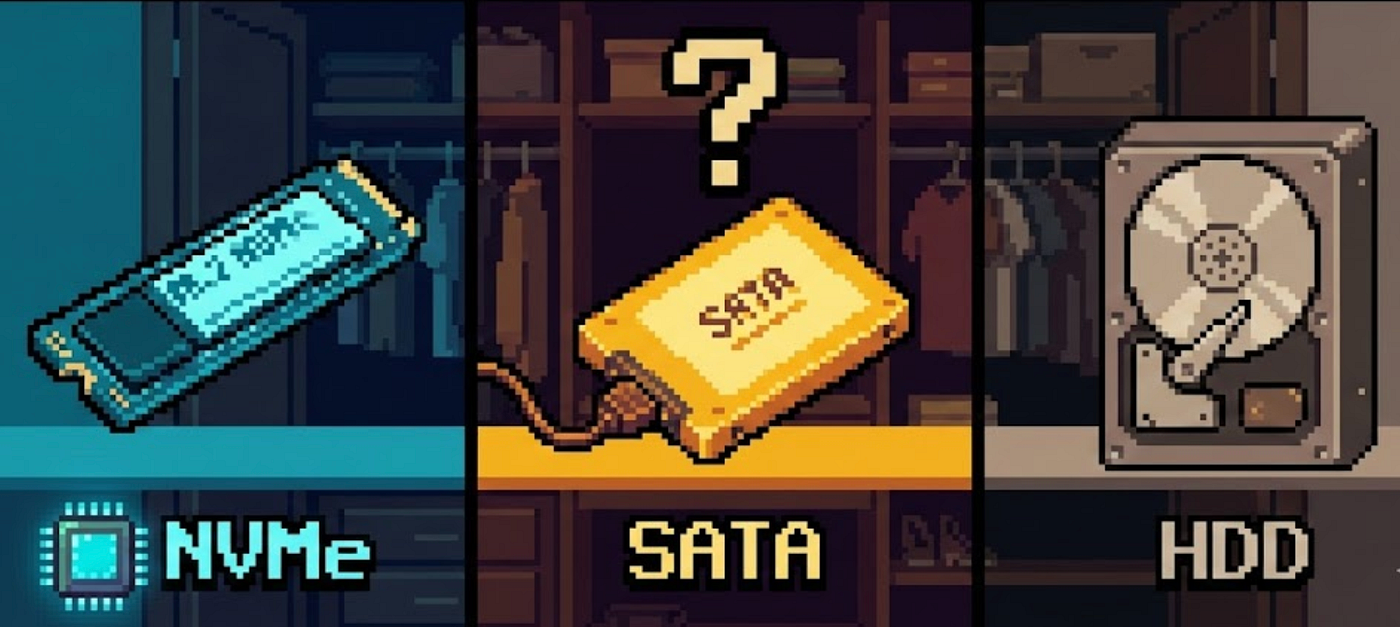
When you compare NVMe SSDs, SATA SSDs, and hard drives for long-term, unplugged storage, the real question is simple: what happens to the data when nothing is refreshing it?
NVMe SSD: fast, but not meant for long sleep
NVMe drives use NAND flash memory. Data is stored as electrical charge in tiny cells. That charge slowly leaks over time. Normally, this isn’t a problem because the drive’s controller refreshes the data while the drive is powered.
If the drive sits unplugged for years, there is no refresh cycle.
Manufacturers typically rate consumer SSDs for about one year of data retention at room temperature after their write endurance has been used. A lightly used drive can last longer, but 10–20 years without power is outside what these products are designed for. Higher temperatures speed up charge loss.
NVMe is built for speed and everyday use. Long-term, unpowered storage is not its main design target.
SATA SSD: same storage, different connector
A 2.5-inch SATA SSD uses the same NAND flash technology as an NVMe drive. The interface is different; the underlying storage method is not.
That means the long-term risks are the same. If you leave a SATA SSD in a closet for a decade without power, it faces the same charge leakage issue. For cold storage, there isn’t a meaningful durability advantage over NVMe.
The SSD discussion is really about flash memory in general, not about the connector type.
HDD: mechanical, but magnetically stable
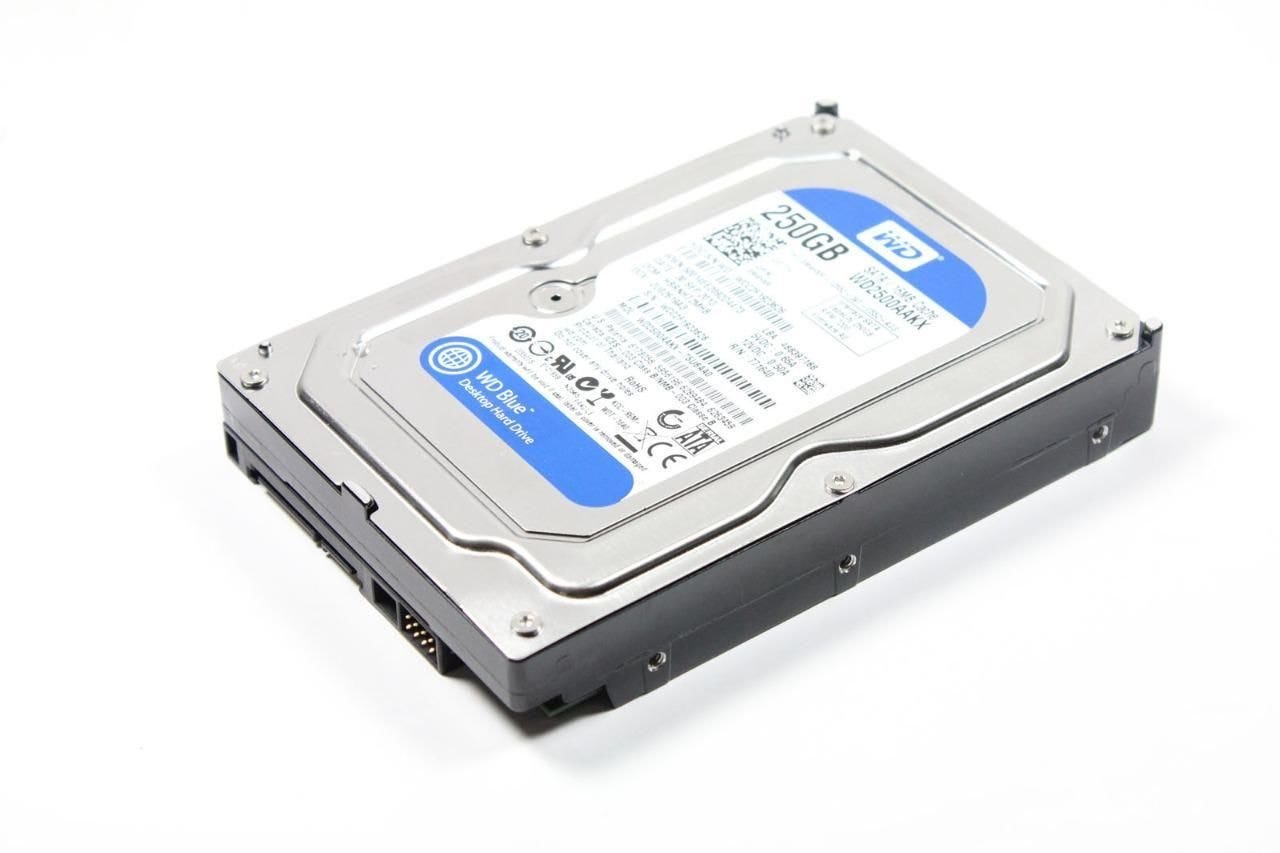
Hard disk drives store data magnetically on spinning platters. There’s no electrical charge that needs periodic refreshing. When powered off, the data remains encoded in magnetic domains.
Magnetic storage does degrade over long periods, but not in the same predictable way as flash memory. A hard drive kept in a cool, dry place can often remain readable for many years without power.
HDDs have their own failure modes. Bearings can seize. Lubricants can dry out. Electronics can fail. They are more vulnerable to physical shock. But in terms of passive data retention while sitting unpowered, they generally have better odds than consumer SSDs.
That’s one reason magnetic media is still used in archival systems.
About the “20-year” idea
No consumer drive is guaranteed to survive untouched for two decades. These products are built with typical replacement cycles in mind, not generational storage.
If you truly plan to leave a single device unplugged for a long time, a quality 3.5-inch HDD usually gives you the best chance of recovery. It’s not a guarantee. It’s a probability.
The larger risk is assuming that any single copy is enough.
A more realistic approach
If the data matters, treat long-term storage as maintenance, not abandonment.
Keep at least two copies, ideally on different devices. Store them in a cool, dry place. Every few years, power the drives on, verify the files, and copy the data to new media before the old hardware ages out.
Interfaces change. File systems evolve. Even if the bits survive, you still need a way to read them.
So what survives?
If you put one drive in a closet and ignore it for 10–20 years:
- A good HDD has the highest chance of spinning up with intact data.
- An SSD might still work, but the risk of silent data loss increases with time and heat.
- NVMe and SATA SSDs behave similarly in this scenario because they rely on the same flash memory principles.
The better answer, though, is that survival depends less on the model you buy and more on whether you check on it occasionally.
Storage doesn’t last forever. It lasts as long as someone maintains it.
메타데이터
- post_id
- 1c6f91e2bcff
- slug
- nvme-vs-sata-vs-hdd-what-actually-survives-in-a-closet-1c6f91e2bcff
- url
- https://medium.com/byte-of-knowledge/nvme-vs-sata-vs-hdd-what-actually-survives-in-a-closet-1c6f91e2bcff
- canonical_url
- https://medium.com/byte-of-knowledge/nvme-vs-sata-vs-hdd-what-actually-survives-in-a-closet-1c6f91e2bcff
- author_url
- https://medium.com/@PlanB.
- status
- ok
- fetched_at
- 2026-06-21 09:28:28