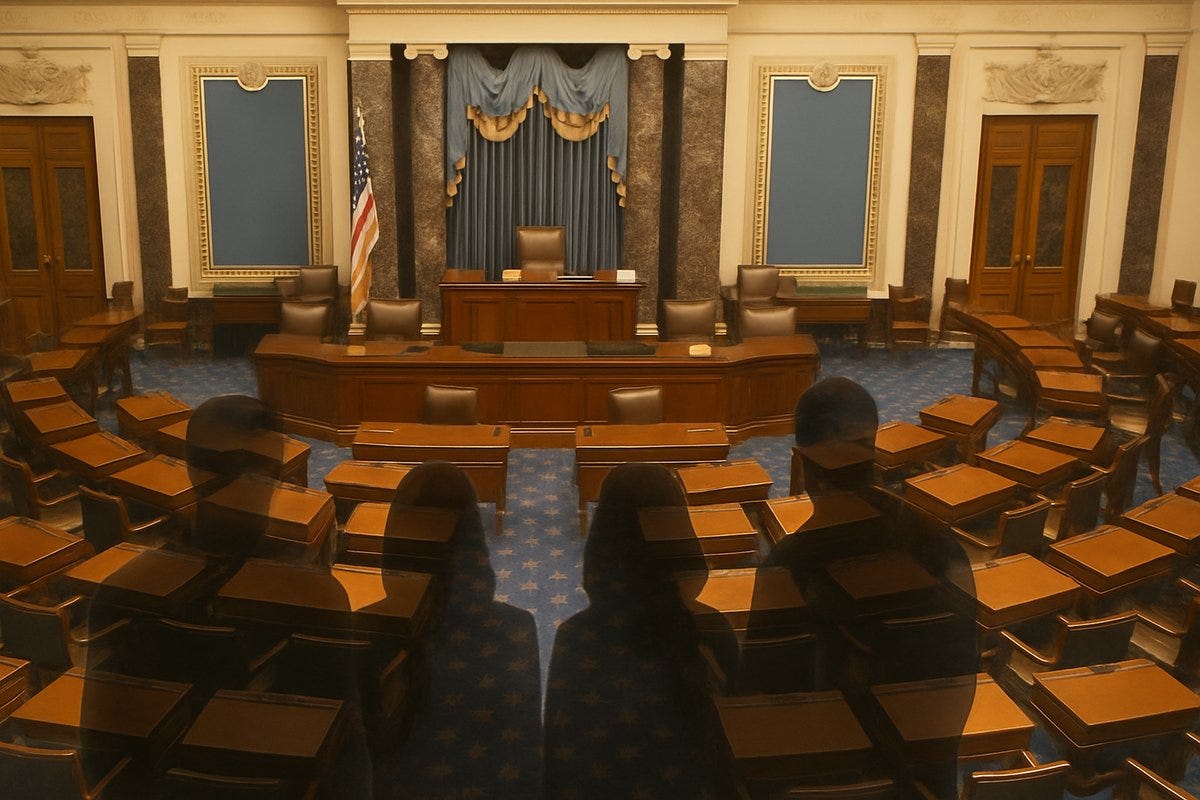
What It Really Takes to Believe in Trump and Musk’s America
Originally published on April 8, 2025. Republished on Medium for archival and accessibility. The text is unchanged.
What It Really Takes to Believe in Trump and Musk’s America
Originally published on April 8, 2025. Republished on Medium for archival and accessibility. The text is unchanged.
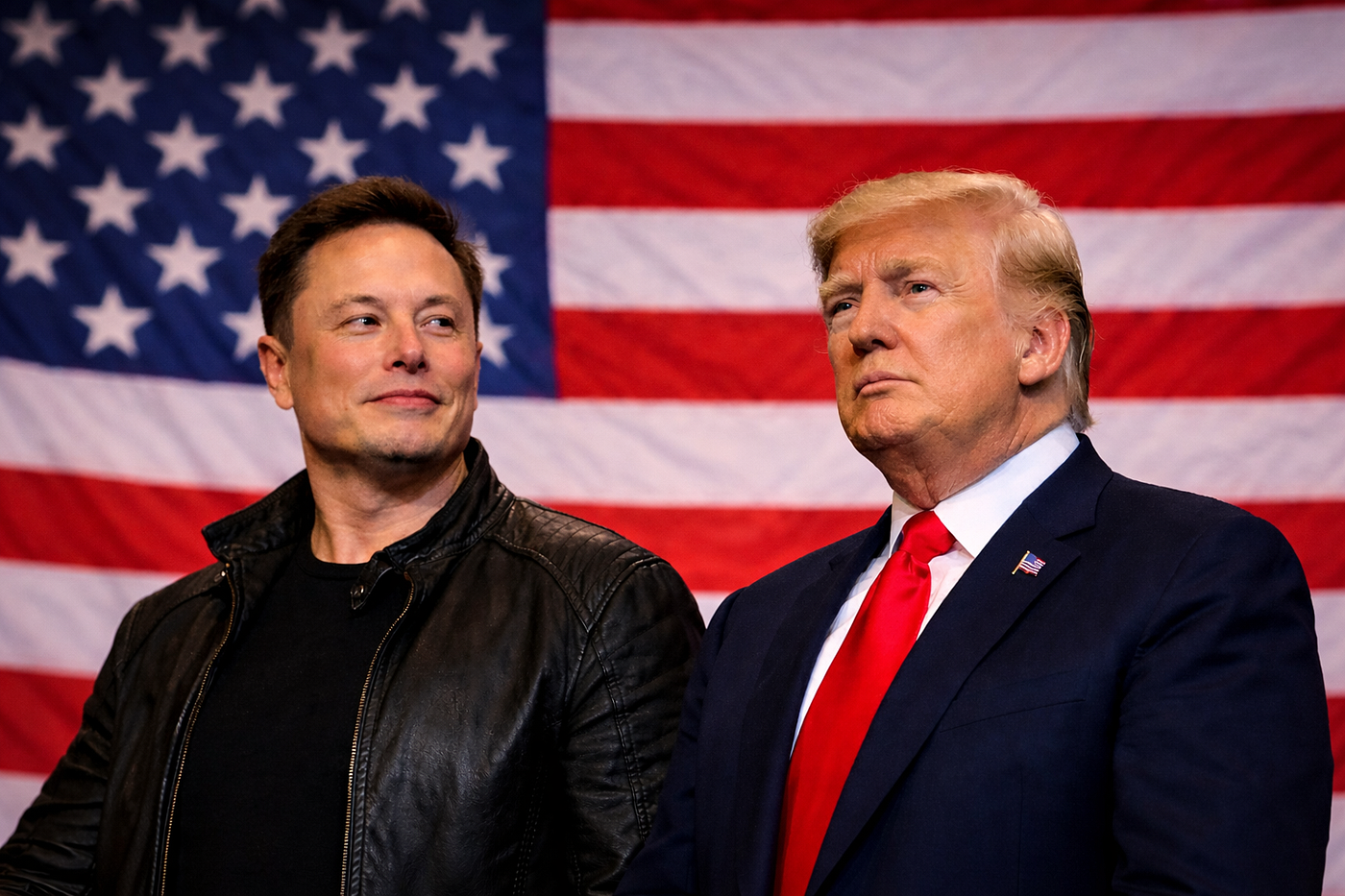
Many Americans I respect continue to believe that Donald Trump is a strategic mastermind and that Elon Musk is a fearless reformer battling corruption in government and media. But if we take that belief seriously, we have to confront the long list of improbable assumptions it rests on — assumptions that fall apart when tested against the facts.
Their supporters frame chaos as genius, disruption as reform, and authoritarian overreach as strength. But a closer look reveals a cascade of actions and policies that have hollowed out foundational institutions, sidelined experts, and invited long-term damage to democratic governance and global leadership.
Let’s start with Trump. You’d have to believe that a presidency marked by record turnover — four chiefs of staff and dozens of senior officials — wasn’t dysfunctional but deliberately agile. That impulsive tweets, staff purges, and contradictory policies were 4D chess moves. That putting family members and loyalists in top posts, many with no qualifications, improved governance rather than eroded it.
You’d have to believe that alienating NATO and democratic allies makes America stronger — even as it empowers adversaries like Russia and China. That launching a trade war with China, as Trump did in his first term, helped the economy — despite triggering retaliatory tariffs and forcing $28 billion in bailout payments to U.S. farmers. And then that imposing even broader and higher tariffs will not cause more widespread hardship — or slide what was the world’s strongest economy into a self-imposed recession.
You’d also have to believe that the 2017 tax cuts paid for themselves, even though they added nearly $2 trillion to the national debt and disproportionately benefited the wealthy and large corporations.
You’d have to believe that Trump isn’t implementing a highly unpopular agenda supported by only 13% of Americans who are even aware of it — even though his actions perfectly mirror its blueprint: mass firings of civil servants, deep cuts to federal agencies, and a sweeping concentration of power in the executive branch.[1]
And then there’s Elon Musk — once hailed as a tech visionary, now a central figure behind D.O.G.E., a campaign positioned as a bold effort to root out fraud, waste, and abuse across the federal government. You’d have to believe this initiative is about genuine reform — not self-interest or control — despite its lack of credible findings and its alignment with Musk’s growing network of government contracts and political allies. You’d have to believe it’s just a coincidence when federal inspectors general investigating his companies are fired — or when agencies begin echoing Musk’s rhetoric, like labeling mainstream outlets as “state-affiliated media,” softening regulatory scrutiny of SpaceX and Tesla, or prioritizing AI deregulation in line with Musk’s lobbying efforts.[2][3][4]
You’d also have to believe that slashing the IRS — an agency that returns $5 to $6 for every $1 spent — somehow benefits working Americans, rather than imposing a systemic weakening of enforcement capacity, especially for the complex filings of corporations and the ultra-wealthy.
You’d have to believe that defunding media like PBS and NPR isn’t an attack on independent journalism — despite their role in holding power to account and occasionally challenging the administration’s narrative — but merely an act of fiscal discipline, despite their relatively tiny share of the federal budget. And that stripping USAID of funding won’t weaken America’s global influence or elevate the standing of adversaries like China, Russia, and Iran — even though it’s one of our most cost-effective tools of soft power and a critical alternative to military intervention.
You’d have to believe, perhaps most disturbingly, that due process protections are optional. That the extrajudicial detention and deportation of legal migrants — and even U.S. citizens and legal residents — is justified. That individuals can be sent directly to some of the most inhumane prisons in other countries. And that the U.S. government bears no responsibility to repatriate those it has clearly deported illegally — or even when the administration admits it deported them in error.
You’d have to be untroubled by government censorship — as long as it targets the press, civil servants, law firms representing plaintiffs against the administration, or whistleblowers who speak out against corruption.
You’d have to believe that every judge who rules against them is a partisan, every journalist who reports inconvenient facts is “failing” or lying, every civil servant who resists unlawful orders is part of the “deep state,” and every former Trump appointee who raises concerns is a bitter traitor. That the real threat to democracy isn’t those abusing power — but those trying to hold it accountable.
Supporting leaders who challenge convention — like Trump and Musk — isn’t inherently wrong. But continuing to defend them requires accepting a long chain of increasingly implausible assumptions: that their critics are all liars, that institutions are the enemy, and that chaos is competence. At some point, we have to ask whether they are truly working in the best interests of the American people — or carrying out a slow, calculated effort to dismantle oversight, entrench personal power, and reshape government to serve themselves. The odds of the former are vanishingly small — and the evidence strongly supports the latter.
References:
[1] Navigator Research. “A Majority of Americans Continue to Oppose Project 2025.” Navigator Research, 2 Oct. 2024, https://navigatorresearch.org/a-majority-of-americans-continue-to-oppose-project-2025/
[2] Conley, Julia. “US Public Rapidly Sours on Project 2025 as Awareness Grows.” Common Dreams, 23 July 2024, https://www.commondreams.org/news/project-2025-2668798316
[3] NPR. Twitter labels NPR as ‘state-affiliated media’. April 2023. https://www.npr.org/2023/04/05/1168158549/twitter-npr-state-affiliated-media
[4] Reuters. Tesla under criminal investigation over self-driving claims. https://www.reuters.com/legal/exclusive-tesla-faces-us-criminal-probe-over-self-driving-claims-sources-2022-10-26/
[5] Cellan-Jones, Rory. “Elon Musk Joins Call for Pause in Creation of Giant AI Digital Minds.” The Guardian, 29 Mar. 2023, https://www.theguardian.com/technology/2023/mar/29/elon-musk-joins-call-for-pause-in-creation-of-giant-ai-digital-minds
메타데이터
- post_id
- 1c9ee9dbf871
- slug
- what-it-really-takes-to-believe-in-trump-and-musks-america-1c9ee9dbf871
- url
- https://medium.com/@jpspira/what-it-really-takes-to-believe-in-trump-and-musks-america-1c9ee9dbf871
- canonical_url
- https://medium.com/@jpspira/what-it-really-takes-to-believe-in-trump-and-musks-america-1c9ee9dbf871
- author_url
- https://medium.com/@jpspira
- status
- ok
- fetched_at
- 2026-06-22 00:13:37