Beyond Human: How Ruination and Multispecies Encounters Redefine Our World
Have you ever been to a forest, with no boundaries, nature growing freely and unpredictably? Now imagine a city, organised lanes and houses…
Beyond Human: How Ruination and Multispecies Encounters Redefine Our World
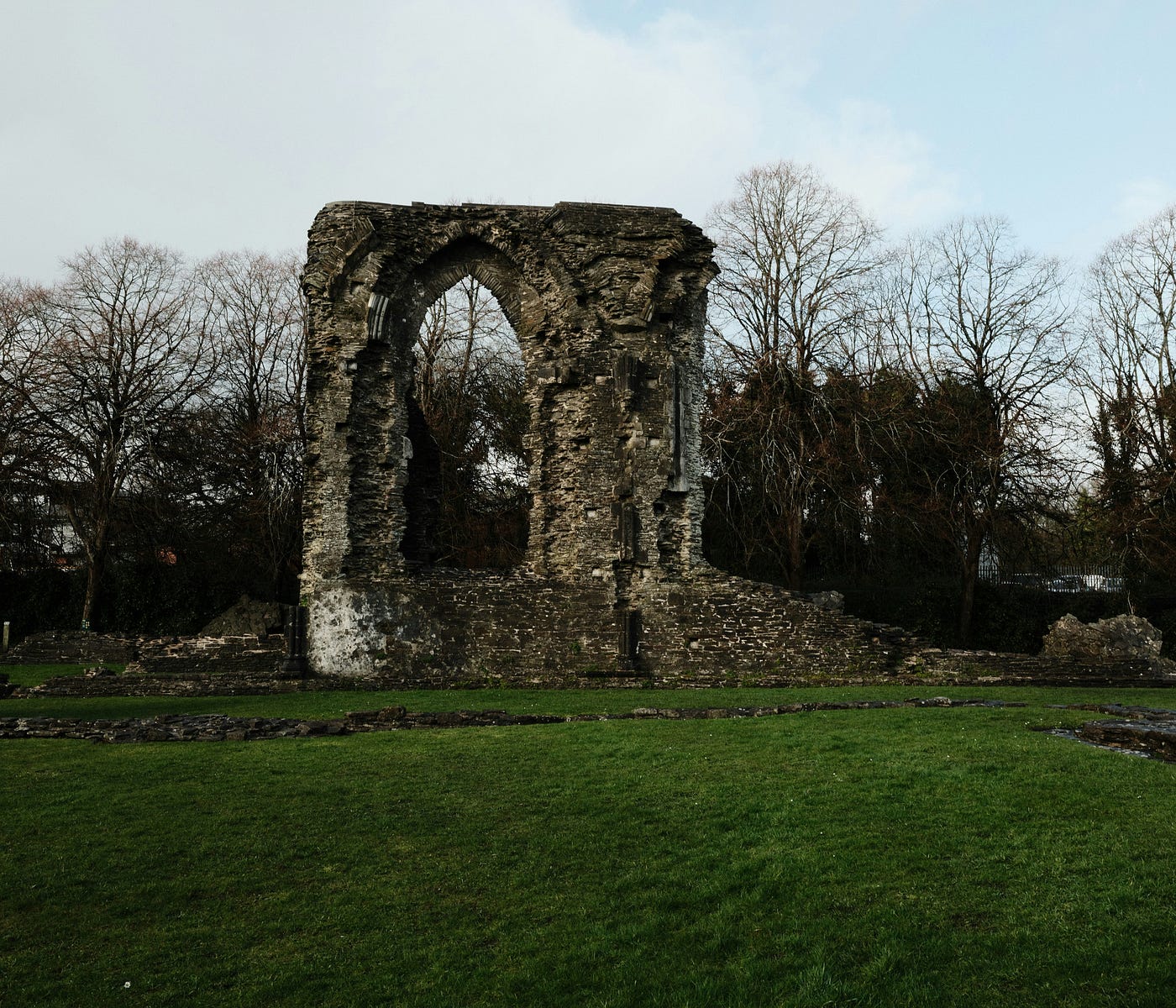
Photo by Tanya Barrow on Unsplash
Have you ever been to a forest, with no boundaries, nature growing freely and unpredictably? Now imagine a city, organised lanes and houses mapped into boxes.
Anthropocentrism is a philosophical view which puts human beings as the central or most important beings in the universe. Hence, the construction of cities and civilisations signifies what it means to be ‘human,’ utilising intellect to build, create, and transform nature. This hegemonic view of thinking facilitates the urge to domesticate nature and marks civility as the highest form of virtue deemed important for a human being. This perspective values nature for the material or physical benefits it can provide for humans.
We do not live in a vacuum; our daily interactions are not only with humans around us but also with things and other beings. These interactions are webbed together and are constantly evolving with time. They foster a dynamic process of transformation, with each entity acting as a ‘main character’ in their own right. This contributes to the collective narrative, shaping and being shaped by the intricate relationships humans share with others.
Anthropology, the science of humanity, draws on these entanglements, observing and theorising through the nuances of everyday life. Unlike “hard sciences,” anthropology thrives on the complexities of lived experiences, offering insights that are both abstract and practical. Reflecting upon the arguments made by contemporary anthropologists, this article discusses how our interactions, consciously or unconsciously, are entangled with our environments.
Theories have a nature to be abstract; however, when derived from everyday observations, they hold the potential to apply to everyday life as well.
There has always been a popular conception that only humans hold the capacity to create, while their surroundings are a reaction to these ‘human creations’. Anthropologists are debunking this concept by recognising the agency of non-humans in shaping urban environments. For example, Maan Barua (2022, p. 896), in his ethnographic approach, explores the concept of ‘ferality’ and how parakeets in London contribute to the urban fabric. Ferality is midway between domestication and wild; these parakeets neither live in forests nor are they completely urban. These parakeets, who are not native to their environment, reflect colonial attitudes, which categorise life forms into those that belong and those that are deemed undesirable or disruptive. With immigration, cities are changing. Therefore, the colonial notion of what belongs and where is outdated as these boundaries have blurred out. Urban planning today demands an inclusive space where humans and non-humans are accommodated to suit the dynamic and multicultural fabric of urbanscapes.
Photo by Youssef Mubarak on Unsplash
Human interactions with the world around them are not bifurcated into binaries of man vs nature. Despite their complexity, anthropological theories provide valuable insights into the intricate details (microcosm) and broader patterns (macrocosm) of human and more-than-human interconnections. Each interaction, whether at the smallest personal level or the largest societal scale, generates ripples that influence and shape the world in profound ways.
The dictionary defines ruins as the remains of something which has been destroyed or is in a state of decay. However, Arnold-de Simine’s (2015) work on ruins emphasises their dual nature: they are both evidence of destruction and a testament to life’s enduring capacity for renewal. Here, renewal is not just a state of regrowth but represents transformation.
Townsend Middleton (2021, p. 287), in his work on Quinine remains of Darjeeling, India, discusses the term *‘*becoming after’ as an ongoing process of change that follows events and conditions. Once central to quinine production, these cinchona plantations have outlived their industrial utility but remain critical to the communities inhabiting them. Far from being relics of the past, they are active sites of livelihood, identity, and belonging. Challenging linear historical progressions, these objects do not hold the past but become a means of defining the present. The ruins of cinchona plantations become sites for the ‘politics of belonging’ (Govindrajan, 2018, p. 94), where communities such as the Gorkhas anchor their identity and existence to these remains.
Quinine Remains, Kalimpong, 2017. Photo by Townsend Middleton (2021)
Vulnerable conditions often become a shared emotion which forges human and material connections. Resilience to such conditions often leads individuals to devise strategies that adapt to hostile situations while paving the way for regenerative practices. Anne Meneley (2018) describes her interlocutor’s agro-activism as a way of preserving Palestinian culture via seed-sharing practices. Amidst the destruction of their land, these activists keep their traditional knowledge from being ‘musemified’ (Meneley, 2018, p. 168), hence their act becomes an ongoing resistance against ruination.
Resistance is not always about overcoming the conditions and rising above. Kristina Lyons’s (2016) work in Colombia illustrates how farmers embrace decomposition and regeneration as acts of resistance against contemporary political movements. She talks about ‘becoming into death’ (Lyons, 2016, p. 68), which refers to a type of death that results from the forest’s natural life cycle, involving peaceful recycling and renewal, in contrast to the violence of war or killing for growth. Here, ‘politics of belonging’ (Govindrajan, 2018, p. 94) is not merely a reaction to external threats but as a proactive assertion of their right to exist and thrive in the present.
By focusing on how we adapt and thrive, anthropological theory suggests rethinking resilience as a creative process, where resistance becomes an active engagement with change and renewal, co-creating futures that adapt to complexities.
Ruins, both literal and metaphorical, are central to anthropological inquiries into the aftermath of violence, displacement, and ecological collapse. In analysing the early writings of Heidegger, Hans Ruin (2012, p. 33) states that life lies in ruins and nothing can repair nor restore it. The ruination of all material objects is inevitable, but that does not demonstrate a pessimistic take on life. Close notice of ruination reveals that even though they are remains, they are not devoid of life. Everything in nature is cyclical; seasons change, and days turn into night, hence ruin, and regrowth are part of a never-ending cycle. Bettina Stoetzer (2018, p. 308), engaging with human-plant relations in Berlin post-WWII, defines ‘ruderal ecologies’ as ecologies thriving in often inhospitable environments such as rubble. These ruderal plants exemplify resilience and adaptation in hostile environments. Stoetzer’s (2018) case study on the Maria Mama Garden created by Turkish immigrants in Berlin’s Hasenheide Park demonstrates how marginalised communities carve out spaces for sociality and resilience amidst the precarity of their belongingness.
However, the traces of ruination can also regenerate themselves into new forms of violence, a subtle manifestation which haunts the people living among them. This effect is evident in the lives of villagers in Bosnia-Herzegovina, where navigating among landmines has integrated into their daily interactions with each other and their landscape (Henig, 2012). Yael Navaro Yashin (2009) combines the study of melancholia with material and spatial analysis. She describes how affect is not confined to an individual and extends into environments, spaces and objects.
These works point out that historical violence and displacement are not a part of melancholic nostalgia but are active agents shaping the present-day emotional and material realities. They raise ethical questions about how we define violence, which is not limited to a specific time and is an ongoing act that shapes societal dynamics. Ethnographic analysis of precarious situations explores the effects of global capitalism, war, migration, and violence as ongoing processes rather than isolated events.
People use various analogies and metaphors to describe their present situation. Anthropologists spot these metaphors as not just linguistic devices but cognitive tools that shape how we think, feel, and interact with the world. While expressing their distress caused by the displaced monkeys, the Kumaoni people use the monkeys as material metaphors for anxieties about belonging and exclusion (Govindrajan, 2018). Their disdain for outsiders occupying and destroying their culture gets projected onto these animals. These interactions are based on embodied encounters and are ever-changing. When the orphan monkey grabs Bubu’s leg, his hostility transforms into tenderness. Stoetzer (2018, p. 307) describes how natural metaphors of destruction, like tsunamis, are used to describe the influx of immigrants in Europe. Migrants are depicted as animals who act against the concept of ‘civility’. Such narratives in anthropological research define co-existence not as a harmonious ideal but as a dynamic process of negotiation, adaptation and constant redefinition.
The daily interactions of humans and the world around us are sometimes more than cause and effect. In the Papuan Plantationocene, Sophie Chao (2021, p. 247) explores the more-than-human forms of ‘relatedness’. The Marind people personify the sago palms and treat them as children. The sago saplings grow among the Marind people. To become an anim (persons), the Marind need to live with and within the forest. Hence, a ‘plantification’ of humans also takes place. This invites us to approach non-human entities not just as influencers or influenced but as equal participants in the production of persons and identities.
Anthropology’s engagement with habitability extends beyond survival to consider the conditions that allow life to thrive. Stacey Ann Langwick (2018) relates toxicity to more than material features like chemical fertilisers, but also looks at social issues like stigma, which depletes life. Her study of Tanzanian healing gardens reveals that these gardens are shaped by the relationships between people, plants, and soil, which challenge dominant paradigms of extraction and exploitation. These experimental spaces foster alternative economies and ecologies, offering insights into mutual flourishing in the Anthropocene. This challenges the traditional concepts of ownership and questions the very idea of what it means to be an owner.
While anthropology often draws from the lived experiences of communities, its theories are also directed back at the everyday as tools for advocacy and change. This is evident in the study of multispecies justice, which grapples with questions of equity and representation across human and nonhuman lives.
However, representing non-humans raises ethical questions. Eben Kirksey and Sophie Chao (2022, p. 6) iterate the need to consider “justice for whom or what”. Justice in this sense is an ongoing accomplishment. There is also a need to consider the ‘politics of the meantime,’ as Middleton (2021, p. 290) describes it, which shifts the focus from utopian futures to the here and now. This approach encourages us to determine which dreams are worth pursuing and which injustices must not be tolerated.
In essence, anthropological theories on more than human or non-human highlight the importance of creating environments where life can flourish and where new possibilities can emerge. Life is a process which needs to be navigated through. Instead of viewing destruction as apocalyptic, theories offer a new perspective that helps navigate through it. Ruin (2015, p. 21) argues that life does not begin from a fixed point and is constantly in motion, adapting to its environment. This ongoing movement means life can never be completely defined nor stopped.
Anthropology, in this sense, is dynamic and emerges from the present reality. What Anna Tsing (2011, as cited in Kirksey and Chao, 2022, p. 2) calls the ‘art of noticing’, is not merely a descriptive process to understand human cultures but also innately prescriptive. From ruination to regeneration, and from multispecies entanglements to the politics of persistence, anthropology draws its insights from the ordinary while offering frameworks that inform and empower those very contexts. This reciprocal relationship ensures that anthropology remains a discipline not only of understanding but also of relevance, constantly evolving in response to the worlds it seeks to explain.
In today’s world, where humans have significantly altered ecosystems and fostered intolerance, anthropological theories about ruins and multispecies transcend the divide between nature and culture. Even though we acknowledge the significant impact of non-human actors in the lives of humans, power dynamics play a very important part in everyday life. In a world where not even all humans are equal in front of judicial systems, theories can just become words in a book. For them to be practical, they need to merge with various disciplines like urban planning, law, policy-making and governmental institutions which hold the power to control societal dynamics.
These theories also reflect virtues for a common person to embody in daily life. Apart from the despair of living among ruination or living in the process of ruination, ethnographic analysis also reveals a sense of hope among individuals. Like a small plant which sees a crack as an opportunity to grow, either by acts of seed sharing or building gardens to tackle toxins, humans constantly devise strategies to tackle these adverse situations and work towards a better future. The ability to see plants as kin or caring for animals reflects the need for compassion and mutual caring for living not just surviving.
The patterns we create in our daily lives, the marks we leave through our ups and downs, get etched onto the surfaces of the everyday objects we use, often for years. Anthropology becomes a medium through which these ever-prevailing systems become a part of formal study. For a discipline that studies humans and the world, incorporating these more-than-human concepts not only becomes a framework for understanding humans and their relationships but also shapes how we see humans and these relationships.
(Note: This article draws from an academic essay submitted to SOAS, University of London by the author)
Bibliography:
-
Barua, M. (2022) Feral Ecologies: The Making of Postcolonial Nature in London. Journal of the Royal Anthropological Institute, 28 (3), pp. 896–919
-
Chao, Sophie. (2021) Children of the Palms: Growing Plants and Growing People in a Papuan Plantationocene. Journal of the Royal Anthropological Institute, 27(2), pp. 245–264
-
Govindrajan, R. (2018) Outsider Monkey, Insider Monkey: On the Politics of Exclusion and Belonging. Animal Intimacies: Interspecies Relatedness in India’s Central Himalayas. Chicago: University of Chicago Press, pp. 90–118
-
Henig, D. (2012) Iron in the Soil: Living with military waste in Bosnia-Herzegovina. Anthropology Today, 28 (1), pp. 21–23
-
Kirksey, E. and Chao, S. (2022) Introduction: Who Benefits from Multispecies Justice? The Promise of Multispecies Justice. North Carolina: Duke University Press, pp. 1–23
-
Langwick, S. (2018) A Politics of Habitability: Plants, Healing, and Sovereignty in a Toxic World. Cultural Anthropology. 33(3), pp. 415–43
-
Meneley, A. (2021) Hope in the ruins: Seeds, plants and possibilities of regeneration. Environment and Planning E: Nature and Space, 4(1), pp. 158–172.
-
Middleton, T. (2021) Becoming-After: The Lives and Politics of Quinine’s Remains. Cultural Anthropology, 36 (2), pp. 282–311
-
Navaro-Yashin, Y. (2009) Affective spaces, melancholic objects: ruination and the production of anthropological knowledge. Journal of the Royal Anthropological Institute, 15(1), pp. 1–18
-
Ruin, H. (2012) Thinking in Ruins: Life, Death, and Destruction in Heidegger’s Early Writings. Comparative and Continental Philosophy, 4(1), pp. 15–33
-
Simine, Silke A. (2015) The Ruin as Memorial — The Memorial as Ruin. Performance Research, 20(3), pp. 94–102
-
Stoetzer, B. (2018) Ruderal Ecologies. Cultural Anthropology, 33(2), pp. 295–323
-
Lyons, K. (2016). Decomposition as Life Politics: Soils, Selva, and Small Farmers under the Gun of the U.S. Colombian War on Drugs. Cultural Anthropology, 31 (1), pp. 56–81
메타데이터
- post_id
- 1cacf62ee064
- slug
- beyond-human-how-ruination-and-multispecies-encounters-redefine-our-world-1cacf62ee064
- url
- https://medium.com/@mehtachahana/beyond-human-how-ruination-and-multispecies-encounters-redefine-our-world-1cacf62ee064
- canonical_url
- https://medium.com/@mehtachahana/beyond-human-how-ruination-and-multispecies-encounters-redefine-our-world-1cacf62ee064
- author_url
- https://medium.com/@mehtachahana
- status
- ok
- fetched_at
- 2026-06-27 08:09:55