Ratios, Ratios Everywhere — And Here’s Why They Matter
Before you put a single dollar into a company, these are the numbers you should actually be looking at.
Ratios, Ratios Everywhere — And Here’s Why They Matter
Before you put a single dollar into a company, these are the numbers you should actually be looking at.

Image Source: Pixabay
I’ll be honest with you: the word “ratio” is not exactly a conversation starter. It doesn’t have the drama of a hostile takeover or the romance of a bull market. But if you want to invest intelligently — or even just work for a company with any confidence it’ll still exist in two years — ratios are what separate informed decisions from expensive guesses.
So let’s talk about them. All of them. And I promise to make it worth your while.
The Core Four
When analyzing a company’s liquidity and solvency — that is, its ability to pay its debts and stay afloat — four ratios do the heavy lifting:
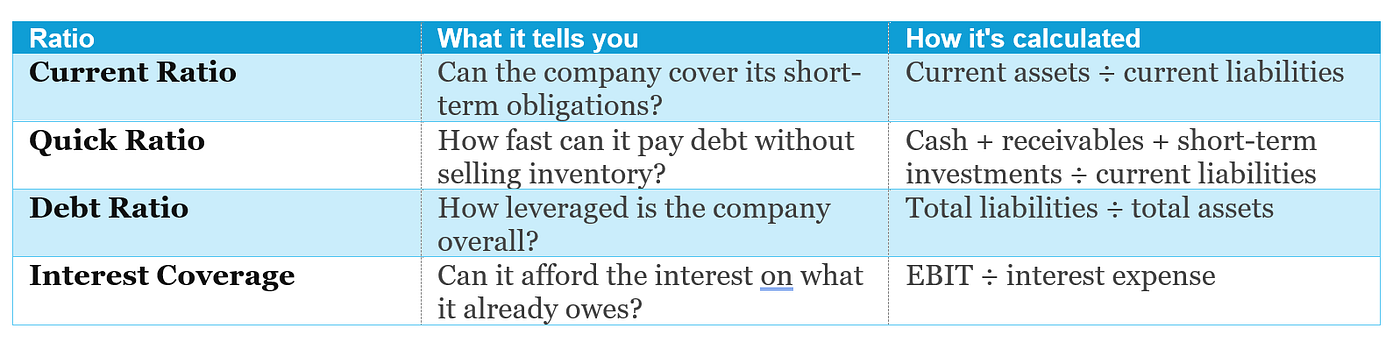
Rounding out the essentials is the dividend payout ratio — dividing dividends by net income — which tells you whether a company’s earnings can actually support what it’s paying out to shareholders. If you’re an income investor, this one matters enormously. A payout ratio that exceeds 100% means the company is paying dividends it hasn’t earned. That’s a red flag wearing a tuxedo.
Going Deeper: Efficiency and Return Ratios
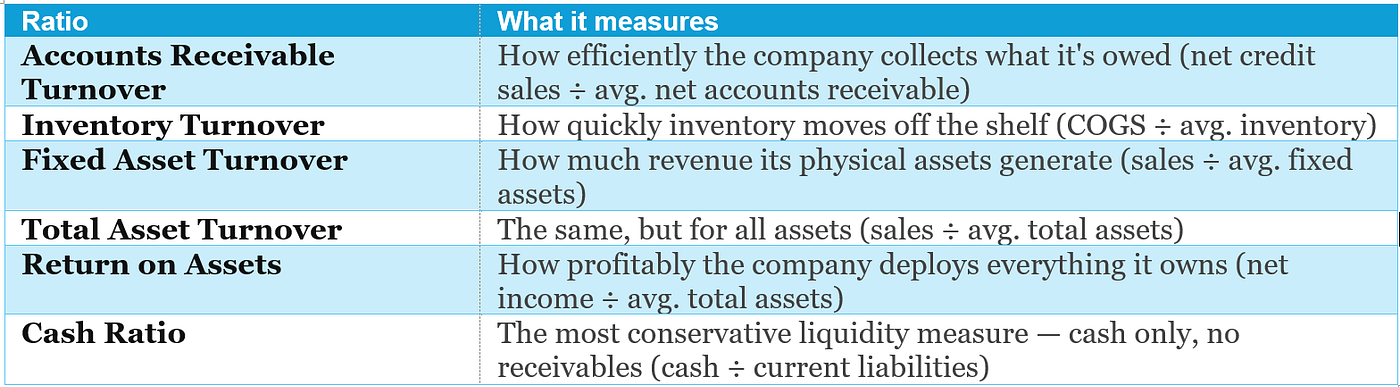
If the core four tell you whether a company is financially stable, the next tier tells you whether it’s being smart with the assets it has. These are the ratios that separate a well-run business from one that just happens to be surviving:
One more worth adding to your toolkit — and this one came courtesy of a mid-research interruption involving my boxer dog’s very own liquidity analysis — is the executive turnover ratio: the average number of C-suite and senior leaders who left a company divided by the average number in those roles overall.
Think of it as an employee turnover rate, but restricted to upper management. It’s a metric worth taking seriously. Executive teams tend to be stable by nature; when they’re not, it’s usually a signal that something is structurally wrong. High staff turnover in customer service or seasonal retail positions is expected and largely meaningless as a valuation metric. Revolving doors in the C-suite are a different story entirely.
The Categories Behind the Numbers
Here’s something that took me a moment to appreciate: not every ratio is actually called a ratio. Some are percentages, some are multiples. But they all serve the same purpose — and they fall into a handful of clear categories, each answering a specific investment question.
✅ Profitability: Is the business making money?
✅ Liquidity: Can it pay its debts?
✅ Asset Efficiency: Is it using its assets wisely?
✅ Working Capital: Is it operating efficiently?
✅ Leverage: How dependent is it on debt?
Valuation: Can it earn for shareholders?
Together, these categories form the backbone of financial statement analysis. They are the difference between reading a company’s story and just staring at its numbers.
So Where Do You Actually Start?
Everybody has their own approach, and I don’t think there’s a universally wrong way to analyze a company from a personal investment standpoint. Corporate valuation is a more formal discipline — but for individual investors, the sequence matters less than the consistency. Here’s the order that works for me:
1 Debt ratio, first. Before anything else, I want to know whether this company can pay its bills — and whether I’d see anything back if it went into bankruptcy tomorrow. If the answer is no, I’m done.
2 Gross profit percentage, over time. Specifically, over a minimum of three years — ideally five or more. One good year means very little. Consistent profitability over time means something.
3 Historical return on equity, EPS, and dividends per share for at least as long as I plan to hold the investment. If I’m thinking five years, I want five years of history. Ten years out, I want a decade of data.
“Employment is an investment for both the employee and the employer. I want to know that the company I’m working with can pay its bills and my salary before I accept an offer.”
That last point is worth pausing on. I apply this same analytical lens when considering job offers or freelance engagements. If a company’s financials are public, I look at them before I accept a project. A paycheck is only as reliable as the company writing it. Ratios aren’t just for investors — they’re for anyone whose income depends on an organization’s continued existence.
Which, when you think about it, is most of us.
References
Horngren, C. T., et al. Accounting. Chapter 12, pp. 575–586.
Brealey, R. A., Myers, S. C., & Marcus, A. J. Fundamentals of Corporate Finance, 6th ed.
메타데이터
- post_id
- 1cd19a7770b7
- slug
- ratios-ratios-everywhere-and-heres-why-they-matter-1cd19a7770b7
- url
- https://medium.com/@cmfalato/ratios-ratios-everywhere-and-heres-why-they-matter-1cd19a7770b7
- canonical_url
- https://medium.com/@cmfalato/ratios-ratios-everywhere-and-heres-why-they-matter-1cd19a7770b7
- author_url
- https://medium.com/@cmfalato
- status
- ok
- fetched_at
- 2026-06-09 15:37:30




