From English Literature to UX Design : My Beginner Journey Blending Art, AI and Technology
If you had told me a year ago that I’d trade literary analysis for Figma frames, I probably would have laughed. But here I am — on a new…
From English Literature to UX Design : My Beginner Journey Blending Art, AI and Technology
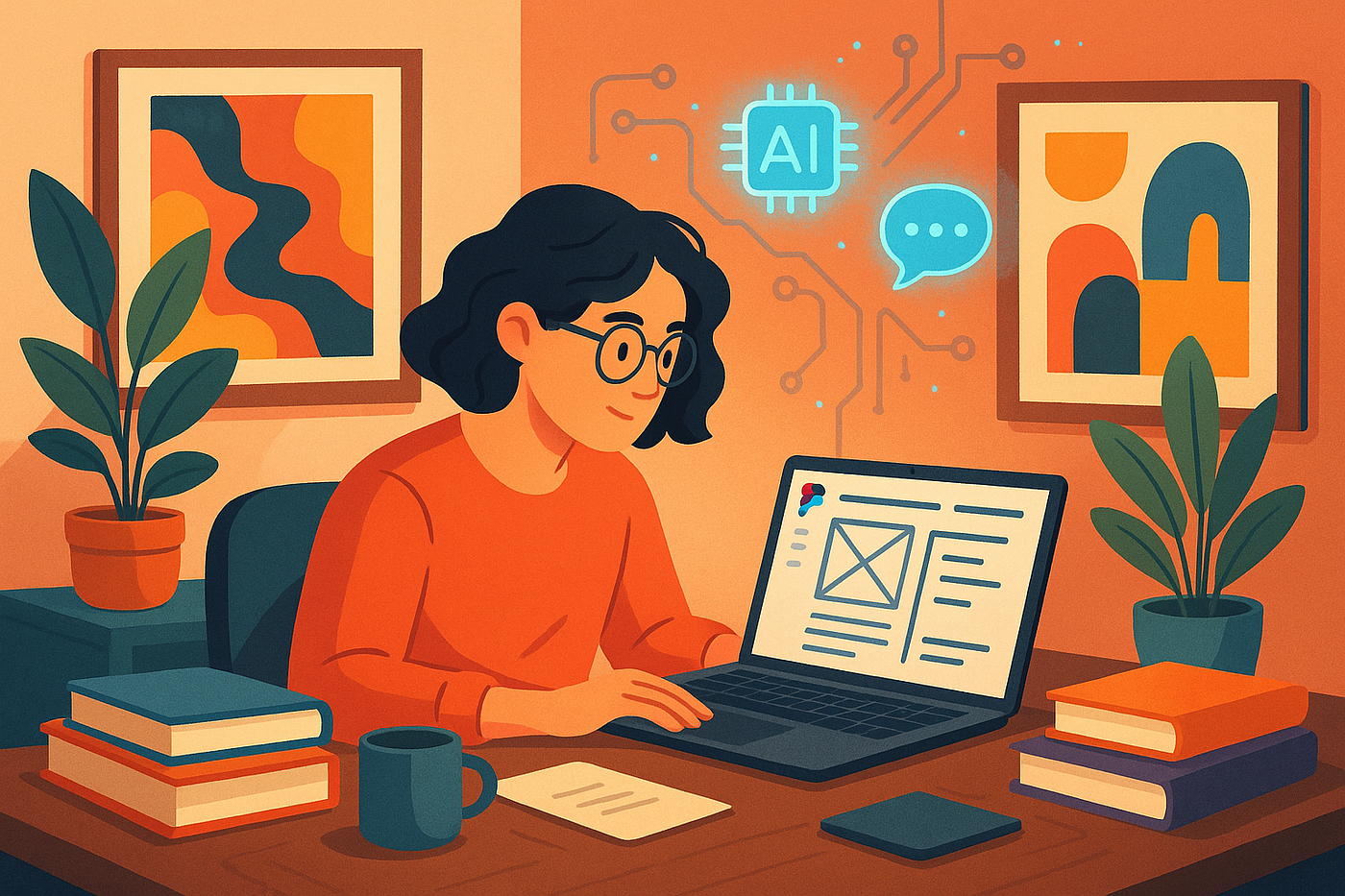
If you had told me a year ago that I’d trade literary analysis for Figma frames, I probably would have laughed. But here I am — on a new path, designing for people, blending creativity and curiosity, and finally feeling like I’ve found my medium (pun intended).
From Shakespeare to Screens: A Literature Grad Turned UX Newbie
I graduated with a degree in English Literature — a world full of stories, metaphors, human emotion, and endless coffee-fueled essays. I loved it. But somewhere between interpreting Shakespeare and writing literary analysis, I found myself asking: “What if I could build something?”
That’s how I stumbled into UX design — a world where creativity meets function, where you design not just for beauty, but for people. The more I explored, the more I realized UX is the perfect blend of everything I love: storytelling, problem-solving, visual thinking, and technology.
I’m writing this blog not as an expert, but as someone standing at the very beginning — navigating the world of UX design with fresh eyes, a literature degree, and an open mind. If you’re also just starting out, or transitioning from a completely different field, I hope my journey resonates with you.
Why UX?
At first, I had no idea what “UX” even stood for. I thought it was something only coders or graphic designers did. But the more I explored, the more I saw that User Experience Design is everywhere — in the way we scroll through apps, the layout of a booking page, even how we feel when a product “just works.” The more I delve in to it the more it connects with my interest.
What drew me in the most wasn’t just the design tools or aesthetics — it was the human side of it. UX design is about understanding people, their needs, their frustrations, and designing with empathy. That instantly clicked with my literature background. After all, studying literature is really about understanding people, their stories, and their emotions.
My training in English taught me how to observe, interpret, and communicate — all essential skills in UX. Whether I’m writing microcopy for a button or sketching out a user journey, I find myself relying on those same storytelling instincts I used when analyzing a novel.
UX feels like the perfect bridge between my love for creativity and my growing fascination with technology. It’s a space where logic meets emotion, and that balance is what keeps me excited to learn more every day.
Starting From Scratch: The Honest Beginner Experience.
When I first opened Figma, I was overwhelmed. I didn’t know what a frame was, how to create a button, or even what UX designers really did day-to-day.
I began my UX journey with free resources and beginner-friendly courses. One of the first structured one I took was on Coursera it was Google UX Design Specialization course, and that helped me understand the process: research, ideation, wireframing, testing, and iteration. Slowly, the chaos started to make sense.
Some days are exciting — like when I finally figured out how to make a clickable prototype. Other days, imposter syndrome creeps in. But I’ve learned to treat this phase as part of the process. I’m learning to ask better questions, sketch out rough ideas, and embrace feedback — even when it’s uncomfortable.
And most importantly, I’m learning to be okay with being a beginner.To create messy drafts. To not know all the answers. Because every click, every small project, every blog like this is a step forward.
The Fascination with AI in UX
As I started exploring UX design, I noticed a pattern: everyone was talking about AI — how it’s changing the way we design, research, and even test products. At first, it sounded intimidating. But the more I read and experimented, the more I realized that AI isn’t replacing designers — it’s empowering us.
From tools that generate user personas to AI assistants that analyze feedback, I began to see how artificial intelligence could make parts of the UX process faster, smarter, and more insightful. Imagine getting instant summaries of user interviews or testing multiple design variations in minutes — it felt like magic, and I wanted to learn more.
But what really excites me is the idea of human-centered AI — tech that enhances rather than replaces creativity and empathy.As someone who values empathy and creativity, I find this intersection of AI and design deeply inspiring. It’s not just about automation — it’s about collaboration between human intuition and machine intelligence.
Even though I’m just starting out, I’m already experimenting with tools like ChatGPT, Galileo AI and DeepSeek to speed up my workflow and brainstorm ideas. I hope to dig deeper into this space, and maybe one day, contribute to making AI-powered experiences feel more human, not less.

Combining Art + Tech
Where Arts Meets Tech in My Design Journey
Long before I knew what UX design was, I loved creating — drawing, painting, writing, and imagining things that didn’t exist yet. I’ve always been fascinated by the idea that art can move people, and technology can connect them. So when I found UX, it felt like the perfect canvas to bring those two worlds together.
In UX, every screen is a composition. The layout, color, typography — they’re not just visual choices; they’re part of a bigger story. That’s where my artistic side feels most at home: thinking about how to make designs feel meaningful, not just functional.At the same time, the tech side keeps me curious and challenged. I love experimenting with tools like Figma, Notion, and AI-powered plugins that push creative boundaries.
One of my small goals is to build a design project that reflects this blend — something artistic yet practical, maybe even infused with AI. I’m still learning, but I know this is the kind of work I want to create: thoughtful, emotional, and intelligent.
What’s Next?
Right now, I’m learning as I go — taking online courses, practicing in Figma, writing this blog. It’s messy, exciting, and sometimes uncomfortable, but it feels like the right path. I’m not here to pretend I have it all figured out. I’m here to document the process, ask questions, and grow — one project, one blog, one lesson at a time.
I started this blog not just to share what I’m learning, but to connect with others who are also starting from scratch. Whether you’re transitioning from a completely different background, curious about AI in design, or just figuring things out one Figma frame at a time — you’re not alone.
In the coming posts, I’ll be sharing:
- My first UI projects and how I approached them
- Tools and AI hacks I’m using as a beginner
- Honest reflections on learning, struggling, and improving in public
So if you’re a fellow beginner, an artist exploring tech, or someone cheering on curious minds — I’d love for you to follow along. Feel free to leave a comment, share your journey, or just say hi!
“The future belongs to the curious.” — and I’m just getting started.
메타데이터
- post_id
- 1d5270ce2bb0
- slug
- from-english-literature-to-ux-design-my-beginner-journey-blending-art-ai-and-technology-1d5270ce2bb0
- url
- https://medium.com/@musheera1901/from-english-literature-to-ux-design-my-beginner-journey-blending-art-ai-and-technology-1d5270ce2bb0
- canonical_url
- https://medium.com/@musheera1901/from-english-literature-to-ux-design-my-beginner-journey-blending-art-ai-and-technology-1d5270ce2bb0
- author_url
- https://medium.com/@musheera1901
- status
- ok
- fetched_at
- 2026-07-08 18:29:56