Four Myths About the Crusades That Simply Refuse to Die
These have persisted for far too long
Four Myths About the Crusades That Simply Refuse to Die
These have persisted for far too long
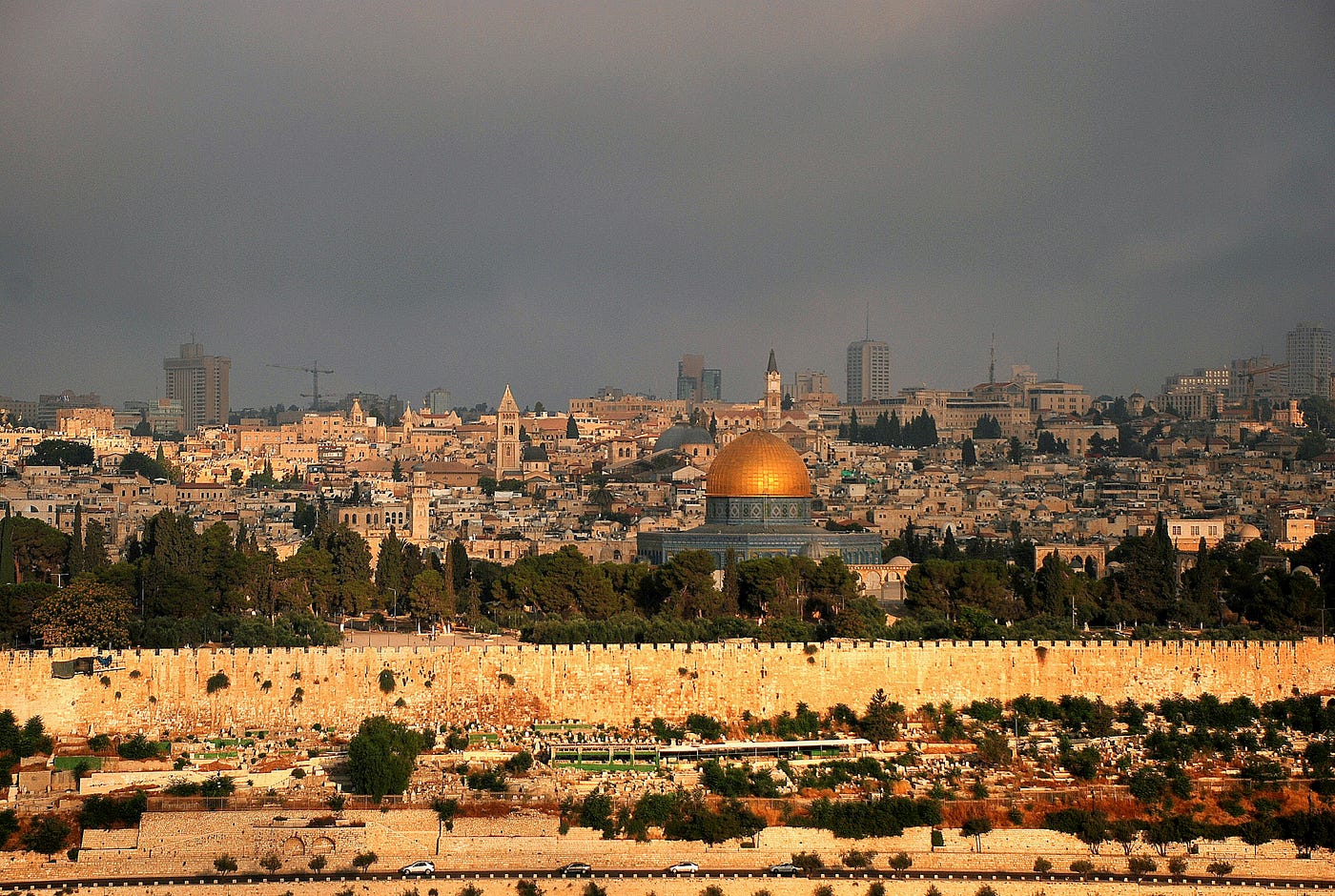
Photo by Snowscat on Unsplash
It seems preposterous that a historical event that occurred nearly 1,000 years ago could generate heated and even violent reaction today, but that is exactly what happens any time the subject of the Crusades comes up. One of the main reasons is that the Crusades and their history have been one of the biggest victims of revisionism over the centuries, and more so in the 20th and 21st centuries than at any other time. Whether this was done as a political or religious maneuver (or sometimes both), there has never been a greater need to debunk some of the myths about the Crusades than now.
Radical Islamist terrorists have taken up the Crusades and their own twisting of the history of the Crusades to further their cause among the general Muslim population. Radical far-right groups in the West have often called for a new Crusade against the terrorists while implicitly lumping all Muslims in with them. Neo-Nazi groups use the word “crusade” without hesitation while others on the alt-right avoid the word itself, knowing the reaction it will cause.
What neither side wants you to know are the actual facts of those events that began in 1095, because the facts don’t match their narrative. Like many global conflicts, the Crusades saw numerous horrible atrocities on both sides, military successes and failures on both sides, acts of chivalry and bravery on both sides, and enduring distrust on both sides as a result of the events. Yet the myths remain, and today I want to address some of them.
- Perhaps the most persistent myth about the Crusades is that they were called to convert Muslims to Christianity. However, as was the case with the Reconquista in Spain and the later battles to reclaim Eastern European lands like Hungary, Romania, and the Balkans from the Ottomans, the Crusades in the Holy Land were intended to recover previously Christian lands that had been conquered by Muslims. It is almost completely forgotten today that North Africa, Turkey, and much of the Middle East were predominantly Christian for 600 years, from the 1st century to the 7th century, before Arab armies overran them.
St. Augustine, for example, one of the four Doctors of the Western Church, was from what is now Algeria. The original five patriarchates (or Sees) of the early Church were at Rome, Constantinople, Alexandria, Antioch, and Jerusalem. By the time of the first Crusade, only Rome and Constantinople remained in Christian hands, and Constantinople would fall to the Ottomans in 1453.
The divide over the question of who has claim to a land or nation continues today, well beyond the region where the Crusades were fought. The Israeli-Palestinian conflict, Native American land in the United States, and pretty much all of the Balkans battle over the “we were there first” issue. How far back do we go? Muslims had held the Holy Land for 400 years by 1095 and Christians for 600 years before that. But before the Christians were the Romans, the Greeks, the Israelites, the Persians, the Babylonians, the Assyrians…you get the point. I am not defending the goal of “reconquest;” I am simply pointing out that it was this, and not conversion, that was a primary motivation.
- An even more pressing cause of the Crusades (perhaps the key reason) was that although Christian pilgrimages to the holy sites in Jerusalem, Bethlehem, Galilee, and other parts of ancient Israel had been allowed for centuries by Muslim rulers, in the years before the First Crusade pilgrims had begun to be attacked, enslaved, and killed. This effectively closed off to Christians the places where Jesus and the Apostles had lived and died. The Crusaders were not seeking to convert Muslim lands but to give Christians the access to their holy sites they had enjoyed even under Muslim rulers for 400 years.
Again, this is a struggle that continues in Israel today. With the Western Wall, the Dome of the Rock, and the Church of the Holy Sepulcher within a stone’s throw of each other (and sacred to Jews, Muslims, and Christians respectively), battles over access to these sites are often the flashpoint for greater conflict. As was the case with the Crusades, places that are supposed to be spiritual are sadly weaponized and each side demonizes the other in an attempt to gain leverage.
- Another prevalent myth is that men joined the Crusades not out of religious piety but to gain land, wealth, and glory. This revision of the historical facts gained traction with those opposed to Victorian-era colonialism and has only intensified in our current climate that has, culturally speaking, no concept of a time when religion took precedence over all worldly concerns. Ironically, the Crusaders’ religious motivation would be better understood today by a devout Muslim in Baghdad than by an agnostic in Boston.
The Crusaders were men who truly believed, right or wrong, that they were answering the call of God to liberate the Holy Land. Also, contrary to popular belief today, there was very little wealth to be gained by most who took up the Crusade. The lands themselves were often harsh and inhospitable, as many of these areas are to the present day. There were no mountains of gold like the Conquistadors found later in Mexico and Peru, and since the Crusaders raised their own armies and financed their expeditions themselves, their expenses usually outweighed any plunder to be had. Most, instead of setting up their own little kingdoms, returned home to Europe as soon as their vows were fulfilled. Even in 1095, there were easier ways to get rich.
- A final pervasive myth can be summed up with one word: Saladin. I use only his name, because his name alone conjures up contradictory images depending on whom you ask. Counterintuitively, he is almost more revered today in the West than in the Muslim world. That the man who took back most of the Holy Land from the Crusaders would be looked upon well by Christians today is perhaps his greatest self-promotion legacy.
Much of what we think about Saladin is true, at least in part. He was generous to a fault, he was a devout Muslim, and he even very briefly united the Muslim world. But like any master politician, and he was far more politician than anything else, Saladin looked out most for the interests of Saladin. We know he defeated the Crusaders on numerous occasions, but on others he negotiated with them, especially when it benefitted him during an internal Muslim power struggle. He fought Italian Crusaders, but at the same time bought wood and other materials from Italy to build his fleet.
He was, in short, neither the romantic hero who was more Christian than the Christians nor the equivalent of an Arab George Washington as some Muslims regard him today. In fact, he was virtually forgotten in the Muslim world until he was resurrected in the early 20th century as a type of warrior-imam icon. That icon has been twisted to such a perverse degree that Saddam Hussein considered himself the second coming of Saladin. That is historical revisionism run amok.
The Crusades were, and will likely remain, a point of contention between two great cultures, and a blight on both. Many will tell you, erroneously, that Muslims only hate the West because of the Crusades. But it is important to know that before they became a convenient propaganda tool in the 20th century, for nearly 800 years most Muslims saw the Crusades as a minor footnote if they thought about them at all, a weak, failed attempt to take a land that was and largely still remains theirs.
You may wonder why we should care about something that happened nearly a millennia ago or correcting myths about it. We should care precisely because the revisionism is being peddled wholesale in an unfortunately successful attempt to stoke hatred around the globe. We need only look at the groups invoking the Crusades to know they do not seek any kind of meaningful dialogue, but rather division. Getting the history right will not automatically change that, but it’s a step in the right direction.
메타데이터
- post_id
- 1d7400c2b9f4
- slug
- four-myths-about-the-crusades-that-simply-refuse-to-die-1d7400c2b9f4
- url
- https://medium.com/@paulcombs/four-myths-about-the-crusades-that-simply-refuse-to-die-1d7400c2b9f4
- canonical_url
- https://medium.com/@paulcombs/four-myths-about-the-crusades-that-simply-refuse-to-die-1d7400c2b9f4
- author_url
- https://medium.com/@paulcombs
- status
- ok
- fetched_at
- 2026-06-09 15:37:30