Huawei Qiankun ADS 5 Debuts on Yijing X9: 896-Line LiDAR & Tianqiong Shield | iEVchina
On July 2, 2026, China’s national broadcaster CCTV aired a “Chaofan Yibu” special segment that did something unusual for Chinese state…
Huawei Qiankun ADS 5 Debuts on Yijing X9: 896-Line LiDAR & Tianqiong Shield | iEVchina
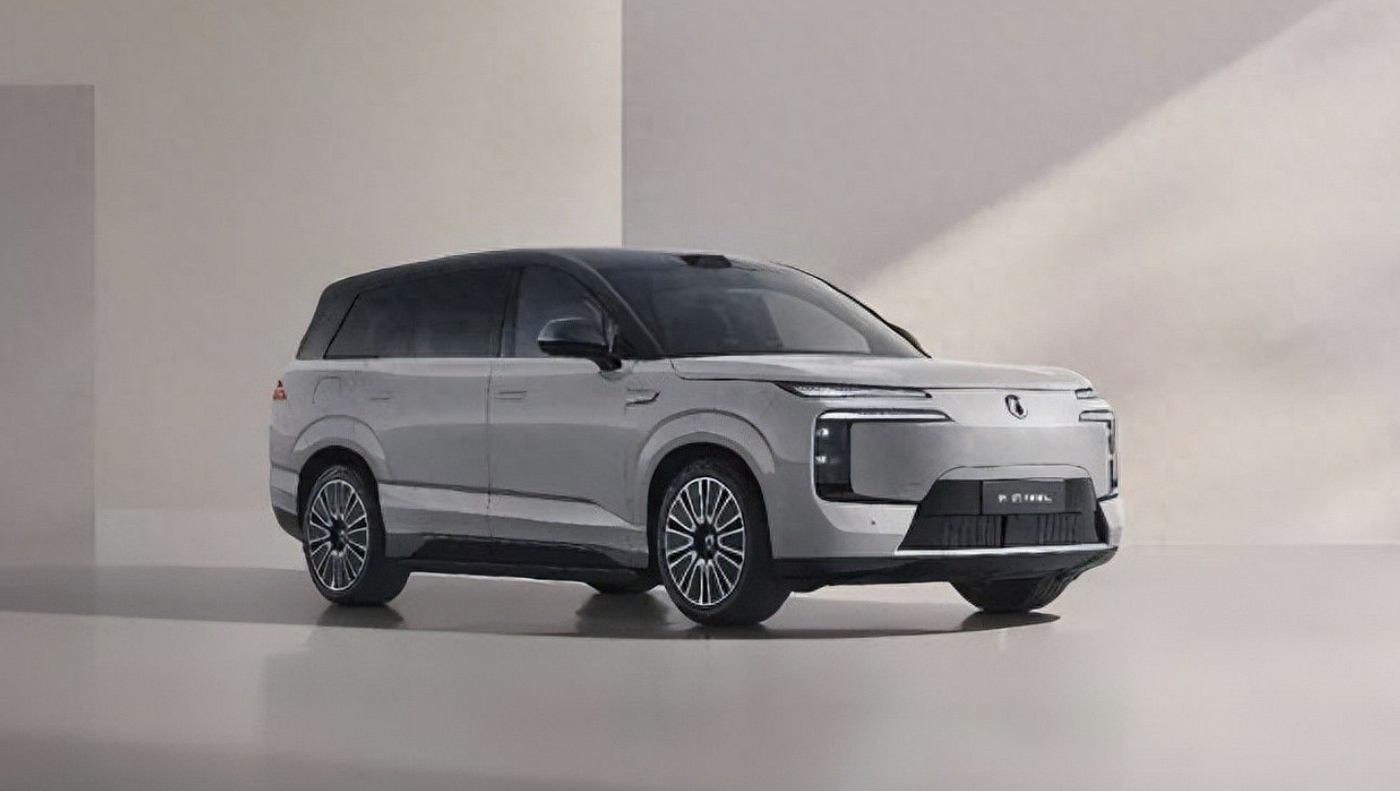
On July 2, 2026, China’s national broadcaster CCTV aired a “Chaofan Yibu” special segment that did something unusual for Chinese state television: it opened up the nervous system of an unreleased flagship EV in front of a live audience. The vehicle was the Dongfeng-backed Yijing X9, and the segment was, in effect, the public debut of Huawei’s next-generation Qiankun ADS 5 stack — the first production vehicle to carry the industry’s first 896-line dual-path image-grade LiDAR, plus a six-dimensional safety architecture Dongfeng and Huawei have branded “Tianqiong Shield” (Sky-Vault Shield). On July 3, Yijing followed up by confirming that the X9 will open pre-sales inside the third quarter and complete customer delivery before year-end, with the Chengdu Auto Show in September flagged as the first mass public appearance.
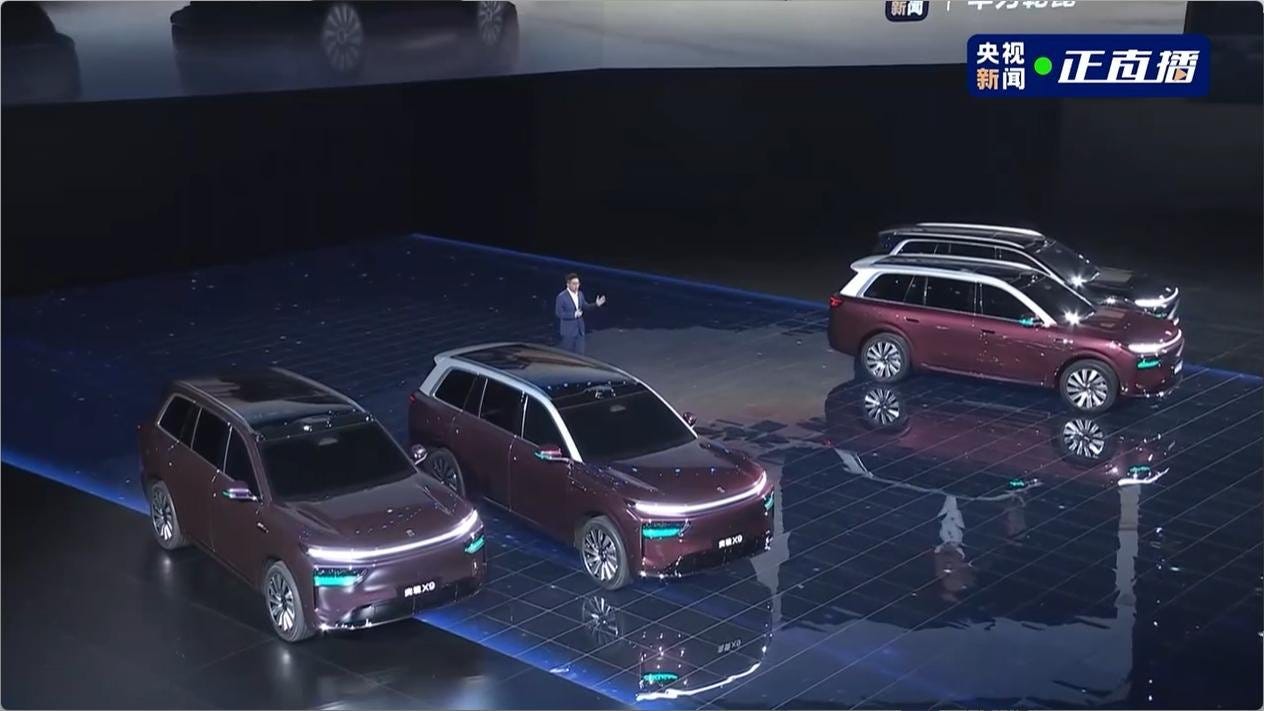
Why This Broadcast Mattered — CCTV’s First Full Teardown of a Chinese EV’s “Nervous System”
Chinese national broadcasters rarely dismantle premium EVs on air. The last time CCTV ran a comparable format, it was on high-speed rail safety systems in 2022. That the segment focused on Yijing X9 — a marque that only spun up in 2025 as a four-joint venture between Dongfeng Motor and Huawei — signals two things. First, the Jing Mode partnership has been officially blessed by Beijing as a co-development template that pairs state-owned OEM chassis strength with a Chinese tech-major’s software stack. Second, ADS 5 has cleared enough regulatory-grade internal validation that Huawei was willing to show its underbody sensor package on prime-time TV. Our earlier our comparison of Huawei ADS 4 versus Xiaomi HAD and BYD God’s Eye Tianshen tracked how ADS 4 rolled out across the sub-RMB 150,000 segment in H2 2026; ADS 5 is the flagship extension of that same rollout curve.
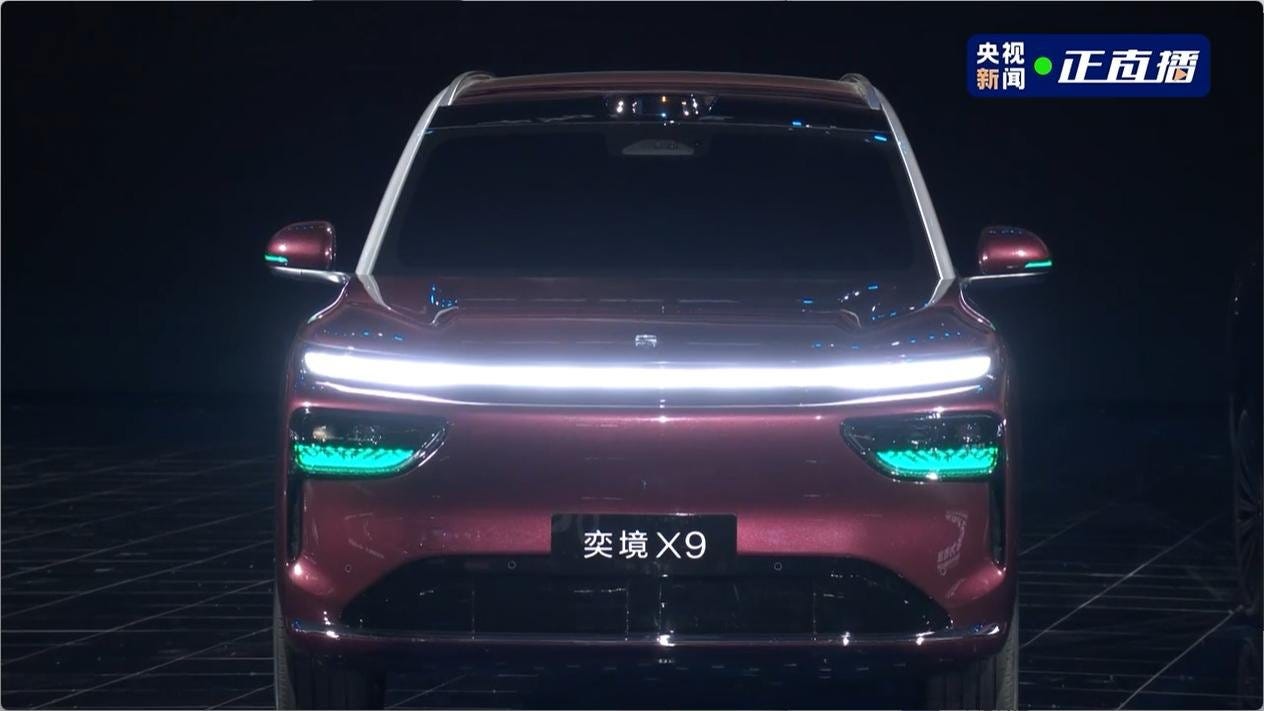
ADS 5’s First Production Home — What Changed From ADS 4
ADS 5 is a hardware step, not an OTA. Huawei’s Qiankun team led by SVP Jin Yuzhi confirmed that ADS 5 marks the leap from rule-driven planning to a data-and-AI-agent-driven autonomy stack. Where ADS 4 relied heavily on high-definition maps for urban NCA, ADS 5 blends a real-time perception model with Huawei’s WEWA 2.0 cloud engine to reason about scenes that have no prior mapping.
896-Line Dual-Path Image-Grade LiDAR — The Numbers Behind the Industry First
The single spec attracting the most attention on the CCTV segment is the 896-line dual-path image-grade LiDAR. Earlier Huawei production LiDARs peaked at 192 vertical lines. 896 lines is not simply a 4.6x resolution jump — the sensor also runs two receive paths in parallel, one tuned for standard automotive range (200–250 m) and one for long-range highway detection with a claimed 400-m cutoff for pedestrian-sized targets. The output resembles a low-light camera frame more than a traditional point cloud, which is why Huawei has begun calling it “image-grade.” Yijing engineers on air described the sensor as producing 4K-equivalent depth resolution at 20 Hz.
4D Distributed mmWave + WEWA 2.0 + 60 EFLOPS Cloud
Beyond LiDAR, ADS 5 pairs a 4D distributed millimeter-wave radar array — four corner units plus a forward long-range radar — with Huawei’s WEWA 2.0 world-engine, backed by 60 EFLOPS of cloud training compute Huawei disclosed at its April 2026 developer conference. Practically, that translates to a training-data flywheel where corner-case data flagged by any Qiankun-equipped car uploads to the WEWA fleet-learning pipeline overnight, with fixed-behavior OTAs pushed back inside two-week cycles.
The Dark-Drive Gauntlet — Three Scenarios That Broke the Rulebook
The CCTV crew ran three dark-drive test scenarios that Yijing had not shown before. All three are designed to be harder than the C-NCAP or Euro NCAP AEB test book.
Anti-Glare at 120 km/h + 14 cm Obstacle Detection
The first test drove the X9 at 120 km/h into a bank of stadium-grade oncoming headlights while a 14 cm-tall floor obstacle sat in-lane. The X9 detected the obstacle in the 896-line LiDAR image stream and executed a full-brake stop before crossing it. Independent camera-only stacks (including several US-market rivals) typically fail at obstacles under 25 cm at that speed.
100 m Rain-Fog Corridor
The second test placed the vehicle inside a 100-meter fog-and-rain corridor with a dummy pedestrian at the far end. ADS 5 acquired the target at 87 m and initiated pre-braking, then confirmed the braking authority at 62 m. Rule-based stacks typically bracket that acquisition somewhere between 40–55 m.
RCA Roaming — Unmapped Warehouse Navigation, Zero Takeovers
The third and most consequential scenario was an unmapped indoor warehouse. RCA (Roaming Cognitive Agent) is ADS 5’s new mode for HD-map-free operation. The X9 self-navigated a multi-turn indoor route with rack aisles, forklift crossings, and low overhead lighting. Zero takeovers logged. This is the scenario most directly relevant to L3-eligible driving domains once Chinese regulators clear the WM/8 amendment expected by year-end.
Tianqiong Shield — Six Layers, One Loop
The Tianqiong Shield safety architecture is Yijing X9’s answer to the fact that ADS 5’s driver-assist capability is only credible if the vehicle survives what ADS misses. Six domains: ADAS, active dynamics, passive structure, battery containment, rescue redundancy, and cabin health.
2400 MPa B-Pillar, 92% HSS + Aluminum Body Ratio (Industry-Leading)
Yijing X9’s B-pillar uses 2400 MPa hot-stamped steel — the highest tensile grade in production automotive today, matching only Volvo EX90 and BMW iX pilot builds. High-strength steel plus aluminum accounts for 92% of body-in-white by weight, which Dongfeng claims is the industry-leading ratio for large SUVs.
Triple-Layer Battery Armor + Aerospace-Grade Aerogel
The battery pack sits inside a three-layer armor cassette: bottom-plate steel, side aluminum extrusions, and top-side aerogel thermal blanket. The aerogel is aerospace-grade and rated for a three-minute direct-torch test without cell propagation.
Rescue Redundancy — Supercapacitor-Backed Door Unlock After Collision
Post-collision, if the 12 V bus fails, a dedicated supercapacitor keeps the door unlock circuit powered for 10 minutes to enable first-responder access. This addresses the specific failure mode responsible for two well-publicized 2024–2025 EV rescue-delay incidents.
What ADS 5 → L3/L4 Means
Jin Yuzhi, Huawei SVP and Yinwang CEO, in his on-air remarks, framed ADS 5 as follows: “ADS 5 marks the leap from rule-driven to data-and-AI-agent-driven autonomy. Future co-development will target L3 and L4 platforms.” That is the clearest signal to date that Huawei sees ADS 5 as the launch vehicle for eligible L3 operation once Chinese Type Approval Rule 8 (WM/8) is finalized — expected regulatory OTA path is Q1 2027, hardware-ready today.
Q3 2026 Launch Window — What to Watch
Yijing has confirmed pre-sale opens Q3 2026, with customer delivery inside 2026. The Chengdu Auto Show in September is now the strongest single visibility window. Pricing has not been disclosed — the segment reference is the six-seat premium large-SUV band anchored by AITO M9 (RMB 469,800–569,800) and Li Auto L9 (RMB 409,800–459,800). Given the 896-line LiDAR and 2400 MPa steel bill of materials, RMB 500,000-plus (~$68,970) is the plausible entry band for the top ADS 5 Ultra trim, with lower Max trims likely to open around RMB 400,000 (~$55,170). Our earlier the Pony.ai Q1 2026 earnings and Robotaxi 395% YoY growth deep-dive deep-dive on China’s Robotaxi and L4 city-fleet map gives context for how L3-eligible private cars like the X9 fit the broader autonomy roadmap.
FAQ
When will the Yijing X9 launch and where can it be seen first? Pre-sales open within Q3 2026, with customer delivery before year-end. The first mass public appearance is scheduled for the Chengdu Auto Show in September 2026.
What makes the 896-line LiDAR different from Huawei’s earlier 192-line unit? The new sensor runs 4.6x more vertical scan lines and adds a second receive path optimized for long-range detection, producing image-grade depth resolution at 20 Hz — comparable to a 4K depth camera rather than a traditional point cloud.
Is Huawei’s ADS 5 the same as ADS 4 with an OTA, or new hardware? New hardware. ADS 5 requires the 896-line LiDAR, 4D distributed mmWave array, and next-generation MDC compute — none of which is OTA-upgradable on ADS 4 platforms.
What is Dongfeng’s “Jing Mode” partnership with Huawei? “Jing Mode” is a four-joint venture format — joint definition, joint development, joint operations, and joint services — sitting between Huawei’s HI mode (component supplier) and Smart Selection mode (AITO/Luxeed/Stelato). Yijing is the first marque under Jing Mode.
Does the Yijing X9 support Level 3 autonomous driving today? No. The hardware stack is L3-ready, but private-vehicle L3 operation requires Chinese regulatory approval under the pending WM/8 amendment, expected to be delivered via OTA once approved (target Q1 2027).
Editor’s note: This briefing summarizes the CCTV live teardown of the Dongfeng-Yijing X9 and Huawei Qiankun ADS 5 debut for English-speaking EV professionals. All specifications are Yijing and Huawei official disclosures on July 2–3, 2026. Reviewed by Dale / Editor, iEVChina.com
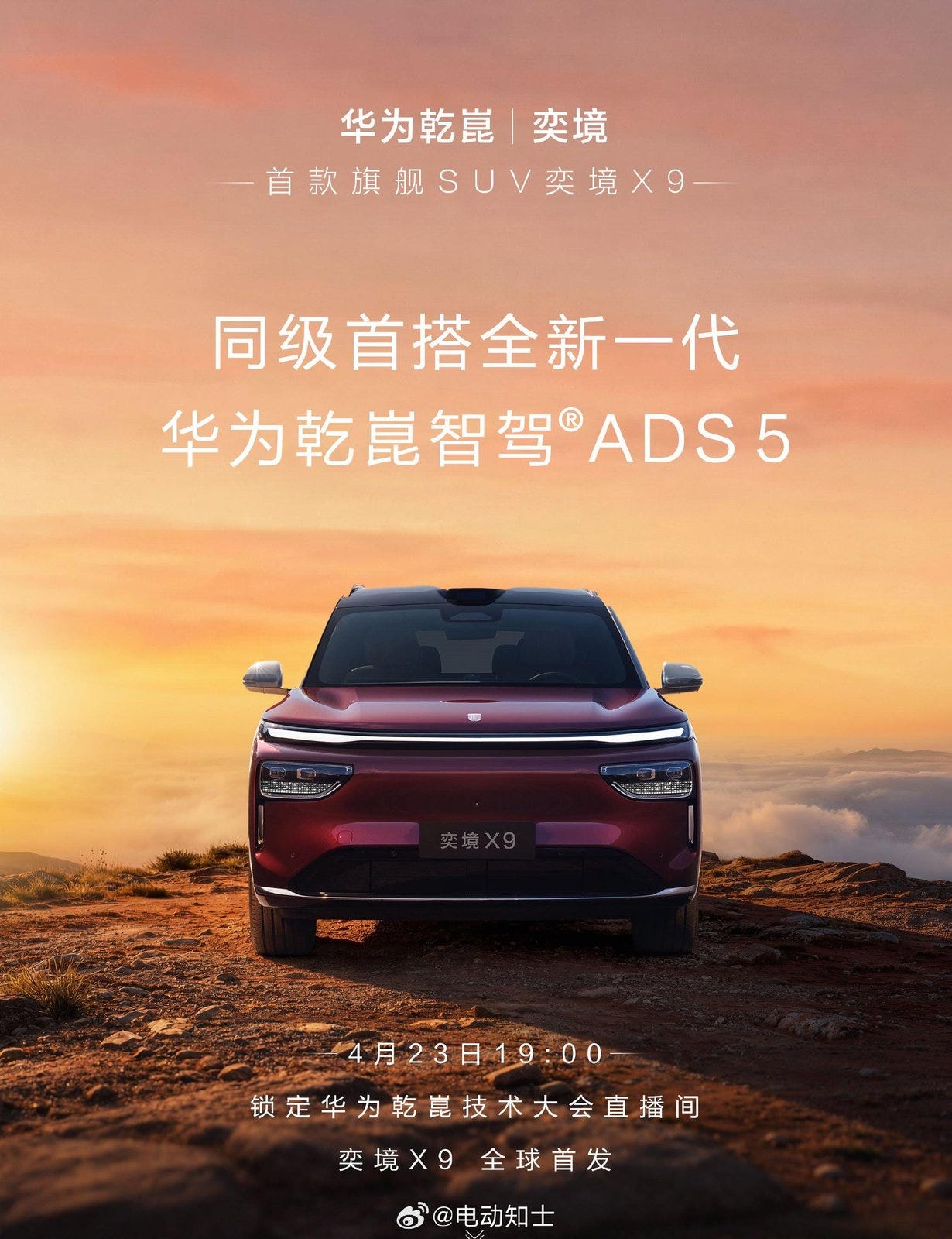
Source: auto.ifeng.com / chejiahao.autohome.com.cn / hao.yiche.com
Originally published at https://ievchina.com on July 4, 2026.
메타데이터
- post_id
- 1d93b2b37e4e
- slug
- huawei-qiankun-ads-5-debuts-on-yijing-x9-896-line-lidar-tianqiong-shield-ievchina-1d93b2b37e4e
- url
- https://medium.com/@ysh653972165/huawei-qiankun-ads-5-debuts-on-yijing-x9-896-line-lidar-tianqiong-shield-ievchina-1d93b2b37e4e
- canonical_url
- https://medium.com/@ysh653972165/huawei-qiankun-ads-5-debuts-on-yijing-x9-896-line-lidar-tianqiong-shield-ievchina-1d93b2b37e4e
- author_url
- https://medium.com/@ysh653972165
- status
- ok
- fetched_at
- 2026-07-10 04:31:59