Sequencing a Zero Trust Roadmap Without a Rip-and-Replace Budget
Field Guide — Part 2 of 3
Sequencing a Zero Trust Roadmap Without a Rip-and-Replace Budget
Field Guide — Part 2 of 3
You already know the five pillars. Now the harder question: what do you actually do first, second, and eighteenth — using the budget and tools you already have, not the ones you wish you had?
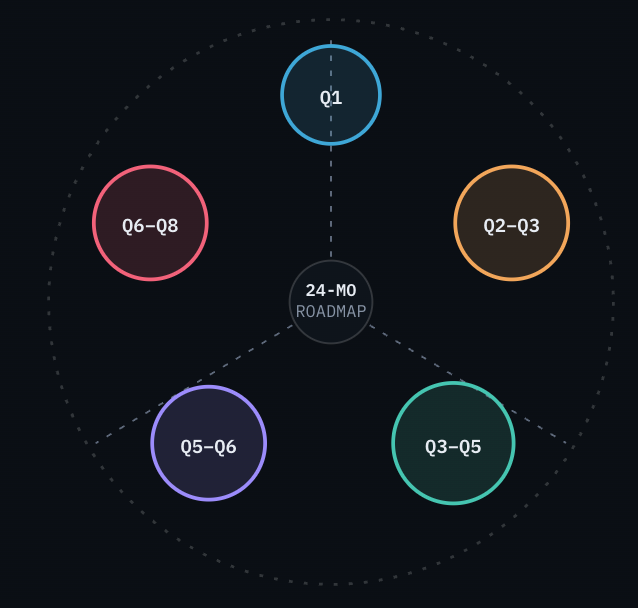
Why sequencing is the whole game
The plan fails in the ordering, not the framework
Almost every Zero Trust program that stalls has the same root cause: it tried to do everything at once, or it bought a platform before diagnosing which gap actually mattered. A good roadmap does two unglamorous things well — it ranks work by real risk reduction per dollar, and it sequences pillars so each phase’s output becomes the next phase’s input (identity data feeds device trust scoring; device trust feeds network policy; network visibility feeds data protection).

Step 1 — rank before you sequence
Plot every gap on impact vs. effort before touching a calendar
Take the pillar-by-pillar gaps from your Part 1 maturity assessment and plot each one here. This single exercise generates 80% of your roadmap’s ordering.

Step 2 — lay it across the calendar
Overlapping tracks, not a single line of sequential projects
Pillars don’t wait for each other to finish — they overlap. Identity work never really “completes,” it just matures while later tracks start layering on top of it.


The budget conversation
What you probably already own vs. what’s genuinely new spend
Most environments are already licensed for more Zero Trust capability than they’re using. Walking through this exercise before writing a procurement request changes the size — and the credibility — of the ask.

Common pitfall: asking for a full platform budget in Phase 0 before anyone has validated which existing entitlements already cover 30–40% of the requirement. It costs you both money and credibility with finance.
Reporting the plan
Metrics that read as risk reduction, not tool adoption
Leadership doesn’t fund “we deployed a new dashboard.” They fund a trend line moving the right direction. Report these every steering committee cycle.

Coming next in this series
Part 3 turns this roadmap into an authorization package
For federal and regulated environments, the roadmap above needs to map cleanly to control families your assessors already recognize. Part 3 walks each of the five pillars into NIST 800–53 control families so this same plan drops directly into your RMF/A&A documentation.
메타데이터
- post_id
- 1deb7d09a2a2
- slug
- sequencing-a-zero-trust-roadmap-without-a-rip-and-replace-budget-1deb7d09a2a2
- url
- https://medium.com/@fnalexandre/sequencing-a-zero-trust-roadmap-without-a-rip-and-replace-budget-1deb7d09a2a2
- canonical_url
- https://medium.com/@fnalexandre/sequencing-a-zero-trust-roadmap-without-a-rip-and-replace-budget-1deb7d09a2a2
- author_url
- https://medium.com/@fnalexandre
- status
- ok
- fetched_at
- 2026-07-16 02:05:13