What If NRED’s Most Scalable Asset Is Not Underground at All?
In junior mining, value is usually created in bursts. A company may spend years collecting data, conducting geophysics, sampling, and…
What If NRED’s Most Scalable Asset Is Not Underground at All?
In junior mining, value is usually created in bursts. A company may spend years collecting data, conducting geophysics, sampling, and drilling. Then one strong result can completely change how the market views the project.
NRED remains part of that traditional model through Wilmac. But MetalCore creates another possibility: generating value not only through a discovery of its own, but also whenever other geological teams use its technology.
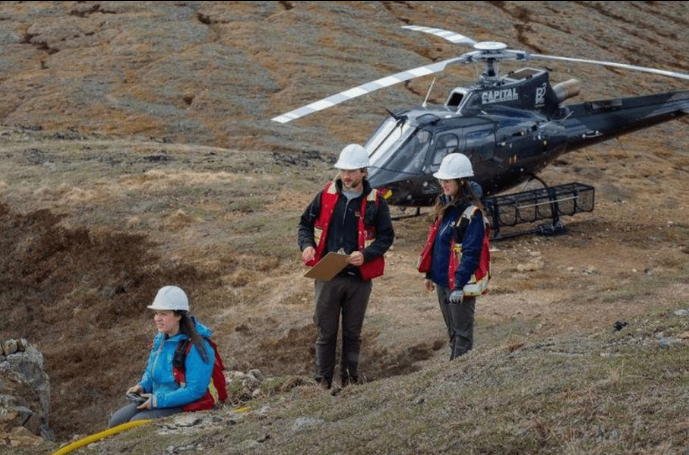
Wilmac could produce one major result underground. MetalCore could potentially create value more frequently through new users, licences, or individual data-analysis projects.
This is not yet an established SaaS business. NRED has not disclosed pricing, the number of paying customers, or recurring revenue from MetalCore. But the early figures already make it possible to discuss the platform as more than an internal geological tool.
Of course, 920 registrations do not equal 920 paying subscribers. But this is still an important signal: interest in the product extends well beyond NRED’s internal team.
The platform’s database included more than 1.4 million geochemical records, approximately 799,000 records related to mineral occurrences and deposits, more than 583,000 mining claims records, and over 11,000 mineral properties.
For a geologist, the value is not in the number 4.1 million itself. One of the main problems in exploration is that useful information is often scattered across old reports, government databases, maps, spreadsheets, geochemistry, and geophysics.
If MetalCore can bring these layers together and help reduce a large area to several priority zones, the platform is addressing a real and expensive problem.
NRED is already applying this logic at Wilmac, a 16,078-hectare project in British Columbia’s Quesnel porphyry belt, approximately 10 kilometres west of Hudbay’s Copper Mountain Mine.
Wilmac matters not only as NRED’s own exploration asset. It could also become a practical example of how MetalCore performs with real geology.
For a future customer, that would be much more convincing than a standard software demonstration. A mining company will want to know whether the platform helped assemble historical material faster, identify new zones, or organize a field program more effectively.
This is where NRED’s second potential source of value could begin.
The most obvious model is subscription access. A small exploration company could use MetalCore to analyze one project. A larger team could connect several geologists, upload its own data, and work across a broader area.
NRED has not announced such a pricing structure, but the SaaS logic is clear: one platform can serve many users without requiring the product to be rebuilt for every customer.
Another option is licensing. Companies with their own geological teams and internal databases may not need a complete external analysis. They may be more interested in the right to use selected MetalCore modules, datasets, or analytical tools within their own workflows.
A third possibility is technology services.

Not every junior company needs a permanent subscription. Some may require help with one specific task: digitizing historical reports, combining geochemistry with geophysics, conducting spatial analysis, or creating an initial list of targets.
Under that model, NRED could receive payment for an individual project. The software would handle a large part of the processing, while geologists would provide interpretation and knowledge of the specific area.
To me, this model appears more realistic than immediately trying to sell one standard subscription to the entire sector. Mining companies differ significantly in size, deposit type, the quality of their historical data, and the capabilities of their internal teams.
One company may need a simple platform. Another may want a licence for its internal group. A third may want a completed analytical project.
NRED’s advantage is that exploration and technology do not need to compete with each other. They can continually reinforce one another.
Wilmac gives MetalCore real data and geological problems. The platform helps NRED organize targets and field work. New samples and geophysical results return to the system. If that cycle creates practical value at Wilmac, MetalCore becomes more convincing to outside users.
The platform’s next important figures may therefore not be only 5 million or 10 million records.
It would be far more interesting to see the first paying users, renewed access, a licensing agreement, or a contract to analyze a specific project.
NRED’s technology story is also beginning to move beyond MetalCore.

MetalCore works with geological and spatial data. EyeX could potentially work with physical operations: cameras, drones, equipment movement, field activities, fuel leaks, personnel location, and site security.
This means NRED’s technology offering could eventually become broader than one exploration platform.
One customer might use MetalCore to identify targets. Another might use EyeX to monitor a remote site. A larger company could potentially combine geological analysis with visual monitoring of field operations.
The appointment of EyeX co-founder Valentin Saitarli as Chief Technology Officer also fits this logic. He has more than 10 years of experience in machine learning and computer vision, and his role is connected to integrating technology directly into exploration operations.
To develop a second source of value, NRED needs more than a large dataset. It needs a team capable of turning field problems into product features, working with users, and gradually building a commercial model.
Exploration and technology create value in different ways.
Exploration may go a long time without producing a major result, and then one drill intercept changes the entire story.
Technology could potentially advance through smaller but more frequent steps: a new user, a new licence, a new dataset, or an individual contract.
NRED still needs to show exactly how MetalCore will be monetized. But 4.1 million records, 920 registrations, practical use at Wilmac, and an expanding technical team already provide a foundation for asking the question.
NRED’s most dramatic result may eventually come from underground.
But its most scalable asset could potentially be the technology other companies use to search for discoveries of their own.”
📩 Join Investor’s Handbook Digest — get the best investing, markets, and wealth-building insights each week.
메타데이터
- post_id
- 1e0632d936ea
- slug
- what-if-nreds-most-scalable-asset-is-not-underground-at-all-1e0632d936ea
- url
- https://medium.com/the-investors-handbook/what-if-nreds-most-scalable-asset-is-not-underground-at-all-1e0632d936ea
- canonical_url
- https://medium.com/the-investors-handbook/what-if-nreds-most-scalable-asset-is-not-underground-at-all-1e0632d936ea
- author_url
- https://medium.com/@wayne_bottrell
- status
- ok
- fetched_at
- 2026-07-21 09:12:41