What If Alexithymia Is the Wrong Diagnosis? What Epiphanesthesia Corrects
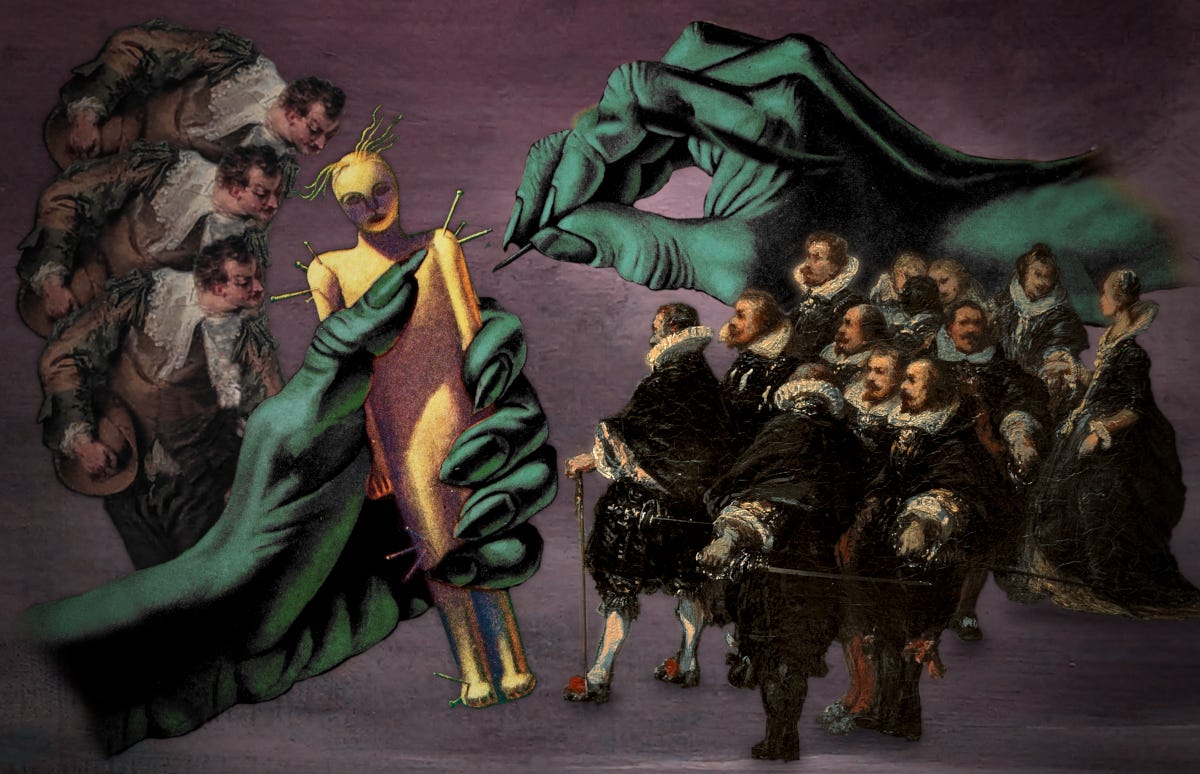
The clinical framework describes what the autistic body lacks. It has not looked at what the autistic body does instead.
What If Alexithymia Is the Wrong Diagnosis? What Epiphanesthesia Corrects
The clinical framework describes what the autistic body lacks. It has not looked at what the autistic body does instead.
Photo by 5010 on Unsplash
The Fan Keeps Running
Lleida, 18:30. Thirty-seven degrees outside, and the fan is fixed on me, its noise a constant underneath everything, its promise of coolness more reliable than the coolness itself. I am at my desk in the living room, writing an article about a finger gesture I had been performing in surgery for decades without understanding what it was doing.
The sentence I am working on reads: calling it regulation is the wrong diagnosis.
My thumb is pressing rapidly against my index and middle finger, both hands, bilateral, automatic. The gesture is running while I write about the gesture running. I am not describing a memory. I am inside the mechanism while naming it.
That simultaneity stopped me.
Not as an emotion. Not as a sensation I could locate in my chest or my throat or my stomach. As something closer to a shift in resolution: two things that had been separate becoming one thing, and the moment of their convergence registered in my body before it reached any word I already owned.
I did not have a name for that registration. What I had, for most of my adult life, was a different name entirely. A name for what I lacked.
What the Clinical Framework Built
Alexithymia derives from the Greek: a- (absence), lexis (word), thymos (emotion). The absence of words for emotions. The term was constructed, from its first syllable, as a description of privation.
The clinical literature has refined that description considerably since its introduction. Alexithymia is now understood as a trait rather than a disorder, prevalent in autistic populations but distinct from autism itself, associated with reduced representational access to emotional states rather than the absence of emotional experience. The neuroaffirmative turn has gone further: alexithymia is not a deficit to correct but a stable neuropsychological configuration, a different relationship to the affective register rather than an absent one.
These are genuine advances. What they have not touched is the architecture underneath.
The neuroaffirmative framework de-pathologised the deficit without de-centralising emotion as the reference category. It changed the value judgment while leaving the conceptual structure intact. The autistic body is still described in relation to what neurotypical emotional processing produces, and the description still moves by subtraction. Less access. Reduced verbalization. Lower emotional granularity. The negative prefix has been stripped of its moral charge, but it has not been stripped from the definition.
When I tell someone I am alexithymic, the conversation goes in one direction with a consistency I have stopped finding surprising. They tell me it is not possible. That everyone feels emotions. That they cannot believe it. The disbelief is delivered in good faith, often with an intent that could be called validating, and it invalidates completely. The mechanism is structural: alexithymia names the absence of something the interlocutor knows they possess. The denial is the only coherent response to a definition built on subtraction.
The clinical framework did not produce that conversation. But it made it inevitable.
What the Research Stopped Short Of
Interoception research has recently done something useful. Studies published in the last decade have established that it is alexithymia, not autism, that is associated with atypical interoception. The two constructs, long conflated, have been disaggregated at the level of mechanism. Autistic individuals who are not alexithymic do not show the same interoceptive differences as those who are. The field has begun to separate what had been treated as a unified profile.
What the research has not done is ask what the interoceptive channel carries when it is not carrying emotional content.
The working assumption across the literature is consistent: interoception is the internal sensory system through which physical and emotional states are noticed, recognised, and responded to. Physical and emotional. The two categories exhaust the field. A somatic signal is either a physiological datum, hunger, cardiac rhythm, temperature, or it is the substrate of an emotional state, the body registering feeling before the feeling reaches language.
The third category has not been named.
I work as a technician in an operating room. The surgical environment demands sustained cognitive precision and absorbs sudden neurochemical transitions: states of concentrated readiness that end without warning, leaving the nervous system to recalibrate while the work continues. In those recalibration windows, I noticed something that did not fit either existing category. A stim, a repetitive bilateral finger gesture running automatically and outside conscious direction, in the seconds before an answer I had been searching for arrived. Not a regulation of distress. Not a physiological signal. The stim preceded the answer. It was, I eventually understood, initiating the retrieval rather than responding to it.
The body was running a cognitive operation. The interoceptive channel was carrying procedural information, a proprioceptive key that reopened a stored trace. Neither physical datum nor emotional substrate. Something the existing vocabulary had no slot for.
And then, at my desk in Lleida, writing about that stim, the fan running its steady promise beside me: the same channel, carrying something different again. The convergence of two ideas registering as a shift in resolution before it reached language. Not retrieval. Not regulation. The perception of the moment when two patterns become one.
The Word That Was Always Missing
Greek etymology offers the components. Epiphany derives from epiphaneia: manifestation, the moment something becomes visible that was not visible before. Aisthesis: sensation, perception, the registration of experience through the body.
Epiphanesthesia: the somatic registration of the moment a pattern manifests. (The term is my own coinage, not an established clinical or academic category. I introduce it here as a working concept, precise enough to be useful, open enough to be tested.)
The word does not describe an emotion. It does not describe a physiological datum. It describes a third function of the interoceptive channel: the body’s capacity to register the instant of cognitive convergence, the moment when something that was separate becomes unified, before that unification reaches declarative language.
Researchers have documented one expression of this: the frisson, the physical response to aesthetic or intellectual beauty that arrives before any verbal account of why the beauty is there. The frisson is neither a physiological datum nor an emotional state in the clinical sense. It is the body registering the coherence of a pattern before the mind has finished naming it. That is the simplest form of epiphanesthesia.
In its more complex form, it is the sensation I cannot describe to most people without watching their face arrange itself into something between pity and polite disbelief: a composed joy, not the joy that moves the body outward, but the joy that moves through the body inward, the intellectual pleasure of discovery as a physical event.
The frisson is also where this becomes concrete for most readers. I do not feel music in my body the way a dancefloor requires. I encounter it as structure, as architecture, as the relationship between its elements. When those elements resolve into something my nervous system recognises as coherent, that recognition arrives somatically before it arrives verbally. The physical response is not an emotion and not a physiological signal: it is epiphanesthesia in one of its clearest forms, the body registering the resolution of a pattern an instant before the resolution becomes a thought.
That is not the absence of an emotional response to music. It is a different response, operating on a different register, producing a different kind of knowledge.
The clinical framework has a name for what is missing. It has not had a name for what is present.
The Conversation That Becomes Possible
When I explain alexithymia, I am describing an absence. The interlocutor, who does not experience that absence, cannot locate themselves in the description. The conversation moves toward disbelief because the definition offers no point of contact: it names something the other person knows they have, and tells them I do not have it. The response is structural incredulity dressed as concern.
When I explain epiphanesthesia, I am describing a presence. The interlocutor may not have experienced it in the same form or with the same frequency, but they have felt something resolve in their body before it resolved in their mind. They have felt the frisson. They have had the moment of a solution arriving before the solution could be articulated. The definition offers a point of contact, and from that contact, a different conversation becomes possible.
Not the conversation that ends with “I don’t believe you.” The conversation that begins with “I have felt something like that, but I didn’t know it had a name.”
That is not a small difference. It is the difference between a definition that positions me as deficient relative to a standard I do not meet, and a definition that positions me as differently equipped in a way that can be recognised, imperfectly but genuinely, across neurological difference.
The next time someone asks me why I do not dance, I will not explain what I lack. I will explain what I have: a nervous system that registers the architecture of music before it registers its invitation to move, and finds in that registration something the dancefloor was not designed to offer.
The Fan, Still Running
At 18:30 in Lleida, thirty-seven degrees, and the fan pointed at me, I wrote the wrong diagnosis, and my body was already running the right one.
The stim was not regulation. The convergence I felt while writing was not emotion. The composed joy of the insight arriving was not the absence of feeling: it was a different kind of signal, carried through the same interoceptive channel, with content the clinical vocabulary had not yet built a container for.
The framework that named my absence was not wrong about the absence. It was wrong about what to look for.
I am not the absence of your emotional vocabulary. I am a different one.
If this piece carried something you want to keep.
Wrong Planet / Right Mind is the memoir-essay this piece grew out of. It traces the late autism diagnosis from undiagnosed masking through burnout to the shape of life on the other side. Second revised edition, available on Amazon.
The Substack is where the material before the article lives. Reading notes that fed the pieces you read here, the thinking before it hardens into a thesis, the conversations the Medium format does not accommodate. One email a week. Full archive for paid subscribers.
This piece draws from my experience as an autistic adult diagnosed in adulthood.
메타데이터
- post_id
- 1e1c22b4b908
- slug
- what-if-alexithymia-is-the-wrong-diagnosis-what-epiphanesthesia-corrects-1e1c22b4b908
- url
- https://medium.com/the-unexpected-autistic-life/what-if-alexithymia-is-the-wrong-diagnosis-what-epiphanesthesia-corrects-1e1c22b4b908
- canonical_url
- https://medium.com/the-unexpected-autistic-life/what-if-alexithymia-is-the-wrong-diagnosis-what-epiphanesthesia-corrects-1e1c22b4b908
- author_url
- https://medium.com/@christian.gajewski
- status
- ok
- fetched_at
- 2026-06-15 20:49:13