Adventures with a Light Cube
A mini studio within a two-foot cube
Adventures with a Light Cube
A mini studio within a two-foot cube
Years ago, I bought a small translucent “tent” to photograph small objects to sell online. Last year, I was commissioned to photograph several dozen small cheesecakes and decided to invest in a larger light cube. I found this one on eBay, and it was perfect because I would be working within the cramped conditions of an industrial kitchen, and my twin flash setup would take up too much room.
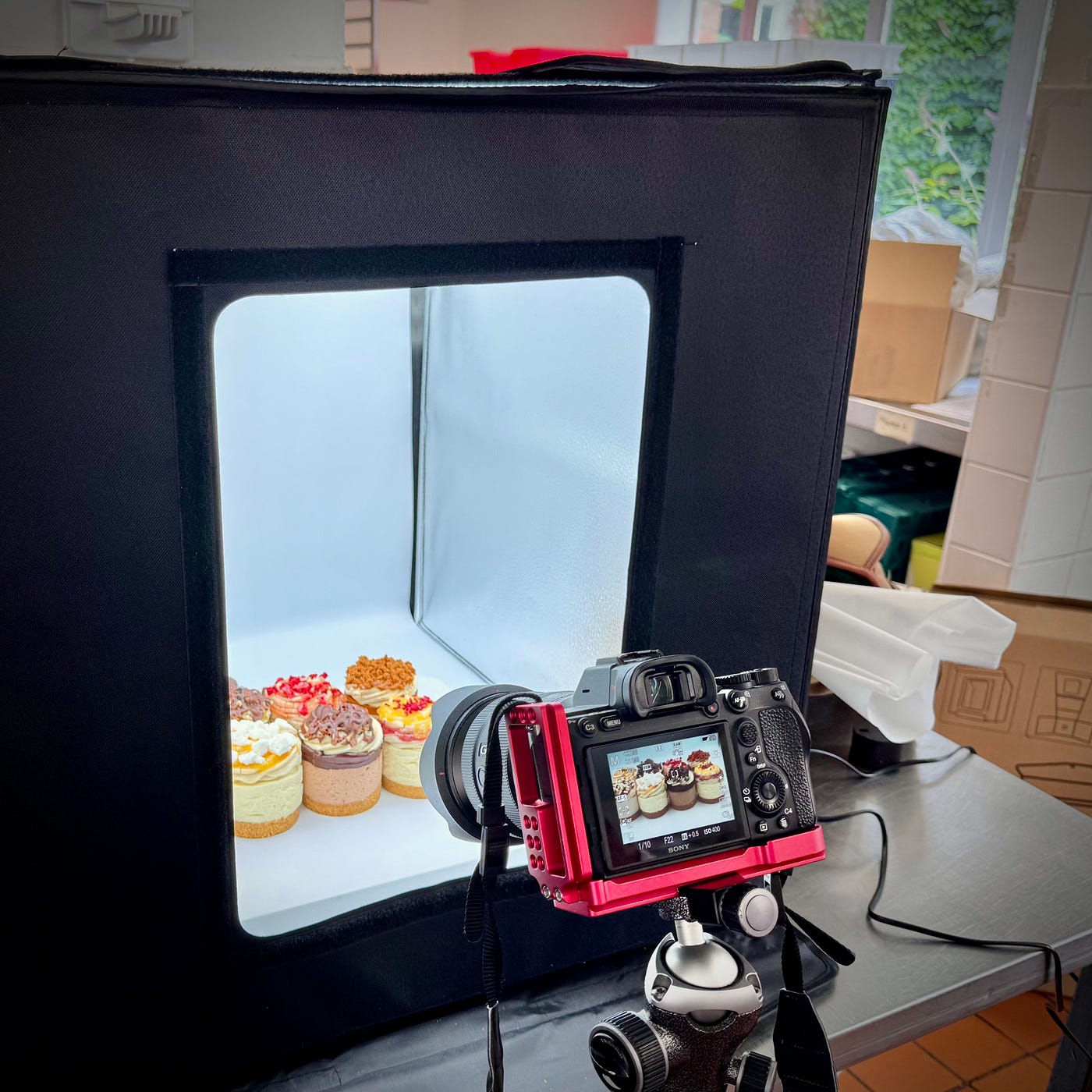
I wrote up this work previously — “If you can Photograph ’em you can Eat Them” – and one image from that work illustrates what I achieved:

I’m pleased with the photo and it was delicious….
So that was fun, and I earned enough from that work to pay for the 27" 4K Dell Ultrasharp monitor for my new Mini Mac. After that project, the folded-down light cube sat in storage. I thought of selling it, but I’m glad I didn’t, as another opportunity popped up recently.
I’m at the “mostly retired” stage of my life, so I only pick up projects that interest me, and I don’t always demand payment from friends and neighbours. A friend in our village is very keen on games and has run games workshops in the village. A particular interest of his is battle and war-based games, where blocks of soldier models move around after a dice roll. Some of these sets of soldiers are exquisitely modelled and painted figures.
Rob’s idea was that not everyone wants to spend months making and painting these models: they just want to play the game! So he invented sets of soldiers made from tiny building blocks. Lego held a patent on similar building blocks that ran out in 1978. Since then, there has been an outbreak of alternative manufacturers of these things. But woe betide those who blatantly rip off Lego-designed sets, as Lego will take legal action and most times win. A very large Chinese company that focused on such rip-off work has been forced out of business. So original designs only!

My friend needed some photographs of his initial products for publicity and a games expo where he will be showing his ideas. If things go well, he may need a complete set(s) of standard shots as a library for packaging and promotion, and who knows? That might happen further down the line.
For this project, I needed my macro lens. I have a Sigma ART 70mm f/2.8 that I should use more often, as it is also a high-performing portrait prime lens. So my setup was my Sony A7r mk4, 70mm macro lens, tripod, and cable release. There is no Optical SteadyShot Image Stabilisation (O.S.S) built into this lens — there is on the other Sony / E mount lenses I own — so I did not have to turn this off. With a tripod and cable release, I was able to shoot at the native 200 ISO of my camera at around a third of a second.
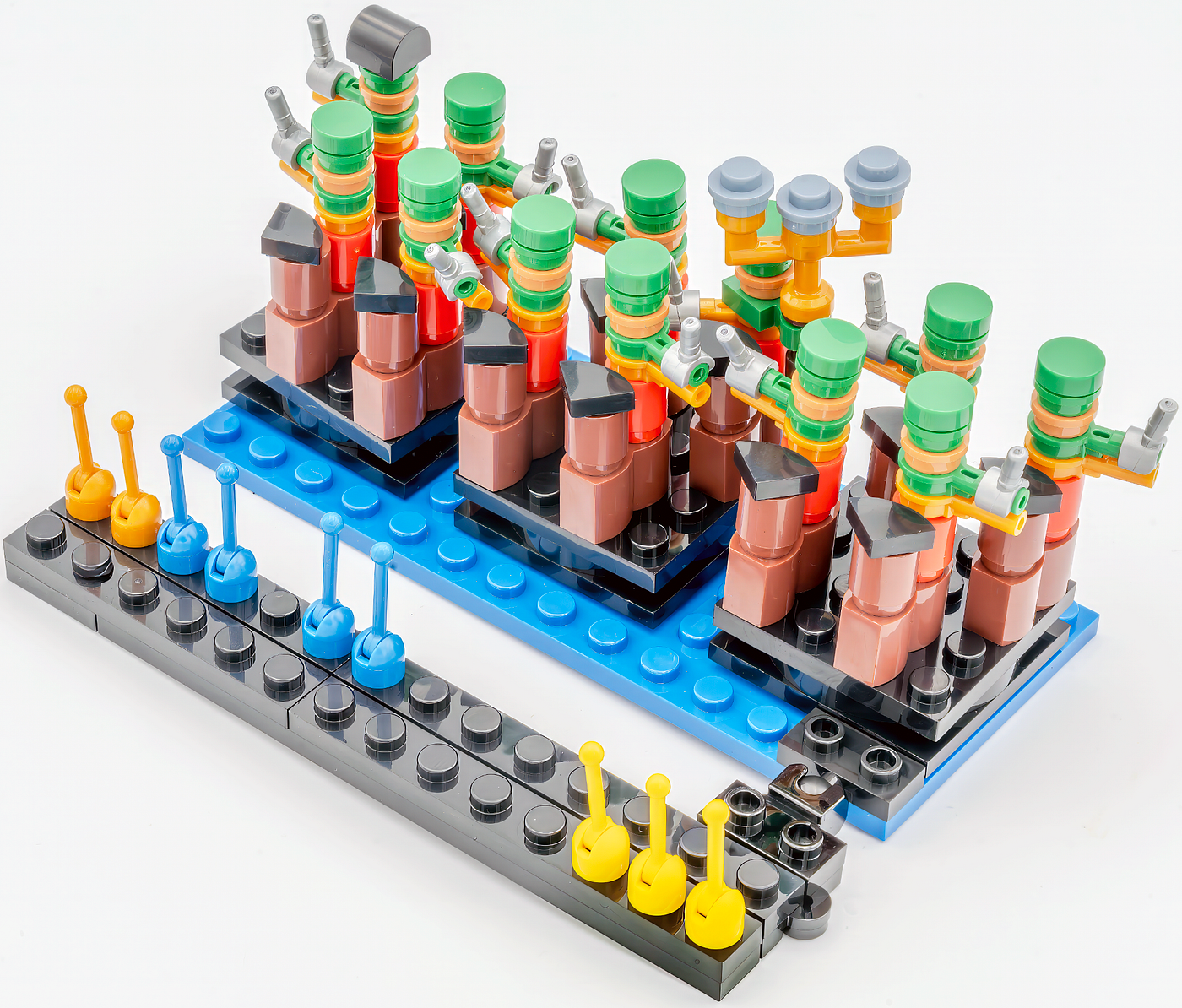
This photograph is an amalgamation of 4 shots
Working with such small models offered up the challenge of a shallow depth of field. Even at f/19, the focus zone didn’t extend far, although I must say the gentle slip into bokeh and soft ‘background’ the Sigma lens provides is exemplary. Whether I wanted it or not, I had to revisit focus stacking.
Focus stacking is where one takes a number of shots, and the focus point is moved in each one. In the photograph above, I’ve taken four shots. Shot 1 is focused on the score levers in the foreground; shots 2 and 3 were focused on the front and back of the middle ground; shot 4 was focused on the back quartet of ‘soldiers’.

Close up of the photograph above showing the detail that the processing outlined below produces. Photograph by the author for “Blocks of Glory”
The shoot itself was a few hours. Rob is good company and so devoted to his idea that he has invented back stories for several of the individual characters. One character is missing an arm, and I queried this. “Oh, that's One-Arm Jacques! He lost his arm in fighting the Austrians at Austerlitz on the Pratzen Heights.” And then after “Oh dear, I need to get out more!”.
Post shoot, I had a processing mountain to climb. Each individual shot was processed from RAW in Lightroom. Even though I was shooting at the native ISO, the shots still benefited from the denoise filter that brings out more detail whilst diminishing any noise or grain. Then, the four shots that make up the photograph were exported to Photoshop as a series of layers. Within Photoshop, I used edit > auto align levels. Then edit > auto stack layers. After this second command, Photoshop creates a series of masks that hide the unfocused parts of each shot. Then Photoshop creates a new top layer that combines all the focused parts from the four original shots.
Sometimes this is enough, but some photographs benefited further from being run through Topaz Lab’s photo filter to sharpen edges and clear up any grain that had crept in from the processes thus far. Then I used the clone stamp tool to copy and overpaint blemishes. I am sad to admit that some of the blemishes were dirt on my sensor. The Sony is particularly noted for attracting dust to its exposed sensor, and before I go to Rome next week, I need to get that cleaned!
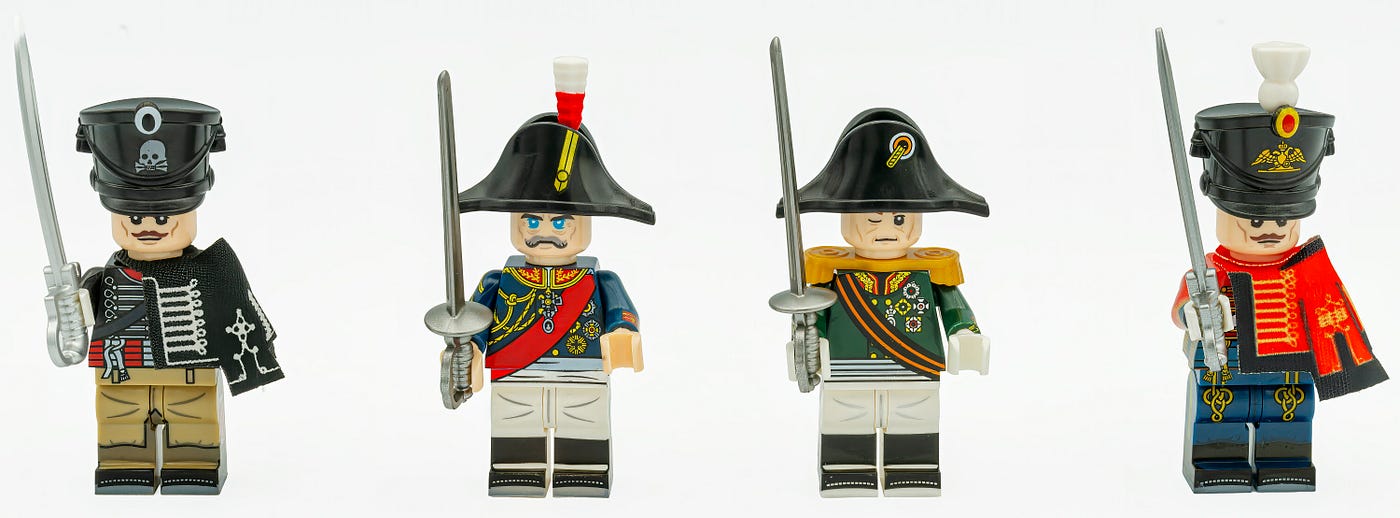
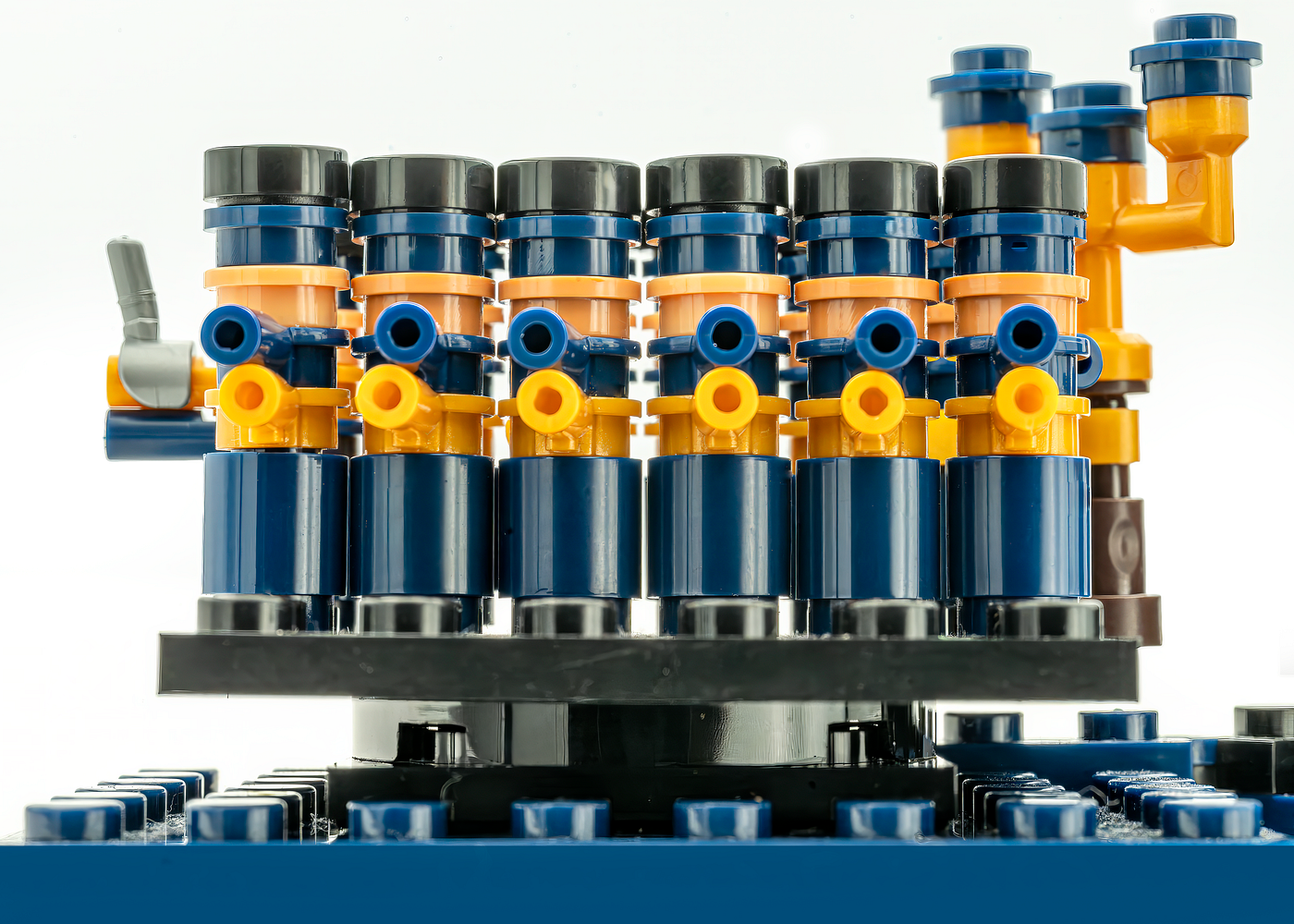
Individual characters and soldier blocks from the prototype game photographed by the author.
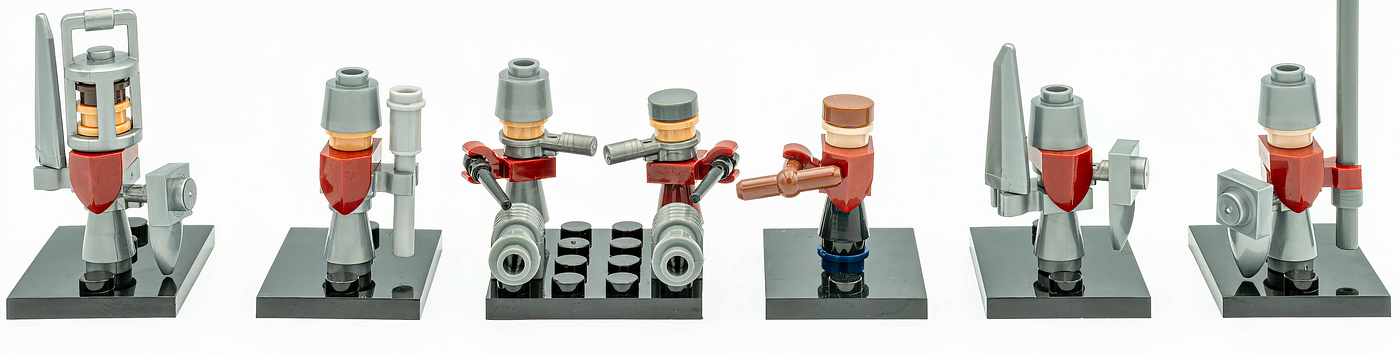
Taking the historical battles concept into the future: ideas for a sci-fi game set.
To return to the shoot: after we finished, I still had my camera all set up and an empty light cube standing by. I decided to do some macro shots of an interesting flower that was used in a bunch of the same kind that my wife was clearing out. Eryngium ‘Magical Blue Lagoon’ is what a Google search has offered for its name. I loved the spiky, architectural leaves around the thumbnail pot of active flowers. I set up my subject close to the aperture in the cube where my lens peers in. This meant that the LEDs’ light that was bouncing around inside the cube began to act as strong backlighting. It was an effect that I liked.

The image above is a single frame — no focus stacking on this particular image, although I did try that on a few images. Earlier in this article, I mentioned that I was re-visiting focus stacking. My attempts at the technique a few years ago were poor. This was on my old iMac, where the i7 processor simply could not cope with the demands that Photoshop and I were making. This time around, though, I have a new Mini Mac with 64GB RAM and an M4 Pro Apple processor working on the problem. It made a huge difference.
Pleased as I am with the photograph above, I am often found experimenting with pushing my images into monochrome. Here I thought, is a subject that somewhat harsh processing into Black and white would create an interesting, strong graphic image, so I am still working on getting a quartet of such shots together. Here is the first of the series so far!

Monochrome version by the author.
Well, that's where my adventures with the Light Cube are at the moment, and if there are more, I shall certainly write them up as Light Cube Adventures 2! I hope that you have enjoyed seeing what a modest Light Cube sourced from eBay can do.
Stephen Ellis Bell MA(ed) BA(hons) PGCE / February 2026
Blocks of Glory battle game sets and characters are copyright, Rob Terrell. My thanks to him for permission to share the project.
메타데이터
- post_id
- 1e4695f336da
- slug
- adventures-with-a-light-cube-1e4695f336da
- url
- https://medium.com/live-view/adventures-with-a-light-cube-1e4695f336da
- canonical_url
- https://medium.com/live-view/adventures-with-a-light-cube-1e4695f336da
- author_url
- https://medium.com/@stephenellisbell
- status
- ok
- fetched_at
- 2026-06-10 15:53:41