The Unexpected Science Behind Melatonin and Chronic Pain
How one of the world’s most popular sleep supplements may influence pain itself.
The Unexpected Science Behind Melatonin and Chronic Pain
How one of the world’s most popular sleep supplements may influence pain itself.
Photo by Joyce Hankins on Unsplash
For most people, melatonin is simply a sleep aid. Millions of individuals take it each year to combat jet lag or recover from a disrupted sleep schedule. Some even take it to manage chronic insomnia. Yet over the past two decades, scientists have discovered that this naturally occurring hormone has effects that extend far beyond regulating the body’s internal clock.
Melatonin influences inflammation, oxidative stress, immune function, and neuronal communication, all of which contribute to the development of chronic pain. As researchers continue searching for safer alternatives to opioids and other traditional pain medications, growing evidence suggests that melatonin may represent an unexpected and promising addition to the treatment of chronic pain.
What is Melatonin
What is melatonin? It is a naturally occurring hormone produced primarily by the pineal gland, a small structure located deep within the brain.
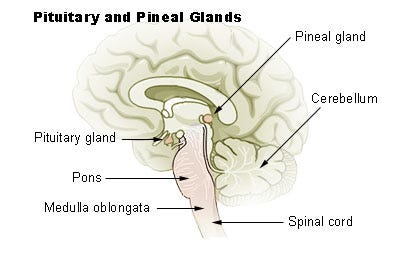
Pituitary and Pineal Glands source: http://training.seer.cancer.gov/module_anatomy/unit6_3_endo_glnds1_pituitary.html
Its release follows a daily rhythm, increasing after darkness falls and decreasing with exposure to light, helping regulate the body’s internal clock and sleep-wake cycle. Although melatonin is best known as a supplement that is taken exogenously, it exists in all of us, even if we never take a melatonin pill.
What is Chronic Pain?
Pain is the body’s natural warning system, engineered over millions of years of evolution to alert us to injury or disease, which in turn encourages us to protect the affected area while it heals.
This type of pain, known as acute pain, usually resolves once the underlying cause has been treated.
Chronic pain is different. It is generally defined as pain that persists for more than 3 months, often continuing long after an injury has healed or, in some cases, without an obvious ongoing cause. Rather than acting as a helpful warning signal, chronic pain can become a disease in its own right, involving long-lasting changes within the nervous system that amplify pain signals.
Chronic pain is remarkably common. The CDC estimates that approximately one in five adults worldwide lives with chronic pain, making it one of the leading causes of disability and reduced quality of life.
Common forms include chronic low back pain, osteoarthritis, neuropathic pain, fibromyalgia, migraine, and chronic pelvic pain. Although medications such as nonsteroidal anti-inflammatory drugs (NSAIDs) and opioids can provide relief for some patients, each has limitations, and many individuals continue to experience persistent pain despite treatment.
For Treatment of Chronic Pain
Opioids are commonly prescribed for chronic pain patients; however, despite being effective, they come with a whole host of side effects, many of which can be very serious. For this reason, researchers are continually seeking other modalities to alleviate suffering among pain patients.
Melatonin looks promising for chronic pain, though not as a universal painkiller: a 2020 meta-analysis of randomized placebo-controlled trials found reduced chronic pain overall, and a 2023 review focused on sleep-promoting drugs concluded that the most consistent pain-relieving signals came from melatonin trials.
The strongest human signals are in fibromyalgia, migraine, irritable bowel syndrome, headaches, and some back pain studies, where reviews consistently report benefits, and some trials found added improvements in sleep, mood, and daily functioning alongside pain relief.
But unfortunately, the story is not clean: the evidence base for chronic pain is still small, one recent randomized trial in severe mixed chronic pain found only short-term sleep benefits, and pain improved during both melatonin and placebo periods. A 2023 endometriosis trial found no significant analgesic effect.
Mechanisms
What is going on here? Why is a hormone that we all associate with sleep helping people manage their chronic pain?
Melatonin’s pain effects seem to come from several overlapping systems rather than one simple switch. It can help realign circadian rhythms and improve sleep (the obvious one), which matters because poor sleep and chronic pain reinforce each other, but it also appears to act more directly in pain circuits through melatonin receptors and neurotransmitter signaling.
At the receptor level, evidence from animal and review studies points especially to MT1 and MT2 receptors in the spinal cord, brain, thalamus, trigeminal pathways, and other pain-processing regions. These are some of the regions where melatonin signaling reduces cyclic AMP and dampens nociceptive activity.
It also seems to tune other chemical systems that shape pain, including opioid, GABA, adrenergic, serotonergic, cholinergic, and nitric oxide pathways, which helps explain why its effects can look part sedative, part anti-anxiety, and part analgesic.
Additionally, a newer line of work suggests the hormone may calm overactive pain networks by acting through MT2 receptors on neurons and microglia, reducing pyramidal-cell excitability and shifting microglia away from a pro-inflammatory state in the anterior cingulate cortex, a key brain area for the emotional side of pain.
Just as important, melatonin is a strong antioxidant and anti-inflammatory molecule: across experimental models, it lowers TNF-α, IL-1β, IL-6, free-radical stress, and mitochondrial dysfunction, while boosting protective systems such as SIRT1, PGC-1α, and antioxidant enzymes, changes that can make injured nerves and pain circuits less excitable.
Additionally, some studies also point to the fact that it may reduce central sensitization by quieting glutamate-heavy signaling and microglial activation in the spinal cord and dorsal root ganglia, which is especially relevant to fibromyalgia-like pain.
And because disrupted light exposure worsens pain biology and opioid tolerance, a previously well-established concept, melatonin may also work as an opioid-sparing adjunct, preserving melatonin rhythms and increasing spinal antioxidant defenses. This, in turn, may make traditional opioids more effective or last longer.
Take-Home
A growing body of evidence suggests that melatonin may be more than just a sleep hormone. Laboratory and clinical research suggest it may influence several biological processes involved in chronic pain, including inflammation, oxidative stress, neuronal excitability, and sleep regulation.
While results have been encouraging in conditions such as fibromyalgia, migraine, and irritable bowel syndrome, the overall clinical evidence remains mixed. As of today, not every study has demonstrated a meaningful benefit; some even show no benefit at all.
Therefore, at present, melatonin should be viewed as a promising adjunct rather than a replacement for established pain treatments. Larger, well-designed clinical trials will be needed to determine which patients are most likely to benefit, what doses are most effective, and what role melatonin should ultimately play in the long-term management of chronic pain.
메타데이터
- post_id
- 1e5a45c7414d
- slug
- the-unexpected-science-behind-melatonin-and-chronic-pain-1e5a45c7414d
- url
- https://medium.com/microbial-instincts/the-unexpected-science-behind-melatonin-and-chronic-pain-1e5a45c7414d
- canonical_url
- https://medium.com/microbial-instincts/the-unexpected-science-behind-melatonin-and-chronic-pain-1e5a45c7414d
- author_url
- https://medium.com/@mcmarone7
- status
- ok
- fetched_at
- 2026-07-08 18:29:56