A Buyer’s Guide to Industrial-Grade Serial Device Servers: The Core Engine of Smart Manufacturing…
As Industry 4.0 advances, integrating legacy OT devices into modern IT networks is a key challenge. Serial device servers enable this by…
A Buyer’s Guide to Industrial-Grade Serial Device Servers: The Core Engine of Smart Manufacturing, Industrial IoT, **AMR Controllers, and [AGV Controllers](https://www.aiotmart.nexcom.com/product_d.php?lang=en&tb=5&id=1143)**
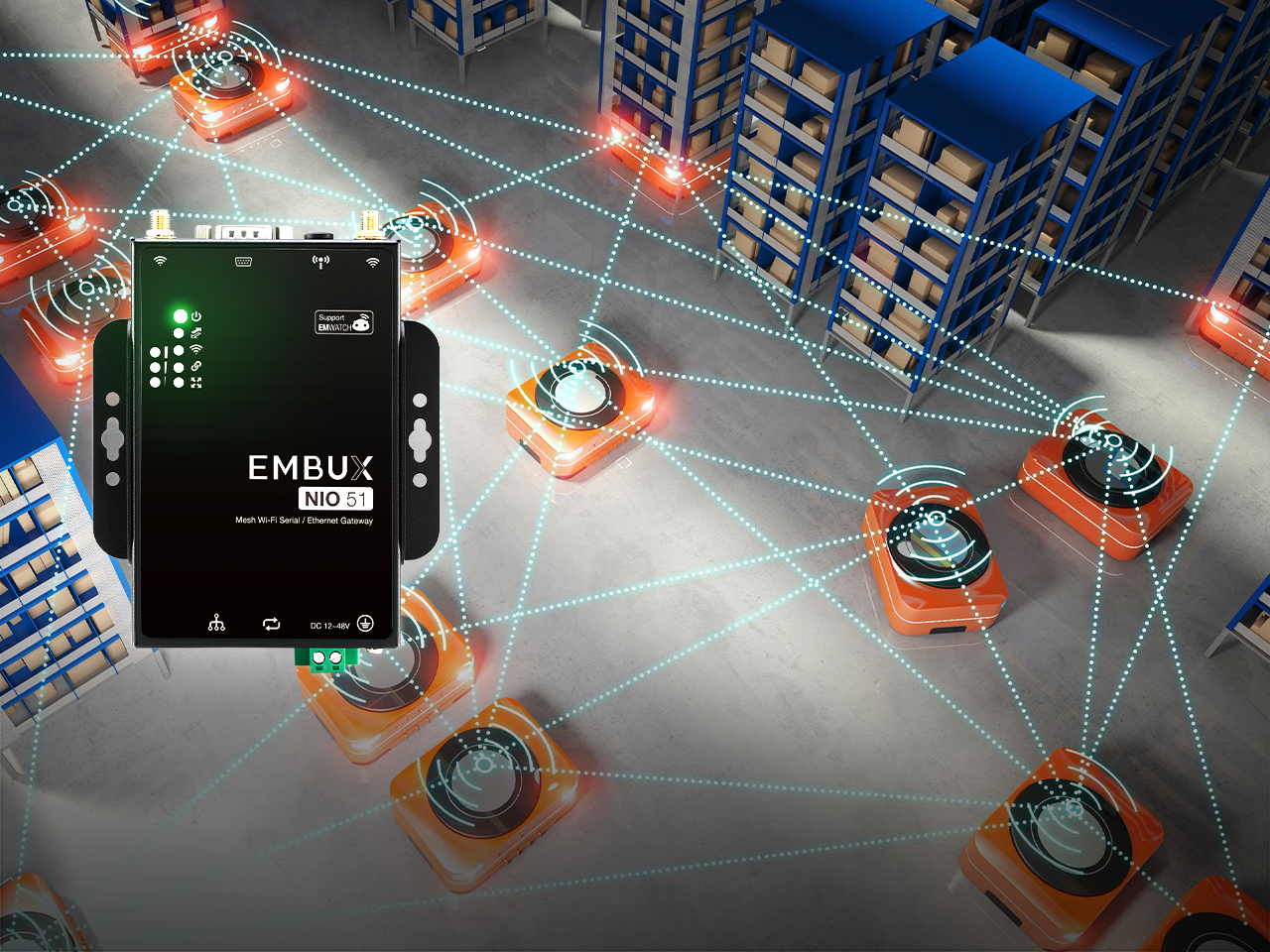
AMRs connected via NIO 51, forming an EZ Mesh network for seamless communication.
As Industry 4.0 advances, integrating legacy OT devices into modern IT networks is a key challenge. Serial device servers enable this by upgrading older devices into smart, connected systems, driving industrial digital transformation.
With numerous serial device servers available, selecting a stable, secure solution is critical. This article compares key features of top models and provides recommendations for a robust Industrial Internet of Things (IIoT) strategy.
The Synergistic Interaction Between AMR Controllers and Serial Device Servers
The **Automatic Mobile Robot (AMR) controller is responsible for managing and directing the robot’s travel path, speed, and its operations on the production line. Through serial device servers, the [AMR controller](https://www.aiotmart.nexcom.com/product_d.php?lang=en&tb=5&id=1143) **can efficiently exchange data and control with other devices in the industrial network, ensuring seamless connectivity and collaborative operation between devices.
The Relationship Between AGV Controllers and Serial Device Servers
The **Automatic Guided Vehicle (AGV) controller communicates with sensors and other devices in the production environment, collecting operational data and managing transportation tasks through serial device servers. The serial device servers provide stable and reliable data transmission, ensuring that the [AGV](https://www.aiotmart.nexcom.com/product_d.php?lang=en&tb=5&id=1143) **can accurately execute logistics and material handling tasks.

NIO 51 Free Download Device Configuration Tool — EmWatch
A Strategic Hub for Industrial Data Convergence
As a key industrial gateway, serial device servers play a vital role in converting legacy serial communication protocols into standard Internet protocols such as TCP/IP, Modbus TCP, and MQTT, significantly enhancing the functionality of existing OT devices and broadens the ranges of applications. More importantly, it enables industrial data acquisition and remote device monitoring — ushering in a new era of data-driven decision-making and accelerating OT-IT integration.
Key Use Cases: Driving Forces of Digital Transformation
Serial device servers are central to factory automation and smart manufacturing solutions. **In smart warehousing, for example, [AMRs (Autonomous Mobile Robot)](https://www.aiotmart.nexcom.com/product_d.php?lang=en&tb=5&id=1143) and [AGVs (Automated Guided Vehicle)](https://www.aiotmart.nexcom.com/product_d.php?lang=en&tb=5&id=1143)** can communicate in real time with control centers via serial device servers, dramatically improving logistics efficiency and production flow, which represents a typical use case of industrial data acquisition and remote device management.
For other legacy devices that lack native networking capability such as sensors, meters, PLCs, or other endpoints, serial device servers enable data acquisition, remote monitoring, and preventive maintenance, leading to significant improvements in asset utilization and production yield. By communicating across the physical and digital worlds, serial device servers serve as essential IIoT bridges and a critical step forward in enterprise digital transformation.
How to Choose the Right Serial Device Server: 5 Core Considerations
When selecting a serial device server, it’s important to evaluate not only functionality, but also reliability and ease of use. We recommend assessing options based on these five key factors:
- Interface Compatibility and Expandability A high-quality serial device server should support multiple industrial protocols (e.g., TCP/IP, Modbus, MQTT), a variety of serialstandards (RS-232/422/485), and rich Ethernet interfaces. Support for wireless technologies like Wi-Fi or Mesh is also crucial. These features ensure flexible integration with both legacy and modern devices, enabling streamlined deployment and maximum connectivity.
- Environmental Durability and Industrial-Grade Design For harsh industrial environments, the device must meet rigorous industrial standards, including wide operating temperature ranges, resistance to vibration and dust, and full EMC (Electromagnetic Compatibility) certification. A rugged design ensures long-term stability even in extreme conditions.
- Stable and Secure Data Transmission In industrial applications, data continuity and reliability are mission critical. Look for devices with strong ESD/EFT immunity, error correction mechanisms, and robust security features such as encryption and firewall protection to safeguard sensitive data and maintain system integrity.
- Intuitive Management and Efficient Deployment A well-designed serial device server should offer user-friendly configuration and management tools to reduce deployment complexity and maintenance costs. For instance, the NIO 51 comes with free EmWatch software for device discovery, firmware updates, configuration backups, and recovery, greatly improving operational efficiency.
- Technical Support and Long-Term Service Choosing a vendor with strong technical support and after-sales service is essential. A knowledgeable support team can help resolve issues promptly, ensure system stability, and assist with future upgrades.

NIO 51 Free Download Device Configuration Tool — EmWatch
Top Recommended Serial Device Servers
Based on the above considerations, we’ve curated a selection of standout serial device servers that excel in their respective areas:
- **NEXCOM NIO 51** The NIO 51 supports various industrial protocols, including Modbus RTU to Modbus TCP, with flexible protocol conversion — ideal for complex automation and IIoT environments. It also supports EZ Mesh and Wi-Fi client/router configuration modes, features a 20MB offline data buffer, and operates in extreme temperatures from -40°C to 70°C — making it suitable for diverse applications.
- Moxa 5150A Renowned for its reliability in industrial settings, the NPort 5150A offers standard, stable serial-to-Ethernet connectivity. It’s well-suited for connecting a single industrial serial device to IP network, focusing on fundamental communication bridging.
- Digi One SP This single-port serial-to-Ethernet device prioritizes simplicity and ease of setup. It’s a great choice for entry-level or basic applications where straightforward IP network connectivity is needed for legacy serial devices.
- Lantronix UDS1100 Compact and reliable, the UDS1100 provides stable remote access for individual serial devices, especially in space-constrained environments. It’s designed for foundational remote connectivity.
- Perle IOLAN SDS1 This model stands out for its enterprise-grade security functions and basic network management tools. It’s ideal for applications requiring secure single-port data transmission.
+---------------------------------------+----------------------------------------------------------------+-------------------------------------+------------------------------------+--------------------------------------+-----------------------------------------------+
|           Feature / Model             |                          NEXCOM NIO 51                         |          Moxa NPort 5150A           |             Digi One SP            |          Lantronix UDS1100           |               Perle IOLAN SDS1                |
+---------------------------------------+----------------------------------------------------------------+-------------------------------------+------------------------------------+--------------------------------------+-----------------------------------------------+
|            Wi-Fi Capability           | Supported (EZ Mesh, Wi-Fi Client Router, 2.4/5GHz, 2x2 MIMO)   | Not supported                       | Not supported                      | Not supported                        | Not supported                                 |
+---------------------------------------+----------------------------------------------------------------+-------------------------------------+------------------------------------+--------------------------------------+-----------------------------------------------+
|         Offline Buffer Memory         | 20MB (dedicated data buffer)                                   | No dedicated data buffer            | No dedicated data buffer           | 2MB Flash (mainly for firmware/OS)   | 16MB Flash (mainly for firmware/OS)           |
+---------------------------------------+----------------------------------------------------------------+-------------------------------------+------------------------------------+--------------------------------------+-----------------------------------------------+
|      Operating Temperature Range      | -40℃ ~ 70℃                                                   | 0℃ ~ 60℃                          | 10℃ ~ 45℃                   | 0℃ ~ 60℃                  | 0℃ ~ 55℃                          |
+---------------------------------------+----------------------------------------------------------------+-------------------------------------+------------------------------------+--------------------------------------+-----------------------------------------------+
|      Supported Protocols / Modes      | Modbus RTU to TCP                                              | TCP/UDP, Virtual COM Port           | TCP/UDP Socket, Virtual COM Port   | TCP/UDP, Virtual COM Port            | TCP/UDP Socket, Virtual COM Port              |
+---------------------------------------+----------------------------------------------------------------+-------------------------------------+------------------------------------+--------------------------------------+-----------------------------------------------+
|              Data Logging             | Supported (Serial Data Logging))                               | Not supported                       | Not supported                      | Not supported                        | Not supported                                 |
+---------------------------------------+----------------------------------------------------------------+-------------------------------------+------------------------------------+--------------------------------------+-----------------------------------------------+
| Remote Management Software / Platform | EmWatch (Free)                                                 | Standard Web / Console Management   | Standard Web Interface / Utility   | GUI / Web-based Management           | Web / SNMP / Telnet Management                |
+---------------------------------------+----------------------------------------------------------------+-------------------------------------+------------------------------------+--------------------------------------+-----------------------------------------------+
|    Enhanced Protection / Isolation    | ESD, EFT, Surge (Level 4), 2kV Isolation                       | 1.5kV Ethernet Magnetic Isolation   | 2kV Surge, 4kV EFT                 | 8kV ESD                              | 15kV ESD on Serial Port, 1kV EFT, 2kV Surge   |
+---------------------------------------+----------------------------------------------------------------+-------------------------------------+------------------------------------+--------------------------------------+-----------------------------------------------+
|             Max Baud Rate             | 921.6 Kbps                                                     | 921.6 Kbps                          | 230 Kbps                           | 921.6 Kbps                           | 230 Kbps                                      |
+---------------------------------------+----------------------------------------------------------------+-------------------------------------+------------------------------------+--------------------------------------+-----------------------------------------------+
|  Target Positioning / Key Advantages  | Smart, wireless IIoT gateway for automation                    | Budget-friendly basic networking    | Simple, compact connectivity       | Cost-effective remote access         | Secure remote monitoring                      |
+---------------------------------------+----------------------------------------------------------------+-------------------------------------+------------------------------------+--------------------------------------+-----------------------------------------------+
Recommendation Summary: Smart Transformation Starts with the Right Serial Device Server
- **NEXCOM NIO 51 Equipped with Wi-Fi and EmWatch software, it’s an ideal gateway for high-efficiency factory automation and IIoT applications, especially well-suited for smart warehousing with [AMRs and AGVs](https://www.aiotmart.nexcom.com/product_d.php?lang=en&tb=5&id=1143)**. Shop on Amazon Shop on Newegg Shop on Digikey
- Moxa — NPort Series: A budget-friendly option designed for small to mid-sized factory automation needs.
- Digi One — One Series: Lightweight and easy to configure, best for simple device networking scenarios.
- Lantronix — UDS Series: A cost-effective choice for basic serial-to-network connectivity.
- Perle — IOLAN Series: Offers enhanced security, making it well-suited for remote monitoring systems that handle sensitive data.
In the era of the Industrial Internet of Things (IIoT), serial device servers have become the essential bridge between legacy systems and the digital future, forming the backbone of successful digital transformation. A deep understanding of product features and a precise selection aligned to your specific needs is the first step toward unlocking the full potential of Industry 4.0.
메타데이터
- post_id
- 1e7ed35c5cd0
- slug
- a-buyers-guide-to-industrial-grade-serial-device-servers-the-core-engine-of-smart-manufacturing-1e7ed35c5cd0
- url
- https://medium.com/@NEXCOM_International/a-buyers-guide-to-industrial-grade-serial-device-servers-the-core-engine-of-smart-manufacturing-1e7ed35c5cd0
- canonical_url
- https://medium.com/@NEXCOM_International/a-buyers-guide-to-industrial-grade-serial-device-servers-the-core-engine-of-smart-manufacturing-1e7ed35c5cd0
- author_url
- https://medium.com/@NEXCOM_International
- status
- ok
- fetched_at
- 2026-08-02 21:04:15