Lessons in Identity From Beowulf and Gilgamesh
Two giants of ancient literature went on separate journeys, yet both of them learned the same lesson. And what did Beowulf and Gilgamesh…
Epic Selfhood
Lessons in Identity From Beowulf and Gilgamesh
Two giants of ancient literature went on separate journeys, yet both of them learned the same lesson. And what did Beowulf and Gilgamesh learn? Something about themselves.
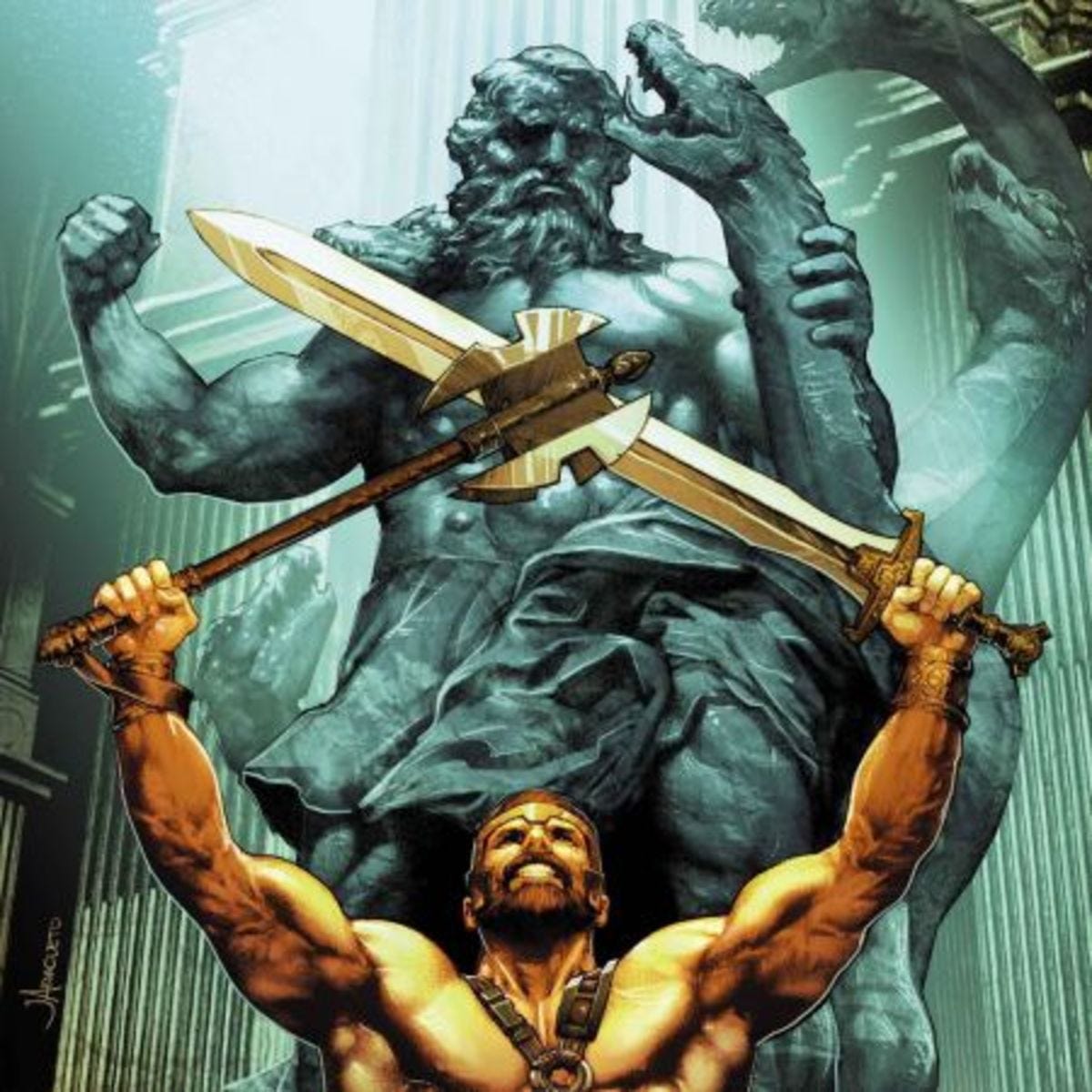
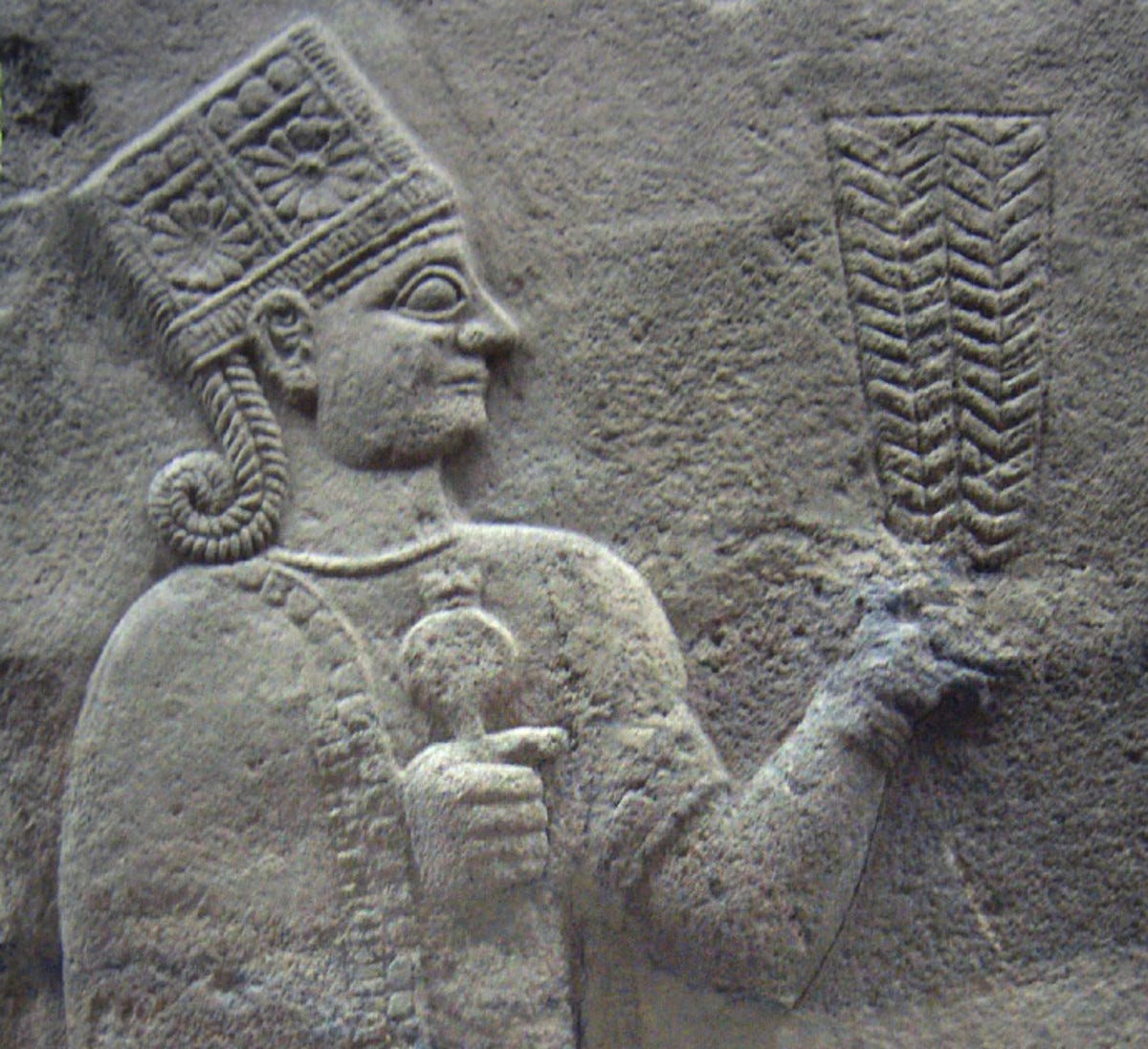
From Marvel Comics series “Civil War II”: Gods of War. Beowulf, Hercules, Gilgamesh and others. Originally published by Marvel Comics.
Beowulf and Gilgamesh
Not every quest ends the way it was intended. It was a lesson that two heroes of mythology — Beowulf and Gilgamesh — had to learn. One went on a quest to find wealth and power, while another went to find eternity. But in both cases, they didn’t find what they were looking for.
However, these quests shouldn’t be viewed as failures. While Beowulf and Gilgamesh didn’t reach their goals, they gained something more important: they gained insight about themselves.
Beowulf and Gilgamesh had the stuff that legends were made of. They were fearless leaders who faced insurmountable odds to defeat their enemies and relish in the spoils of victory.
Yet, by the end of their stories, Beowulf became disenchanted with his newfound wealth and status while Gilgamesh realized that eternal life was not all that it was cracked out to be. They thought their ultimate goals were before them, and each one soon discovered that not everything turned out the way it was intended to be.
Beowulf’s Journey
Beowulf was a prince of the Geats. He was on a journey for personal glory and wealth. His ultimate goal was to become a king of his own realm. Yet, as he worked his way towards his goal, he became a hero and mercenary who constantly went to war with the “devil’s agents.” Monsters and giants roamed the land of the Danes, and, for a price, Beowulf and his small army were willing to exterminate them. His major adversaries were Grendel, Grendel’s Mother, and the Dragon. Each one was worse than the other.
…there was a problem; [Beowulf] was bored.
His first battle with Grendel revealed his strength. His second with Grendel’s Mother proved his determination. In these battles, he insisted on fighting the creatures by himself and on his own terms. He didn’t use weapons or armor. He beat them through brute strength.
While Beowulf had been handsomely rewarded, he seemed to indicate that the treasure and wealth he obtained were only part of the reward; he appeared to enjoy going to battle and would have done so without the monetary rewards.
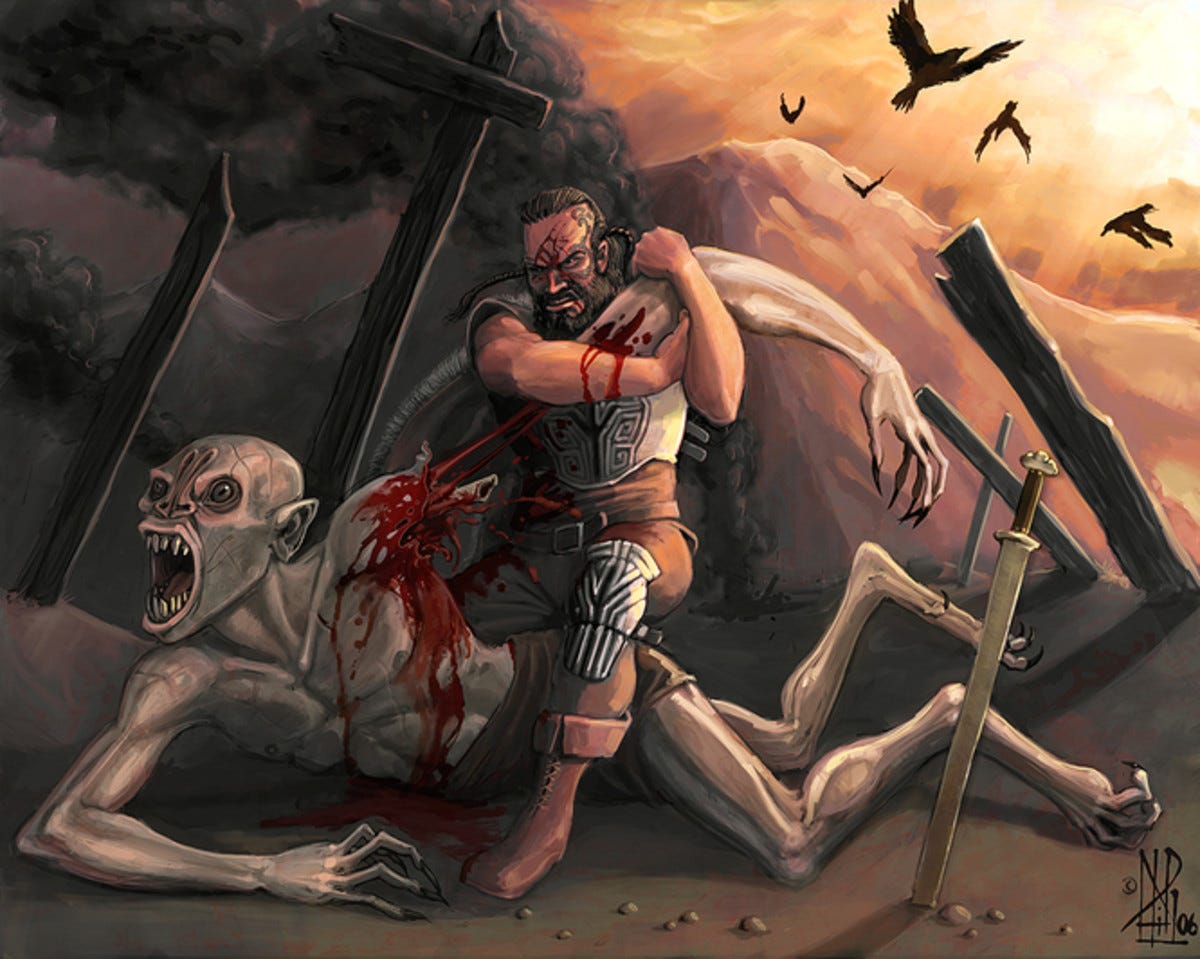
His first battle with Grendel revealed his strength. Published by Independent. uk(Aug.2013). By ND Hill (2006).
Still, he made his money, became a king and ruled for decades as a good ruler. But there was a problem; he was bored. He had nothing to prove. He missed the journey to foreign lands, battling monsters, and living the adventure.
The desire for warrior life — often called the “wyrd” in Anglo-Saxon culture — was now what Beowulf wanted. It was not until the presence of the dragon in his kingdom that Beowulf suddenly felt he had a purpose in life. It was also a time of revelation; he came to realize what his purpose in life was. He may have been a good king, yet Beowulf was a better warrior.
Gilgamesh Search for Eternity
In contrast to Beowulf, Gilgamesh was already a king and was not beloved by his people. He was crass and selfish and, sometimes, a bully. Often, the gods were aware of this and sent him some challengers to challenge him. They hoped it would to quell the brute that Gilgamesh had become. Instead, Gilgamesh came out victorious, much to the dismay of his people and to the Gods.
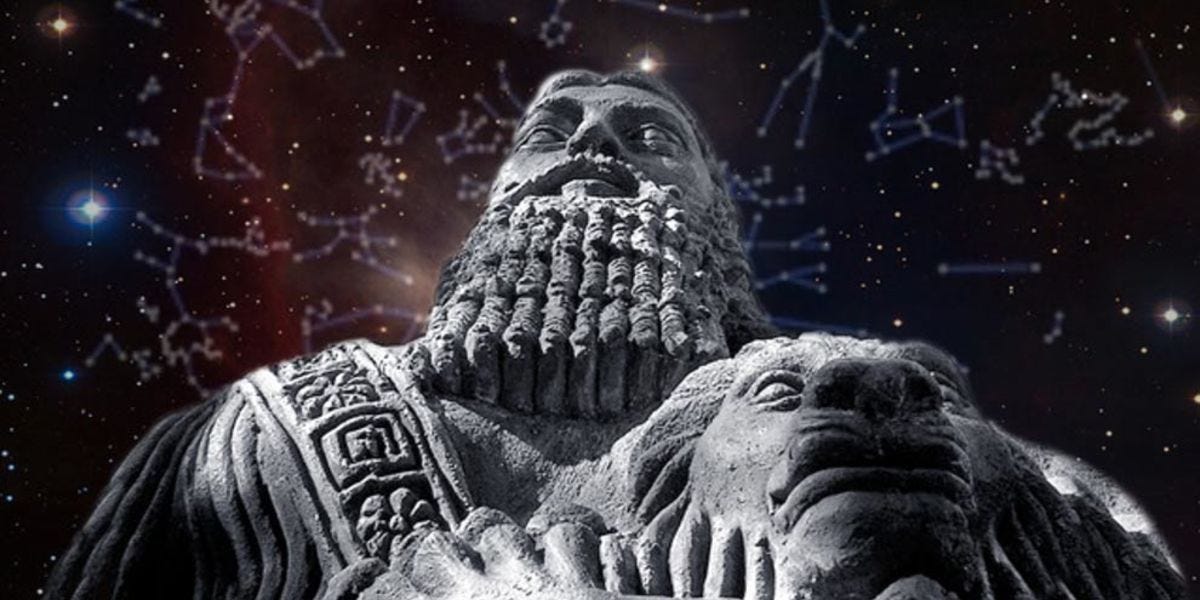
Gilgamesh searched for eternal life.
However, events in Gilgamesh’s life began to change. First, the Gods sent him a worthy adversary named Enkidu. The two battled each other; however, instead of defeating this opponent, Gilgamesh ended up befriending him. Suddenly, Gilgamesh had a partner; the two became best of friends and were inseparable. That was until tragedy struck.
Gilgamesh searched for eternal life. His journey took him beyond the known world and to an island in which the only mortal granted eternal life resided.
Enkidu died ( some sources say it happened in battle, but other sources state that Ishtar cursed him with a disease). Bereaved, Gilgamesh was also shaken. For the first time in his life, he was facing the concept of death. Although he was half-god, his human said made him a mortal. Watching the death of a close friend had made him wonder about his own mortality.
Gilgamesh searched for eternal life. His journey took him beyond the known world and to an island in which the only mortal granted eternal life resided. There, he learned the secret of eternal life from a man who had done the Gods a favor by saving animals from the great flood (he was the possible inspiration for Noah and his ark).
It’s not exactly what he expected. He didn’t find a man living a wonderful life. Instead, he found a person confined to one small place, living alone and unable to do anything.
Although he was given magical reeds that would ensure eternal life, Gilgamesh didn’t take them. A snake beat him to it. However, he returned to his people and began to erect buildings and shelters for his people.
Eventually, he became well-beloved and respected as a good king. In an ironic twist, Gilgamesh found eternal life because of what he did for his people. His body died, but his legacy lived on in the generosity he gave his people.
Different Outcome, Same Revelation
Gilgamesh would live out the rest of his life as a beloved king. Beowulf would die in glorious battle with the dragon. Gilgamesh went out on a selfish journey to find eternity. Instead, he found the virtue of selflessness and the importance of being a leader. Beowulf, on the other hand, realized that happiness wasn’t being the king but being the hero who saved the day and battled evil.
In contrast, the two heroes met different ends. In comparison, the two found the same thing: what they really wanted and what they needed. Gilgamesh needed responsibility and a lesson in humility and sorrow. Beowulf needed a period away from his warrior life to realize how much he missed it. The two men learned that life doesn’t always meek out what they wanted, but their journeys and exploits gave them what they needed. And that happened to be a reflection of themselves.
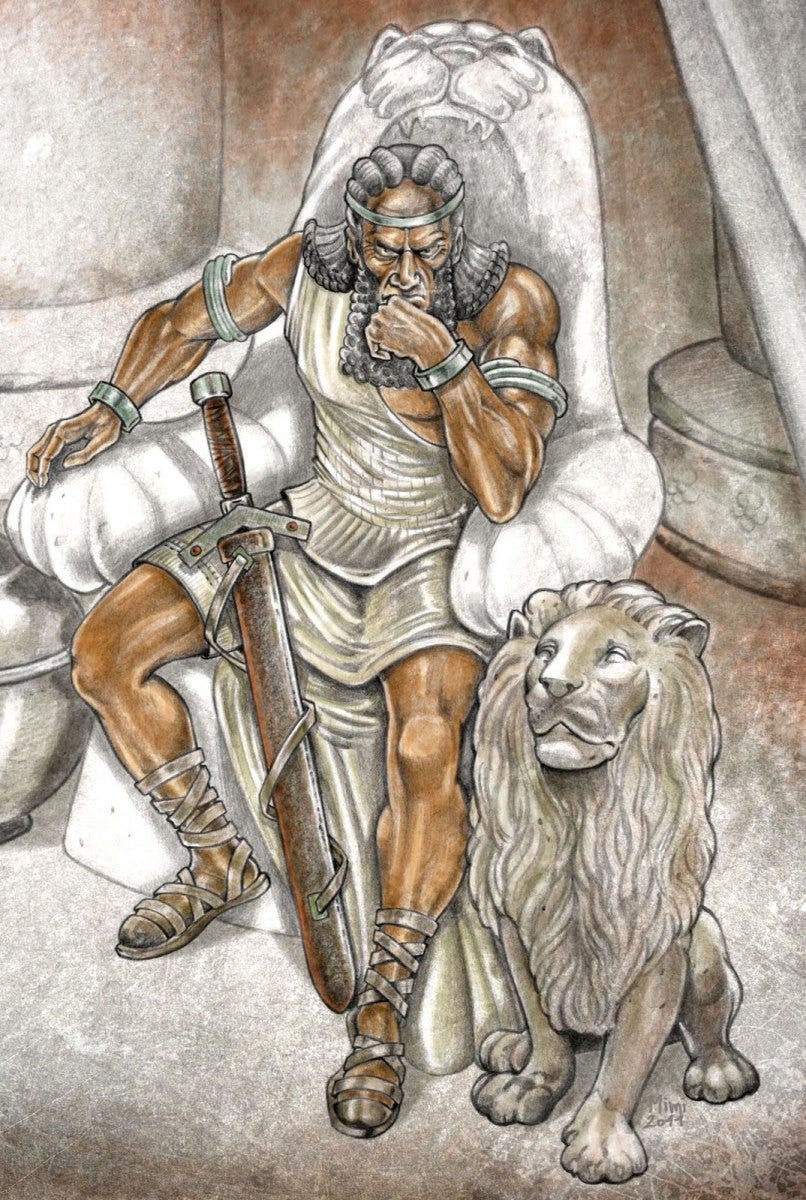
Gilgamesh would live out the rest of his life as a beloved king. Beowulf would die in glorious battle with the dragon. Published November 25, 2015 by amaic
Work Cited
- Octavia Randolph: “Wyrd: The Role of Fate” :Octavia.net (retrieved 2026)
- Maureen Gallery Kovacs (translator): The Epic of Gilgamesh: Uruk-Warka.dk (1998).
- James Felton: “The Ancient Babylonian Flood Myth That Inspired Noah’s Ark Had A Dark Twist”: IFL Science (January 2021).
- Unknown (trans. by Francis B. Gummere):Beowulf (retrieved 2026)
© Ds Traylor, 2026. All rights reserved.


New Literary Society
메타데이터
- post_id
- 1ea07f4fa19b
- slug
- lessons-in-identity-from-beowulf-and-gilgamesh-1ea07f4fa19b
- url
- https://medium.com/new-literary-society/lessons-in-identity-from-beowulf-and-gilgamesh-1ea07f4fa19b
- canonical_url
- https://medium.com/new-literary-society/lessons-in-identity-from-beowulf-and-gilgamesh-1ea07f4fa19b
- author_url
- https://medium.com/@ds_traylor
- status
- ok
- fetched_at
- 2026-08-08 05:39:15