Bolivia Navigates Strikes and Deals After Longstanding Fuel Subsidy Cut
Bolivia currently navigates a fragile, mixed landscape of negotiations, protests, and rising social tension following President Rodrigo…
Bolivia Navigates Strikes and Deals After Longstanding Fuel Subsidy Cut
Bolivia Navigates Strikes and Deals After Longstanding Fuel Subsidy Cut
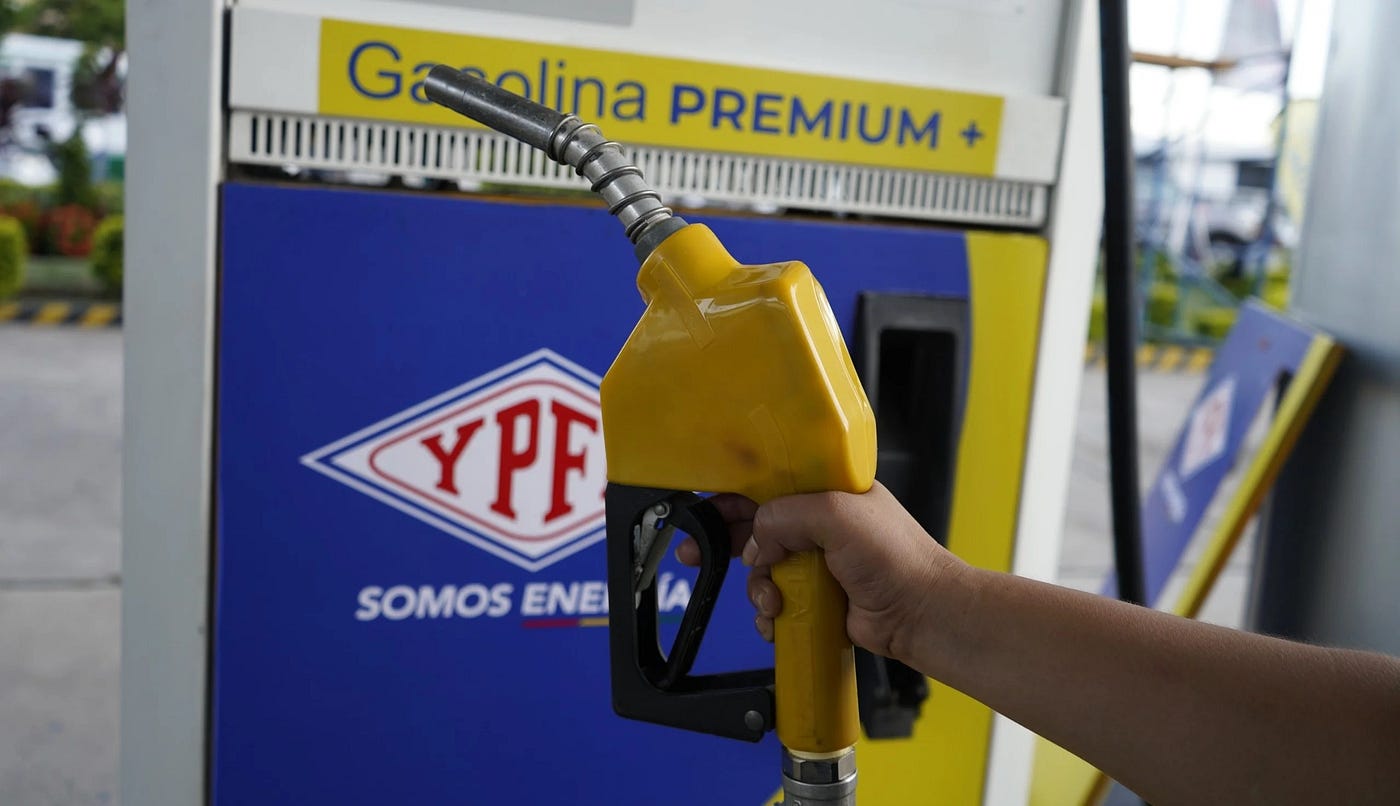
Bolivia currently navigates a fragile, mixed landscape of negotiations, protests, and rising social tension following President Rodrigo Paz’s decision to eliminate state fuel subsidies, a policy that had been in place for more than two decades.
The move was formalized last Wednesday with the issuance of Supreme Decree 5503, which immediately sparked public backlash. Fuel subsidies have long been one of Bolivia’s most politically sensitive policies, repeatedly reversed in the past after street protests, thus representing an Achilles’ heel of successive administrations.
Former president Evo Morales, now one of the most vocal critics of the Government, called on his supporters to mobilize starting Monday, while the Central Obrera Boliviana (COB), the country’s largest labor federation, launched a nationwide strike. Unlike previous episodes, however, the Paz Administration moved swiftly to secure agreements with key sectors, preventing a full-scale shutdown of the country.
The result is a fragmented scenario: marches and demonstrations are taking place in several cities, but without the participation of the transport sector, historically one of the most powerful sources of pressure in Bolivia.
Union Strike and Opposition to the Decree
The COB reaffirmed its strike, accusing the executive branch of adopting what it described as an “arbitrary” policy that favors business interests at the expense of workers. Mario Argollo, the federation’s executive secretary, warned that the fuel price hike would have an immediate impact on the cost of living.
Union leaders argue that higher fuel prices will translate quickly into increased transportation and food costs, and say the government’s compensatory measures will be insufficient to offset inflationary pressures.
Morales-aligned rural and coca-growing groups have also joined the protests, organizing parallel demonstrations in Cochabamba and other regions. Morales, who governed Bolivia from 2006 to 2019, is seeking to channel popular discontent from his traditional union strongholds, despite having attempted a similar fuel price adjustment in 2010 — one he was forced to reverse after mass protests.
“The adjustment must be implemented with moral authority and not end up passing the bill of the crisis on to working people,” Morales wrote on X, accusing Paz’s administration of a lack of timely and transparent public consultation. He added that Decree 5503 “directly affects domestic industry and threatens price stability in the internal market.”
Deals to Prevent a Nationwide Shutdown
Meanwhile, the Paz Administration has pursued an intensive round of negotiations aimed at stabilizing the situation. Over the weekend, unions representing urban bus drivers in La Paz and El Alto, as well as heavy cargo transporters in Santa Cruz and Cochabamba, confirmed they would not join the strike thanks to a series of agreements that include the creation of technical working groups to address tax issues, billing regulations, and the impact of higher fuel prices on transportation fares.
“Overcoming the crisis requires working, not paralyzing the country,” Economy Minister Gabriel Espinoza said, who also described the subsidy cut as “inevitable” given Bolivia’s current economic conditions.
The Economic Rationale Behind the Adjustment
Decree 5503 set new reference prices that represent increases of up to 162 percent for diesel and 86 percent for gasoline, ending a subsidy that the Bolivian state had maintained for more than 20 years. According to the government, sustaining such program would have cost roughly $3.5 billion this year, equivalent to 6.4 percent of gross domestic product.
Officials argue that the subsidy had become unsustainable due to declining revenues, a shortage of foreign currency, and widespread fuel smuggling to neighboring countries. Ending it, they say, is essential to avoid a fiscal collapse and stabilize domestic supply.
To cushion the impact, the government also announced a minimum wage increase, higher bonuses for public-school students, and expanded benefits for elderly citizens without pension contributions.
A Fragile Balance
President Paz’s government is betting on dialogue as its main tool to sustain a politically costly adjustment, while unions and social movements continue to apply pressure in the streets.
The balance remains fragile — but decisive: if the administration manages to contain unrest while holding firm, it would secure a political victory that even Evo Morales was unable to achieve when he faced a similar challenge in 2010.
메타데이터
- post_id
- 1ea321ca5e59
- slug
- bolivia-navigates-strikes-and-deals-after-longstanding-fuel-subsidy-cut-1ea321ca5e59
- url
- https://medium.com/@inesehulech/bolivia-navigates-strikes-and-deals-after-longstanding-fuel-subsidy-cut-1ea321ca5e59
- canonical_url
- https://medium.com/@inesehulech/bolivia-navigates-strikes-and-deals-after-longstanding-fuel-subsidy-cut-1ea321ca5e59
- author_url
- https://medium.com/@inesehulech
- status
- ok
- fetched_at
- 2026-07-07 22:13:32